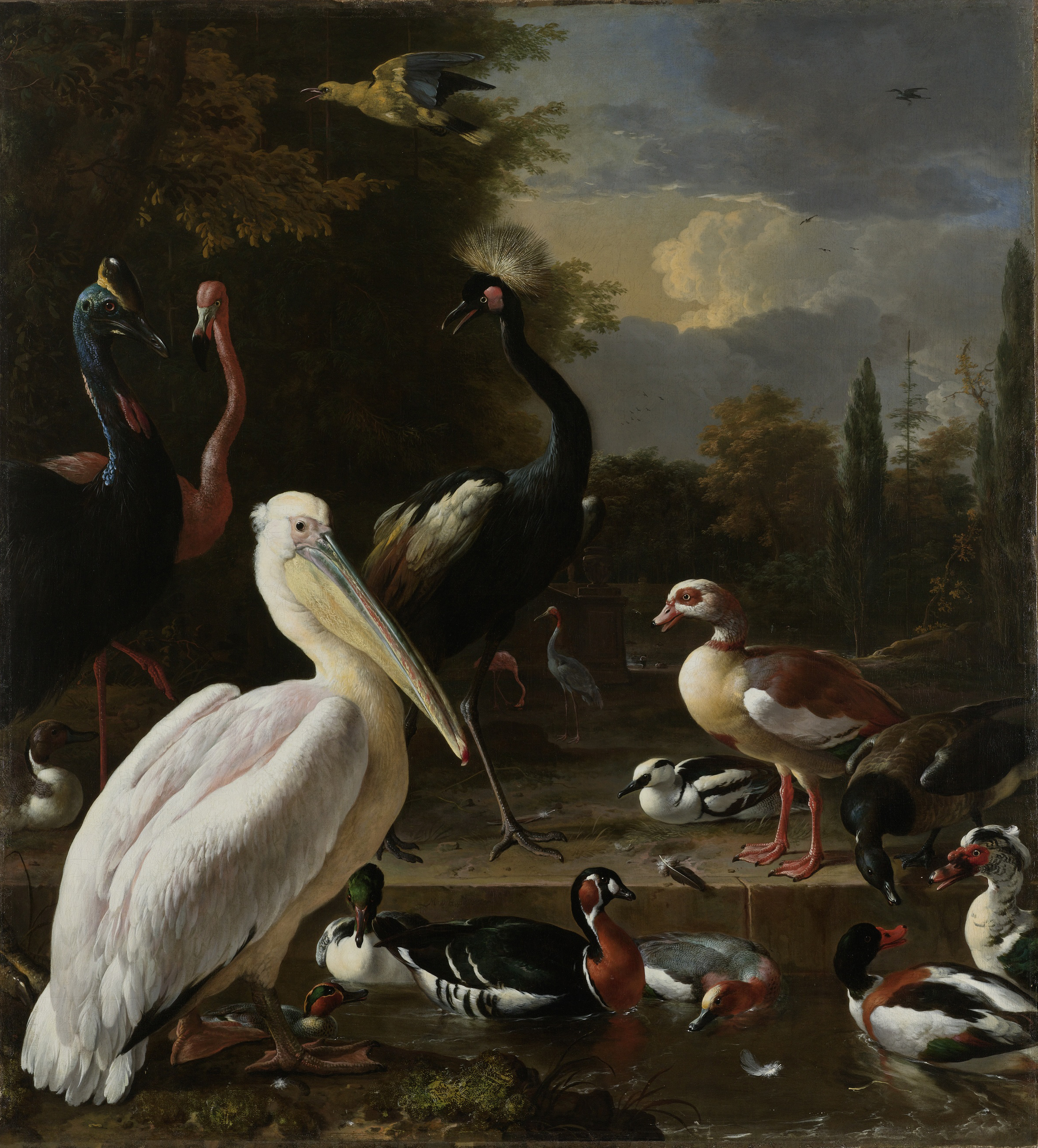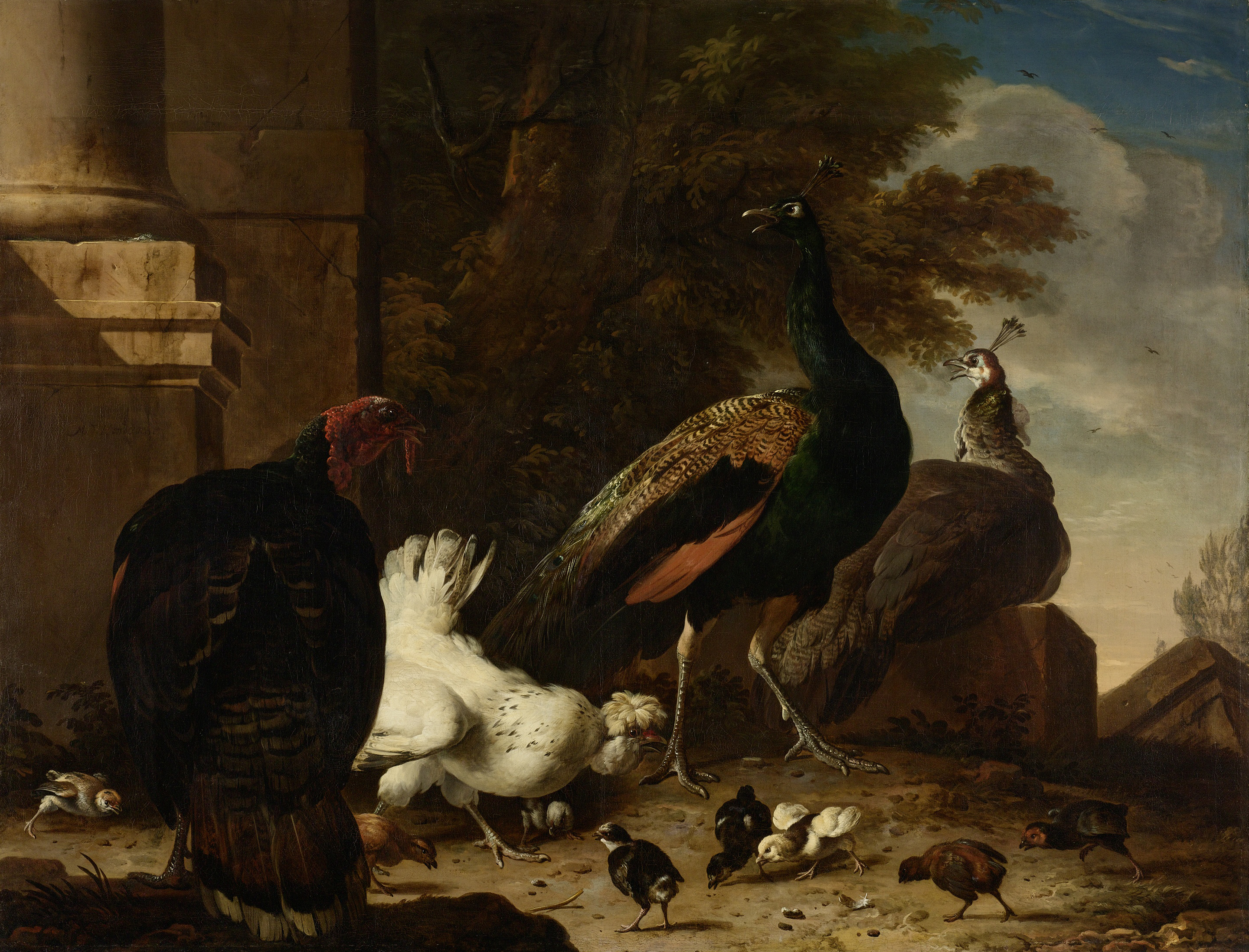
A Hunter's Bag — History & Analysis
Who listens when art speaks of silence? In A Hunter's Bag, the viewer is invited into a dreamlike reverie where nature's bounty and human endeavor intertwine seamlessly. Look to the center where the meticulously arranged game evokes a sense of still life, yet imbued with the weight of an untold story. The subtle interplay of shadows and light enhances the richness of the textures—feathers, fur, and leather come alive under a warm glow.
Notice how the browns and muted greens dominate the palette, creating a feeling of warmth yet underscoring a somber appreciation for life taken. Delve deeper into the layers of this composition. The juxtaposition of the hunter's spoils with the delicacy of the surrounding flora speaks to the tension between life and death, presence and absence. Each bird and animal, while rendered with a meticulous eye, holds a gaze that suggests their spirit lingers, evoking reflections on mortality and the human relationship with nature.
The serene background hints at a world untouched by the hunter's actions, emphasizing a haunting contrast to the vibrant details in the foreground. Created between 1660 and 1695, this piece emerged during a period where d'Hondecoeter was known for his vibrant depictions of animals and still lifes, often influenced by the burgeoning interest in nature among Dutch painters. At this time, he was refining his techniques in Amsterdam, contributing significantly to the Baroque aesthetic while exploring themes of indulgence and the bounty of the earth.