Annunciation — History & Facts
A winged angel enters from the left, stepping forward with one foot and holding a tall stem of white lilies in his left hand. His gaze is directed downward in a gesture of reverence, and his right hand is raised gently toward his chest. The angel’s robe is rendered in deep blue with swirling, sharply folded drapery, and his red hair glows against the pale marble walls.
On the right panel, a woman in a blue mantle and white veil kneels at a gilded lectern, her head bowed and her hand pressed to her chest. An open book rests on the lectern, its pages illuminated by the light streaming through a window behind her. Behind her, a heavy red curtain hangs, its folds painted with careful attention to texture and shadow.
Between the two figures, a window opens onto a distant landscape with a winding road, a cluster of buildings, and blue mountains under a sky streaked with clouds. The room is defined by its geometric floor, coffered ceiling with gilded rosettes, and walls painted to resemble veined marble panels. The composition is divided vertically, with the angel and the Virgin Mary each occupying their own panel, yet linked by the perspective lines of the architecture and the shared source of light.
The brushwork is precise, with crisp outlines and smooth transitions of color, especially in the rendering of fabrics and reflective surfaces. Every detail, from the delicate lilies to the intricate gold patterning on the lectern, is painted with clarity and restraint. The subject is the Annunciation, shown here with the angel Gabriel greeting the Virgin Mary in a richly decorated interior. This work, titled Annunciation, was created by Giovanni Bellini around 1500.
The painting is recognized as a work of religious art, reflecting the Renaissance interest in perspective, natural light, and detailed interiors.
Sources: Wikidata Q48977642 · Wikipedia: Annunciation (Bellini) · Image source (Wikimedia Commons)
More Artworks by Giovanni Bellini
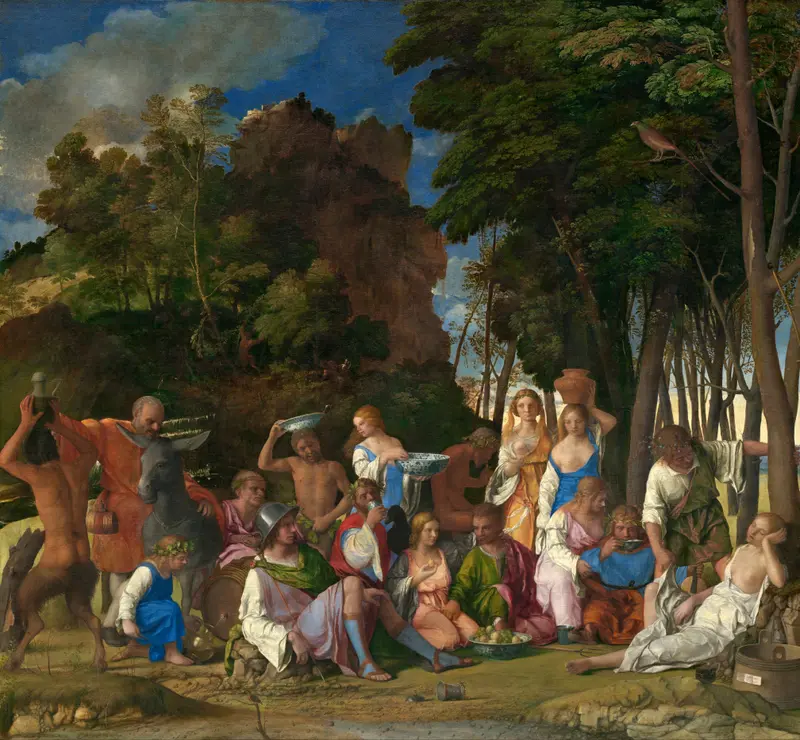
The Feast of the Gods
Giovanni Bellini

Madonna and Child enthroned with Saints and Angels
Giovanni Bellini
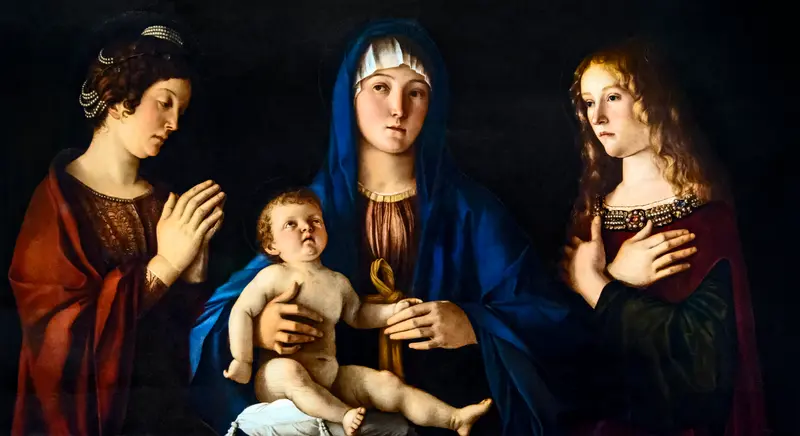
Madonna and Child between Saints Catherine and Mary Magdalene
Giovanni Bellini
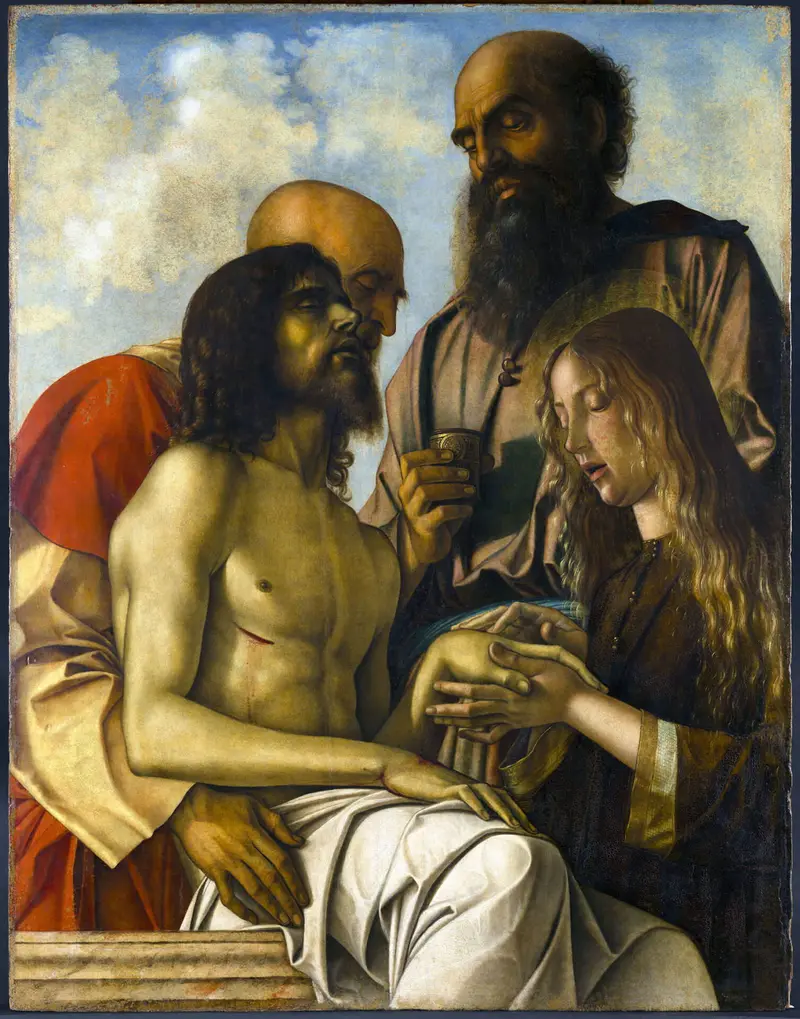
Lamentation over the Dead Christ
Giovanni Bellini
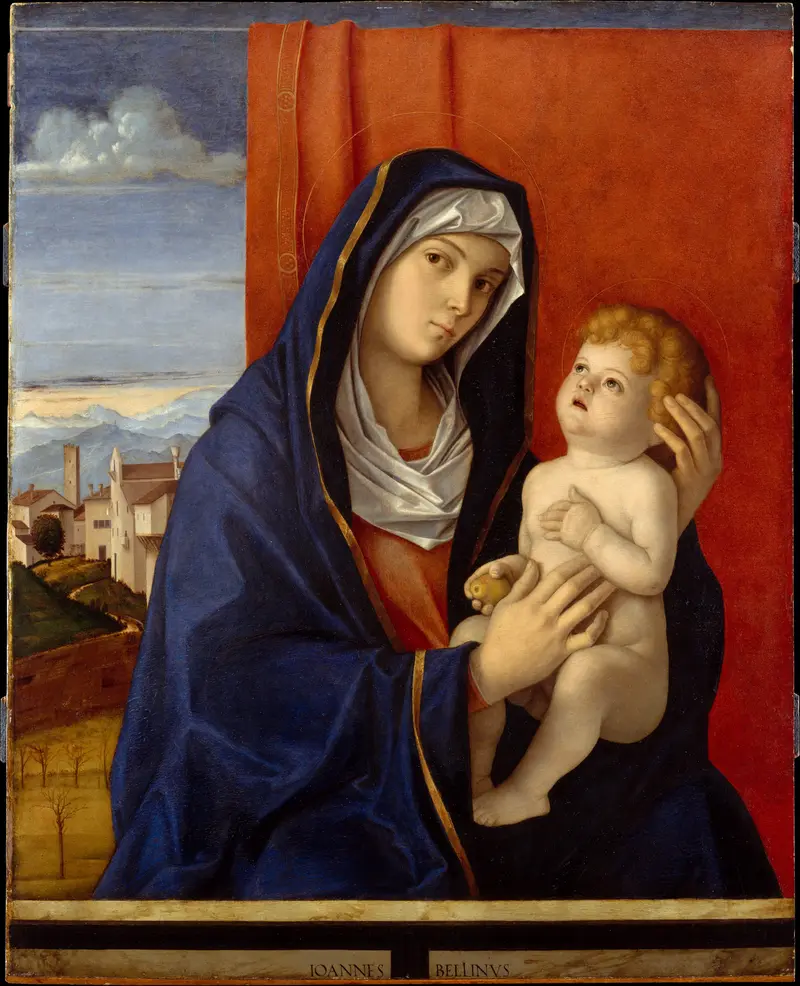
Madonna and Child
Giovanni Bellini
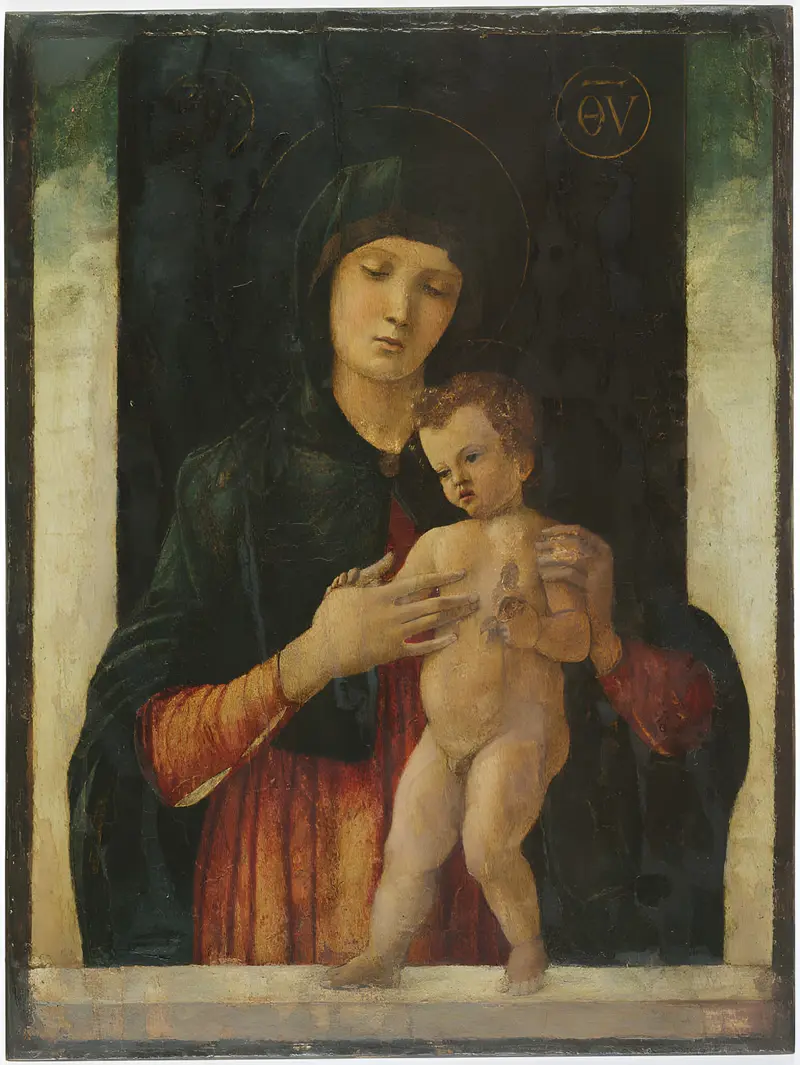
The Virgin and Child
Giovanni Bellini
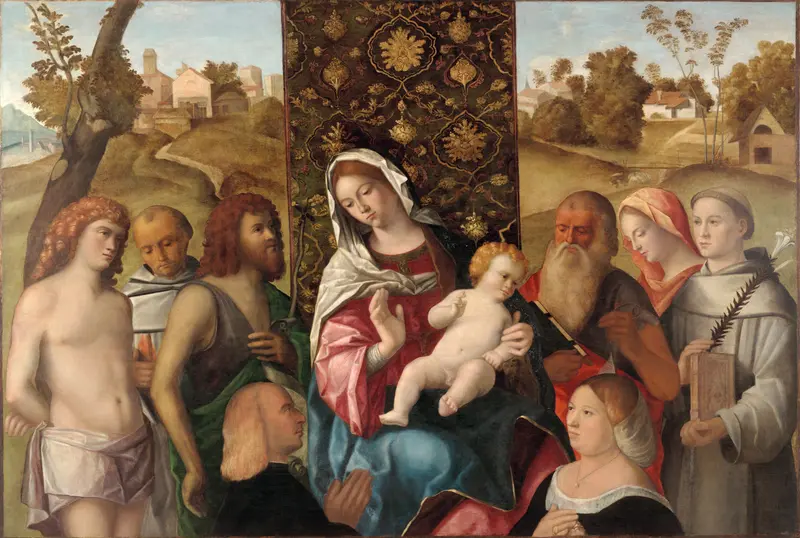
Virgin and Child with Saints Sebastian, Francis, John the Baptist, Jerome, an unidentified female saint, Saint Anthony of Padua and two donors
Giovanni Bellini
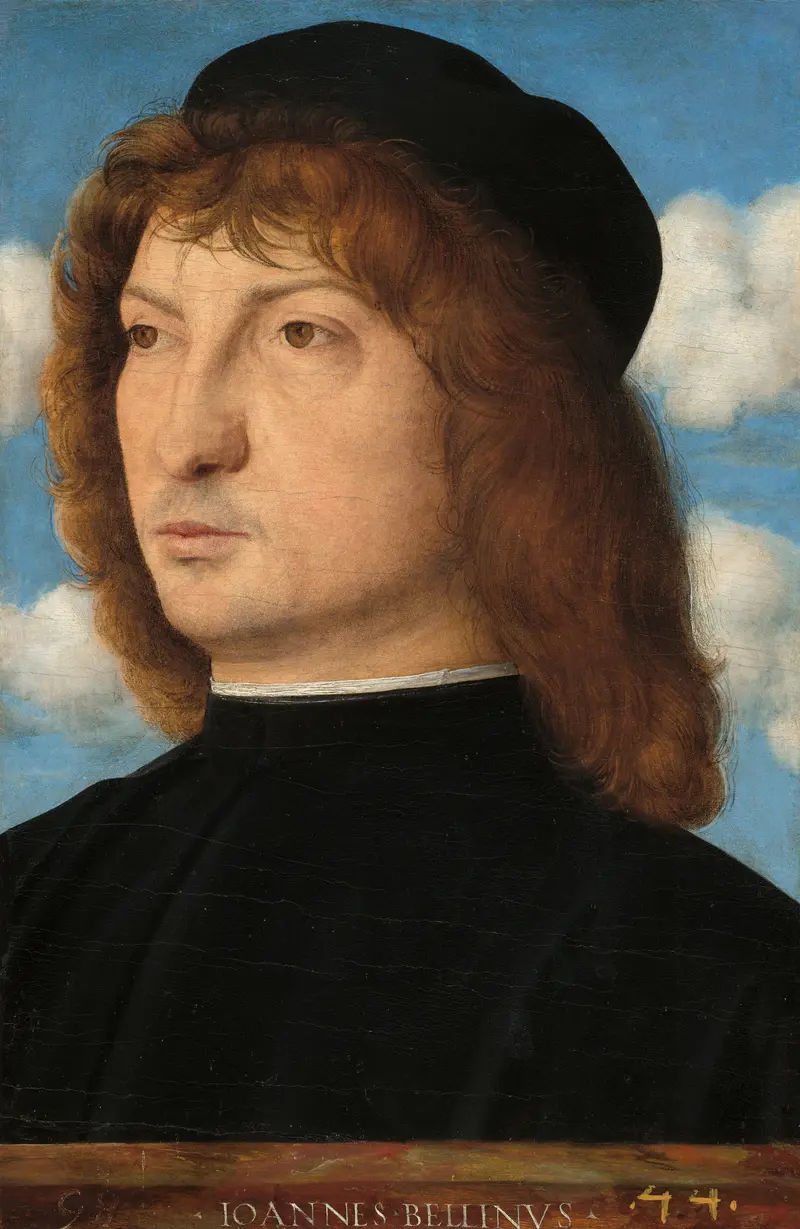
Portrait of a Venetian Gentleman
Giovanni Bellini
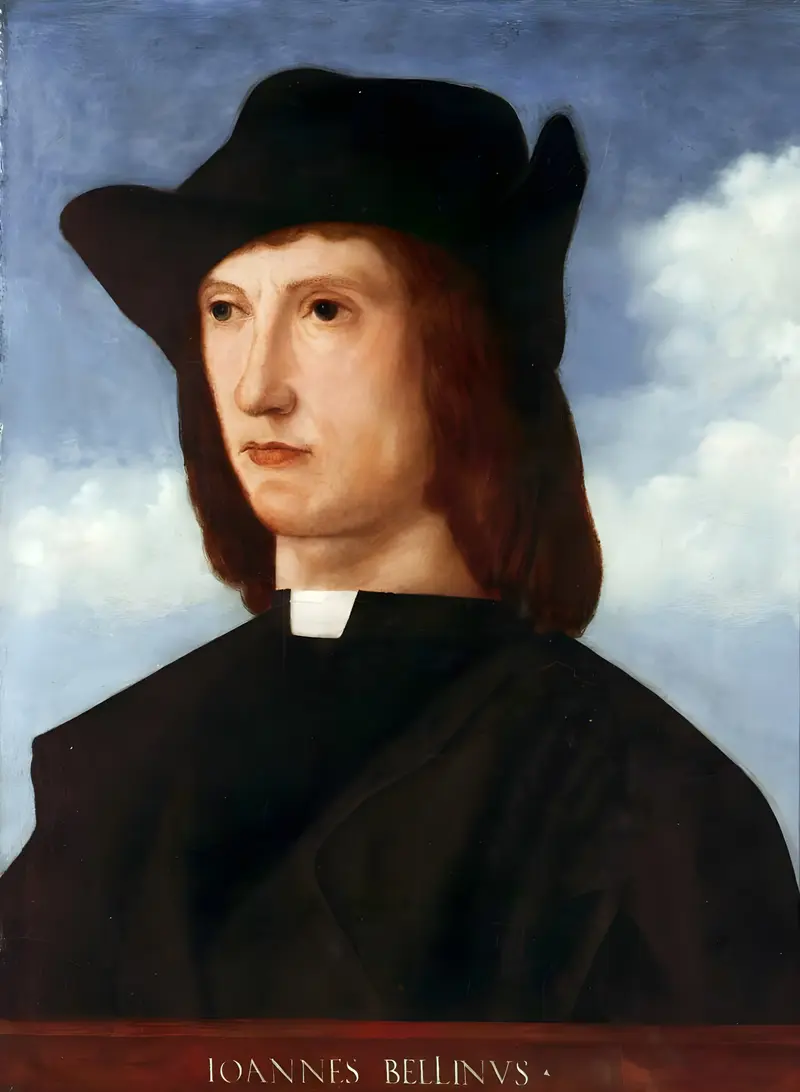
Portrait of a Young Man
Giovanni Bellini
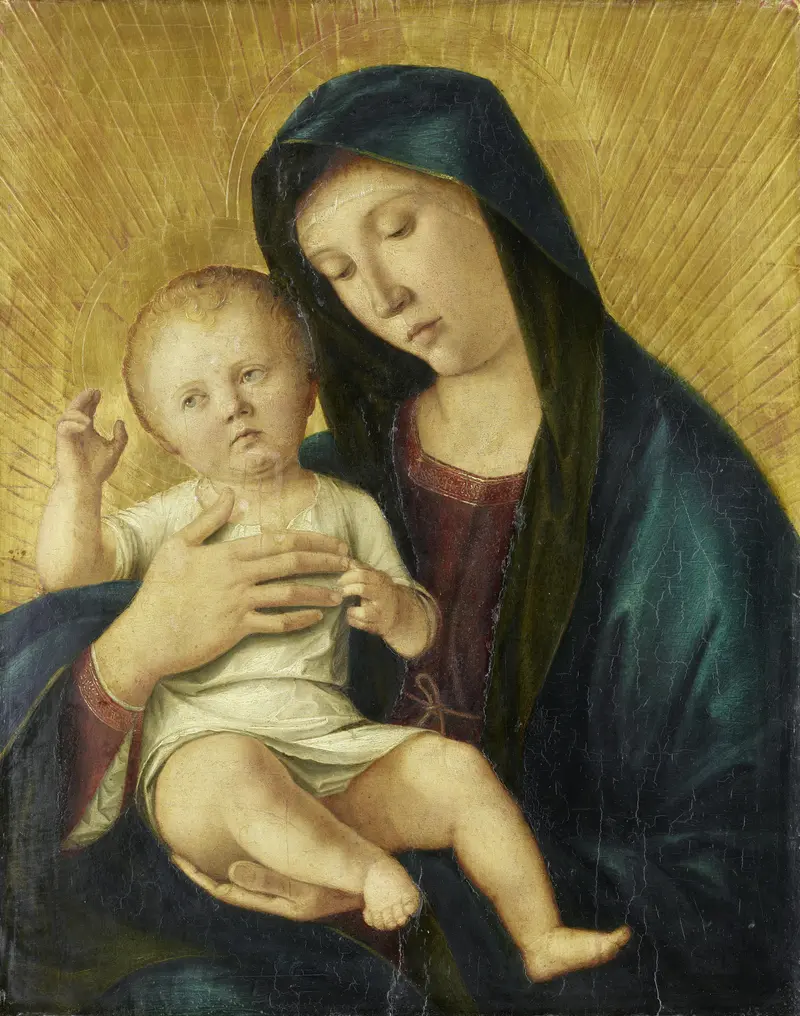
The Virgin with the Blessing Child
Giovanni Bellini