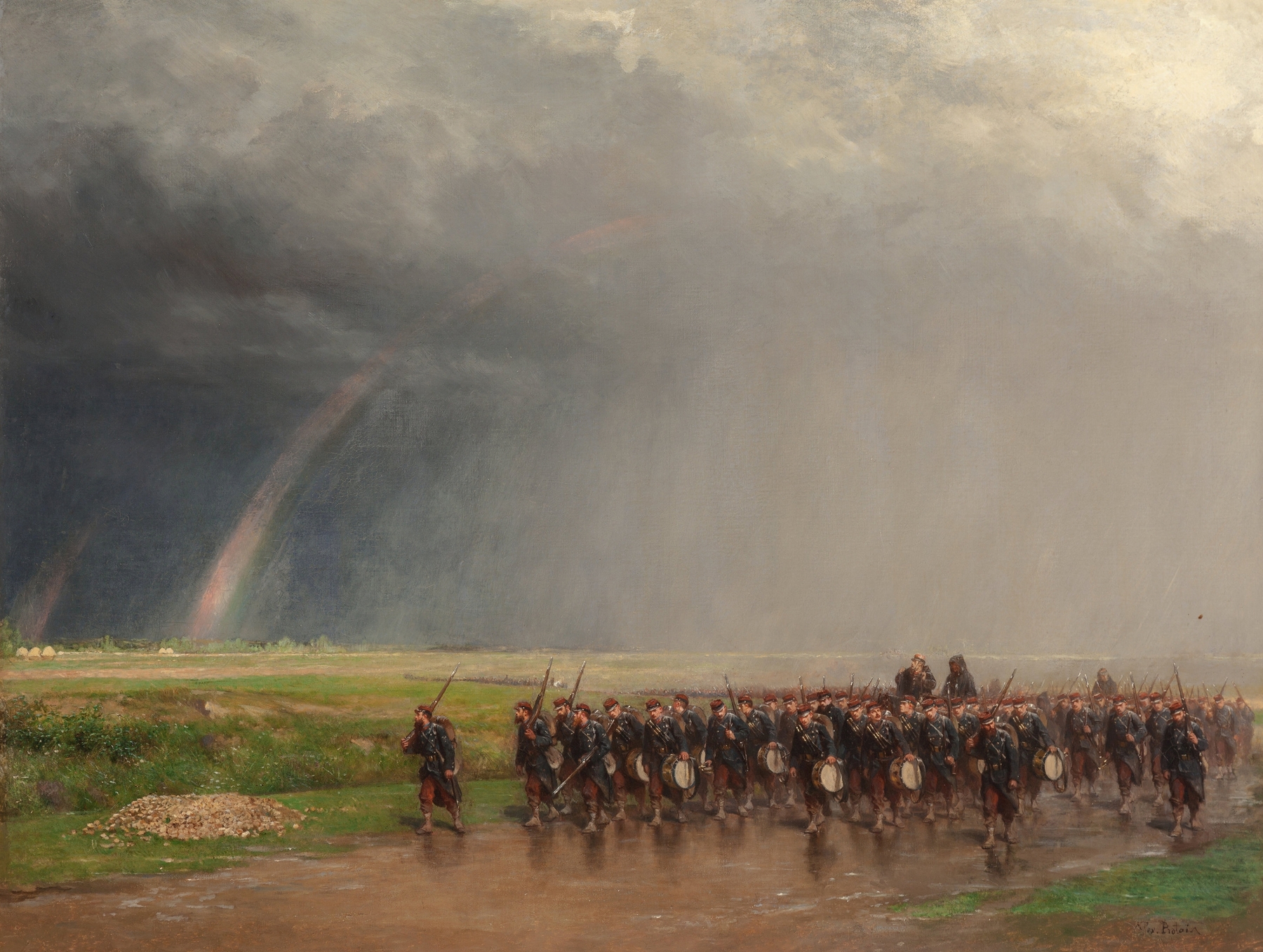
Attaque du mamelon vert et des ouvrages blancs, 7 juin 1855. Épisode de la guerre de Crimée (1853-1856) — History & Analysis
“The canvas doesn’t lie — it simply waits.” Within its still surface, the hidden truths of conflict and valor linger, waiting to be unearthed by the observer. Look to the center of this work, where the bold strokes of deep greens and whites delineate the tumult of battle. The vivid contrast captures the chaos of the Crimean War, with soldiers engaged in a desperate struggle. Notice the meticulous detail in the troops’ attire, the way each brushstroke conveys movement and urgency, drawing you into the scene’s visceral energy.
The artist’s use of shadow and light enhances the tension, illuminating certain figures while others fade into the chaos, symbolizing the unpredictable nature of war. Hidden beneath the surface lies a poignant commentary on courage and sacrifice. The positioning of the soldiers invokes both camaraderie and isolation; while they fight together, an inherent fear of mortality shadows them. The subtle depiction of landscape elements contrasts the brutality of war with the serene beauty of nature, inviting reflection on the dichotomy of destruction and life.
Each detail, from the swirling smoke to the distant hills, amplifies the emotional weight of the narrative. In 1858, Protais created this piece amidst the aftermath of the Crimean War, a conflict that stirred debates about military leadership and national pride. Living in Paris, he was part of an artistic community grappling with the realities of war’s impact on society. This period saw shifts in artistic expression, as many sought to document not just the grandeur, but the raw and human aspects of conflict, which this work exemplifies.