
Bamboo — History & Analysis
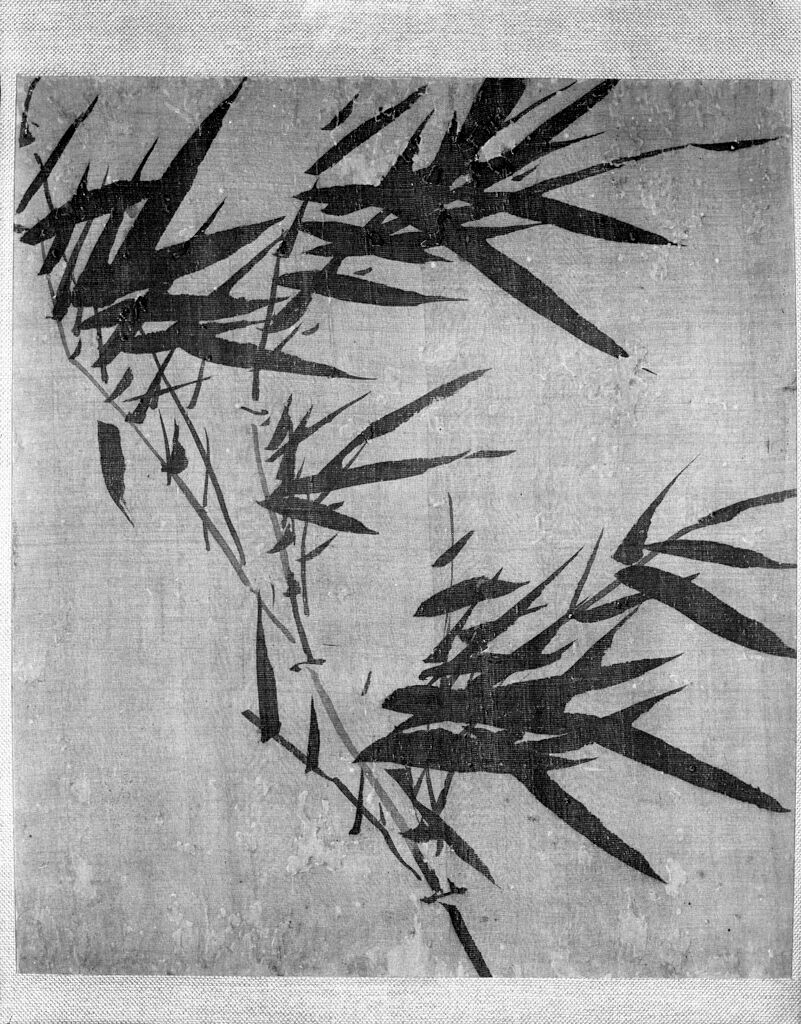
What secret hides in the quiet of the canvas? The stillness of Bamboo invites a contemplative pause, urging us to delve deeper into its serene form and the revolution of thought that pulses beneath the surface. Look closely at the left edge, where a cluster of bamboo shoots rises tall and unwavering, their slender silhouettes drawn with delicate precision. The ink strokes, varying from bold to feathery, capture the essence of the bamboo's resilience against the wind. Notice how the subtle gradation of ink across the leaves creates a dance of light and shadow, breathing life into the composition.
The stark white background amplifies the strength of the bamboo, making each brushstroke resonate with intention. The tension between rigidity and flexibility lies at the heart of this piece. The bamboo's unyielding stance mirrors the artist's own struggles for personal and political freedom. Each line reflects a philosophy that embraces perseverance, while the absence of a human figure hints at the solitary journey of introspection.
This duality speaks not only to the artist’s internal landscape but also resonates with the socio-political climate of the time, where ideas of change were both radical and necessary. Created during the 14th to 15th century, this work emerged from Su Shi’s rich legacy as a poet, statesman, and artist deeply engaged with the cultural currents of his era. He painted Bamboo amid a turbulent period in Chinese history, marked by political upheaval and philosophical inquiry. The painting is a testament to his belief in the power of nature as a metaphor for resilience and revolution, allowing the viewer to glimpse the profound connections between the natural world and human experience.