Bloempiramide — History & Analysis
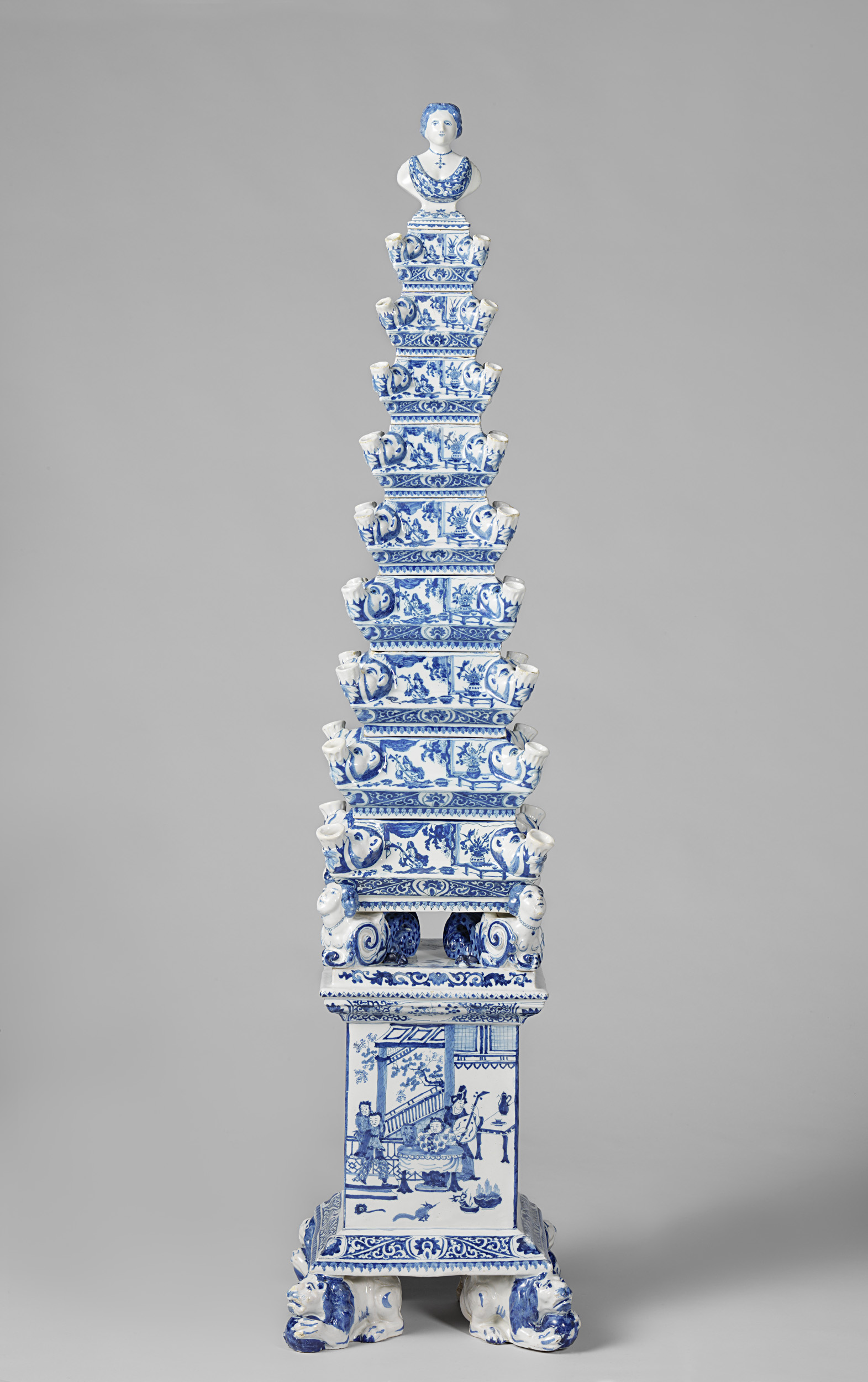
When did color learn to lie? In the world of ceramics, the vibrancy of hues often whispers secrets of transformation, bending the boundaries of traditional craft into realms of wonder. Look closely at the layers of Bloempiramide, where a pyramid of flowers rises majestically, each petal a burst of color—radiant blues, fiery reds, and soft pastels. The arrangement draws your eye upward, leading you to the apex, where the interplay of light dances across the glossy surfaces, creating a dynamic tension between the solid and the ethereal.
The carefully crafted forms exhibit a meticulous attention to detail, inviting admiration for the skill with which each flower blends into the next, a blooming tapestry of artistic ingenuity. At first glance, this piece dazzles with its kaleidoscope of colors and shapes, yet deeper inspection reveals themes of impermanence and resilience—flowers, though beautiful, are fleeting in nature. The pyramid structure implies both stability and fragility, as if holding within it the essence of life’s cycles. This contrast resonates with the viewer, as the artwork becomes a metaphor for transformation; the ephemeral beauty of flowers captured in lasting materials transcends time and speaks to the human experience of growth and change.
Created between 2003 and 2004, this piece reflects the innovative spirit of Koninklijke Tichelaar Makkum, a Dutch ceramics manufacturer steeped in over 400 years of tradition. During this time, the art world was experiencing a revival of interest in handmade crafts, pushing boundaries and igniting conversations around materiality and form. This context not only informed the creation of Bloempiramide but also highlighted the shifting relationship between art and craftsmanship in contemporary society.