Chariot Race — History & Facts
A team of four horses, their muscles taut and nostrils flared, rounds the spina at full speed, kicking up a dense cloud of dust that blurs their hooves and wheels. The charioteer in red, gripping the reins tightly, leans forward with his arm raised, urging his horses onward as his chariot tilts dangerously close to the ground. At the heart of the arena stands the spina, marked by three monumental golden columns and a tall obelisk, casting long shadows across the sand under a clear blue sky streaked with soft clouds.
The architecture of ancient Rome forms a dramatic backdrop, with colonnades, arches, and distant towers bathed in warm sunlight, their ochres and pinks contrasting with the cool blue of the sky. Along the lower edge of the arena, figures on horseback and on foot watch the race intently, some gesturing toward the action, while others stand in anticipation near the red barriers. The composition sweeps from the crowded stands on the left to the open space of the track on the right, guiding the viewer’s gaze along the curve of the race and emphasizing the speed and danger of the contest.
Gérôme’s meticulous technique is evident in the crisp outlines of the horses, the gleaming harnesses, and the sharply defined architectural details, all painted with a polished, almost enamel-like surface. Jean-Léon Gérôme painted Chariot Race in 1876, presenting a scene at the Circus Maximus in Rome that he claimed was informed by archaeological research. The work was first acquired by A. T.
Stewart, a prominent New York department store owner, reflecting the appeal of Gérôme’s highly finished and dramatic paintings among wealthy American collectors in the late nineteenth century. Its arrival in the United States was widely reported, and Henry James described the painting’s energetic depiction of the struggle between men, horses, and chariots. After Stewart’s death, the painting passed through several hands, including Cornelia M.
Stewart, Henry Hilton, E. H. van Ingen, and eventually George F.
Harding Jr., before entering the collection of the Art Institute of Chicago. The museum notes that the painting’s slick finish and dramatic composition were characteristic of Gérôme’s style, which was especially admired in his lifetime. The painting has been exhibited in major American museums, including the Dayton Art Institute, the Minneapolis Institute of Arts, and the Walters Art Gallery in Baltimore.
Sources: Art Institute of Chicago, record 1983.380 · Wikidata Q20275999
More Artworks by Jean-Léon Gérôme
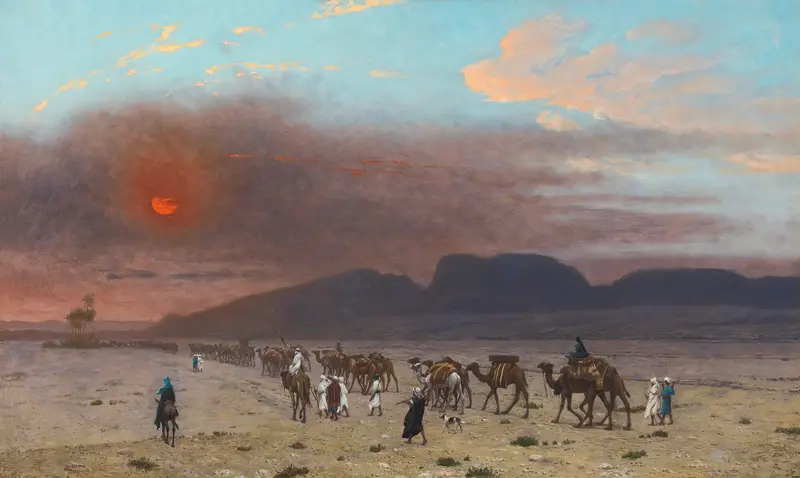
Caravane Dans Le Desert
Jean-Léon Gérôme
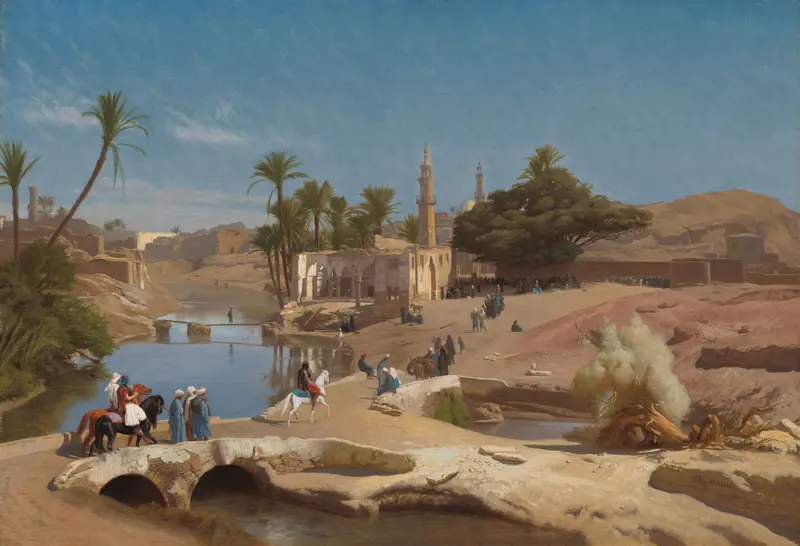
View of Medinet El-Fayoum
Jean-Léon Gérôme
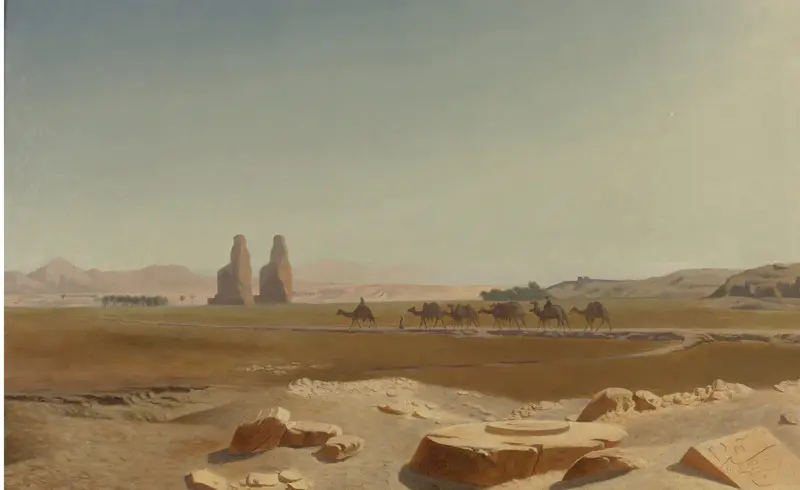
Caravan Passing The Colossi Of Memnon, Thebes
Jean-Léon Gérôme
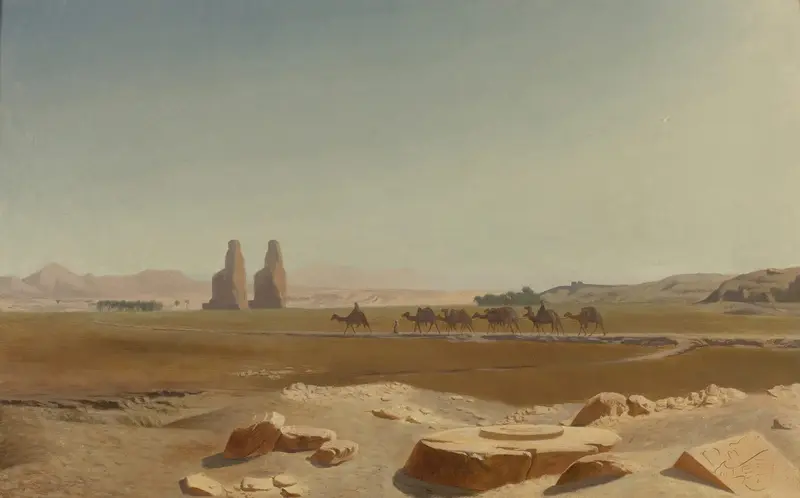
Caravan Passing The Colossi Of Memnon, Thebes
Jean-Léon Gérôme
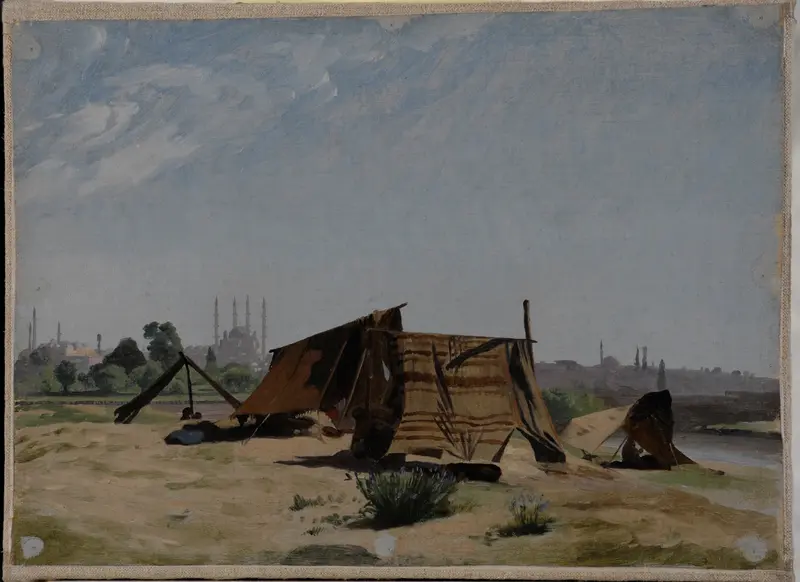
An Encampment before Constantinople
Jean-Léon Gérôme
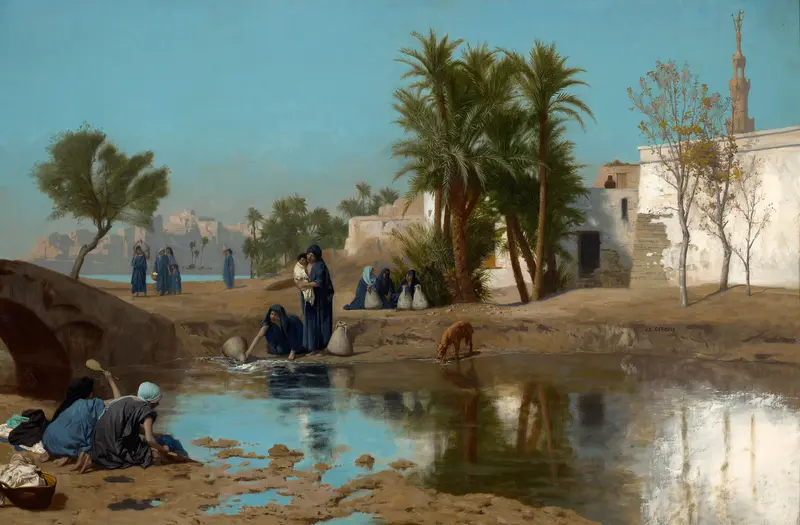
Fellah Women Drawing Water
Jean-Léon Gérôme
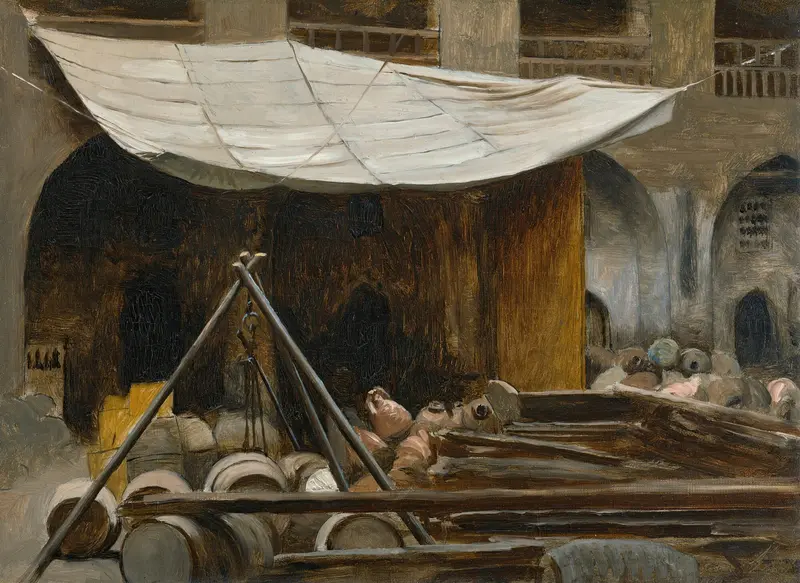
The Citadel, Acre
Jean-Léon Gérôme
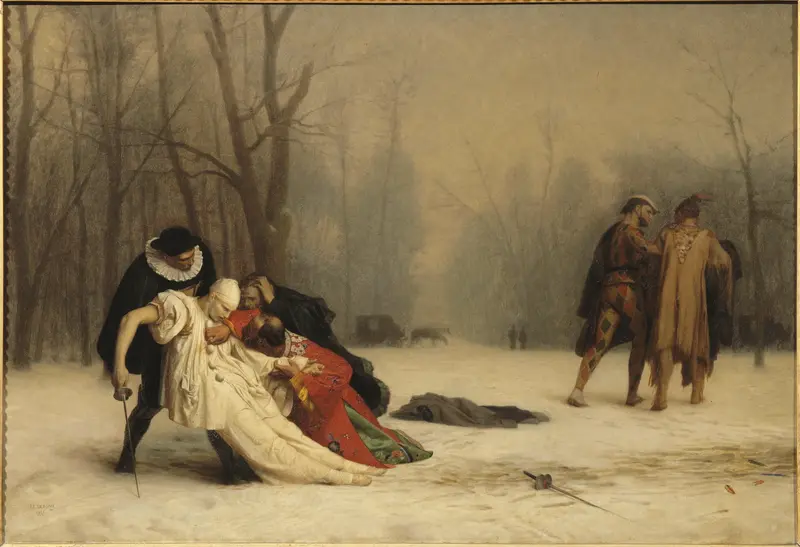
The Duel After the Masquerade
Jean-Léon Gérôme
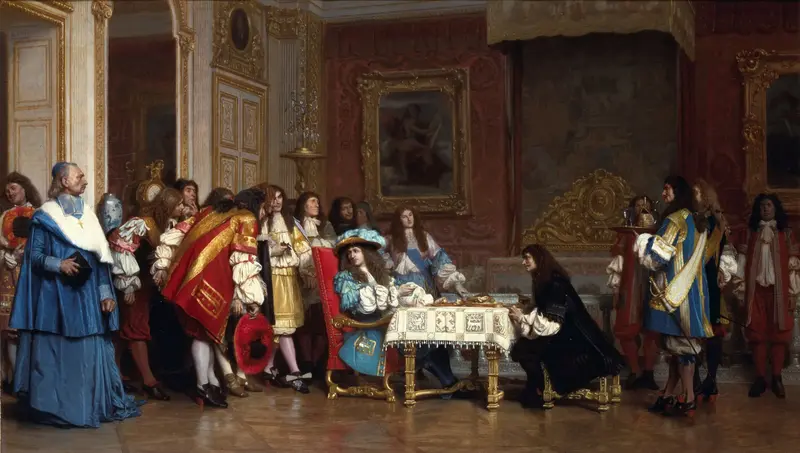
Louis XIV and Molière
Jean-Léon Gérôme
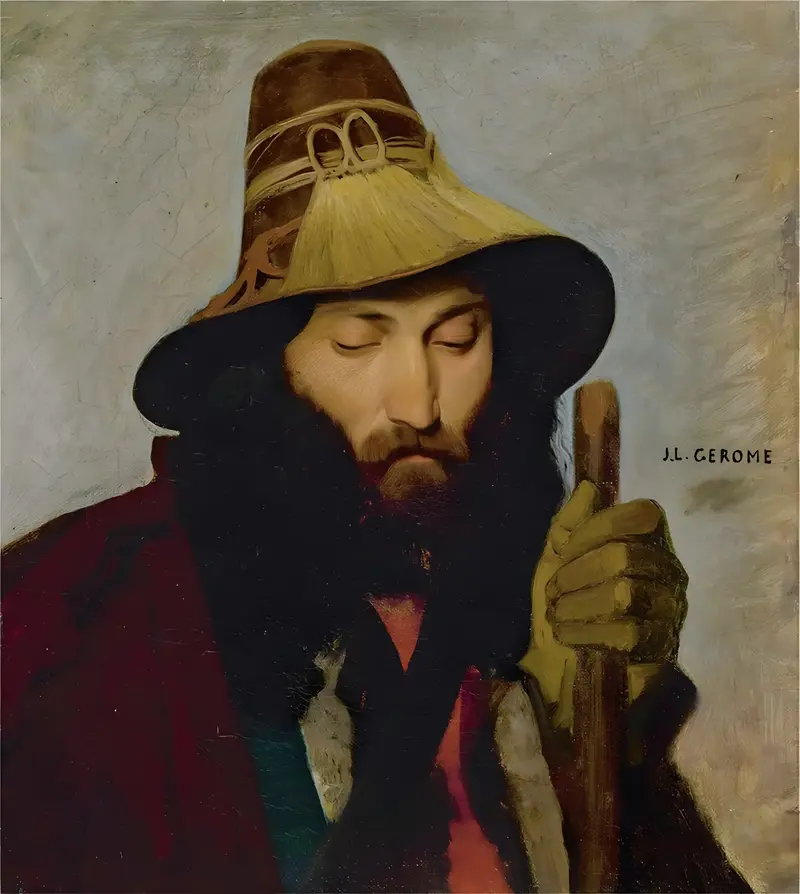
Portrait Of An Italian Man
Jean-Léon Gérôme