Chûte du Staubach Vallée de Lauterbrunnen — History & Analysis
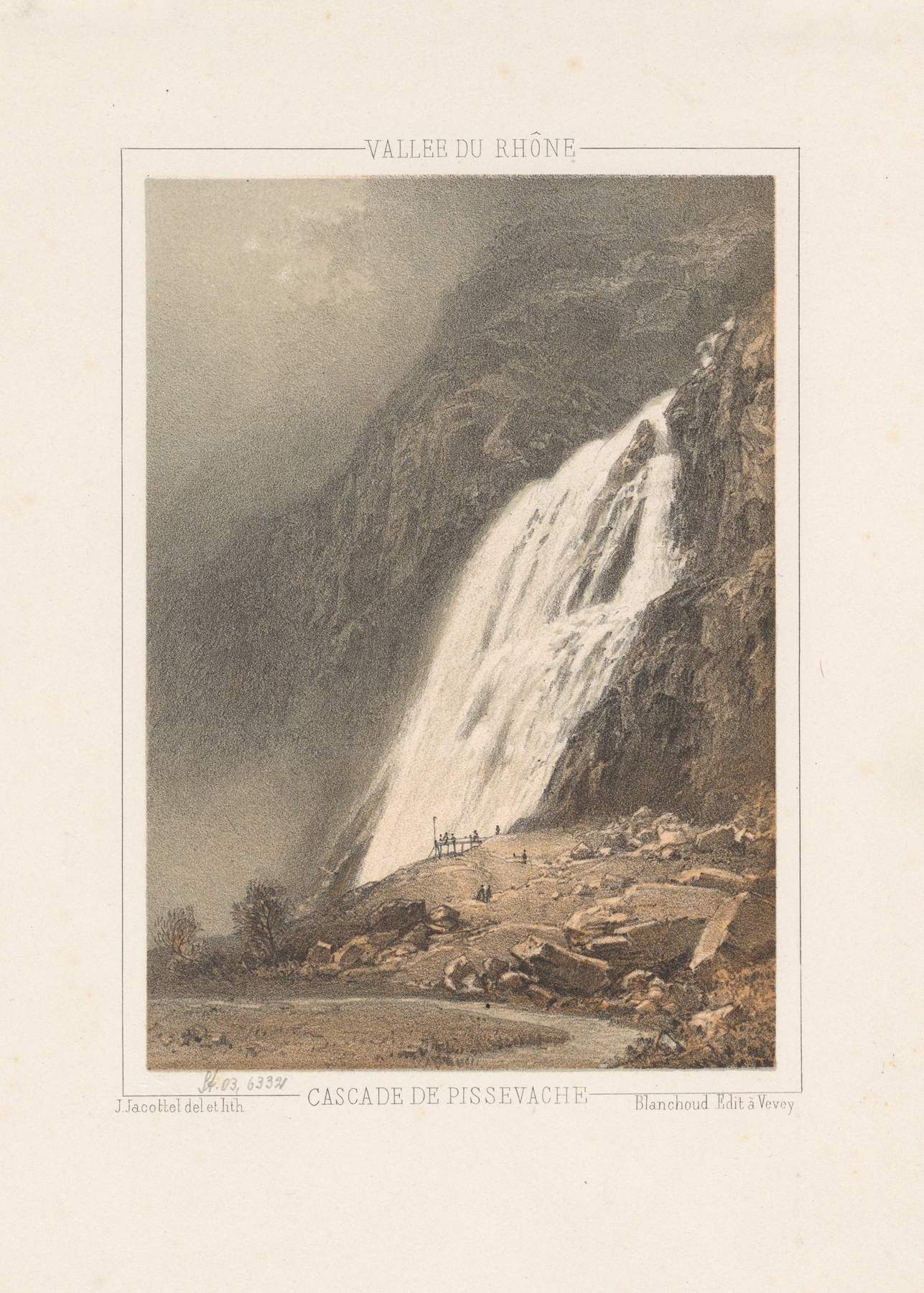
Where does light end, and longing begin? The delicate interplay of clarity and introspection in a landscape captures the heart's silent yearnings. Look to the center of the canvas, where the majestic Staubbach Falls cascades down rocky cliffs, its silvery water glinting as it dances in the sunlight. Notice how the artist employs ethereal blues and greens, softly blending to evoke the pure, fresh air of the Swiss valleys.
The foreground, dotted with lush grasses and wildflowers, draws you closer, inviting you to explore the vibrant details that breathe life into this serene moment. The peaks rise sharply in the background, their rugged silhouettes framing the waterfall, creating a dynamic contrast between the smooth flow of water and the solid, unyielding rock. Beneath the idyllic surface, there’s a palpable tension between nature's beauty and the longing for peace it inspires. The reflective quality of the water suggests a deeper connection to the self; it acts as a mirror not only for the landscape but for one’s innermost thoughts.
The play of light creates a transient moment—a fleeting pause where the viewer can escape the chaos of life, revealing the artist’s understanding of not just the physical beauty of the scene, but its emotional resonance. Jean Jacottet painted this scene in a quiet moment of his career, likely during the late 19th century, while he resided in Switzerland. This period was marked by a growing interest in capturing the sublime beauty of nature, as artists sought to express both the grandeur and the tranquility found in landscapes. Jacottet, influenced by his surroundings, infused his work with a sense of peace that resonates with viewers long after they leave the canvas.