Cotton Merchants in New Orleans — History & Analysis
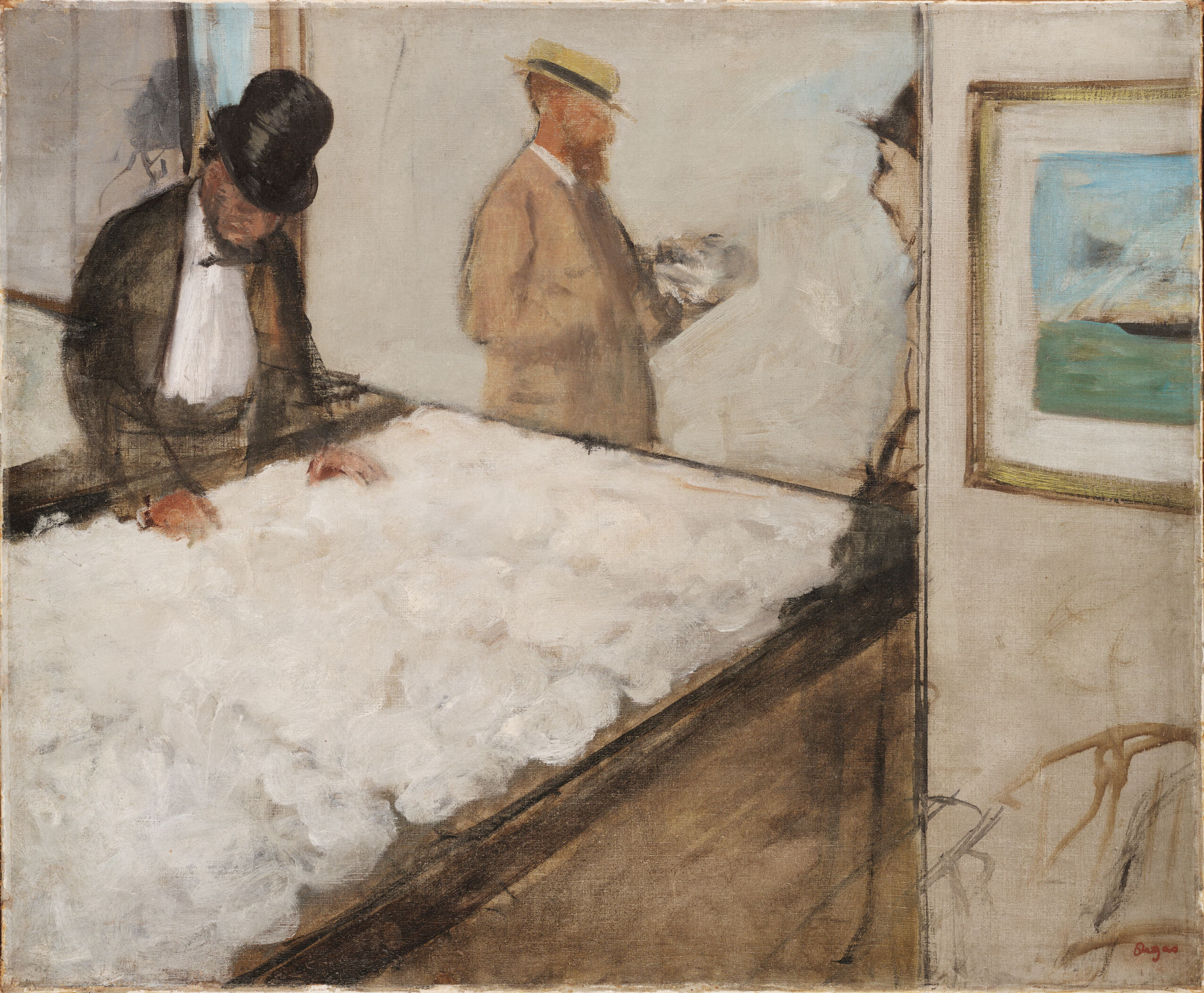
Who listens when art speaks of silence? In Cotton Merchants in New Orleans, the weight of a melancholy atmosphere envelopes the viewer as the painting's narrative unfolds quietly. Look to the left at the two merchants, their somber expressions framed by the muted yet rich palette of browns and greens. Notice how the soft light filters through the hazy interior, casting gentle shadows that dance along the textured surfaces of cotton bales.
The composition draws your gaze toward the figures, each gesture steeped in contemplation, creating a palpable tension between their stillness and the vibrant life outside, hinted at through the open doorway. Delve deeper, and you'll find layers of meaning beneath the surface. The merchants' posture suggests a struggle, perhaps with the changing tides of commerce or the weight of their labor. The soft blues juxtaposed against the earth tones evoke a sense of nostalgia, a yearning for a past that seems just out of reach.
Each detail, from the folds of their clothing to the slight curve of their lips, speaks to the emotional burdens they carry, inviting the viewer to ponder the stories untold. Degas painted this scene in 1873, a formative time in his career as he navigated the complexities of Impressionism in France. Having recently returned from Italy, he was influenced by the interplay of light and shadow found in classical works while simultaneously capturing the essence of modern life. In New Orleans, where he visited family, he embraced the local culture, infusing his art with the rich textures and narratives of American life.