Cyclists — History & Analysis
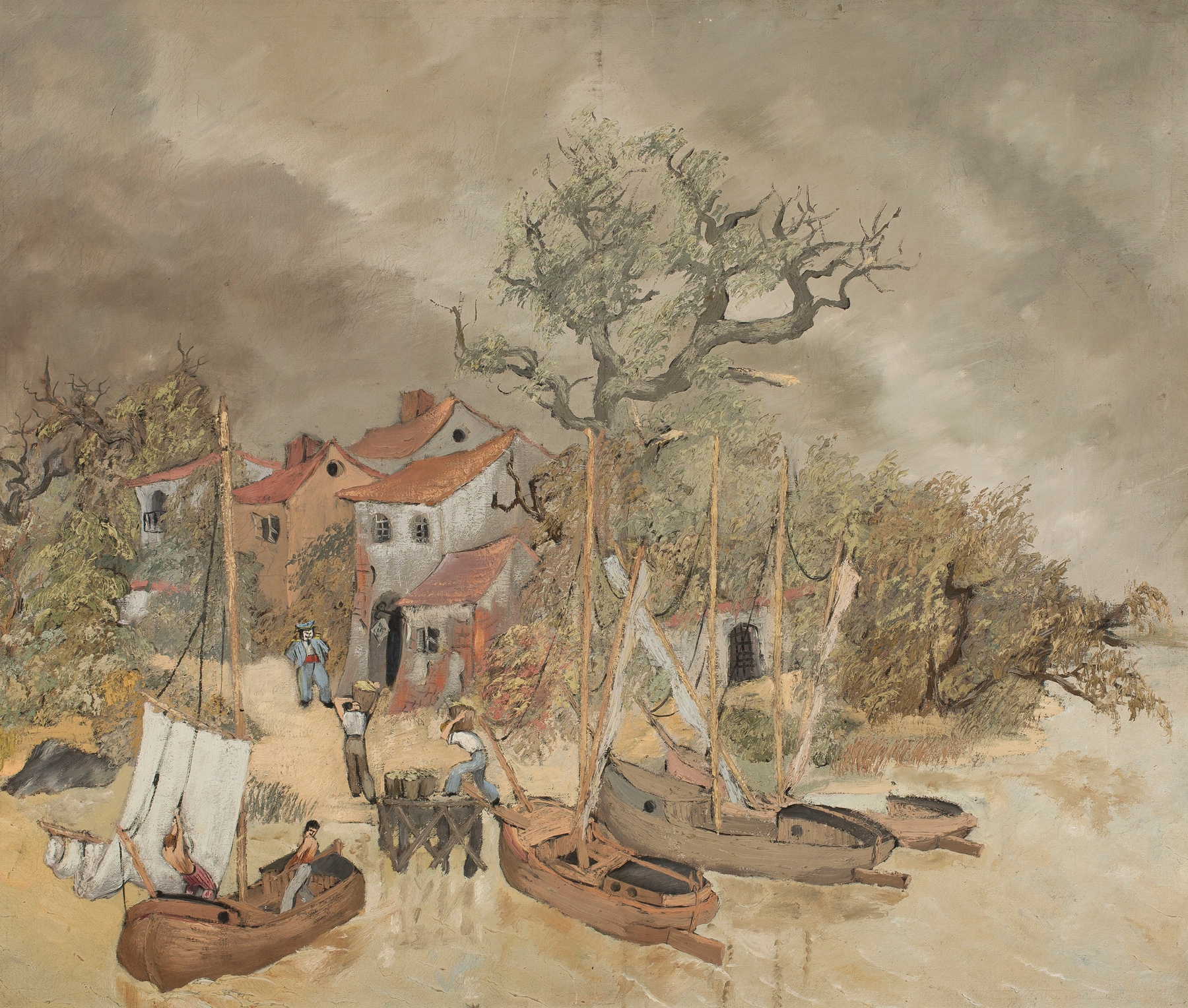
Could beauty survive in a century of chaos? The question hangs in the air as we consider the vivid tableau crafted by Jeremi Kubicki, a testament to resilience in an ever-changing world. Look to the center of the canvas where two cyclists, dressed in vintage attire, glide seamlessly along a sunlit path. The vivid greens and earthy browns of the landscape envelop them, contrasting with the muted tones of their clothing. Notice how the play of light dances across the road, illuminating the cyclists' faces, capturing a moment of joy amidst the stillness of nature.
The composition, balanced yet dynamic, draws the eye forward, suggesting motion and freedom. Hidden within this serene moment lies a complex interplay of emotions. The cyclists embody a spirit of liberation, yet their surroundings hint at the turbulence of the 1930s—a decade rife with political upheaval and economic strife. The juxtaposition of their carefree ride against a backdrop of uncertainty invites contemplation on the fragility of joy in turbulent times.
The lush greenery symbolizes hope, while the cyclists’ unfettered movement speaks to the human desire for escape. Created in 1935, this work emerged during a period of significant change in the art world, as modernism was beginning to take root. Kubicki, an emerging talent from Poland, sought to capture the essence of life amid the chaos, reflecting both personal and societal challenges. As he painted, Europe was on the brink of profound transformation, and his art became a vehicle for expressing hope and beauty, reminding viewers of the resilience of the human spirit.