
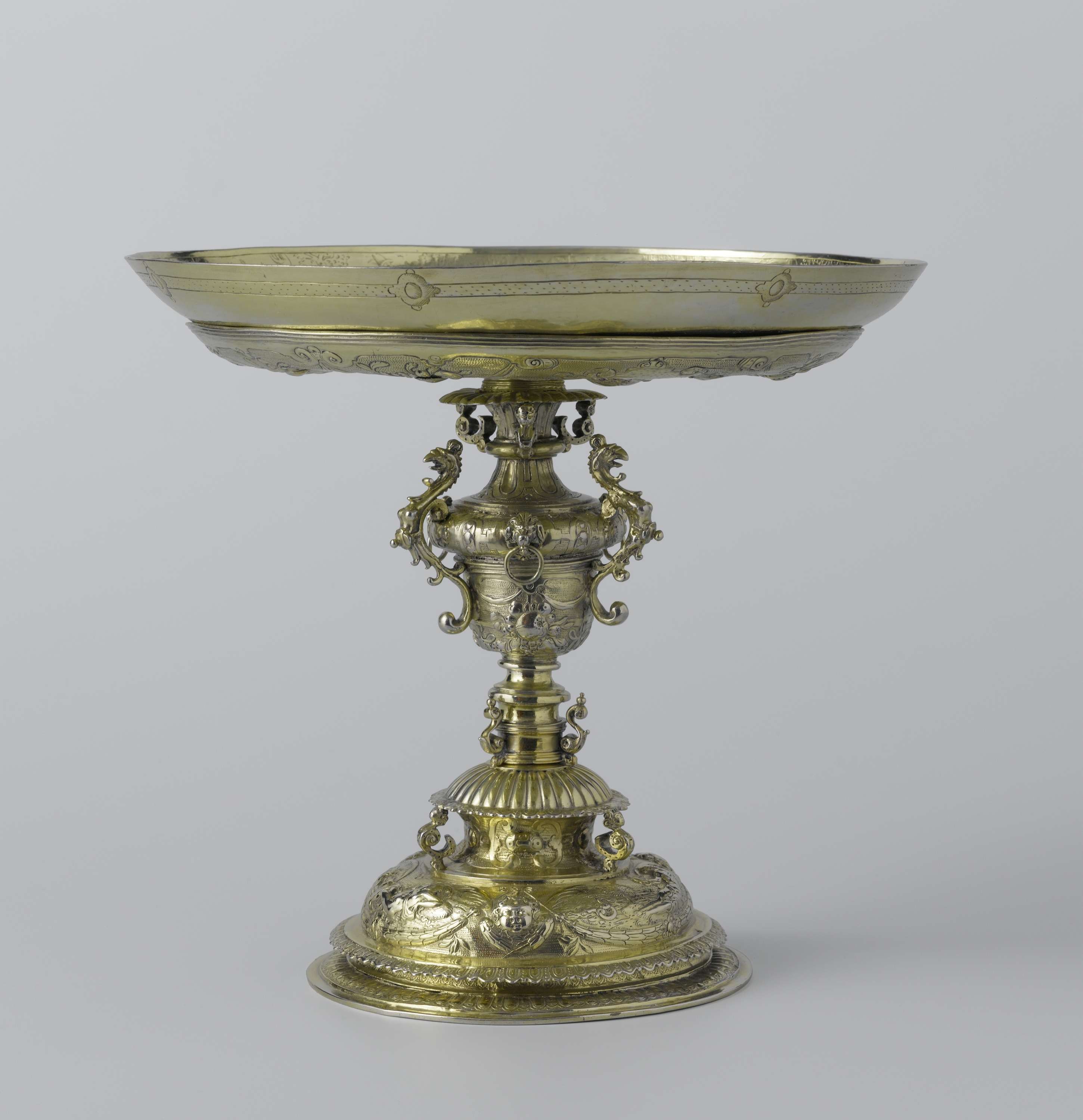
Drinkschaal met allegorieën op de zuivere en onzuivere liefde — History & Analysis
“Every silence here is a confession.” In the delicate interplay of light and shadow, desire takes form, revealing the true essence of love's duality. Look to the center, where a finely crafted drink bowl draws the eye, adorned with intricate allegories that speak of both pure and impure love. Notice how the soft glow reflects off the polished surface, creating a dance of highlights and deep shadows that mirror the complexities of human emotion. The artist’s use of rich colors—deep reds and soft greens—imbues the piece with a lush sensibility, inviting viewers to engage deeply with its tactile elegance.
Beneath the surface, the juxtaposition between the harmonious figures and the more chaotic elements adds layers of meaning. The contrast of the idyllic representations of pure love against the troubling implications of desire hints at the ambivalence inherent in relationships. Each figure, whether playful or pensive, encapsulates the tension between longing and fulfillment, urging the audience to contemplate their own experiences with love and desire.
Created in 1595, this work emerged during a dynamic period of artistic exploration and cultural introspection in the Netherlands. Molckman, working in a time when the Mannerist style was prevalent, sought to convey moral themes through his art. As Europe grappled with social and religious changes, the duality of love became a poignant subject, reflecting the complexities of human nature that resonate even today.