Fortuna — History & Analysis
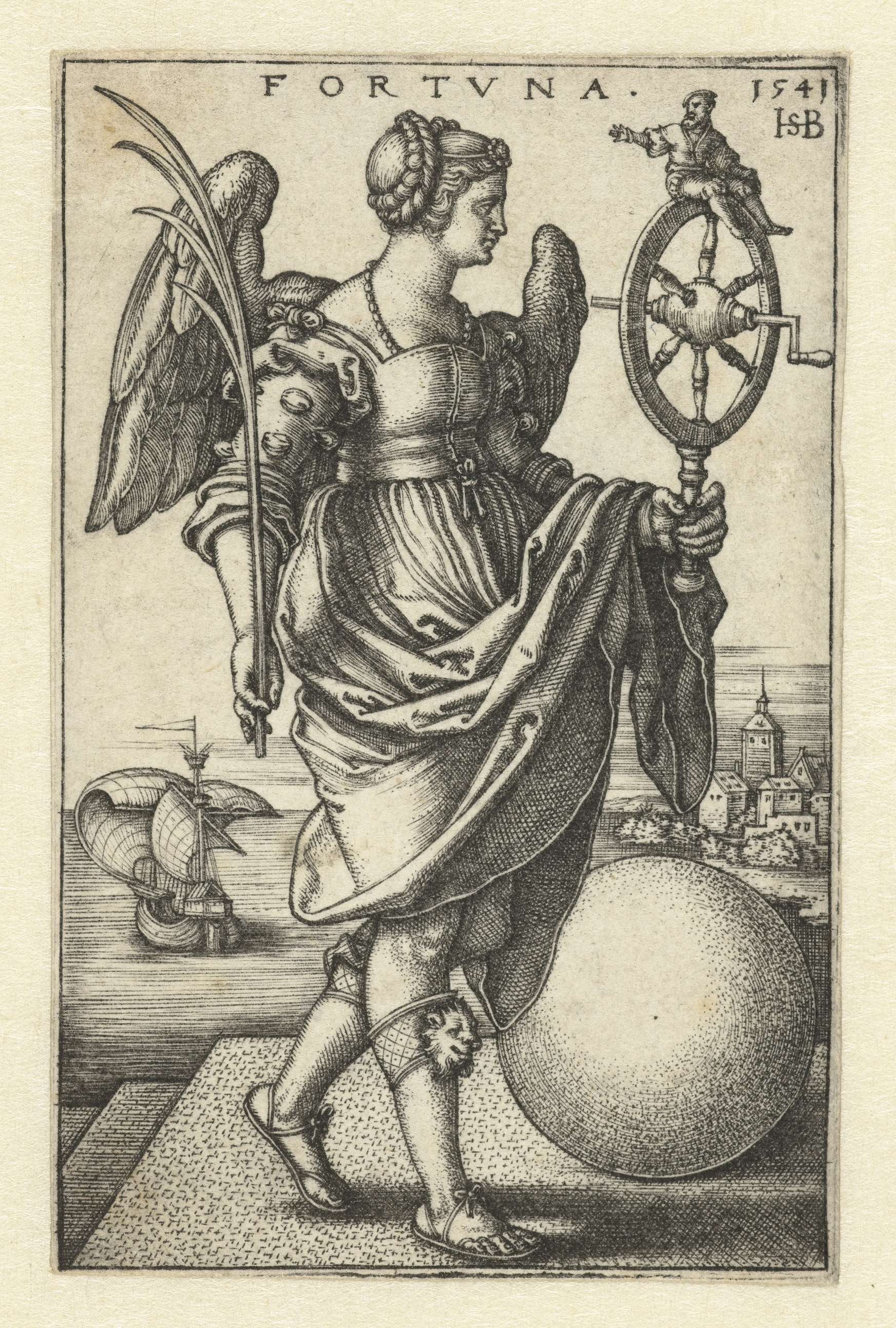
What if silence could speak through light? In Fortuna, this question emerges, inviting viewers to explore the profound truths hidden within the delicate interplay of shadow and illumination. The essence of fortune is captured here, beckoning us to contemplate the balance between fate and free will. Look to the center, where a radiant figure stands, embodying the very concept of fortune. Notice how the light cascades gently over her flowing garments, creating an ethereal glow that draws the eye.
Surrounding her, an intricate arrangement of symbols—coins, a globe, and a wheel—serves to ground the celestial in the earthly, weaving a narrative that connects human desire with the capricious nature of luck. The subtle use of color, dominated by warm golds and cool blues, sets a tone of both optimism and caution. As you delve deeper, consider the contrasts at play: the luminous presence of Fortuna against the darker, shadowy elements that hint at misfortune and uncertainty. Each detail—the positioning of her hand, the tilt of her head—communicates a complex relationship with destiny, suggesting that while fortune may favor the bold, it is fickle, always on the brink of change.
This interplay invites contemplation about how truth reveals itself in moments of silence, urging us to listen closely to what is not spoken. Hans Sebald Beham created Fortuna in 1541, during a period when the Northern Renaissance was reaching its zenith. Living in Nuremberg, Beham was part of a vibrant artistic community, responding to both the Reformation and the flourishing humanist thought of the time. His meticulous engravings and keen observation of human emotion reflect a world grappling with new ideas about destiny, morality, and the truths that shape our existence.