Fusilamiento de Torrijos y sus compañeros en las playas de Málaga — History & Analysis
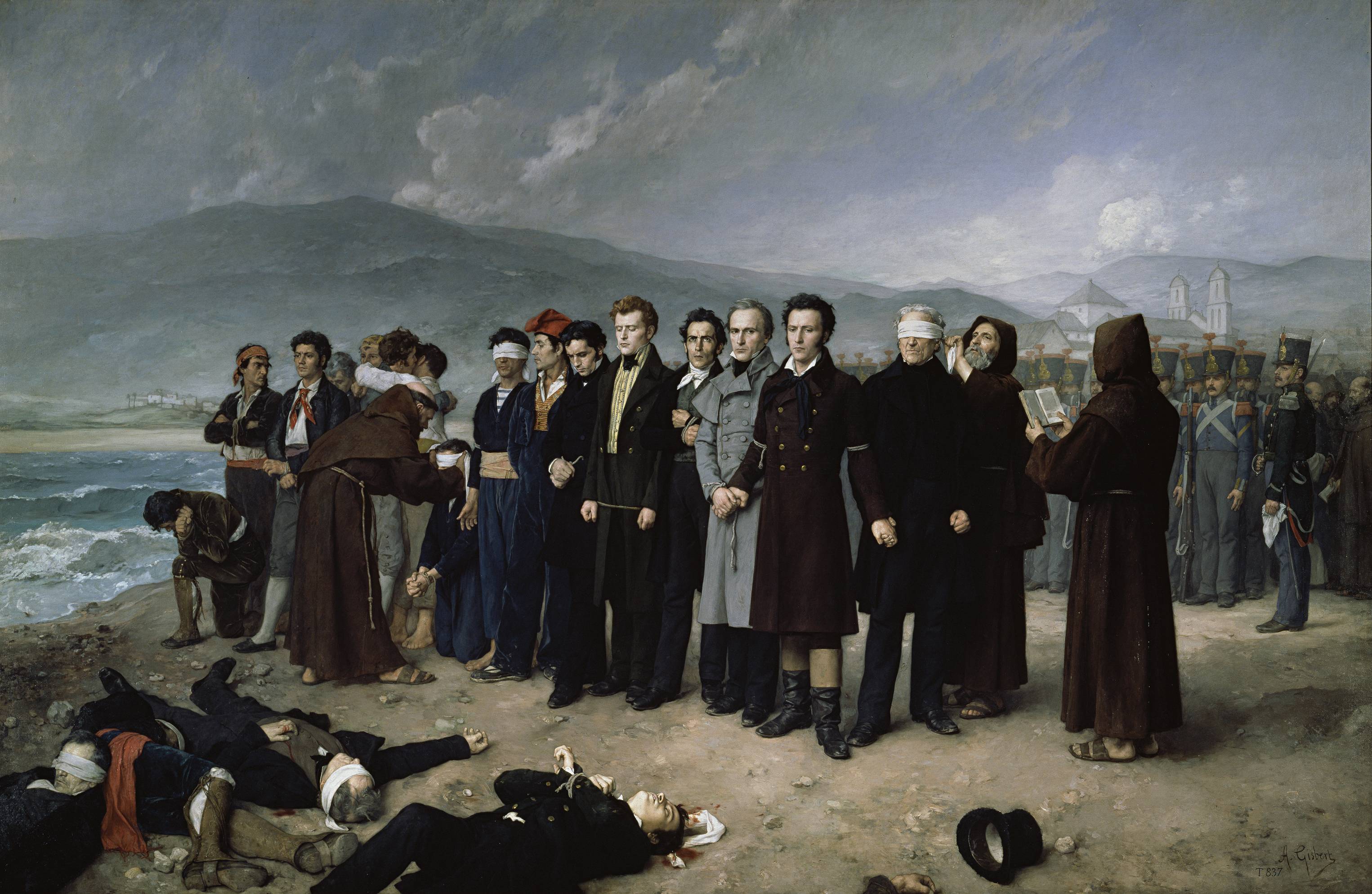
Fusilamiento de Torrijos y sus compañeros en las playas de Málaga (1888), painted by Antonio Gisbert, captures a real historical event: the execution of liberal general José María Torrijos and 48 of his followers on December 11, 1831. They had attempted to restore constitutional rule against the absolutist king Fernando VII, but were betrayed, captured, and sentenced to death. Gisbert painted this work decades later during a period when Spain was reassessing its liberal past, which explains the painting’s clear political message: it honors these men as martyrs rather than rebels. The composition is meticulously staged to emphasize dignity over chaos.
Torrijos stands at the center, upright and composed, refusing to kneel or be blindfolded—a detail rooted in historical accounts and used here to symbolize defiance. Around him, the condemned men form a tight horizontal line, dressed in dark, restrained tones that contrast sharply with the pale sand and overcast sky. There is no visible violence yet—no gunfire, no blood—only the tense stillness before execution. On the far right, the firing squad waits in rigid formation, partially cropped, which shifts the emotional focus entirely onto the victims rather than the act itself.
Gisbert paid exceptional attention to individual portraits: many of the figures are based on documented likenesses, turning the painting into both a historical record and a memorial. The bleak beach setting in Málaga is not romanticized—its emptiness reinforces the isolation and inevitability of their fate. Interestingly, the painting was commissioned for a public institution and now resides in the Museo del Prado, signaling its national importance. Today, it’s considered one of Spain’s most powerful political paintings, often compared to works like The Third of May 1808 by Francisco de Goya for its portrayal of execution and resistance.