Impression, Sunrise: meaning and location
Stolen from the Musée Marmottan Monet in Paris in 1985 and found again in Corsica five years later, Impression, Sunrise is the canvas that gave a movement its name. Claude Monet (1840–1926) painted this misty view of the harbour of Le Havre in 1872, and when the critic Louis Leroy mocked it at the first group exhibition in 1874, Impressionism got its name. In French it is Impression, soleil levant. It has been in the Marmottan since 1940.
- The view: Monet looked south-east over the outer harbour of Le Havre from his room at the Hôtel de l’Amirauté. The Quai au Bois frames the left, the Quai Courbe, where work was under way, the right, and the gap in the middle marks the lock for transatlantic ships opening onto the Bassin de l’Eure.
- Painted in a few hours: the museum says this hazy image was painted in just a few hours and surprised viewers with its unusual freedom of handling. The ferrymen’s rowing boats in the foreground and the bright orange sun with its reflections were added at the end.
- The hour: a 2014 study by the astronomer Donald Olson, published by the museum, dates it to 7:35 a.m. on 13 November 1872, shortly after sunrise.
- Signature and size: oil on canvas, 50 × 65 cm without the frame. It is signed “Claude Monet” at lower left, and the date “72” was added afterwards.
Sources: Musée Marmottan Monet record (inv. 4014) · Musée Marmottan Monet: the museum and its history · France 3 Régions: 150 years of Impression, Sunrise · Associated Press, 17 April 1991 (Seattle Times) · Associated Press, 7 December 1990 (Deseret News) · Live Science: astronomy sleuths date Monet’s painting (2014) · Wikidata Q328523
Questions and answers about the painting
What does Impression, Sunrise mean?
It is Claude Monet’s view of the outer harbour of Le Havre at dawn, and its title names a passing sensation rather than a place. Cranes, chimneys and masts are bathed in mist, and a bright orange sun and its reflections stand out against them. When Monet had to give the 1874 exhibition catalogue a title, he reckoned the canvas could not decently pass for a view of Le Havre and called it Impression, a painters’ word for catching the atmosphere of a scene instead of describing nature in detail.
Where is Monet’s painting kept?
At the Musée Marmottan Monet, 2 rue Louis-Boilly in Paris, where it is catalogued as inventory number 4014. Eugène and Victorine Donop de Monchy gave it in 1940; Victorine had inherited it from her father, Dr Georges de Bellio, one of Monet’s first supporters. The museum calls it the foundation stone of its Impressionist collections, and it holds the world’s largest collection of Monet’s work.
Source: Musée Marmottan Monet record (inv. 4014) · Musée Marmottan Monet: the museum and its history · Musée Marmottan Monet: Claude Monet collection
When and where did Monet paint his sunrise over Le Havre?
Monet painted it in Le Havre around November 1872, from the window of his room at the Hôtel de l’Amirauté. A 2014 study by the astronomer Donald Olson, published by the Musée Marmottan Monet, puts the most likely moment at 7:35 a.m. on 13 November 1872, working from the sun’s position, the tides and the weather. The canvas is signed at lower left, and the date “72” was added afterwards.
Source: Musée Marmottan Monet record (inv. 4014) · Live Science: astronomy sleuths date Monet’s painting (2014) · France 3 Régions: 150 years of Impression, Sunrise
How did Monet’s painting give Impressionism its name?
A mocking review of the 1874 exhibition turned its title into the name of a movement. Monet showed the canvas that April in the former studios of the photographer Nadar. The critic Louis Leroy, sent by the satirical paper Le Charivari, built his article “The Exhibition of the Impressionists” (25 April 1874) on the title. A few days later the critic Jules Castagnary used the word in a positive sense, and it came to name the group around Monet, today known as Impressionism.
Source: Musée Marmottan Monet record (inv. 4014) · Musée Marmottan Monet: the museum and its history · France 3 Régions: 150 years of Impression, Sunrise
Was the Monet painting ever stolen from the Musée Marmottan?
Yes. On 27 October 1985 armed robbers took nine paintings from the museum during opening hours, and Impression, Sunrise was one of them. Police found the nine canvases in an apartment near Porto-Vecchio, Corsica, in December 1990, and the Monet hung in the museum again in April 1991, after restorers removed a yellowed varnish. The curator, Arnaud d’Hauterives, said it was in better condition than before the theft.
Source: Associated Press, 17 April 1991 (Seattle Times) · Associated Press, 7 December 1990 (Deseret News) · France 3 Régions: 150 years of Impression, Sunrise
Is the painting in the public domain?
Yes. Monet died in 1926, so his paintings are free of copyright in every country where protection lasts the author’s life plus 80 years or less. A faithful photograph of a public-domain painting adds no new copyright in the United States or the European Union, so you can download this image and use it in personal or commercial projects. Public Domain Images for Commercial Use explains how.
Source: Wikidata Q296 (Claude Monet, died 5 December 1926) · Wikidata Q328523
More Artworks by Claude Monet

Water Lilies
Claude Monet
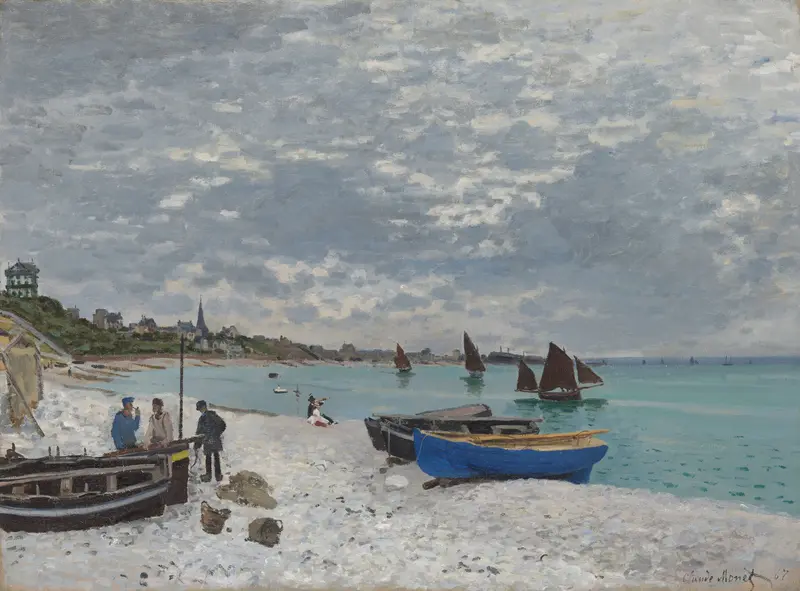
The Beach at Sainte-Adresse
Claude Monet
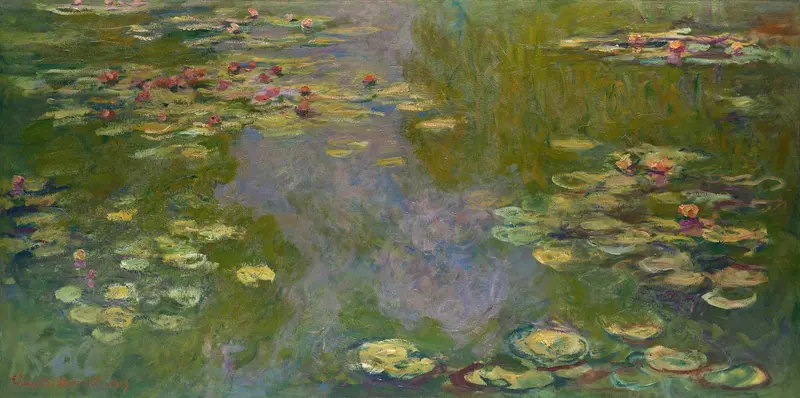
Water Lilies
Claude Monet
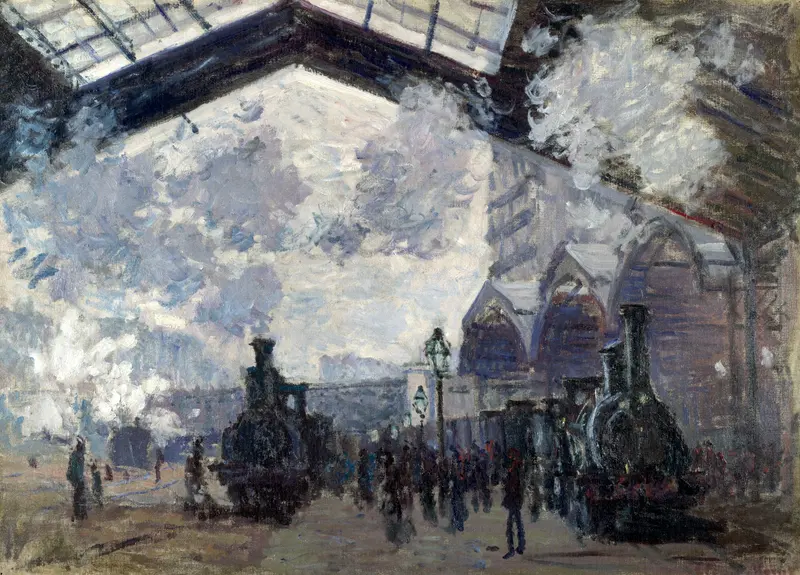
The Gare St-Lazare
Claude Monet
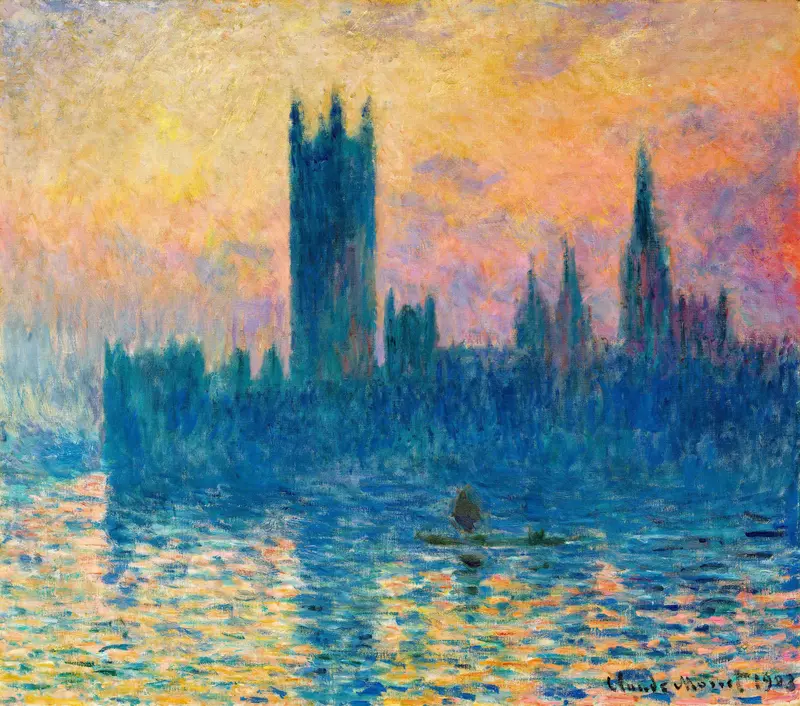
The Houses of Parliament, Sunset
Claude Monet
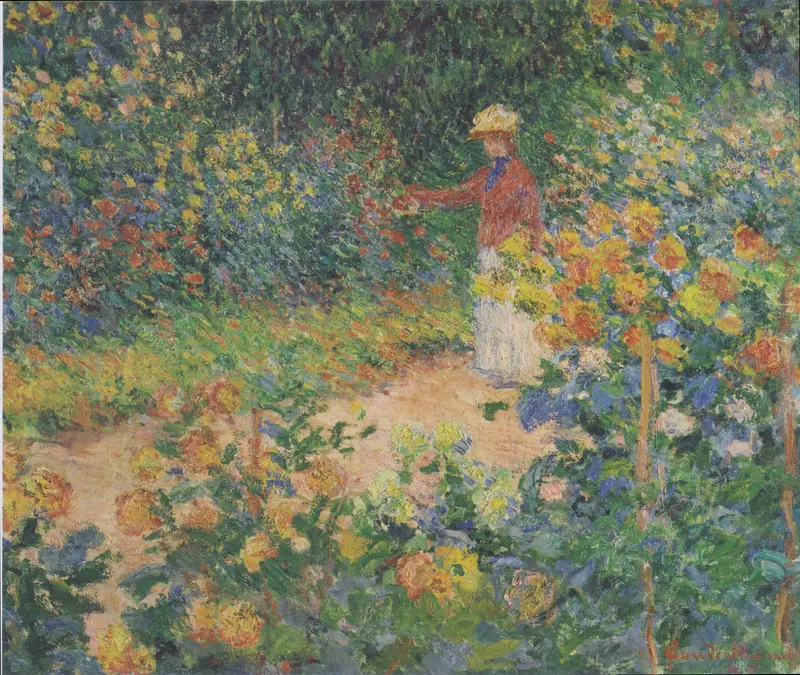
Monet's Garden at Giverny
Claude Monet
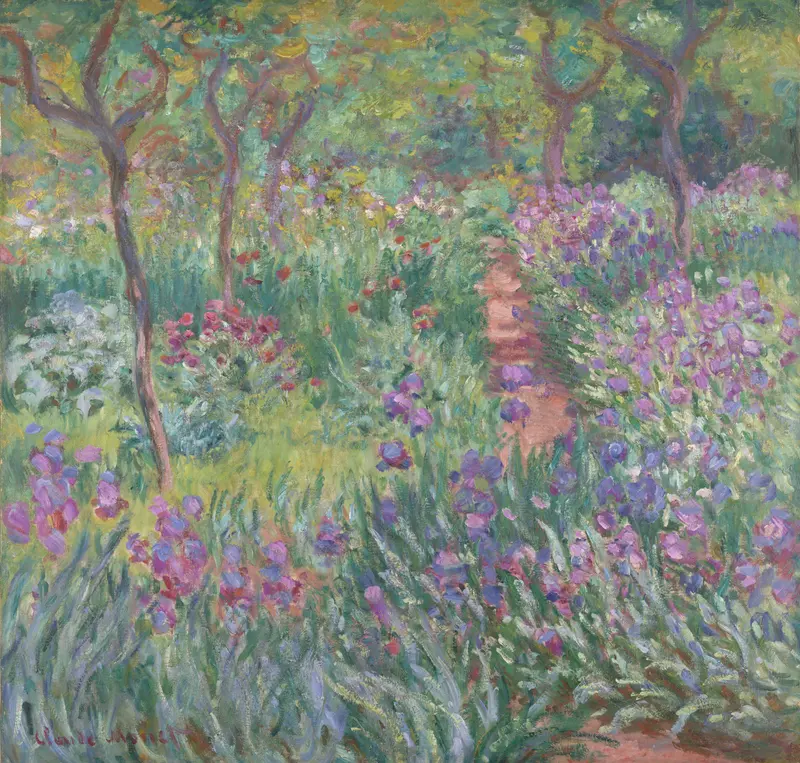
The Artist’s Garden in Giverny
Claude Monet
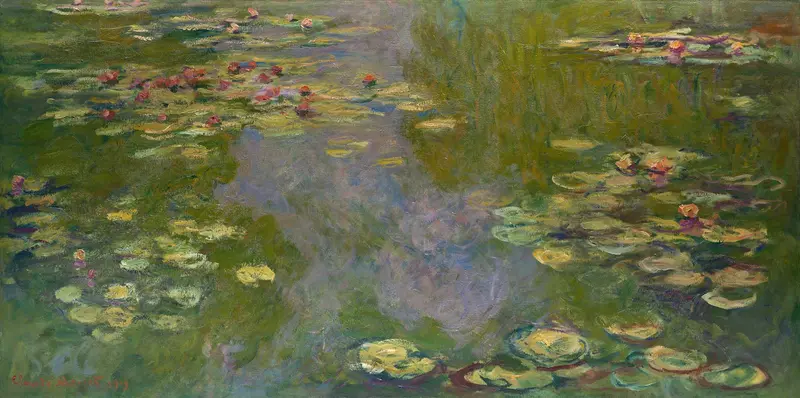
Water Lilies
Claude Monet
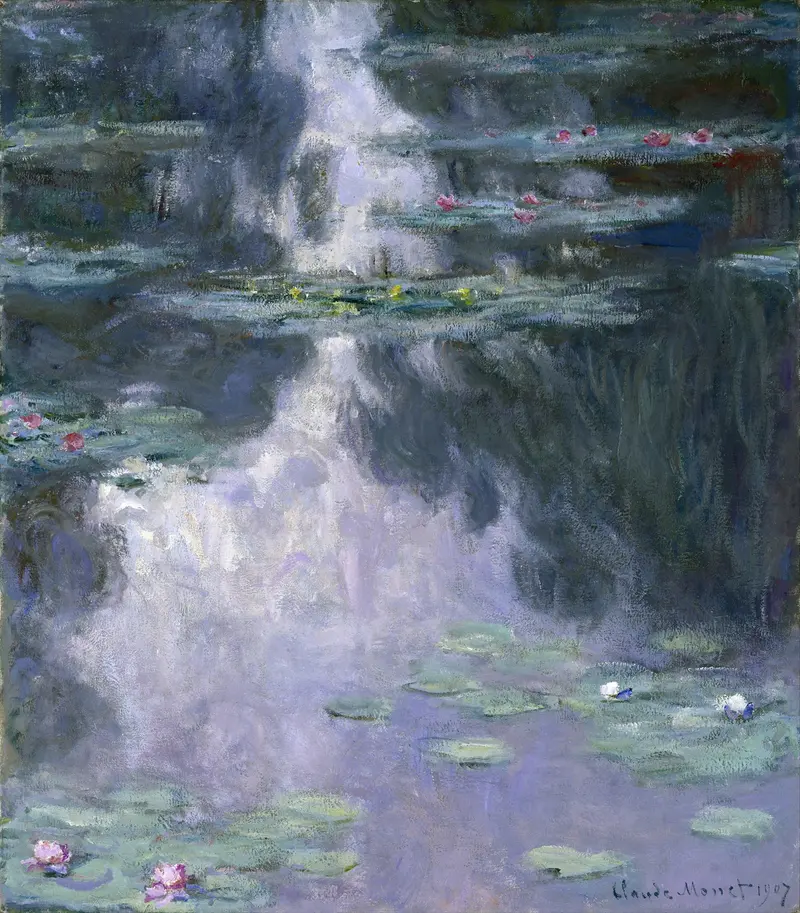
Water Lilies
Claude Monet
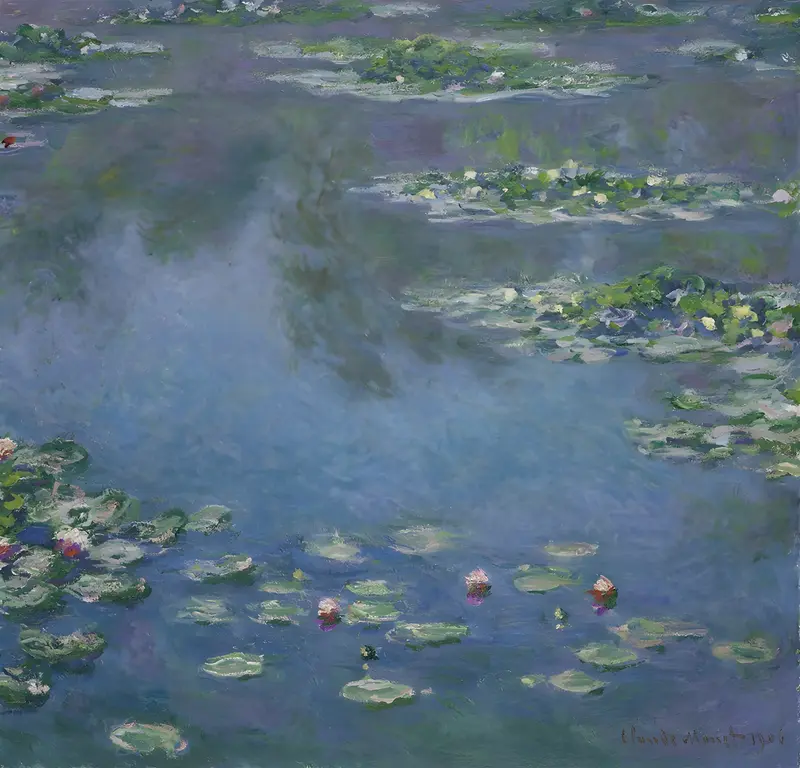
Water Lilies
Claude Monet