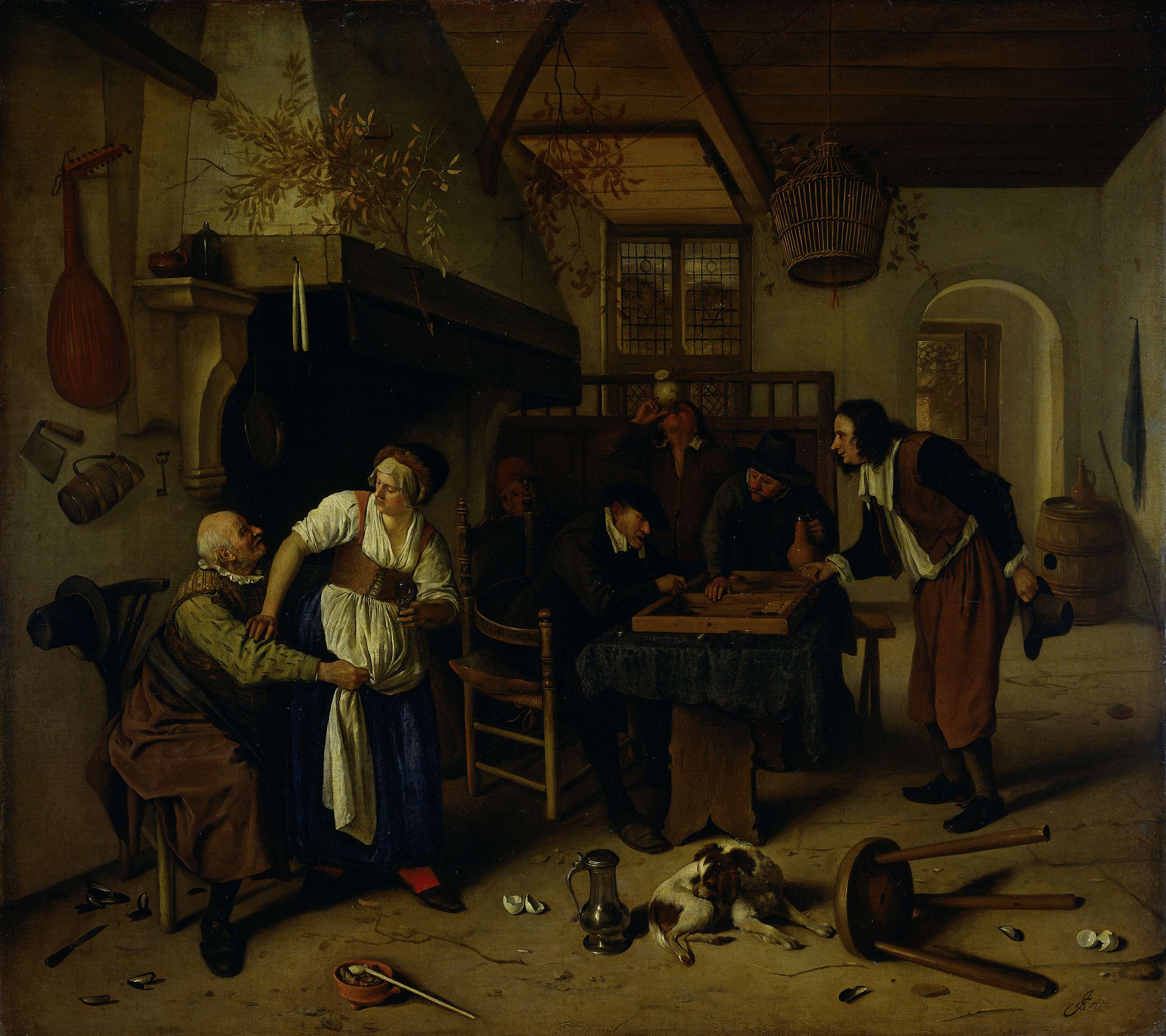
Interior of an inn with an old man amusing himself with the landlady and two men playing backgammon, known as 'Two kinds of games' — History & Analysis
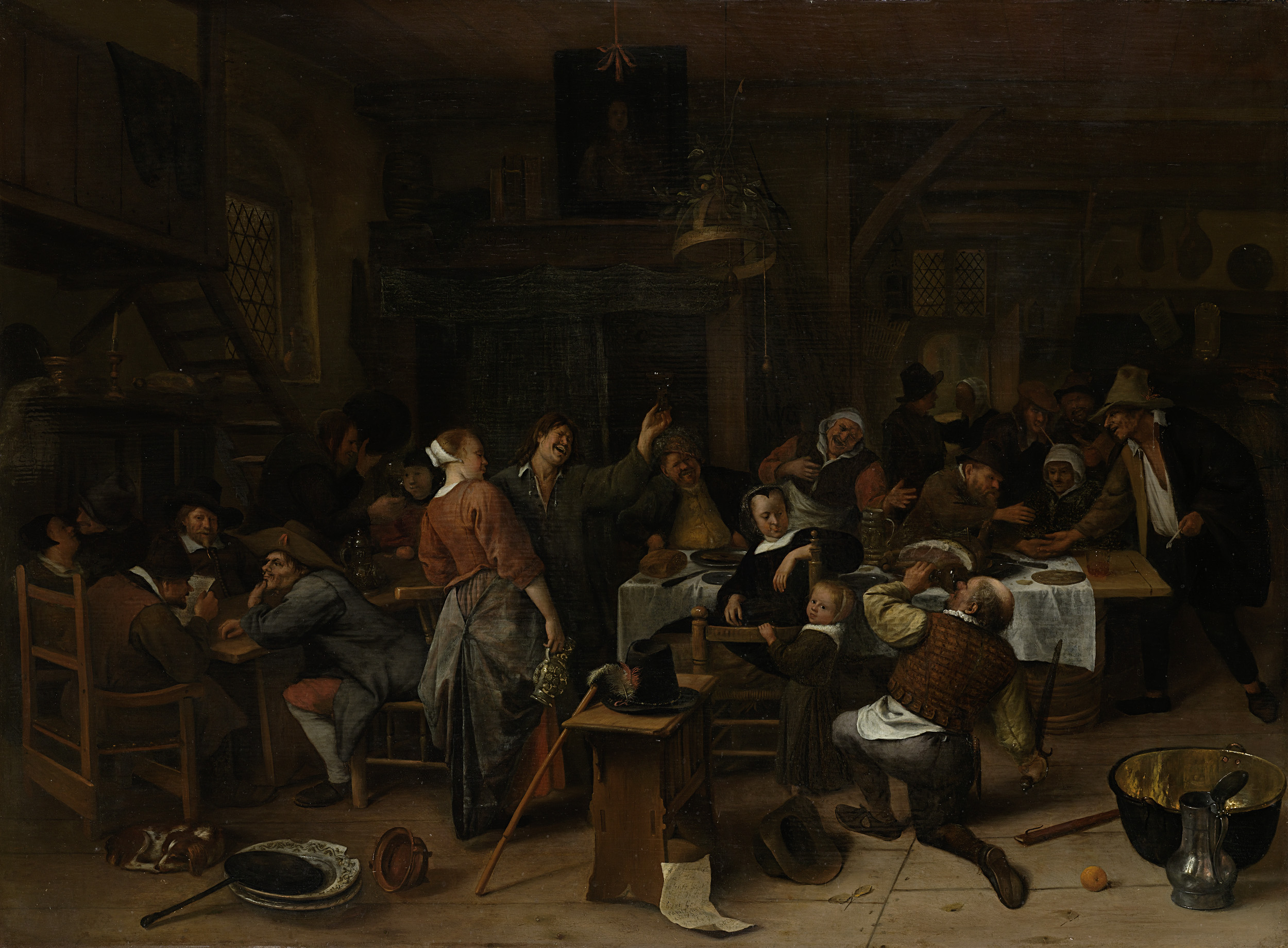
“Between color and silence, truth hides.” In the intimate space of an inn, where laughter dances in the air, two games unfold—one of strategy, the other of companionship. Here, the balance between joy and contemplation is strikingly evident, as each character navigates their own moment of escape. Look at the center of the composition, where two men are deeply engaged in a game of backgammon, their faces etched with concentration. Notice the light cascading from a nearby window, illuminating the warm hues of the wooden table and casting gentle shadows that cradle their intense expressions.
To the left, an old man shares a light-hearted moment with the landlady, their shared smiles forming an unspoken connection that pulls the viewer into the room. Yet, beneath the surface, a subtle tension emerges. The juxtaposition of the playful banter and the strategic game highlights the duality of life—where merriment coexists with rivalry. The old man's relaxed demeanor contrasts with the competitive focus of the players, hinting at the different ways individuals engage with their surroundings.
This balance of dynamics invites viewers to reflect on their own experiences of leisure and rivalry, suggesting that life itself is a series of games played in diverse ways. In the late 1660s, when this piece was created, Jan Havicksz. Steen was navigating the vibrant artistic scene of the Dutch Golden Age, a time characterized by a fascination with everyday life and social interactions. The artist's masterful ability to capture character and humor in domestic settings was indicative of his broader contributions to genre painting, as he sought to depict the complexity of human connection amidst the simplicity of daily routines.