Landscape — History & Analysis
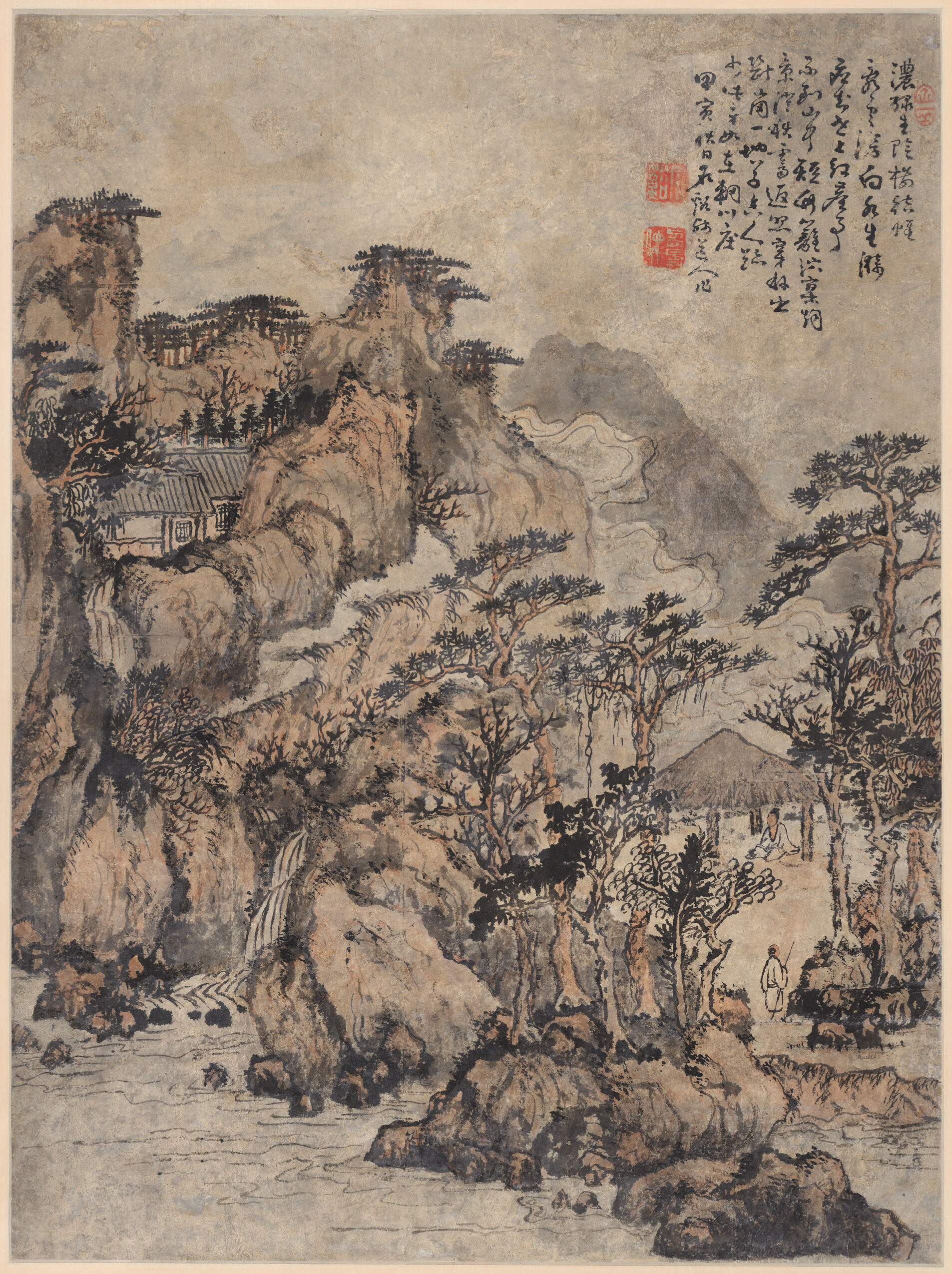
Can paint confess what words never could? In Landscape, Kuncan captures the delicate madness of nature, drawing the viewer into a realm where brushstrokes imitate the chaos of emotion, as if the landscape itself speaks secrets buried in the earth. Look to the right at the swirling clouds, their vibrant hues of blue and crimson clashing in a tumultuous sky. The painter employs ink wash techniques, allowing soft transitions between shades that evoke a sense of fluidity and unrest.
Notice how the jagged peaks of mountains rise sharply against this tumult, casting dark shadows over the serene valley below, where delicate trees stand in stark contrast, their muted greens a respite from the storm above. This tension between the wild sky and the stable earth suggests a dichotomy of emotions—one reflective of the artist’s inner turmoil and the chaotic world around him. The stark interplay of light and shadow not only highlights the dramatic landscape but also hints at the tumultuous history of the time, revealing an artist wrestling with the madness of existence. Each stroke seems to echo a whisper of despair, a longing for peace amidst chaos.
Painted in 1659 during a period of social and political upheaval in China, Kuncan was navigating his own artistic evolution. Having transitioned from traditional Chinese painting to a more expressive style, he found himself amidst the vibrant dialogues of the Ming-Qing transition. This masterpiece reflects not only his personal journey but also the broader cultural shifts within the world of art, as artists began to explore deeper emotional truths through their work.