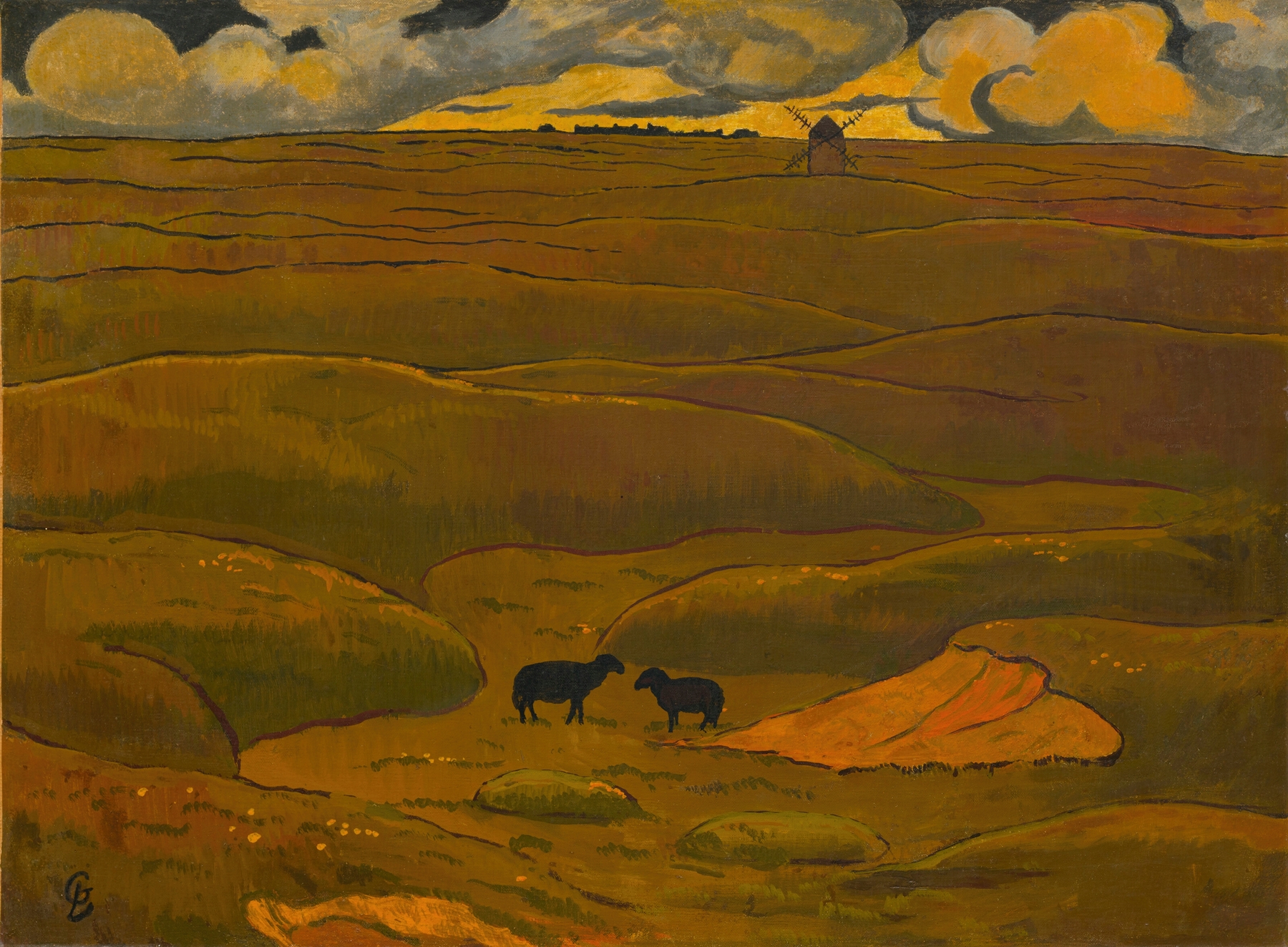
Who listens when art speaks of silence? In *Les Moutons noirs*, the quietude of the scene envelopes the viewer, inviting a profound reflection on existence and ecstasy. Look closely at the dynamic interplay of dark and light, where the deep shadows of the black sheep command attention amidst the softer, pastel hues of the surrounding landscape. The figures are arranged with an almost cinematic precision, drawing the eye to the contrast between their stillness and the vibrant life of the lush greens and tranquil blues that cradle them. The brushwork is both loose and deliberate, giving a rhythmic quality to the grass and sky, as if inviting movement just underneath the surface. The sheep, dark against the landscape, symbolize more than just their appearance; they evoke feelings of alienation and individuality in a world that often seeks conformity. The juxtaposition of the calm, pastoral setting with the striking presence of the black sheep creates a tension that resonates deeply, whispering of the ecstasy found in embracing one’s uniqueness. Subtle details, such as the gentle sway of the grass and the tenderness of the sun filtering through clouds, amplify the serenity, inviting contemplation of the heart’s unuttered yearnings. During the years 1893-94, Lacombe was immersed in the vibrant art scene of Paris, exploring the interplay of color and form while engaging with the burgeoning Symbolist movement. This period marked a shift towards a deeper emotional expression in art, as societal changes stirred a longing for personal truth and connection. Lacombe's work reflects these currents, embodying both the quietude of rural life and the stirring of individual ecstasy amid the collective experience.