Max and Moritz: The Widow Bolte's Hens — History & Facts
Four birds hang dead in a row from a bare branch, each strung up by a thread around its neck, wings spread and feet dangling, in plain black line. Three hens have each dropped a single egg beneath them, while the fourth bird, a rooster with comb and wattles, hangs at right beside the gnarled trunk. Wilhelm Busch drew it for the First Trick of Max und Moritz, his story of two boys in seven tricks, published by Braun & Schneider in Munich in 1865. The boys tie pieces of bread crosswise to threads; the widow Bolte's hens and rooster swallow the bait, get tangled, flutter up and are left hanging from her apple tree.
In Busch's verse each bird quickly lays one last egg before it dies, and the widow laments that her fondest dream hangs on the tree. Busch drew on his own boyhood in the village of Ebergötzen, where his uncle, a pastor, raised him. His Dresden publisher turned the story down, and Braun bought the rights for a one-time fee of 1,000 guilders. The book became a bestseller, with nearly half a million copies sold by Busch's death in 1908, and it has been translated into more than 280 languages and dialects.
It first appeared in Munich in 1865.
More Artworks by Wilhelm Busch

Wiedensahler Bockmühle bei aufziehendem Sturm
Wilhelm Busch
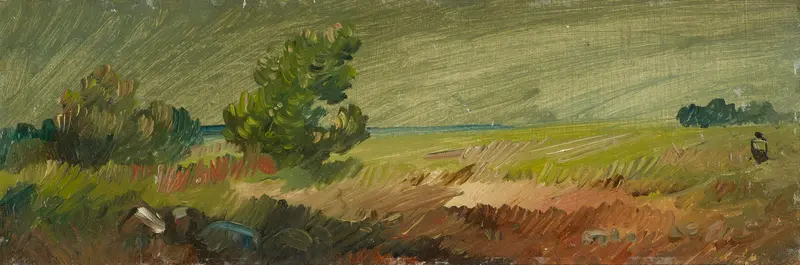
Niedersächsische Landschaft
Wilhelm Busch
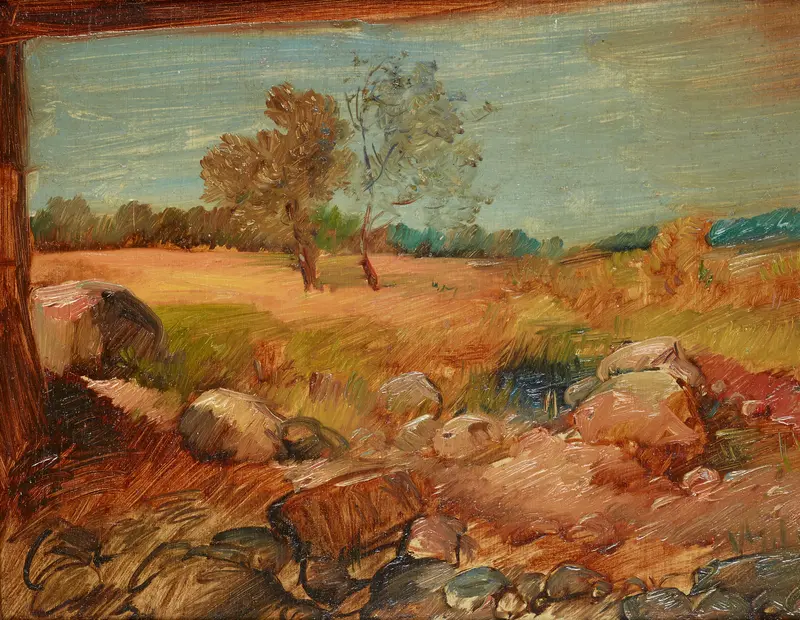
Blick aus einer Scheune
Wilhelm Busch
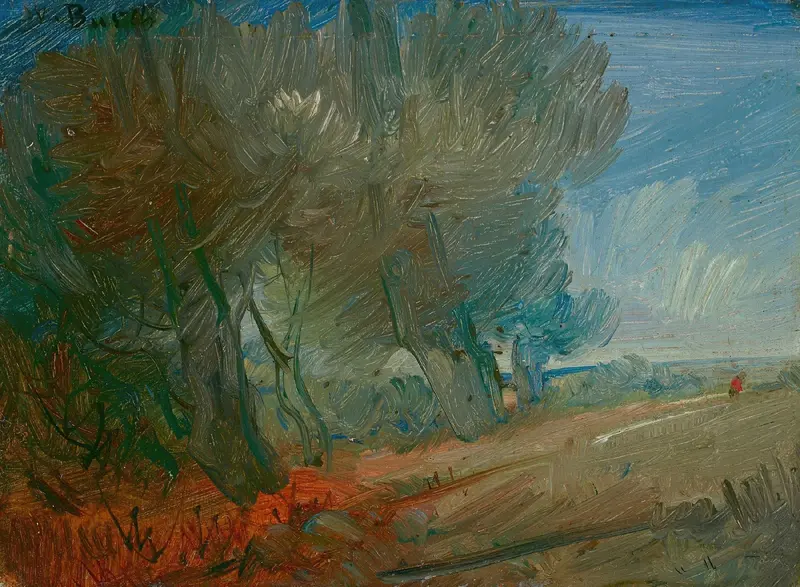
Waldrand mit Rotjacke
Wilhelm Busch
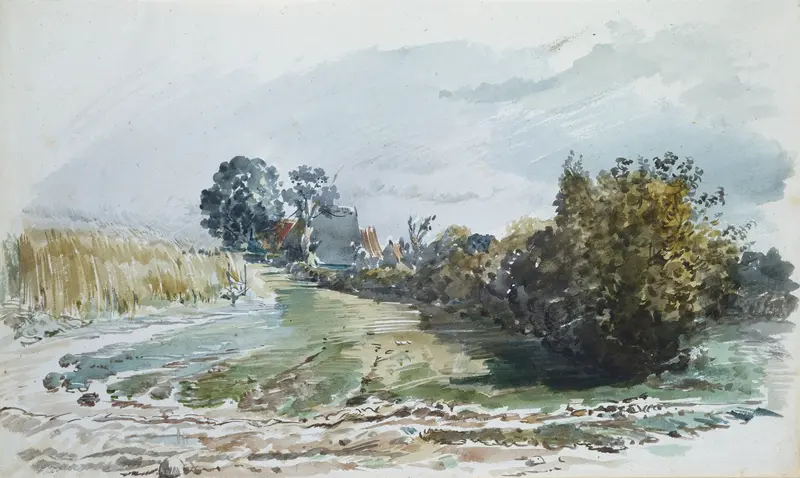
Weg zwischen Kornfeld und Sträuchern mit Katen im Hintergrund
Wilhelm Busch
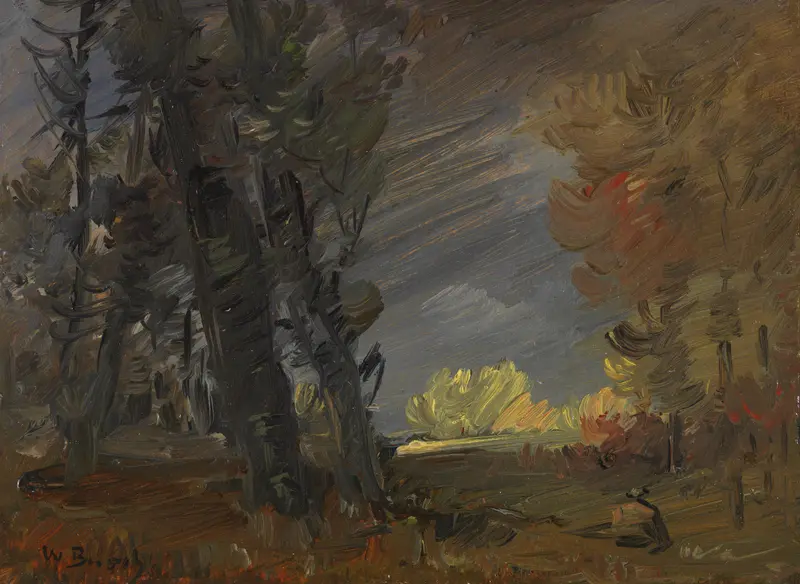
Waldrand mit sonnenbeschienener Baumgruppe
Wilhelm Busch
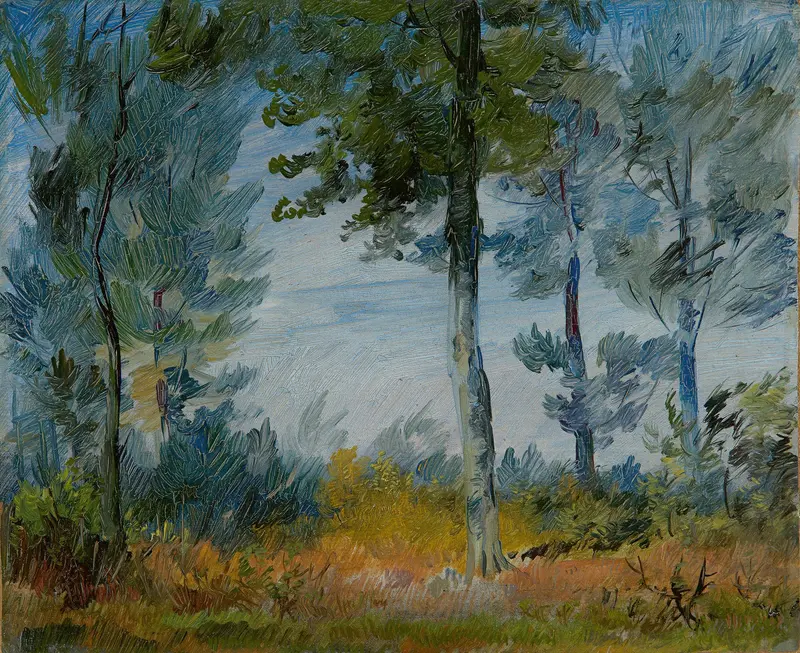
Waldrand
Wilhelm Busch
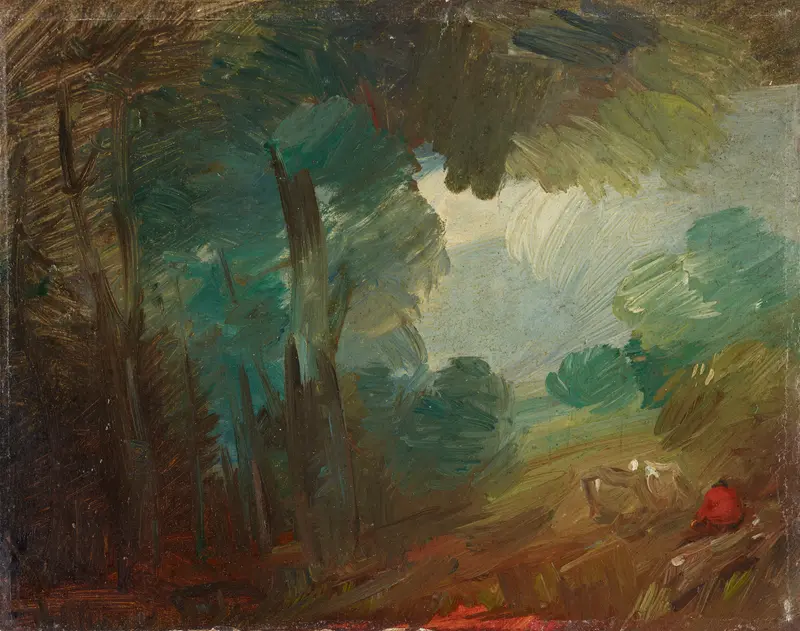
Waldlandschaft mit Kühen und Bauern
Wilhelm Busch