Mühle im Plauenschen Grund bei Dresden — History & Analysis
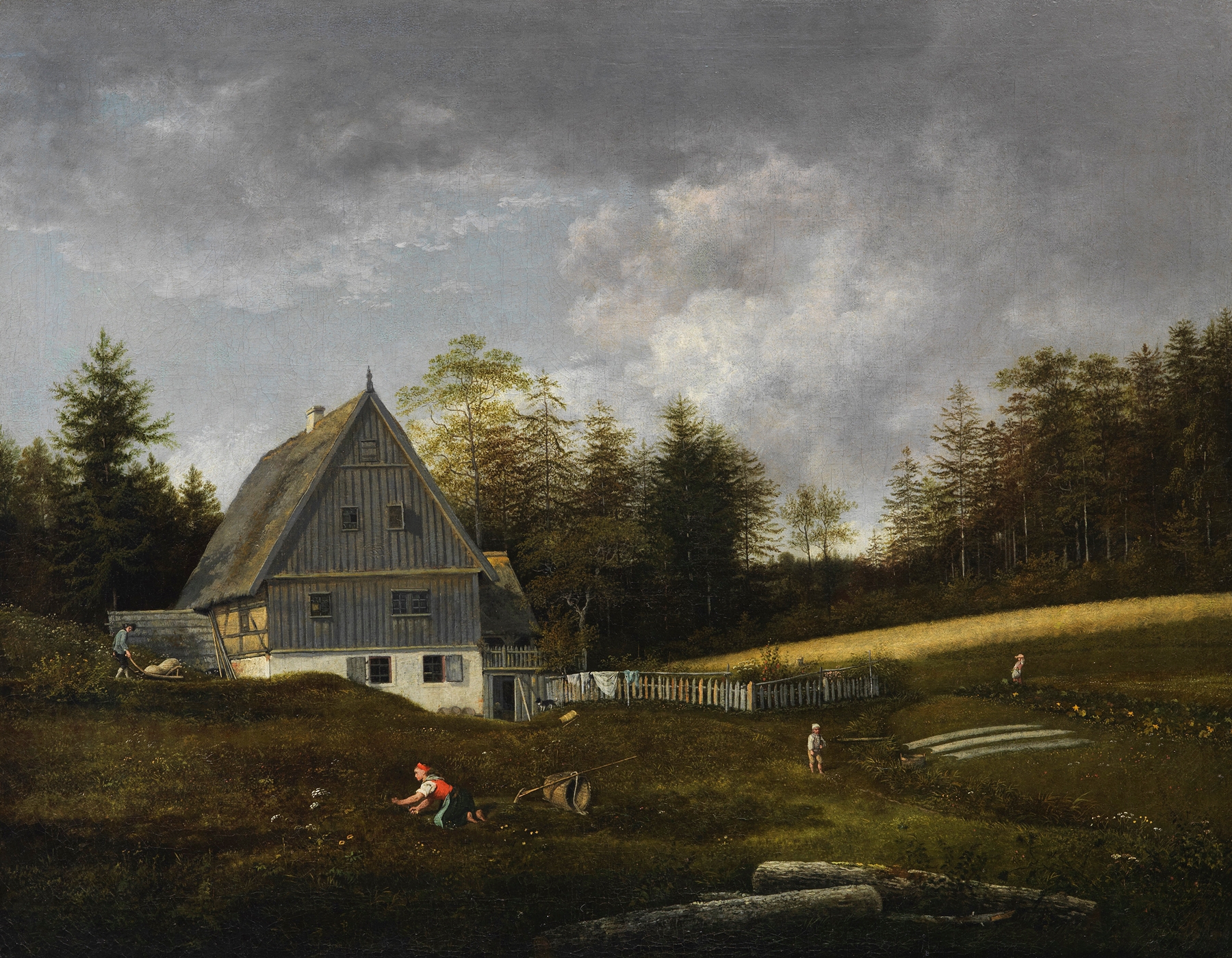
“Sometimes beauty is just pain, disguised in gold.” Beneath the serene surface of the landscape lies a truth that speaks to the heart of decay and the passage of time. In a world where nature ebbs and flows, the remnants of human existence grapple with their inevitable decline. Focus first on the idyllic scene at the center, where a quaint mill stands resolute against the encroaching shadows of forest and decay. The soft brushwork creates a gentle texture, evoking the lush greenery that surrounds it. Notice how the light cascades over the mill’s weathered façade, illuminating its age while casting a melancholic glow on the surrounding foliage, hinting at both the vibrancy of life and the slow march towards oblivion.
The interplay of light and shadow draws the viewer’s gaze deeper into the landscape’s whispers. Within this tranquil setting, contrasts emerge that reveal deeper emotional tensions. The vibrant hues of the mill’s exterior juxtapose with the muted tones of the encroaching wilderness, suggesting a struggle between humanity’s creations and nature's reclamation. The subtle decay evident in the structure indicates a fleeting beauty, a reminder of the constant cycle of growth and deterioration.
This delicate balance invites contemplation on our own impermanence and the beauty found even in decay. At the turn of the 19th century, as Johann Christian Klengel painted this work in Dresden, he was influenced by the shifting tides of Romanticism. This period was marked by an increasing fascination with nature and emotional expression, reflecting a broader societal movement towards introspection and an appreciation for the sublime. The artist, navigating artistic innovations and personal evolution, captured not only a scene but also the essence of a world straddling beauty and decay.