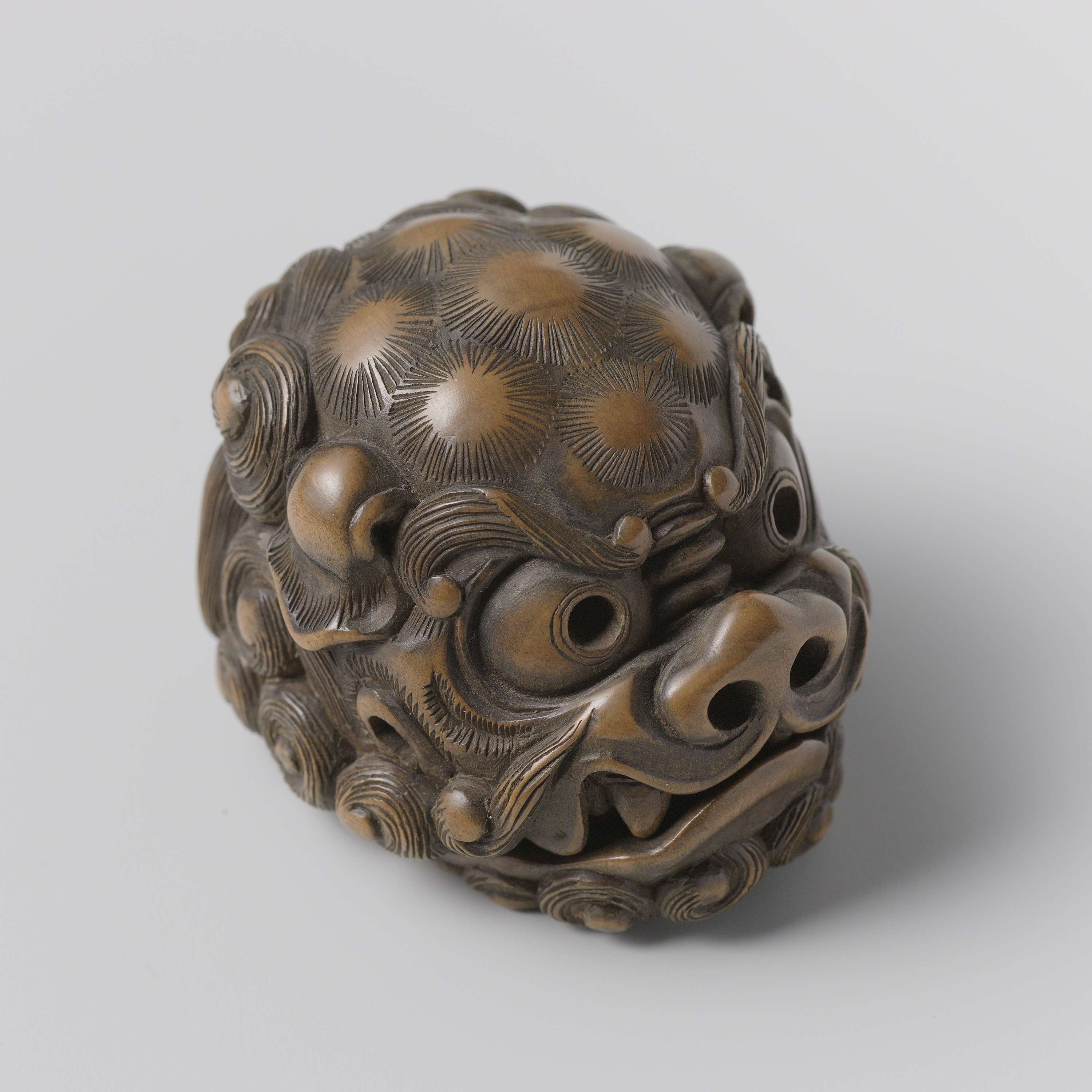
Netsuke in the form of a wolf with a turtle — History & Analysis
Can paint confess what words never could? In the intricate dance of form and void, the essence of Tomotada’s creation transcends simple representation, inviting us into a dialogue that reverberates within the silence of the unknown. Look closely at the wolf, its fierce expression frozen in time, yet imbued with a sense of movement. Notice how the finely carved fur catches the light, each nuanced wave revealing the artist’s mastery in the subtleties of texture. To the left, the turtle finds a serene contrast, its shell detailed with delicate patterns that speak of wisdom and patience.
The interplay of dark and light accents draws our gaze, emphasizing the tension between predator and prey, while the overall composition evokes a sense of balance between these two creatures. Delve deeper into the work’s significance. The wolf, often seen as a symbol of ferocity and instinct, stands in stark opposition to the turtle, a creature synonymous with slow deliberation and longevity. This juxtaposition invites contemplation on the duality of nature itself, suggesting an underlying narrative about the balance of power and vulnerability within the cycle of life.
Moreover, the void surrounding these figures underscores the emotional tension — a reminder of the silent spaces where thoughts and feelings linger, unspoken yet palpable. Created between approximately 1800 and 1850, this netsuke emerges from a period of Japanese art marked by refined craftsmanship and a growing appreciation for intricate designs. Tomotada, likely working in Kyoto, navigated the shifting tides of artistic expression during the Edo period, a time when the intertwining of nature and spirituality was profoundly explored. In this context, the piece not only reflects skillful artistry but also resonates with the broader cultural narratives of its time.