![One of two colossal statues of Rameses [sic] II. Entrance to the Temple at Luxor., 1846-1849, by David Roberts, lithograph, public domain](https://froigstrpvutwqtqikzt.supabase.co/storage/v1/object/public/art-images/artworks/c031915f02a0afa2082fe1ac5a838b965d8bfd791829f647e816cb3c7d65b268.jpg)
One of two colossal statues of Rameses [sic] II. Entrance to the Temple at Luxor. — History & Analysis
“Every silence here is a confession.” In the stillness of ancient stone, balance between grandeur and decay reveals itself, echoing through time. Look to the colossal figure on the left, its silhouette carved from sun-baked sandstone, every line and crevice a testament to the meticulous craftsmanship of a forgotten era. The muted earth tones of the statues contrast sharply against the vibrant desert sky, emphasizing their monumental stature. The composition draws the eye upward, inviting admiration for the scale, while the shadows cast upon the temple entrance hint at a fleeting moment, pregnant with history.
Beneath the surface, the tension between permanence and impermanence is palpable. Each statue stands not just as guardians of the past but as echoes of lost voices, conveying an unyielding authority that belies their gradual erosion. The balance between the figures creates a dialogue, with one statue seemingly gazing into the infinite, while the other observes the earthly realm, merging the divine with the mortal. This duality captures the essence of an ancient civilization struggling against the relentless march of time.
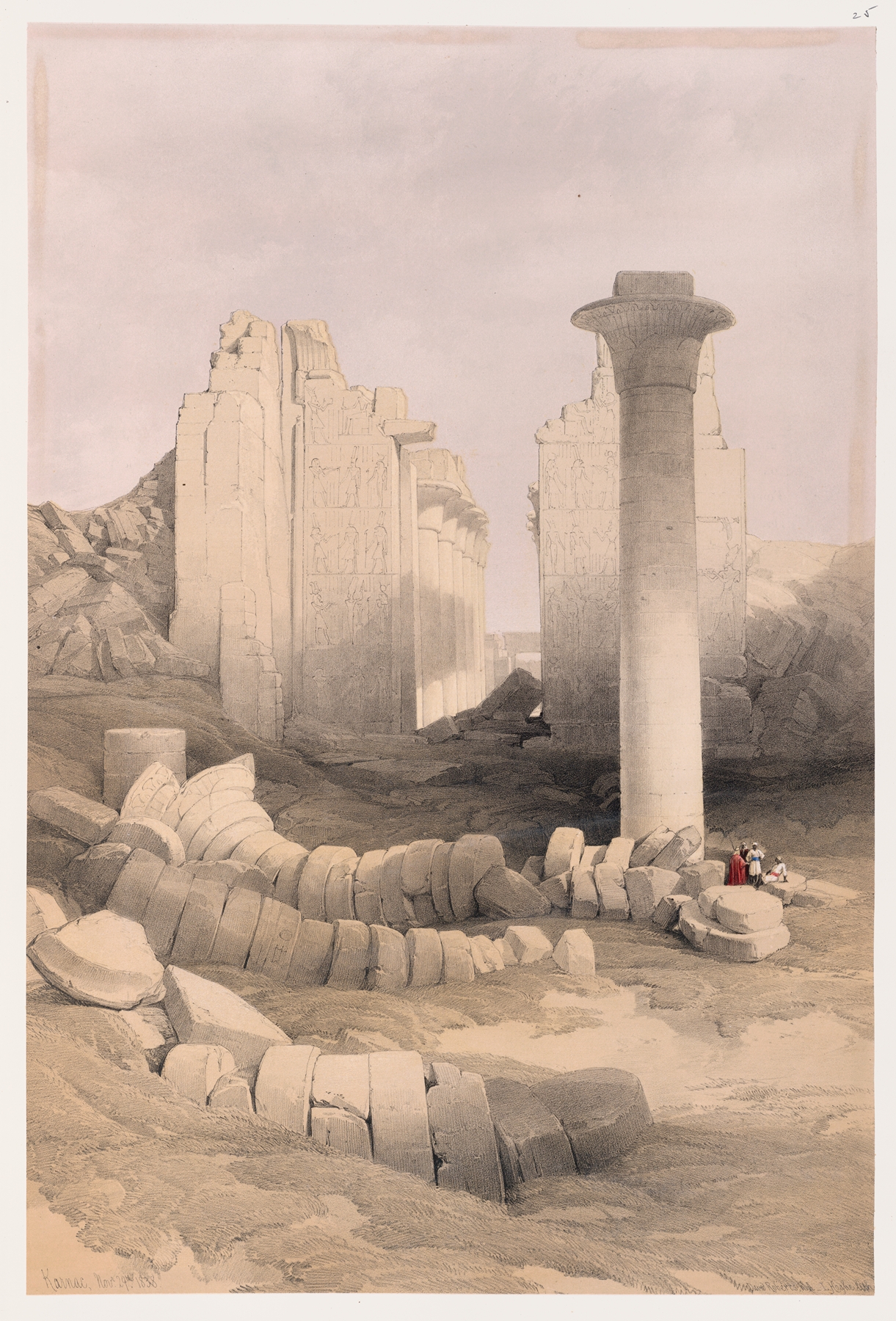
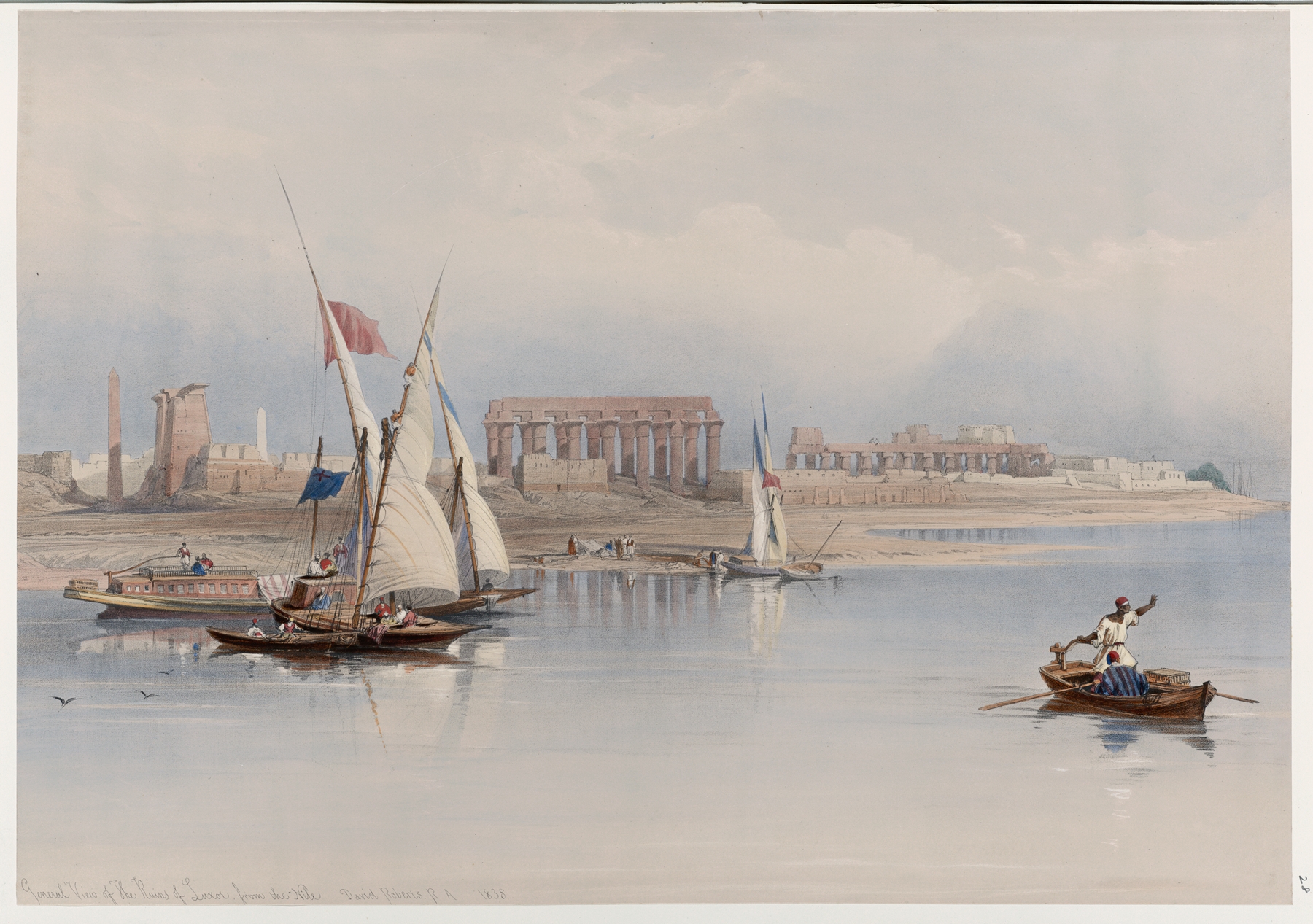
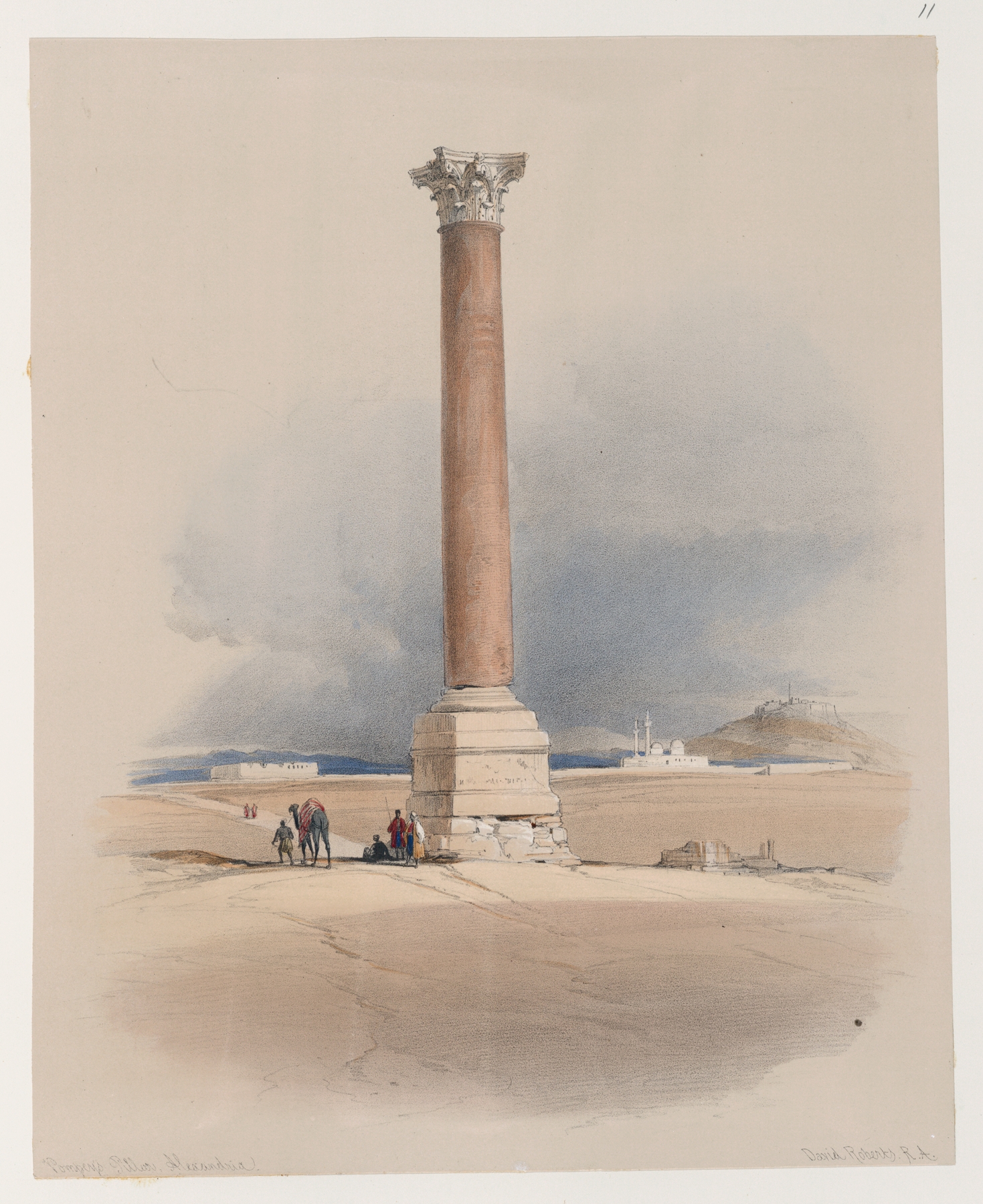
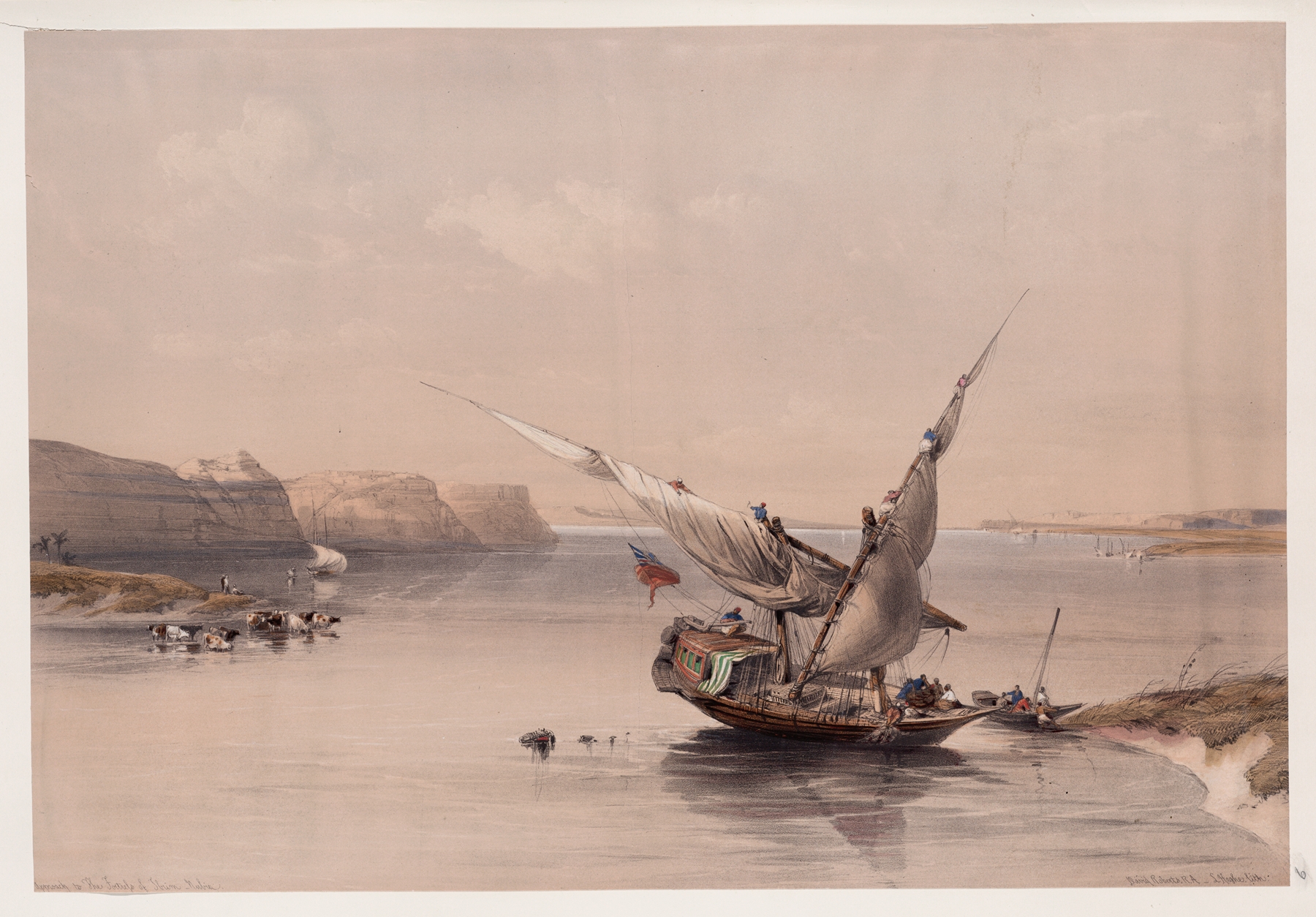
David Roberts painted this magnificent scene between 1846 and 1849 during his travels through Egypt, a period marked by a growing fascination with antiquity in Europe. As Europe began to awaken to the richness of its colonial history, Roberts sought to document the grandeur of the Egyptian landscape, solidifying his role as a pivotal figure in Orientalist art. His works not only served as a visual record but also influenced how the Western world perceived and engaged with ancient cultures.
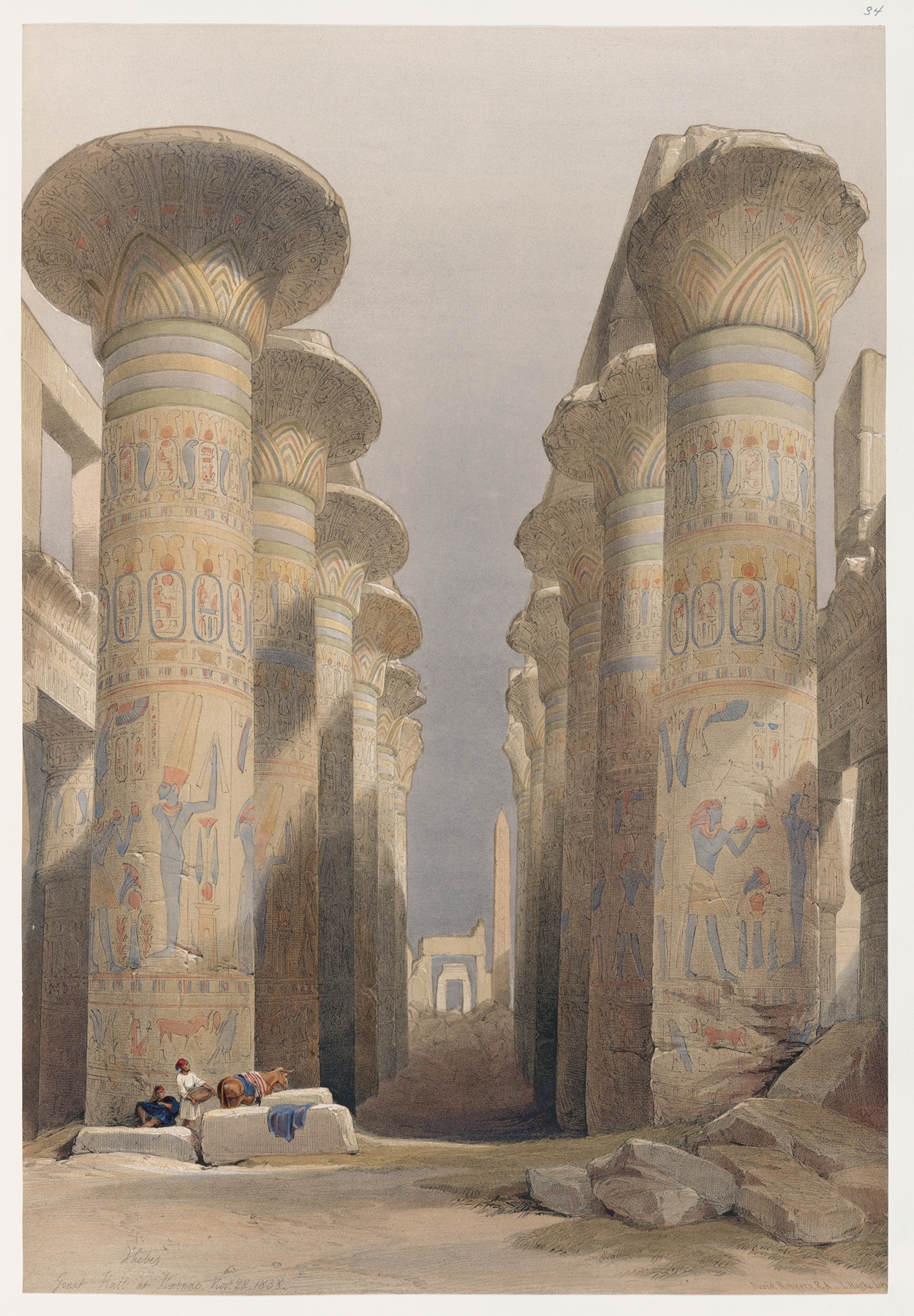
![Temple of Edfou [Idfû], ancient Appolinopolis, Upper Egypt., by David Roberts, public domain](https://froigstrpvutwqtqikzt.supabase.co/storage/v1/object/public/art-images/artworks/b51e83da008fb52a9e3832297709f860ad8821d94936f0ccc0984f79e32cfea9.jpg)
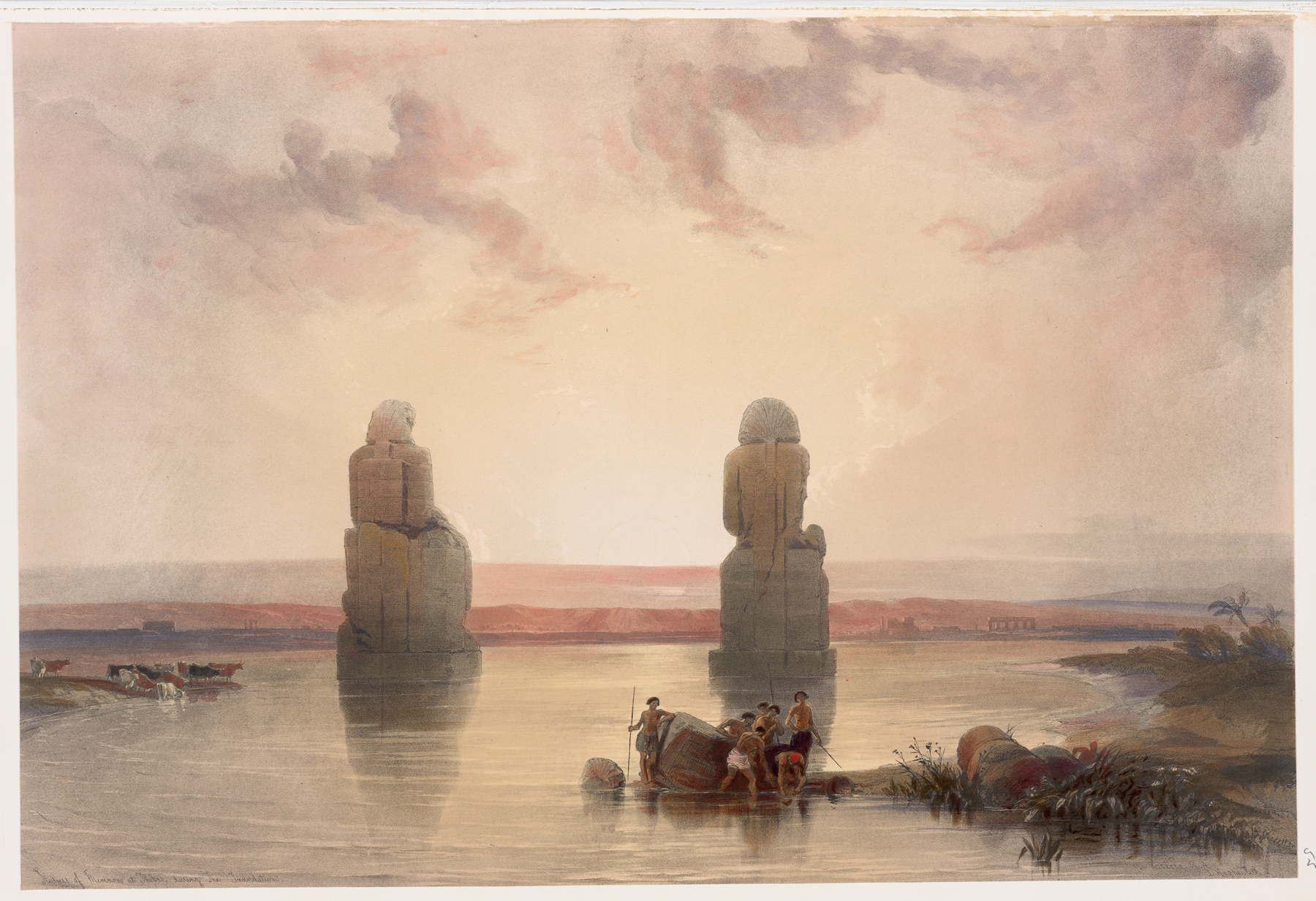
![Entrance to the tombs of the kings of Thebes. Bab-el-Malouk [Bîbân al-Mulûk]., by David Roberts, public domain](https://froigstrpvutwqtqikzt.supabase.co/storage/v1/object/public/art-images/artworks/9f12d85330f523f7a10051ef2b6b1ebe90468ae48e1601ee63ecff2779bfca39.jpg)
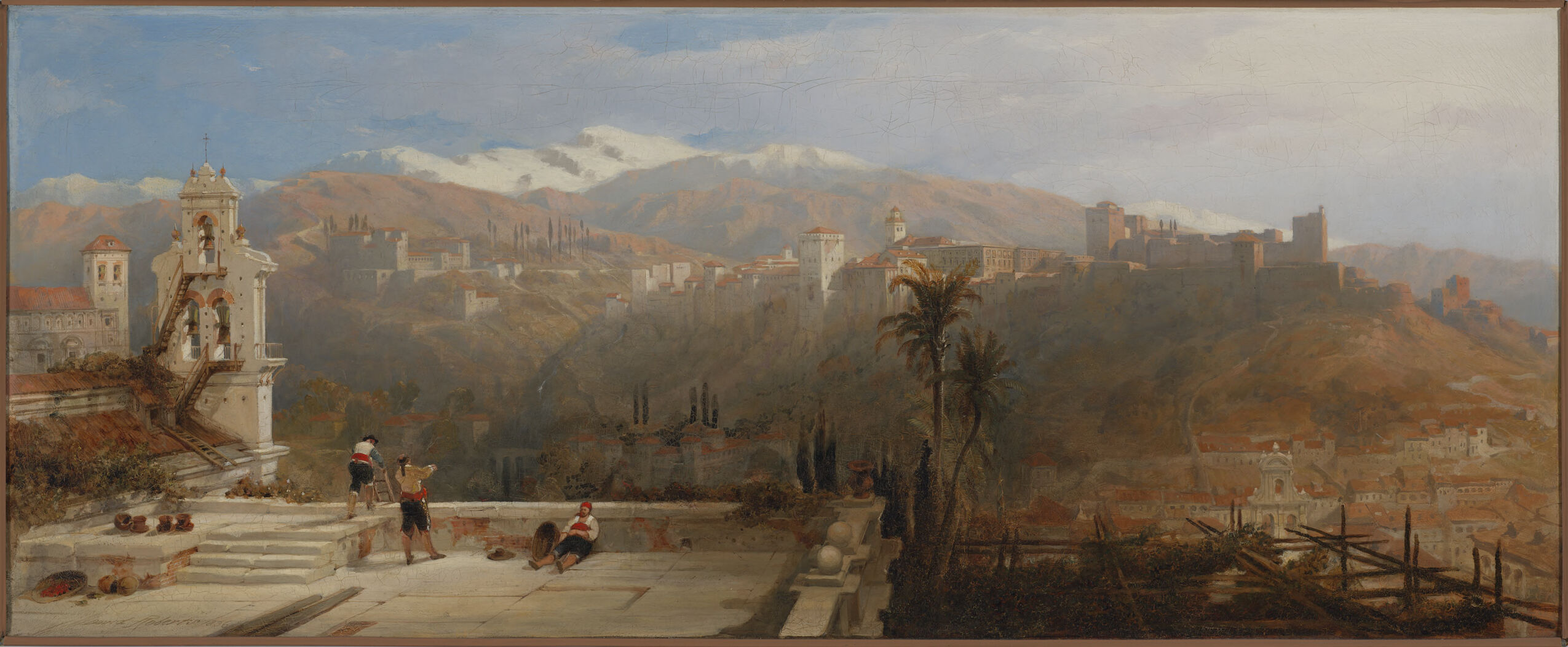
![Temple of Kalabshee [Kalabsha, Kalâbishah], Nubia. Nov. 1838., by David Roberts, public domain](https://froigstrpvutwqtqikzt.supabase.co/storage/v1/object/public/art-images/artworks/c5ed0b38c9a784f56a7ac4d7d514cecf800d77b6cf2f043be350b267a07d899e.jpg)