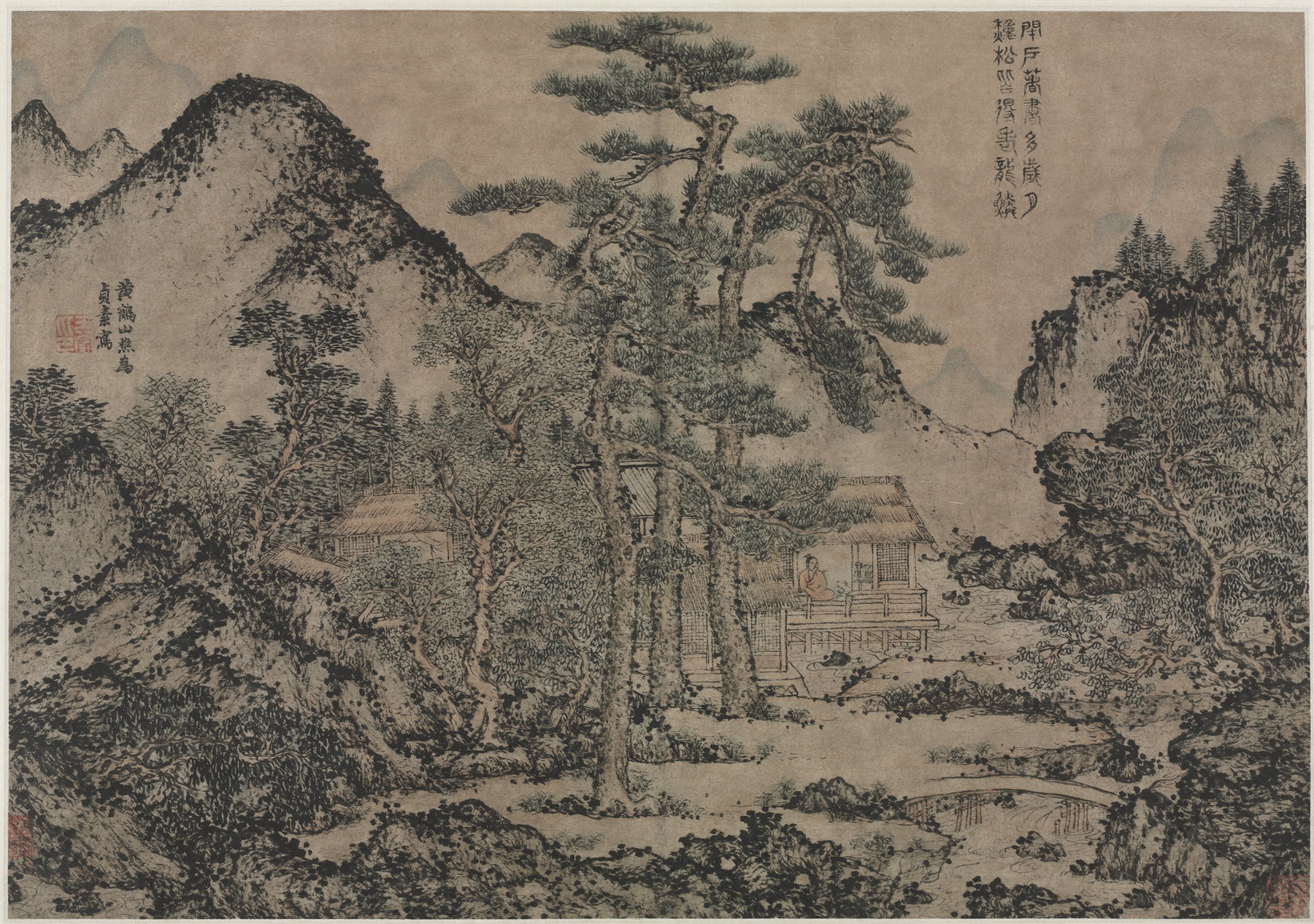
Quiet Life in a Wooded Glen 林麓幽居圖 — History & Analysis
“Every silence here is a confession.” In the stillness of a wooded glen, the air vibrates with unspoken narratives, where creation unfolds quietly, like a seed finding its roots in fertile soil. Focus on the central scene that draws the eye into a harmonious blend of nature and architecture. Notice how the delicate brushstrokes of green breathe life into the trees, their leafy canopies sheltering the tranquil dwelling nestled beneath. The pale, earthy tones of the cottage contrast with the rich, vibrant hues of the forest, echoing the interplay between humanity and the wild.
Each stroke seems to whisper the gentle caress of wind through branches, while dappled sunlight plays upon the ground, inviting contemplation. Delve deeper into the details that enrich this serene tableau. The figures, though minute, convey a sense of purpose and tranquility, suggesting a dialogue with nature that transcends words. The winding path through the glen embodies the journey of life, hinting at the balance between solitude and community.
Here, silence reigns supreme, yet it is alive with the essence of existence—each element, from the fluttering leaves to the sturdy boughs, is a testament to the fragile link between creation and the natural world. Wang Meng painted this work in 1361 during the Yuan dynasty, a time marked by significant cultural and artistic shifts as the Mongol rule began to influence traditional Chinese aesthetics. Immersed in a world of shifting values and philosophical inquiry, the artist sought to encapsulate the spirit of harmony and tranquility amid the tumult of his era. This painting is not only a reflection of his personal artistic vision but also a celebration of the profound connection between nature and humanity.