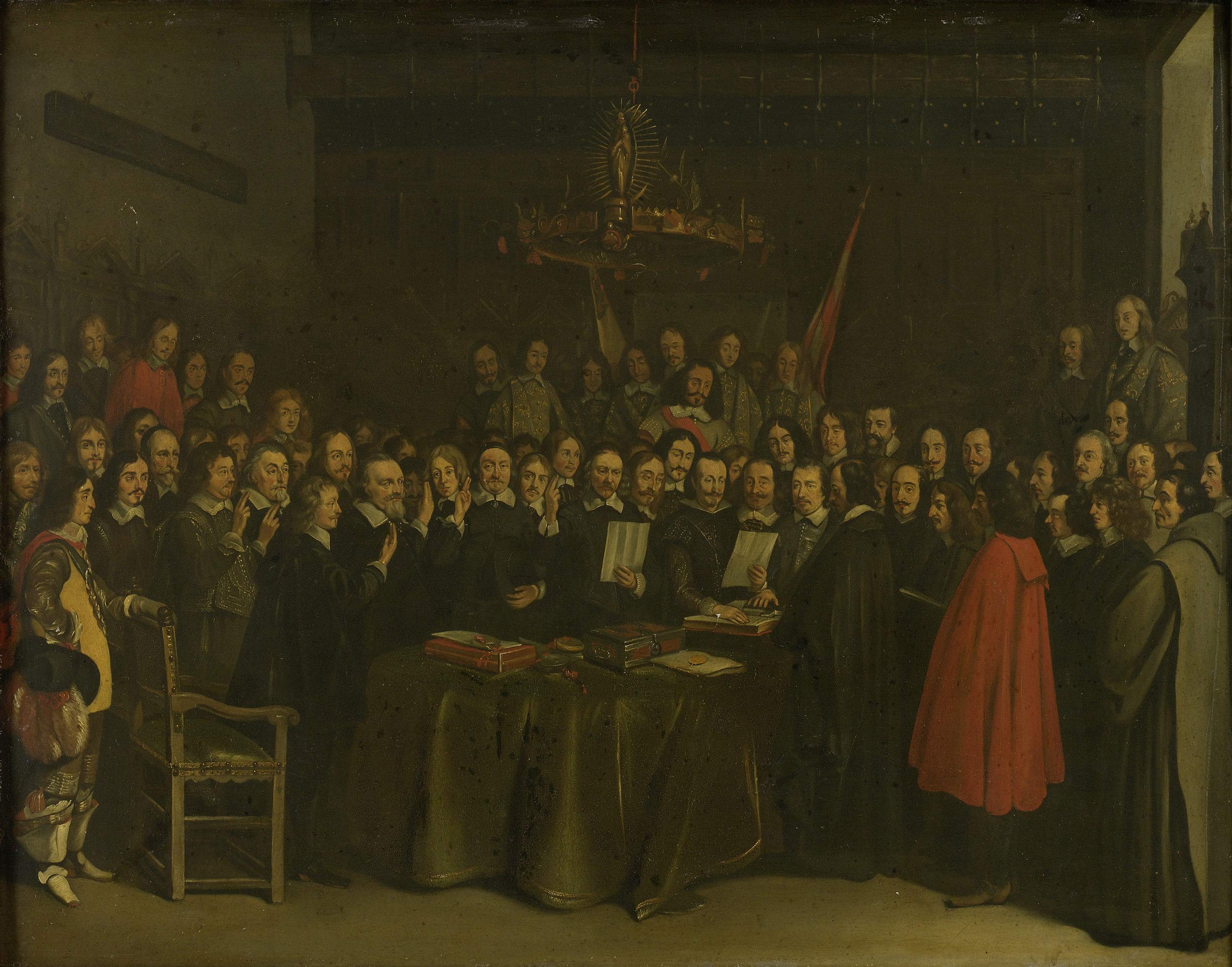
Ratification of the Peace of Münster between Spain and the Dutch Republic in the Town Hall of Münster, 15 May 1648 — History & Analysis
Where does light end, and longing begin? In the intricate layers of history, moments of destiny unfold, forever captured in time. Look to the right at the figures adorned in richly detailed costumes, their expressions a blend of hope and trepidation as they gather in solemn deliberation. Notice how the light filters through the windows, illuminating the faces of the delegates, each brushstroke revealing their inner turmoil and anticipation.
The clever use of shadows and contrasts enhances the room's grandeur while simultaneously anchoring the viewer in this pivotal moment of peace. Delve deeper into the symbolism of the gestures; some hands clasped in unity, others raised in caution, reflecting the fragility of the treaty. The overflowing table, laden with papers, signifies the weight of negotiations and the burden of histories intertwined. The stillness of the scene belies the turbulence that preceded it, where centuries of conflict gave way to this singular moment of potential destiny—a fragile truce amidst a backdrop of uncertainty.
In the late 1640s, during a period of transformation and upheaval in Europe, Gerard ter Borch (II) painted this evocative piece in Münster. With the Thirty Years' War drawing to a close, the artist found himself in a world where diplomacy was paramount—a reflection of his own career transitioning from genre scenes to more historical narratives. This painting not only marks a moment in time but also a shift within the artist, embracing the weight of history through the lens of human connection and resolution.