
Ruins of Karnack [Karnak]. — History & Analysis
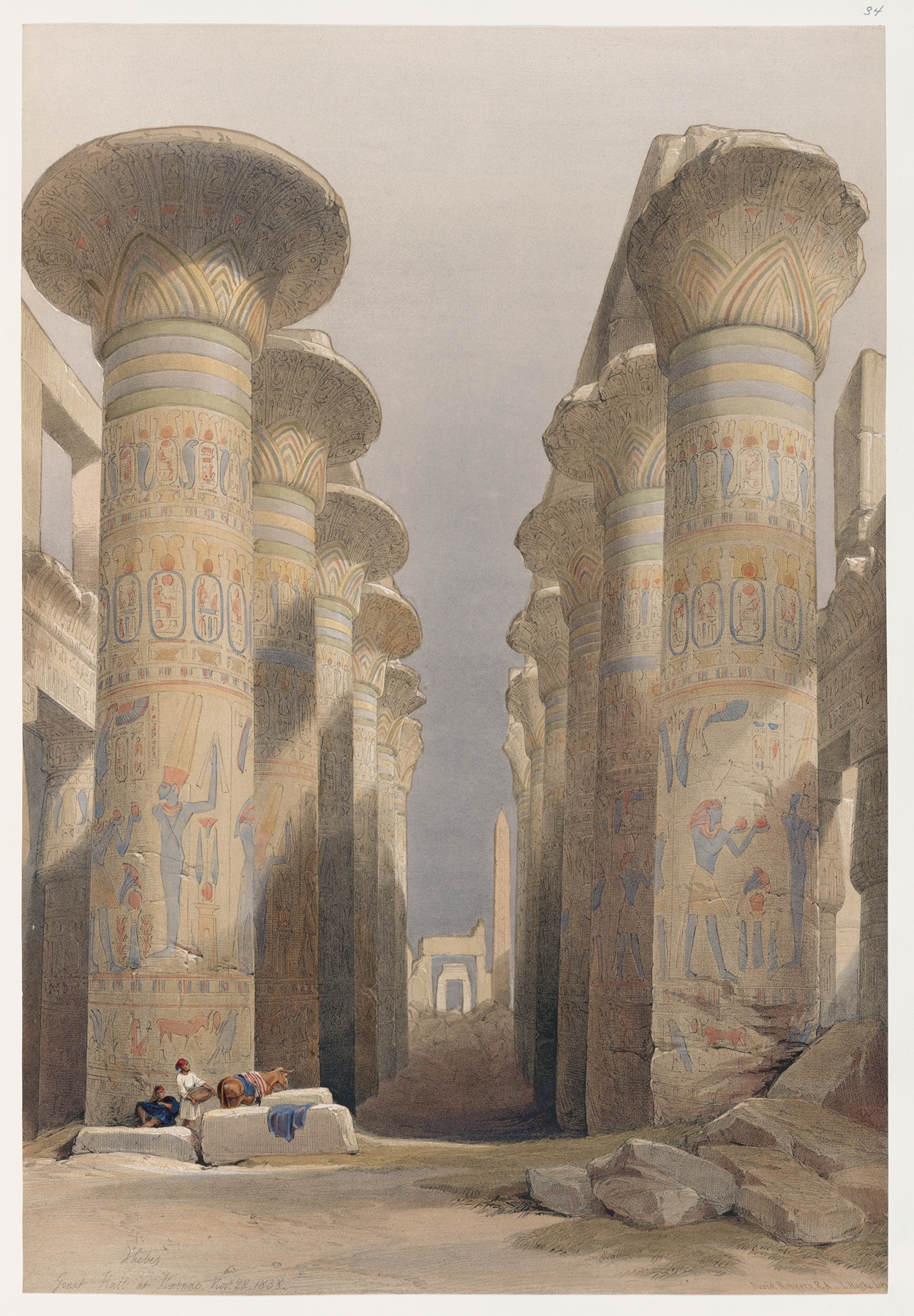
Who listens when art speaks of silence? In the haunting stillness of ancient ruins, emptiness reverberates through time, whispering stories long forgotten. Look to the foreground, where towering columns rise like sentinels against the vastness of the desert. The light, a soft golden hue, gently caresses the stone, revealing intricate carvings that tell of gods and rituals now lost to history. Notice how the interplay of shadow and light creates a sense of depth, drawing the viewer's eye from the jagged stones upward to the vast, cloud-strewn sky.
The crumbling remnants of civilization stretch across the canvas, each fragment a testament to an age of grandeur that has faded into oblivion. Within this desolate landscape lies a profound contemplation of loss and memory. The stark contrast between the vibrant past and the muted present implies a tension that evokes both awe and melancholy. Clusters of sparse vegetation push through the cracks, symbolizing resilience amid decay, a reminder that nature persists even as human endeavors erode.
The vast emptiness surrounding the ruins amplifies their majesty, inviting reflection on the inexorable passage of time and the impermanence of human achievement. David Roberts created this striking work between 1846 and 1849 while traveling through Egypt, capturing the grandeur of its ancient monuments. During this period, the Romantic movement was influencing artists to explore themes of nature and spirituality, reflecting both admiration and a sense of nostalgia for the past. Roberts' meticulous attention to detail and atmospheric composition arose from a deep fascination with the remnants of civilizations, echoing the artistic curiosity of an era eager to uncover ancient histories.
![Karnac [Karnak]. Nov. 29th, 1838., by David Roberts, public domain](https://froigstrpvutwqtqikzt.supabase.co/storage/v1/object/public/art-images/artworks/4d03dc1f7193c7d916a2bc790dd85d799ca595e465dea5741c39c1c0d95500f2.jpg)
![Temple of Edfou [Idfû], ancient Appolinopolis, Upper Egypt., by David Roberts, public domain](https://froigstrpvutwqtqikzt.supabase.co/storage/v1/object/public/art-images/artworks/b51e83da008fb52a9e3832297709f860ad8821d94936f0ccc0984f79e32cfea9.jpg)
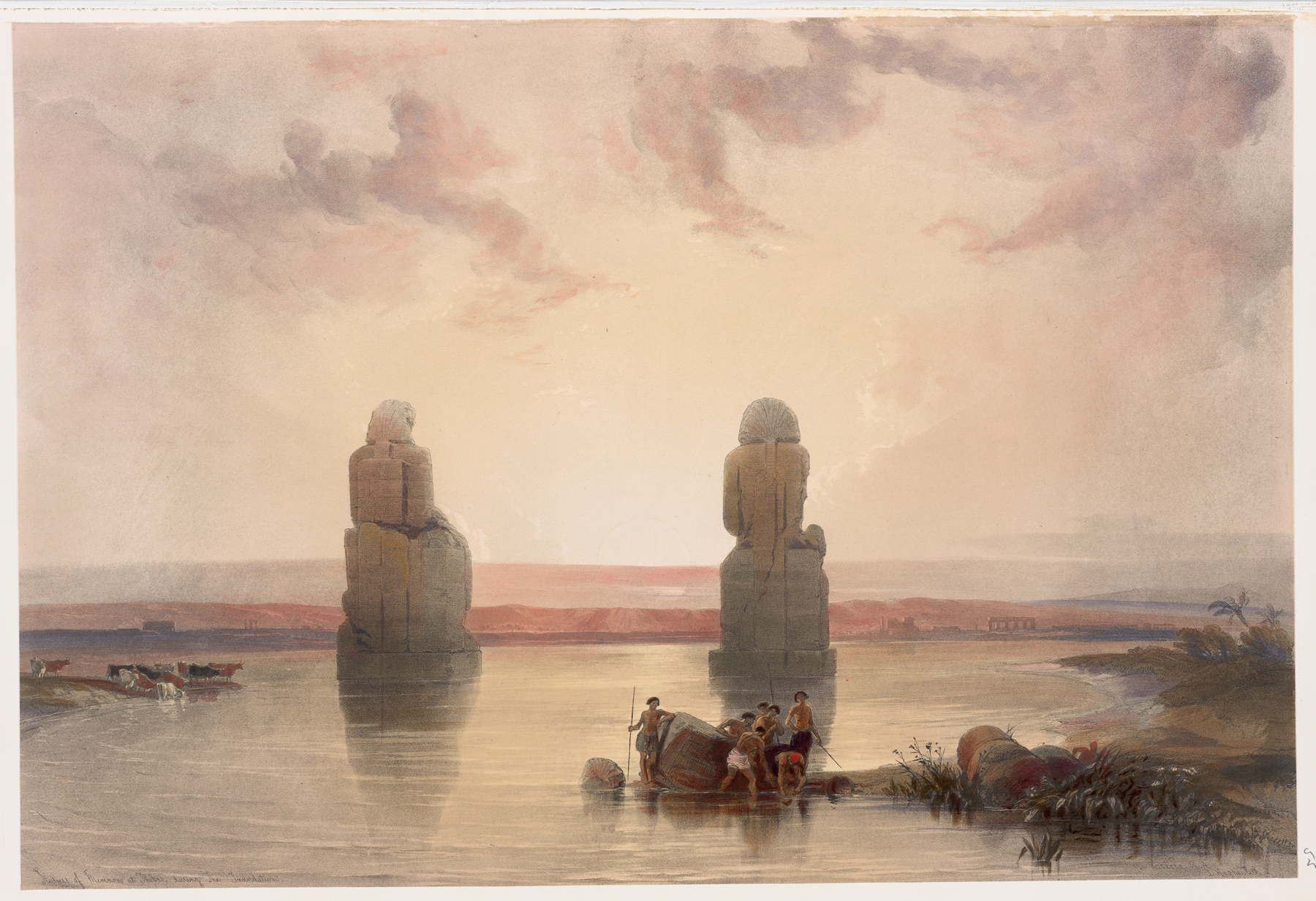
![Entrance to the tombs of the kings of Thebes. Bab-el-Malouk [Bîbân al-Mulûk]., by David Roberts, public domain](https://froigstrpvutwqtqikzt.supabase.co/storage/v1/object/public/art-images/artworks/9f12d85330f523f7a10051ef2b6b1ebe90468ae48e1601ee63ecff2779bfca39.jpg)
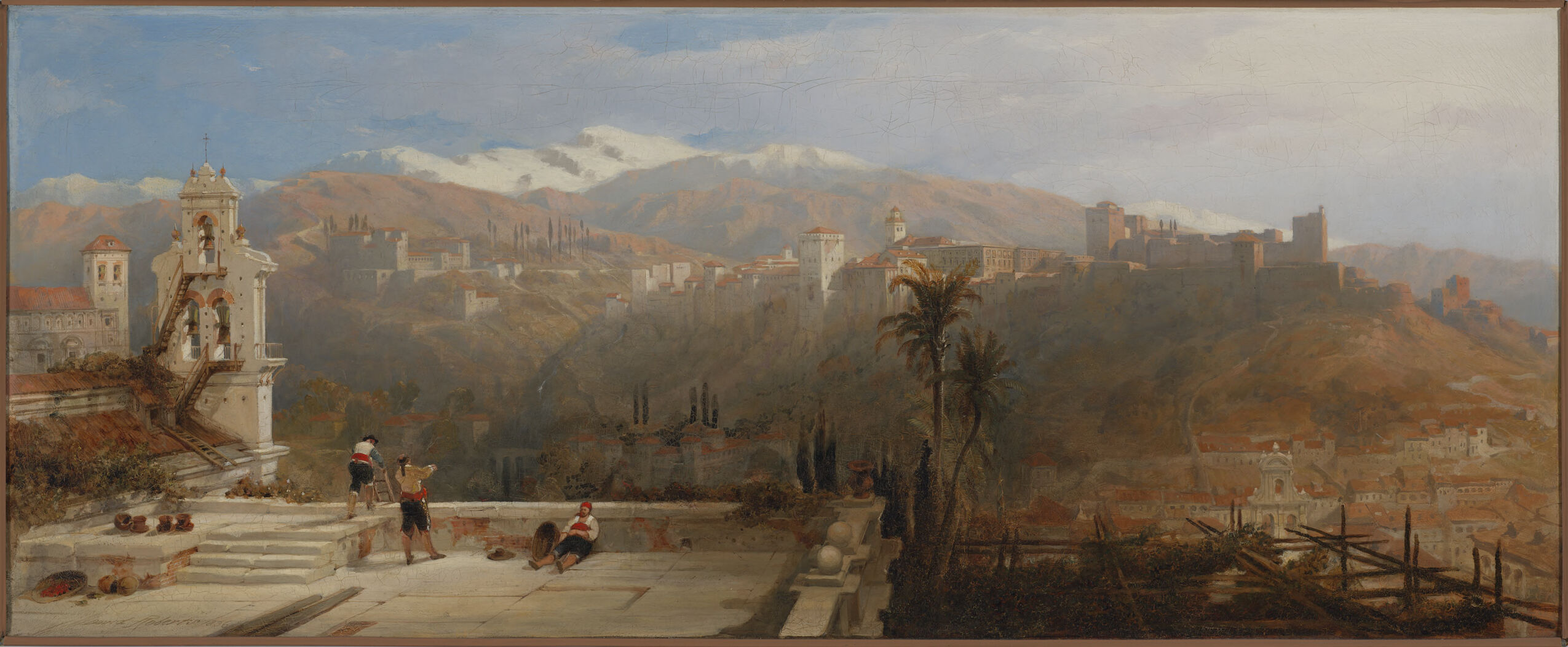
![Temple of Kalabshee [Kalabsha, Kalâbishah], Nubia. Nov. 1838., by David Roberts, public domain](https://froigstrpvutwqtqikzt.supabase.co/storage/v1/object/public/art-images/artworks/c5ed0b38c9a784f56a7ac4d7d514cecf800d77b6cf2f043be350b267a07d899e.jpg)