Saint Jerome — History & Analysis
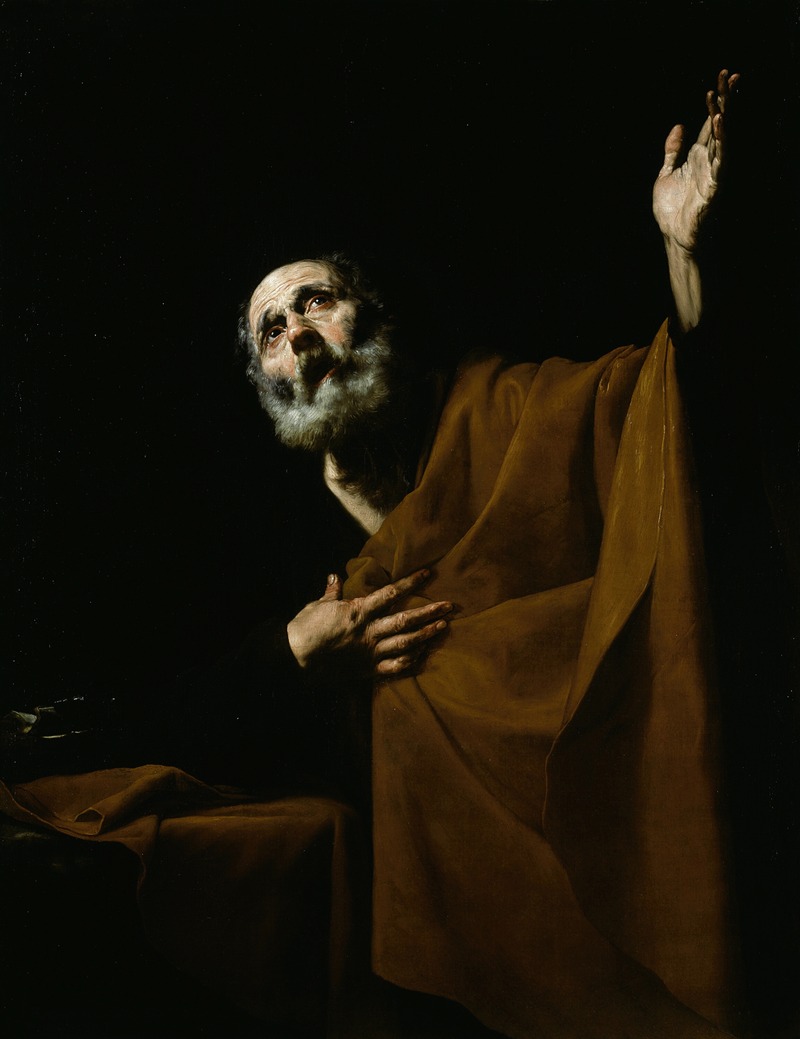
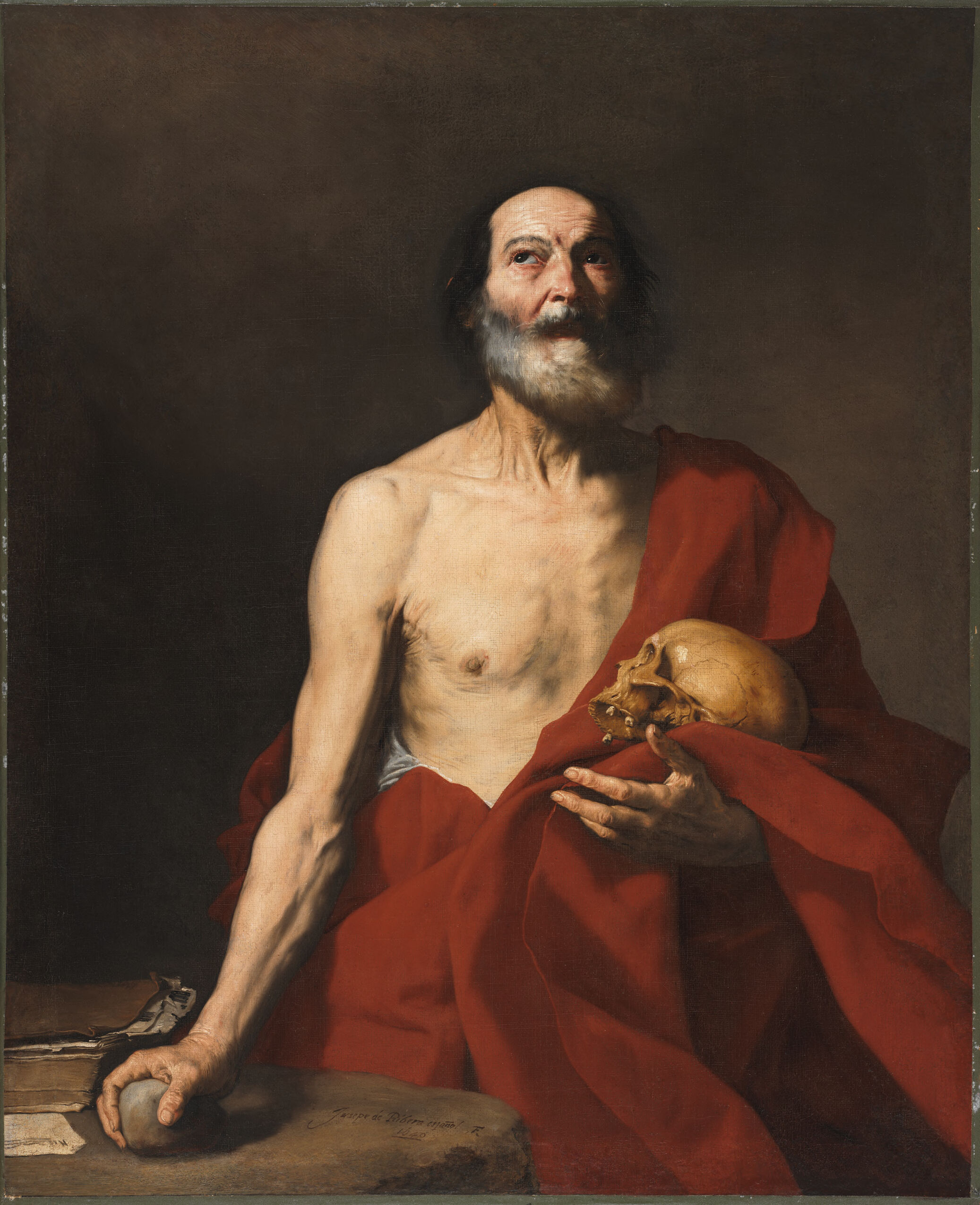
What if beauty was never meant to be finished? In Saint Jerome, vibrant hues clash with shadow, evoking a tension between the sacred and the earthly that lingers in the viewer's heart. Look to the left at the figure of Jerome, robed in deep crimson and earthy browns, as light cascades dramatically across his face, illuminating his furrowed brow and concentrated gaze. Notice how the masterful chiaroscuro technique accentuates the contours of his features, giving life to his pensive expression.
The rich, deep colors are not merely decorative; they draw the eye and invite contemplation, while the muted background allows Jerome's essence to resonate powerfully. Delve into the details; the open book and the lion resting at his feet symbolize wisdom and companionship amidst solitude. The contrast of his vibrant garments against the dark background reflects the struggle between inner enlightenment and the weight of earthly existence. Ribera encapsulates a profound moment of reflection, where beauty thrives in its unresolved state, urging viewers to ponder the ongoing pursuit of knowledge and spiritual truth.
Created in 1640 during a period of intense artistic transition in Spain, Saint Jerome reflects Jusepe de Ribera's mastery of naturalism and dramatic expression. At this time, Ribera was gaining prominence within the Spanish Baroque movement. His works often blended religious fervor with human emotion, mirroring the complexities of life in a world grappling with both enlightenment and spiritual devotion. This painting stands as a testament to his ability to capture the beauty found in the unfinished journey of the soul.