
Self-Portrait with Fur-Trimmed Robe — History & Facts
Self-Portrait with Fur-Trimmed Robe was painted by Albrecht Dürer in 1500, using oil on a lime panel. This work was created when the artist was twenty-eight years old, as indicated by the Latin inscription on the right side of the painting. It is among the most renowned self-portraits of the Northern Renaissance and marks a significant moment in Dürer's career, reflecting his self-awareness as an artist and intellectual. The painting presents a frontal view of Dürer, with his gaze directed outward, meeting the viewer.
He is depicted with long, wavy hair, a beard, and a fur-trimmed robe, rendered in meticulous detail. The composition is symmetrical and the lighting emphasizes the face and hands, drawing attention to the artist's features and the hand that touches the fur collar. The idealized pose and features recall contemporary representations of Christ, highlighting the artist's role as a creator. Self-Portrait with Fur-Trimmed Robe is held in the collection of the Alte Pinakothek in Munich.
The work has been widely studied for its iconography and its assertion of the artist's status. Its composition and execution have influenced later generations of artists and it remains one of the most frequently discussed and reproduced self-portraits in Western art history.
More Artworks by Albrecht Dürer

Melancholia
Albrecht Dürer

St. George and the dragon.
Albrecht Dürer
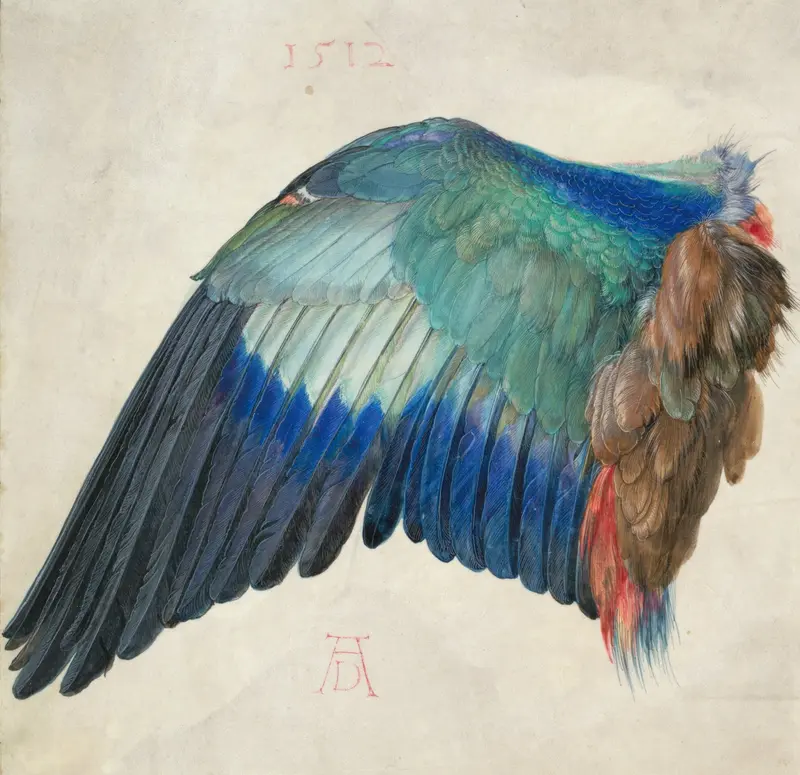
Wing of a European Roller
Albrecht Dürer
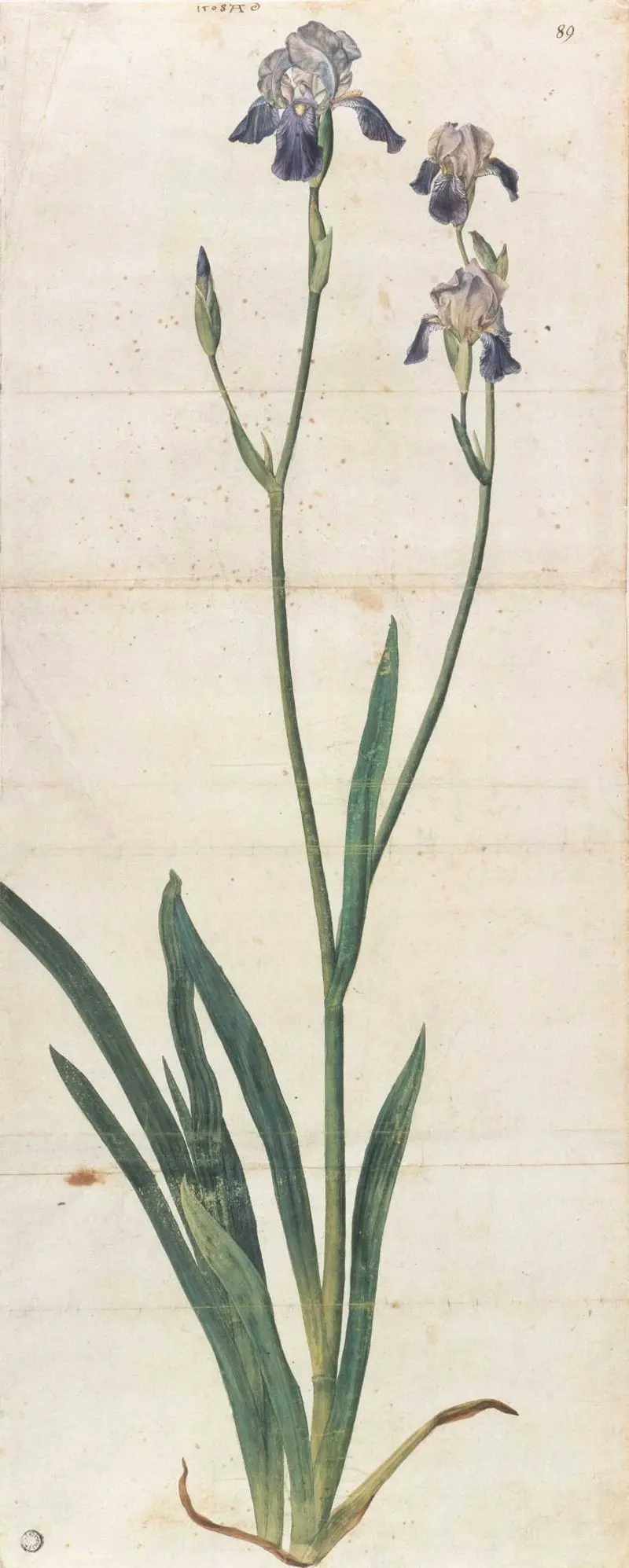
Iris
Albrecht Dürer
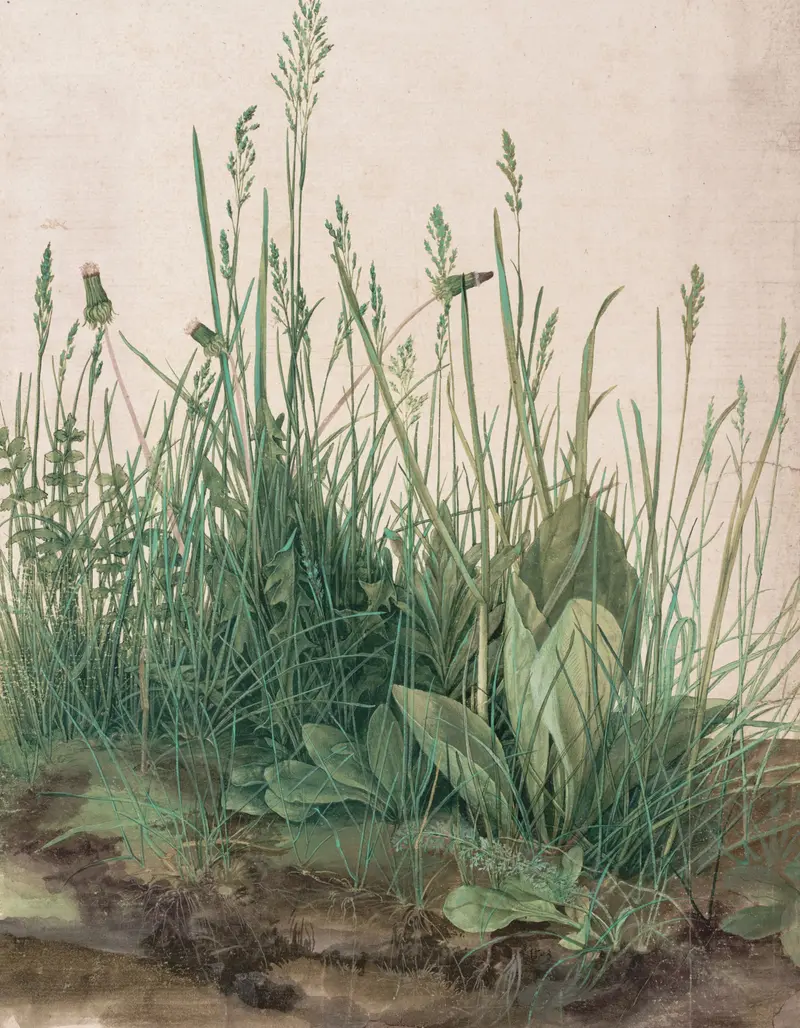
The Great Piece of Turf
Albrecht Dürer
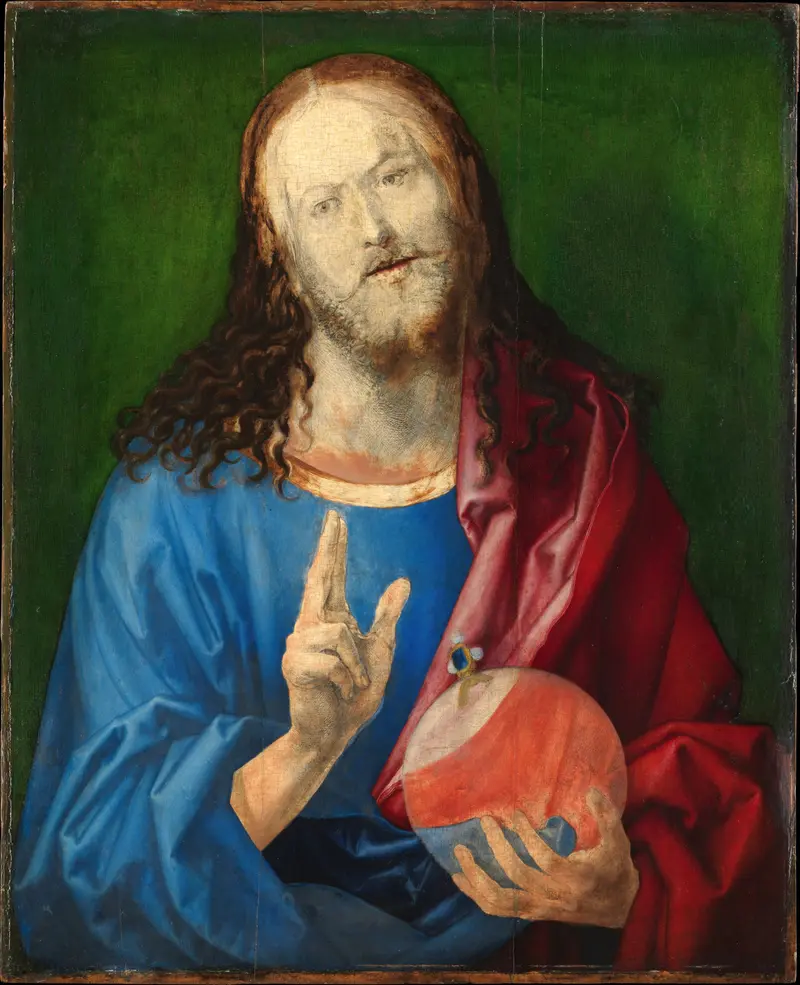
Salvator Mundi
Albrecht Dürer
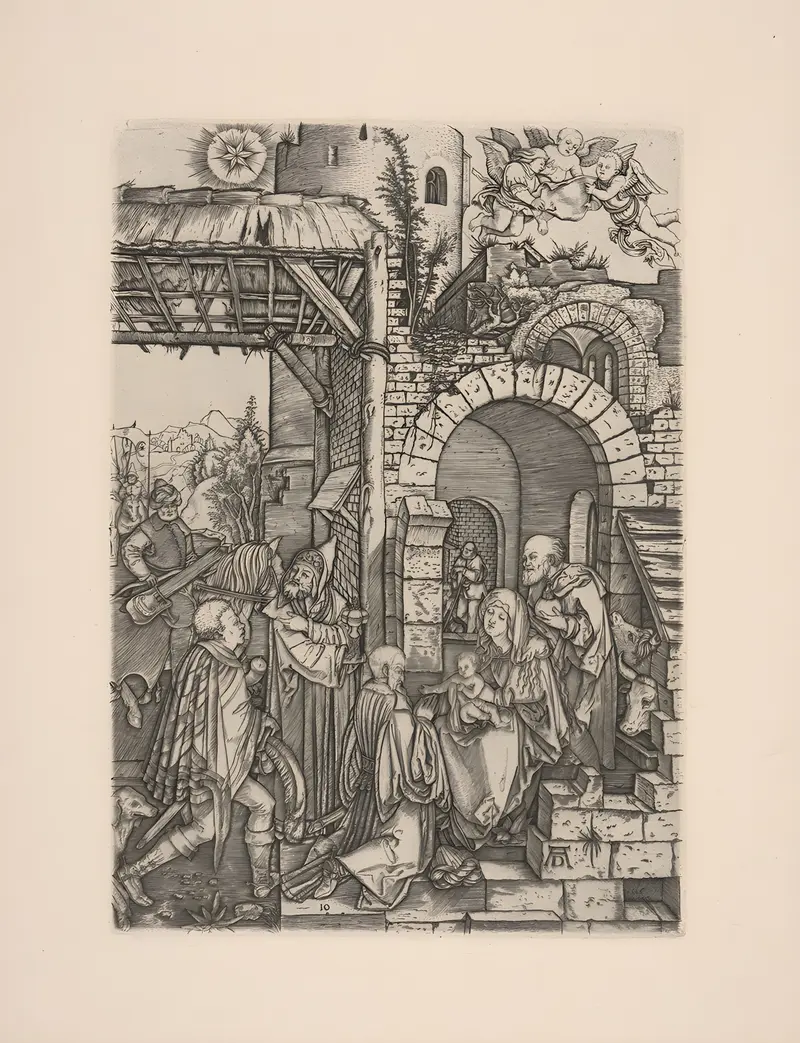
The Adoration of the Magi
Albrecht Dürer
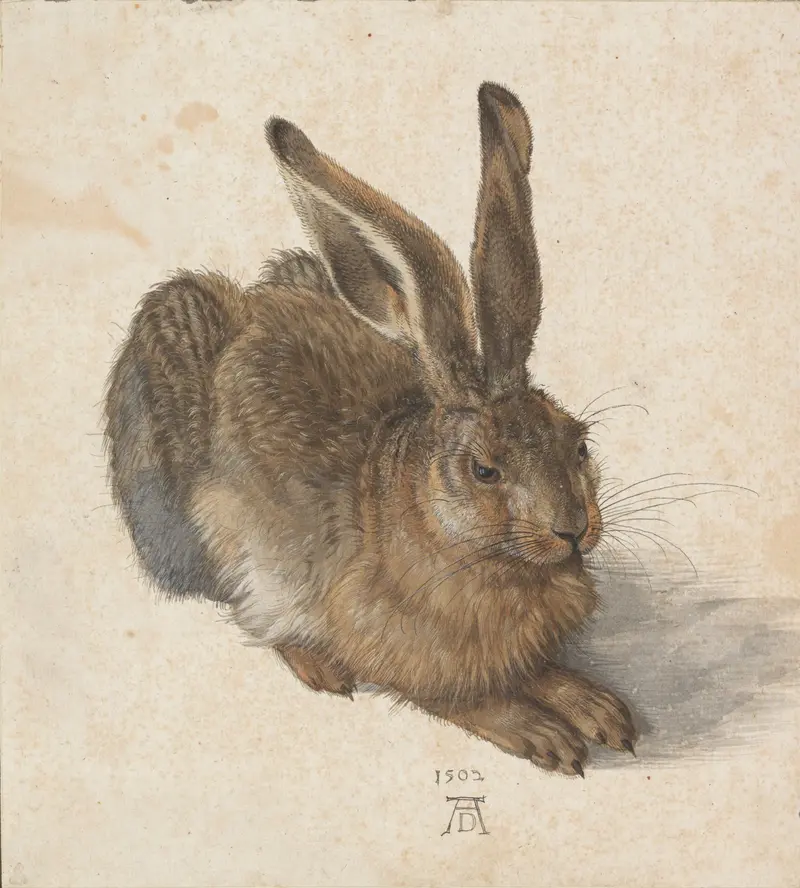
Young Hare
Albrecht Dürer
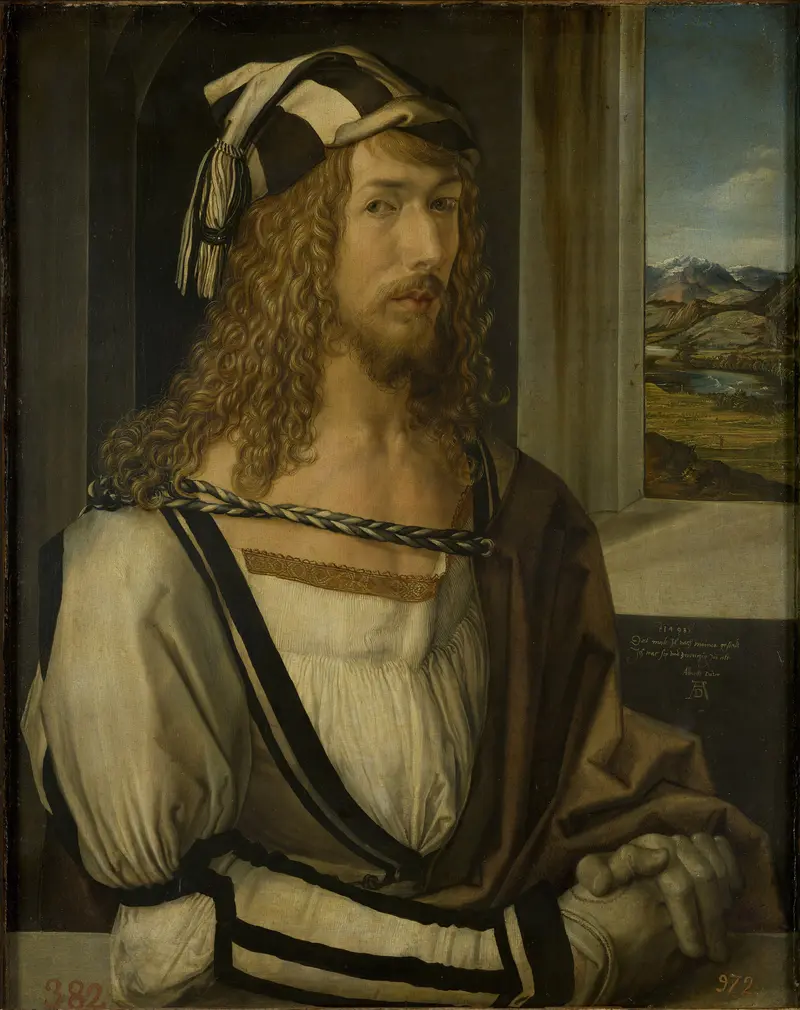
Self-portrait
Albrecht Dürer
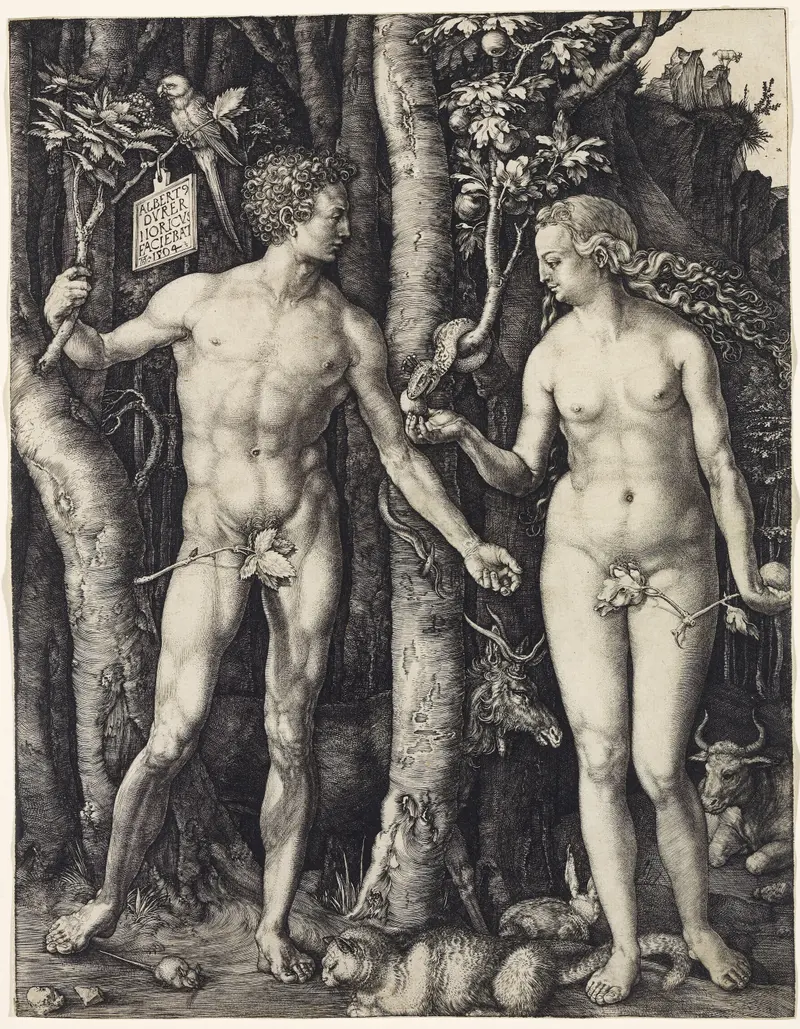
Adam and Eve (The Fall of Man)
Albrecht Dürer





