Several Circles — History & Facts
Dozens of circles of every size float in a dark, cloudy space. A large black circle with a blue ring and a pale halo sits at upper center, with a cluster of smaller transparent circles in yellow, green, pink and lavender overlapping at its lower right. Single disks in pink, yellow, teal and pale violet are scattered across the dark ground, with tiny dots between them. The Guggenheim says Wassily Kandinsky layered precise, transparent circles to create a range of rich chromatic relationships across flat, oscillating planes.
He then applied varnish to selected forms, such as the largest black circle, which sets matte and glossy surfaces against each other. The dark background suggests the infinite space of the cosmos and evokes celestial movement and the planetary hours system. He painted it in January and February 1926, while teaching at the Bauhaus, and said his frequent use of the circle came from his strong feeling for its inner force and countless variations. A Freie Universität Berlin inventory of seized works records that it was confiscated from the Dresden state painting gallery in 1937 as "degenerate art." It later became part of the Guggenheim's founding collection by gift and was shown in the museum's 2021-22 exhibition Vasily Kandinsky: Around the Circle.
It is in the Solomon R. Guggenheim Museum in New York.
More Artworks by Wassily Kandinsky

Improvisation 35
Wassily Kandinsky
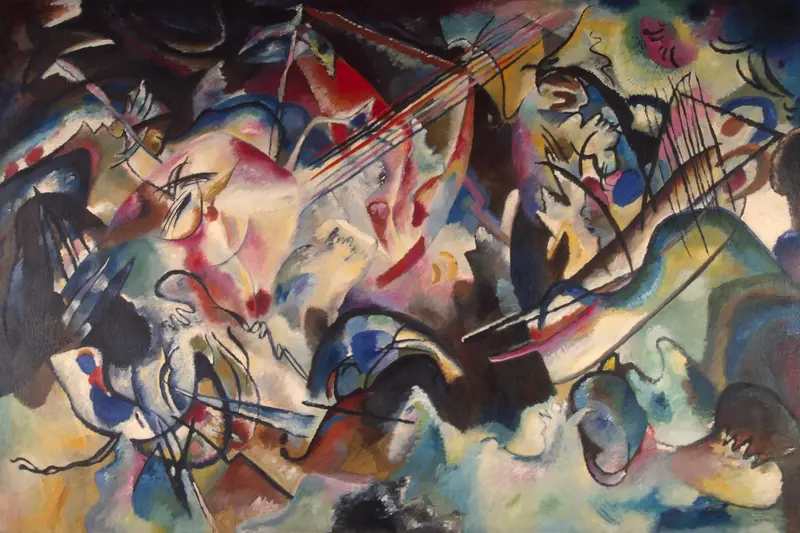
Composition VI
Wassily Kandinsky
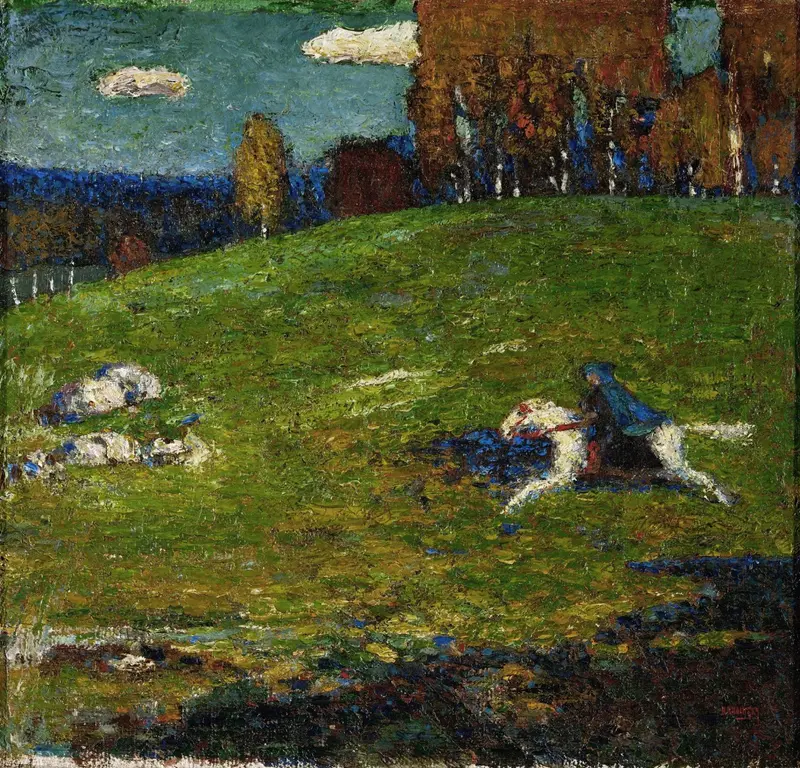
The Blue Rider
Wassily Kandinsky

Murnau
Wassily Kandinsky
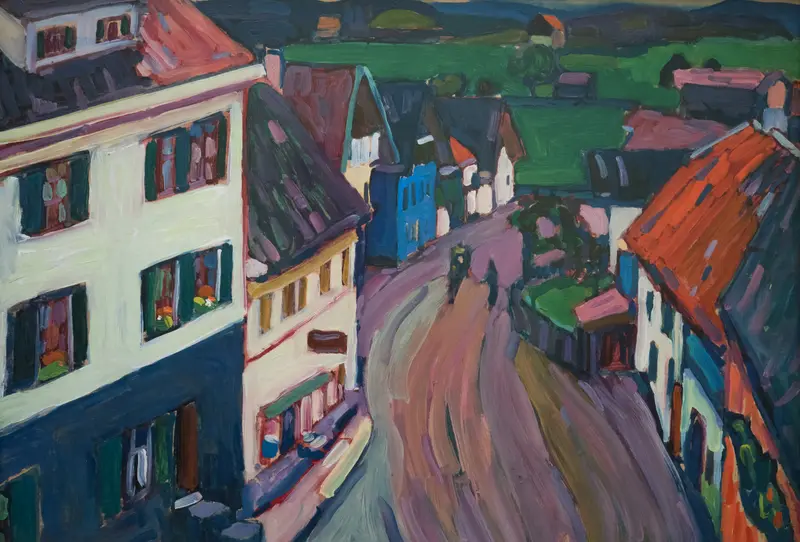
Murnau – View from the window of the Griesbräu
Wassily Kandinsky
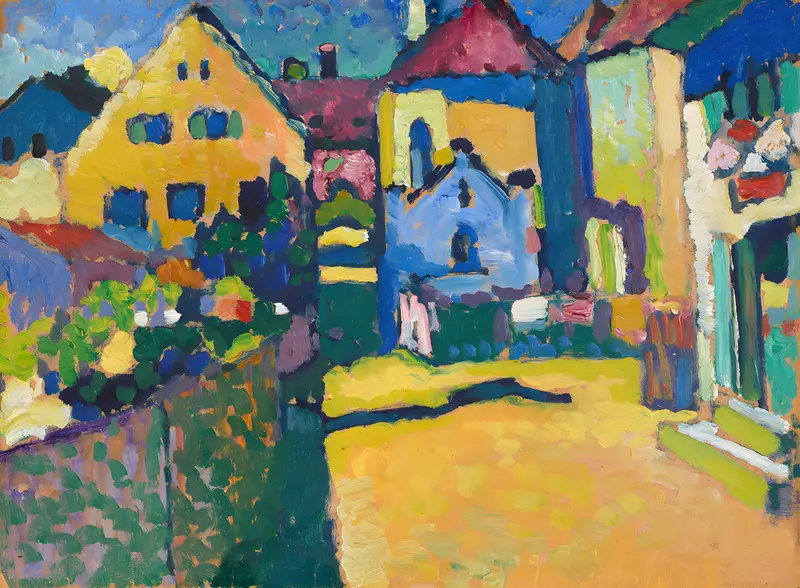
Green Lane in Murnau
Wassily Kandinsky
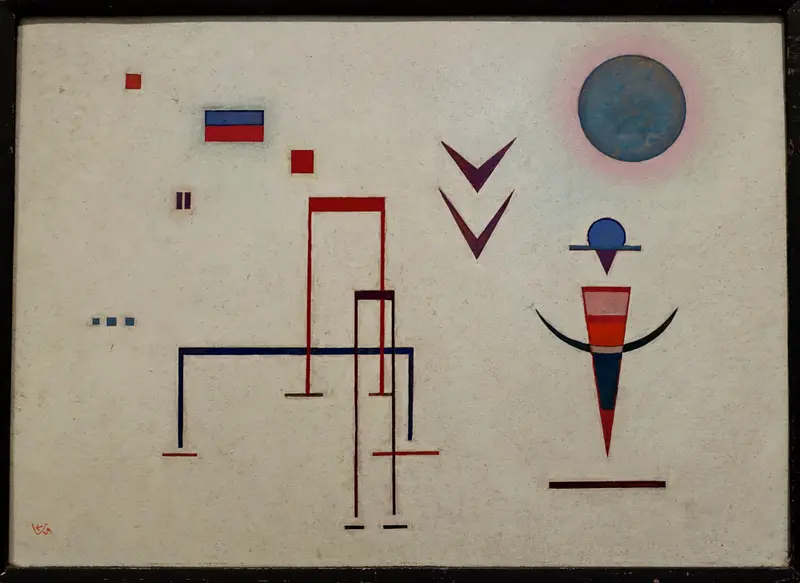
Jocular Sounds
Wassily Kandinsky

Zubovsky Platz
Wassily Kandinsky

Landscape with a yellow field
Wassily Kandinsky
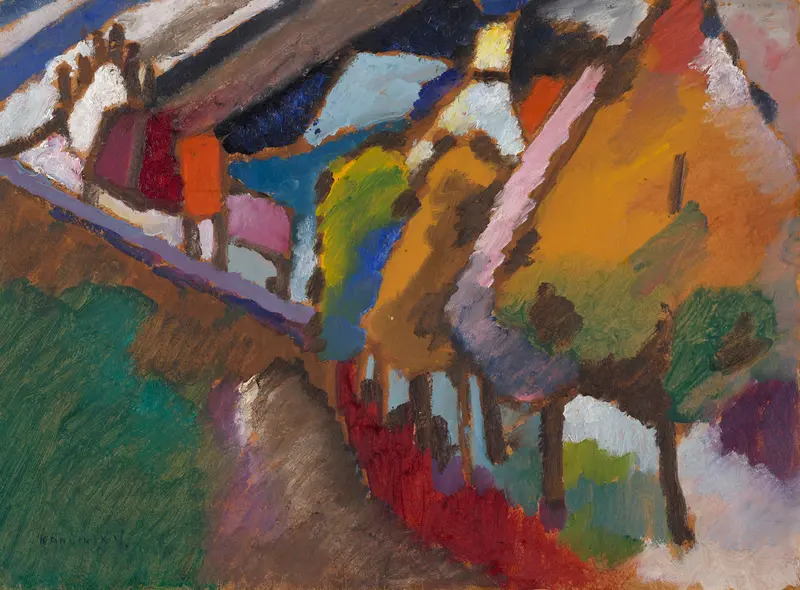
Murnau – Castle and Church
Wassily Kandinsky