Street, Tangier — History & Analysis

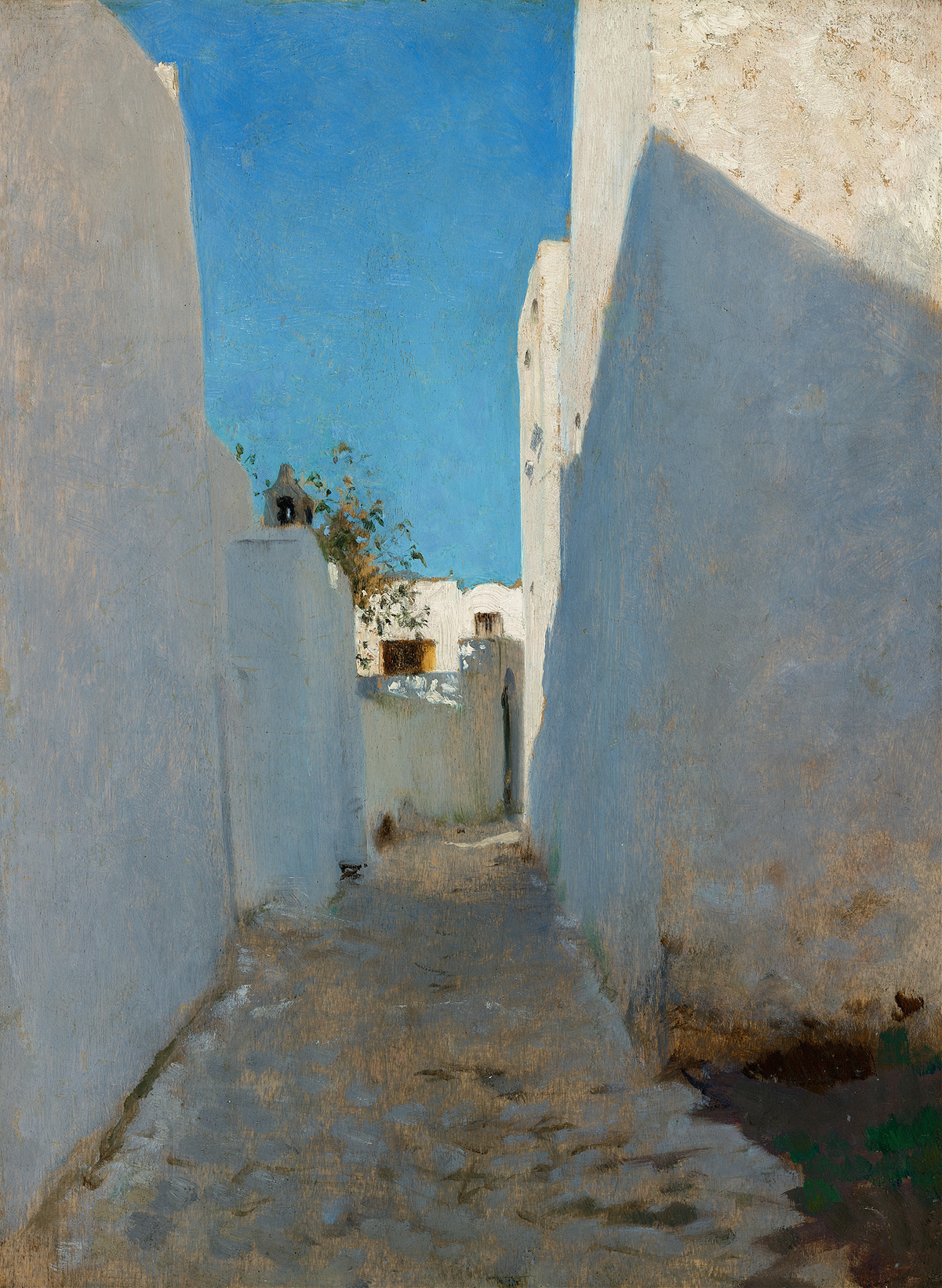
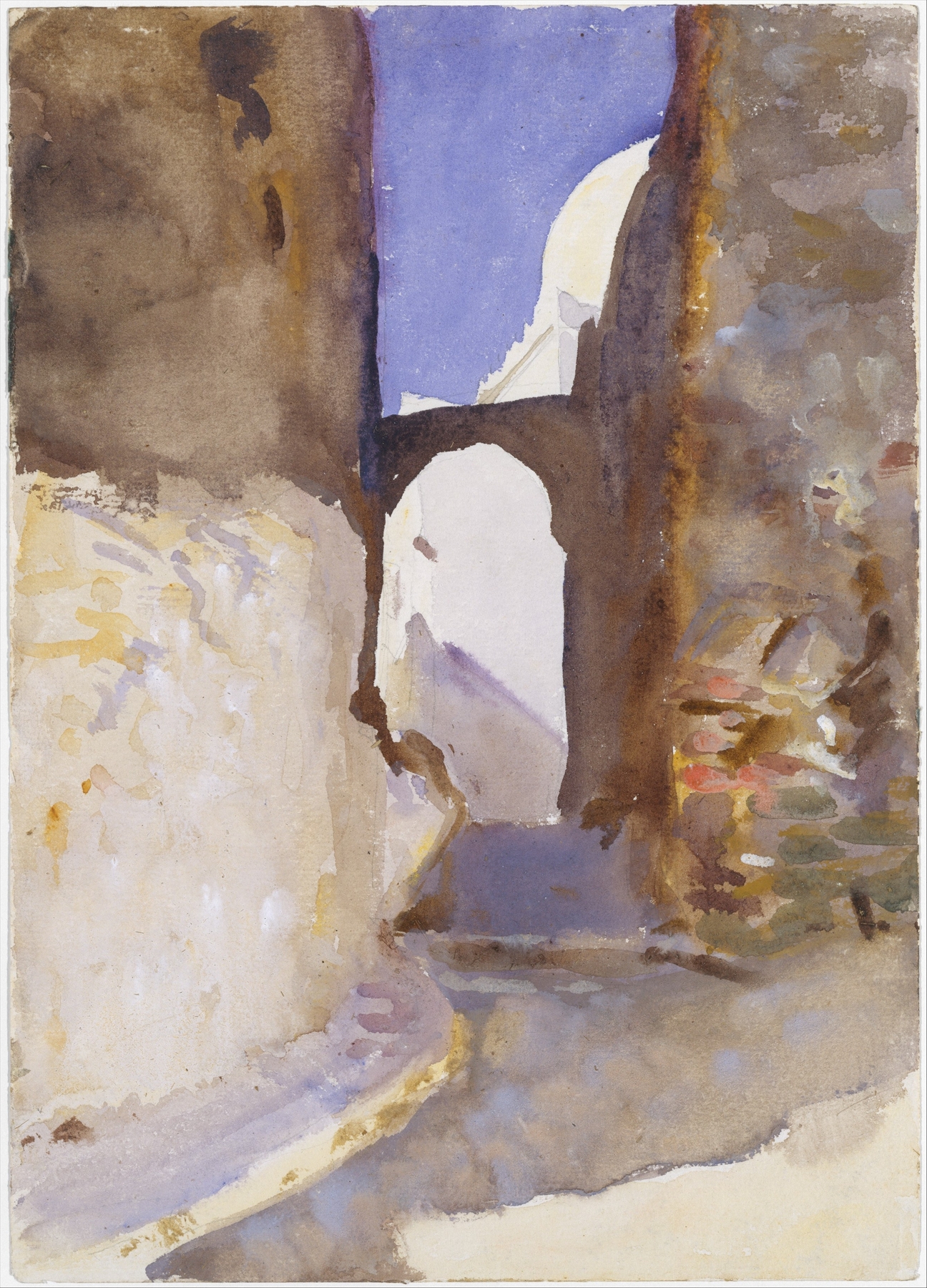
“Every silence here is a confession.” This poignant reflection invites us to consider the layers of experience hidden within the bustling streets of Tangier, where the vibrancy of life meets the stillness of contemplation. Look to the left at the narrow alley, where a cluster of figures stands in quiet conversation. The warm, golden hues of the walls contrast sharply with the deep shadows cast by the overhanging architecture, creating a dynamic interplay of light and dark. Sargent’s masterful brushwork gives texture to the scene, while the fluidity of his strokes captures the effortless movement of the figures, drawing the viewer into the heart of the composition.
The careful arrangement guides the eye across the canvas, inviting us to explore the nuances of this lively yet intimate moment. Beneath the surface, a myriad of emotions unfolds. Consider the posture of the individuals—some appear engaged in lively discussion, while others seem lost in thought, perhaps reflecting on their own journeys. The vibrant colors speak to the richness of Tangier’s culture, yet the serenity of the shadows hints at the deeper stories and secrets that lie beneath the bustling exterior.
This tension between vibrancy and silence evokes a sense of nostalgia and longing, urging us to contemplate what remains unspoken. In 1895, Sargent found himself in Tangier, amidst a flourishing artistic movement that celebrated the interplay of light and color. This period was marked by a burgeoning fascination with exotic locales, as artists sought to capture the essence of diverse cultures. As he painted Street, Tangier, Sargent was not only drawing from his experiences as a traveler but also engaging with the larger currents of Impressionism that were sweeping through Europe, forever altering the landscape of modern art.