
The Adoration of the Magi — History & Analysis
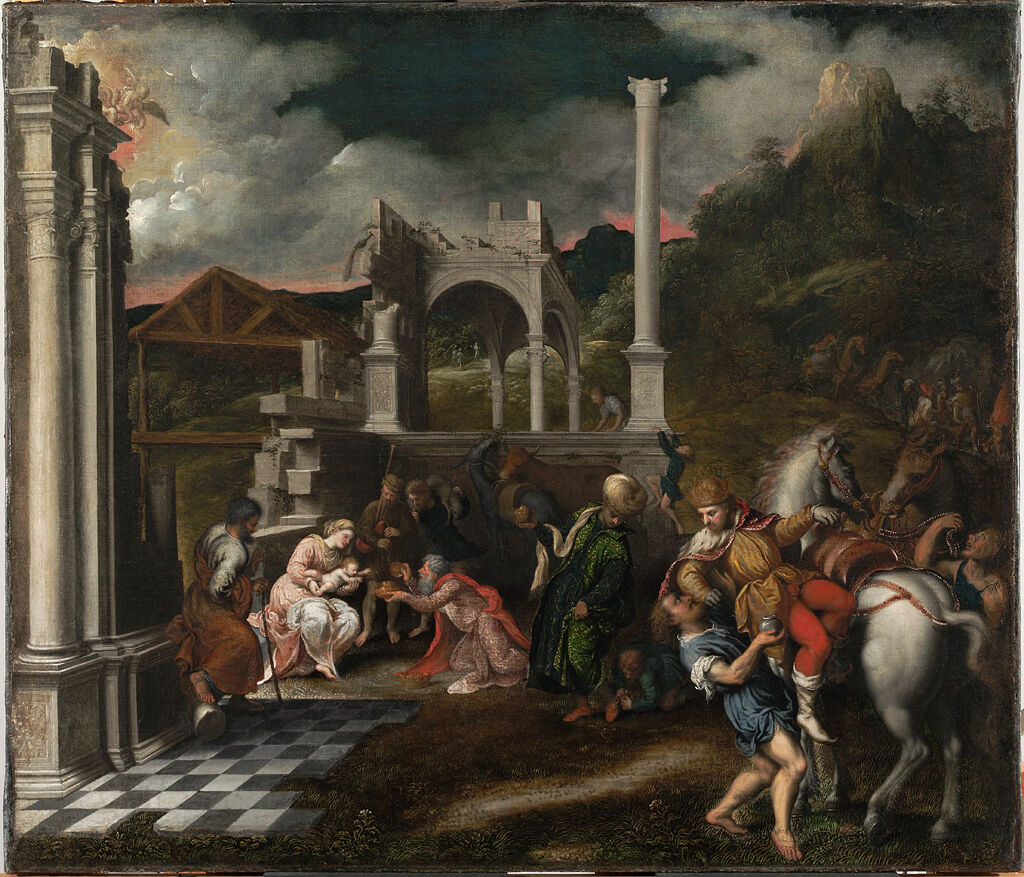
The morning light spills through an open window, illuminating the gathered figures in a moment of reverent awe. Three Magi, adorned in regal splendor, kneel before the Christ child, their expressions a blend of wonder and nostalgia. In the air hangs the weight of history and prophecy, as onlookers—the humble and the exalted—form a silent circle around the divine tableau. Focus on the vivid robes of the Magi, rich in jewel tones that contrast against the soft, ethereal light illuminating the infant.
Notice how the painter's deft brushwork captures the intricate details of their garments, the shimmer of gold and lapis lazuli drawing the eye. To the left, the serene face of the Madonna cradles the child, her gentle gaze fostering a connection that transcends time, inviting the viewer to partake in this sacred moment. Bordone evokes a profound emotional tension through the varying gestures of the figures; the Magi's outstretched hands signify both reverence and longing, while the presence of humble shepherds in the background hints at the juxtaposition between earthly and celestial knowledge. The interplay of shadow and light also speaks to a deeper narrative—the nostalgia of faith amidst the dazzling display of wealth.
Here, every element intertwines, crafting a scene rich in symbolism that resonates with the viewer’s own reflections on devotion. Painted circa 1550 during the Venetian Renaissance, The Adoration of the Magi emerges from an era marked by spiritual exploration and artistic innovation. Paris Bordone, a distinguished student of Titian, found himself in a vibrant artistic milieu, where the tension between tradition and modernity flourished. This work encapsulates the essence of its time, merging the grandeur of religious themes with a uniquely personal approach that invites contemplation and reverence.