The Adoration of the Magi — History & Analysis
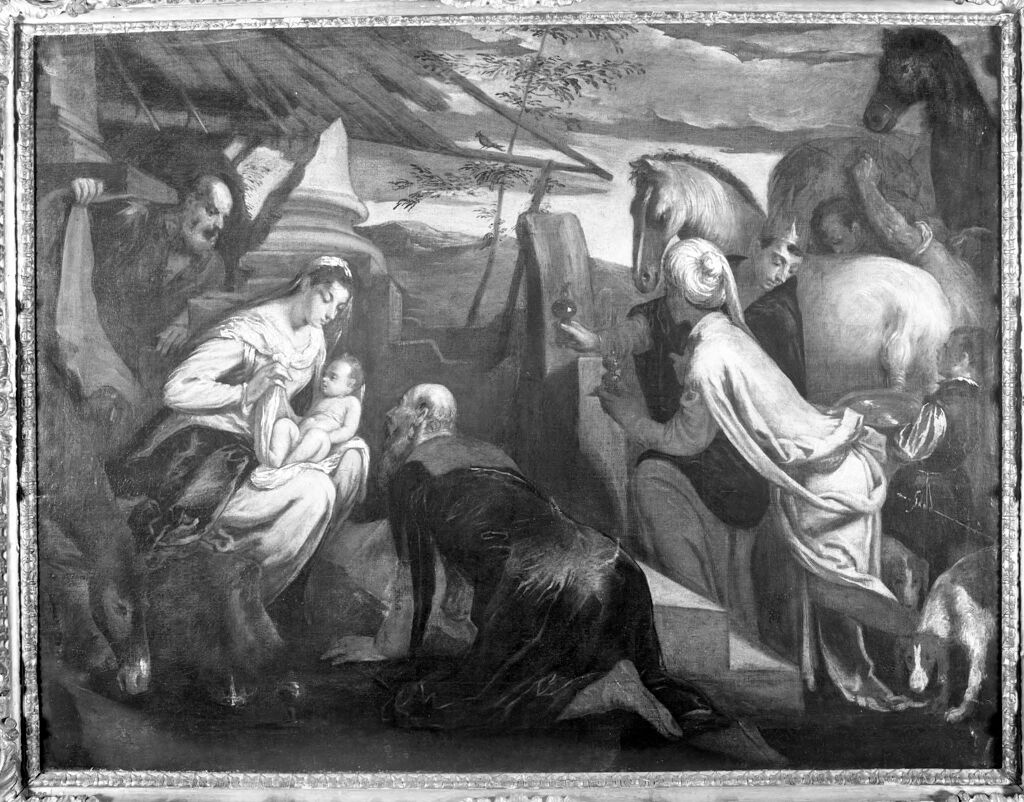
The air is thick with anticipation as three figures, cloaked in rich fabrics, kneel before a modest cradle. Their faces—etched with reverence and awe—reflect the flickering candlelight that dances across the room, illuminating the humble interior. A cacophony of emotions stirs around them, a chaotic blend of devotion and wonder enveloping the scene. Look to the left at the central figure bent in humble adoration, his vibrant red cloak contrasting sharply with the muted tones of the surroundings.
Notice how the light spills over the baby, casting a divine halo that draws the eye, while shadows cling to the corners, adding depth to the composition. The artist’s brushwork captures a sense of immediacy, the swirling garments and dynamic poses of the Magi conveying the frenzy of the moment, as though time itself has paused in reverence. Hidden meanings pulse within the chaos. The contrasting wealth of the Magi, adorned in opulent attire, against the simplicity of the stable, speaks to the clash between earthly riches and spiritual wealth.
The varied expressions on their faces—wonder, joy, and solemnity—reflect the complex emotional landscape of faith, while the presence of bystanders in the background introduces a subtle commentary on the wider world's reactions to this miraculous event. In the late 1570s, while creating this work in Bassano del Grappa, Jacopo Bassano the Elder was deeply engaged in the counter-reformation, where religious themes flourished. This painting embodies the devotion of the time while showcasing his unique blend of naturalism and emotional depth, marking a pivotal moment in the evolution of narrative art within the Italian Renaissance.