
The Adoration of the Magi — History & Analysis
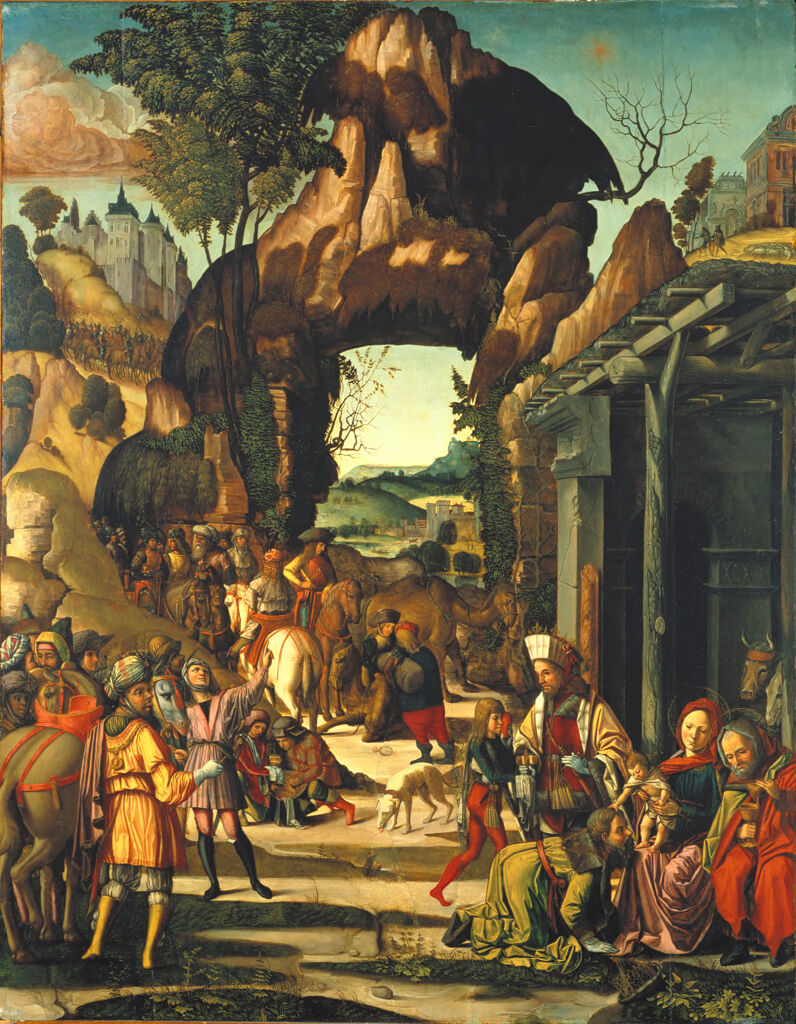
A chill hangs in the air of a dimly lit stable, heavy with anticipation and reverence. The Magi, cloaked in rich fabrics, kneel before the infant, their faces illuminated by a celestial glow that breaks through the darkness of the scene. Their gestures convey awe, yet a shadow of grief lingers in their eyes, suggesting that this moment—so filled with promise—will also carry the weight of loss. Look to the center, where the Holy Family radiates tranquility amidst the bustling figures surrounding them.
Notice how the artist masterfully employs warm, golden tones to envelop the child, contrasting sharply against the cooler blues and greens of the Magi’s attire. The composition draws the viewer’s gaze toward Mary and Jesus, whose serene expressions anchor the painting, while the richly detailed surroundings hint at opulence and suffering intertwined. Beneath the surface, the expressions of the Magi reveal a profound emotional duality. While they bring gifts to celebrate the birth of Christ, the sorrow etched into their features suggests an awareness of the trials that lie ahead.
The tension between joy and grief creates a palpable atmosphere, highlighting the sacredness of the moment while foreshadowing the inevitable pain of sacrifice that is to come. Marcello Fogolino created this poignant piece between 1519 and 1548, a time marked by the High Renaissance's exploration of human emotion and spirituality. Working in Italy, he was influenced by his contemporaries, who were pushing the boundaries of composition and color. This painting reflects the period’s deep engagement with themes of divinity and mortality, encapsulating both the hope and sorrow inherent in the human experience.