
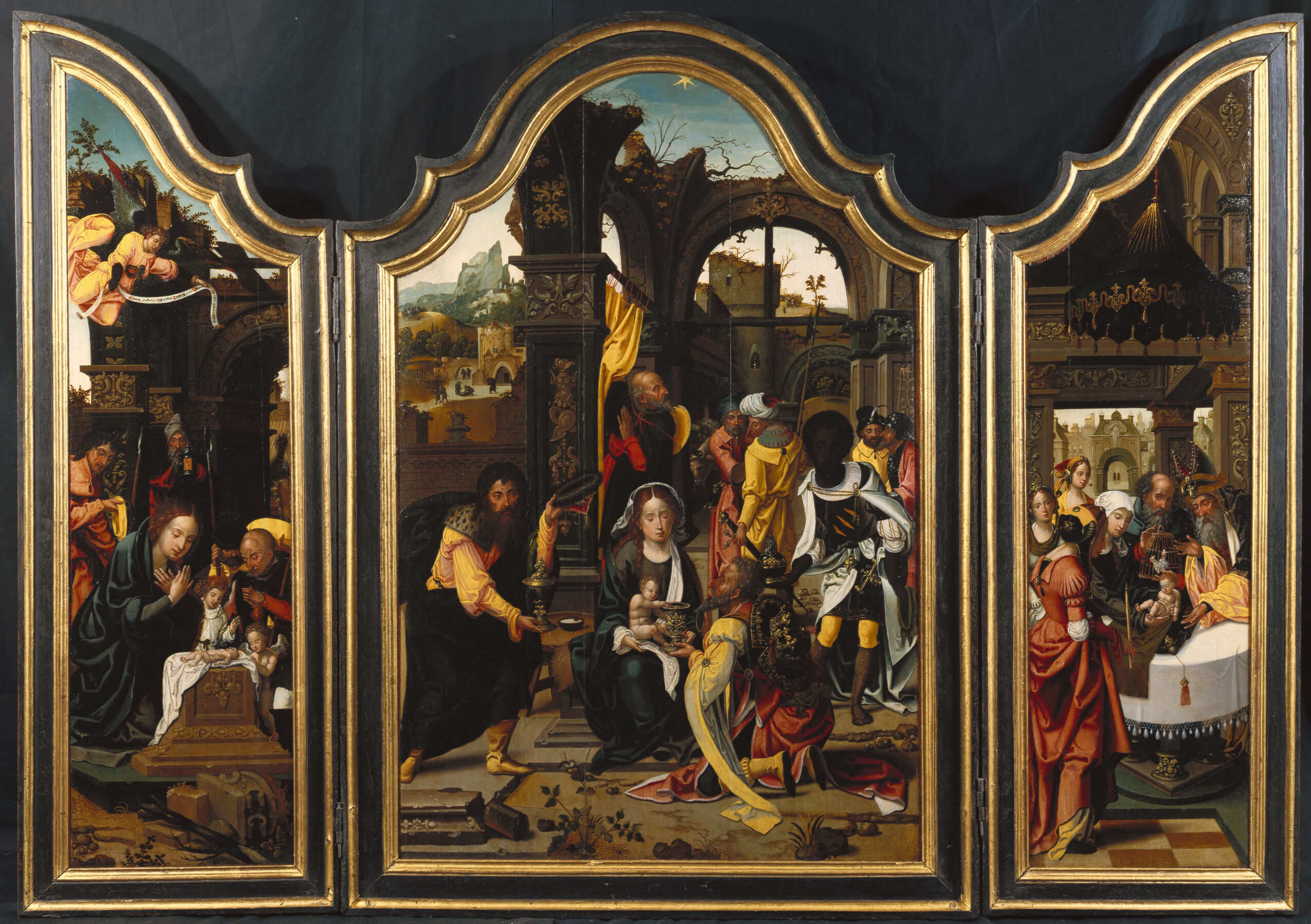
The Adoration of the Magi; left panel: The Nativity; right panel: The Presentation in the Temple — History & Analysis
In the hushed stillness of a dimly lit stable, the air is thick with anticipation. Three Magi, adorned in regal robes, kneel reverently before the newborn Christ, their faces illuminated by a single beam of divine light that filters through the rustic rafters. Mary gazes down with a blend of serenity and chaos, surrounded by a menagerie of animals, each representing a fragment of the earthly realm converging to witness the miraculous moment. Look to the center, where the infant Jesus rests in a humble cradle, his small figure contrasting with the grandeur of the Magi.
Notice how the warm, earthy hues of the stable envelop the scene, while the jewel-toned fabrics of the visitors draw your eye, creating a vibrant focal point. The intricate details in the Magi’s expressions and gestures reveal their awe and disbelief, capturing the emotional weight of this sacred encounter. Yet, it is the tension within this gathering that intrigues most. The juxtaposition of the chaotic scene—animals stirring, the crowd of worshippers, the looming shadows—against the serene countenance of the Holy Family speaks to the tumult of existence.
This moment of adoration unfolds against the backdrop of a world that is both wondrous and bewildering, echoing the conflict between divine peace and earthly turmoil, a theme that resonates beyond the canvas. Created around 1520, this triptych emerged during a transformative period in Northern Renaissance art, marked by an increasing interest in realism and the human experience. The artist, whose identity remains partially obscured in history, was part of a movement that sought to bring the divine closer to the viewer, infusing sacred narratives with relatable emotion. This work reflects not just a moment in biblical history but also the artist's response to the complexities of life in a world grappling with both faith and doubt.