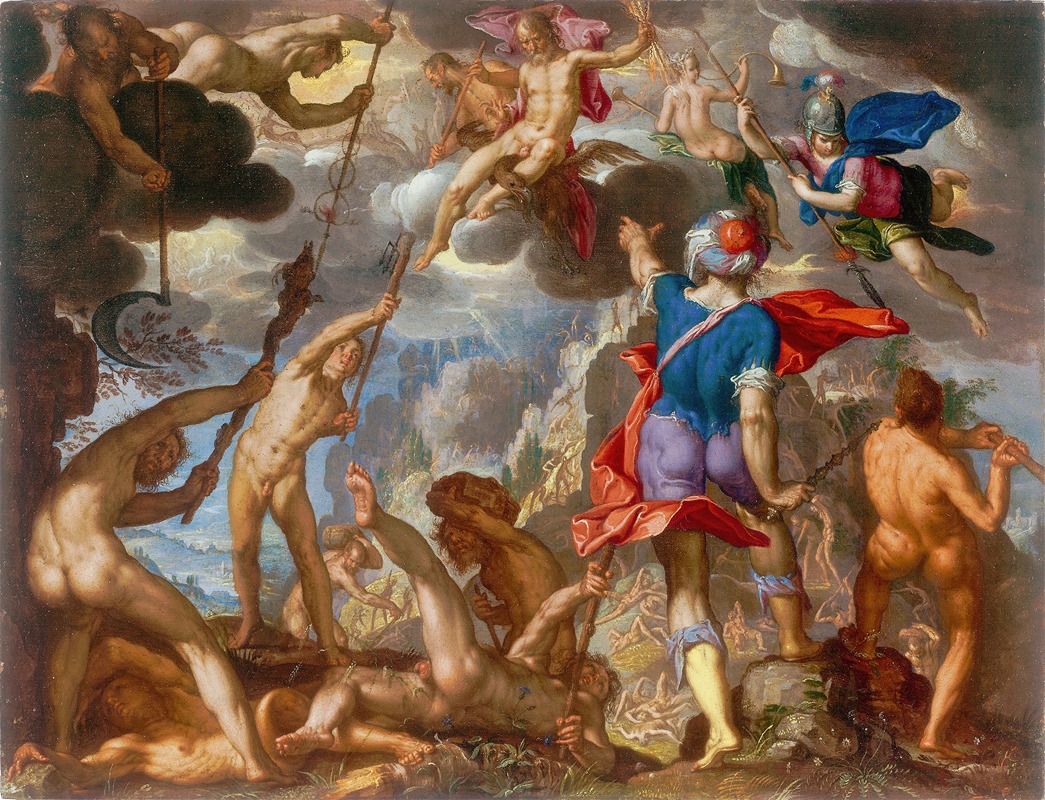
The Battle between the Gods and the Giants — History & Analysis
In the heat of an eternal struggle, titanic figures clash against a swirling tempest of both chaos and divinity. Gods, resplendent in shimmering gold and radiant hues, command the skies, their expressions a mixture of wrath and determination. Below, the muscular forms of giants writhe in defiance, shadows intertwining with the flickers of divine light that pierce the tumultuous backdrop, evoking the very essence of rebirth through conflict. Focus first on the central figures, where a celestial deity raises a weapon, poised to strike with divine authority. Notice the intricate details of their garments, shimmering as if woven from starlight, contrasting starkly against the earthy, twisted forms of the giants below. The composition draws the viewer's eye to the dynamic movement created by swirling drapery and clashing limbs, while the vivid palette of blues and golds intensifies the emotional turmoil and highlights the struggle between celestial order and chaotic forces. Hidden within this dramatic tableau lies a deeper commentary on resilience and renewal. The triumphant deities signify not just victory but the cycles of nature—how destruction fosters new growth. The giants, though menacing, represent the primal forces of the earth, serving as a reminder that chaos often precedes creation. The tension between these opposing elements suggests that through struggle, there is the potential for rebirth and regeneration. Joachim Antonisz. Wtewael painted this masterpiece around 1608 during a time when the Northern Netherlands were experiencing both artistic flourishing and political turmoil. As part of the Mannerist movement, Wtewael sought to convey complex narratives through elaborate compositions, reflecting the tumult of his era. The painting captures the essence of human conflict and divine intervention, illustrating the artist's mastery of allegory during this dynamic period in art history.