The Battle of Cadiz (Dutch and English Ships Attack the Spanish Armada) — History & Analysis
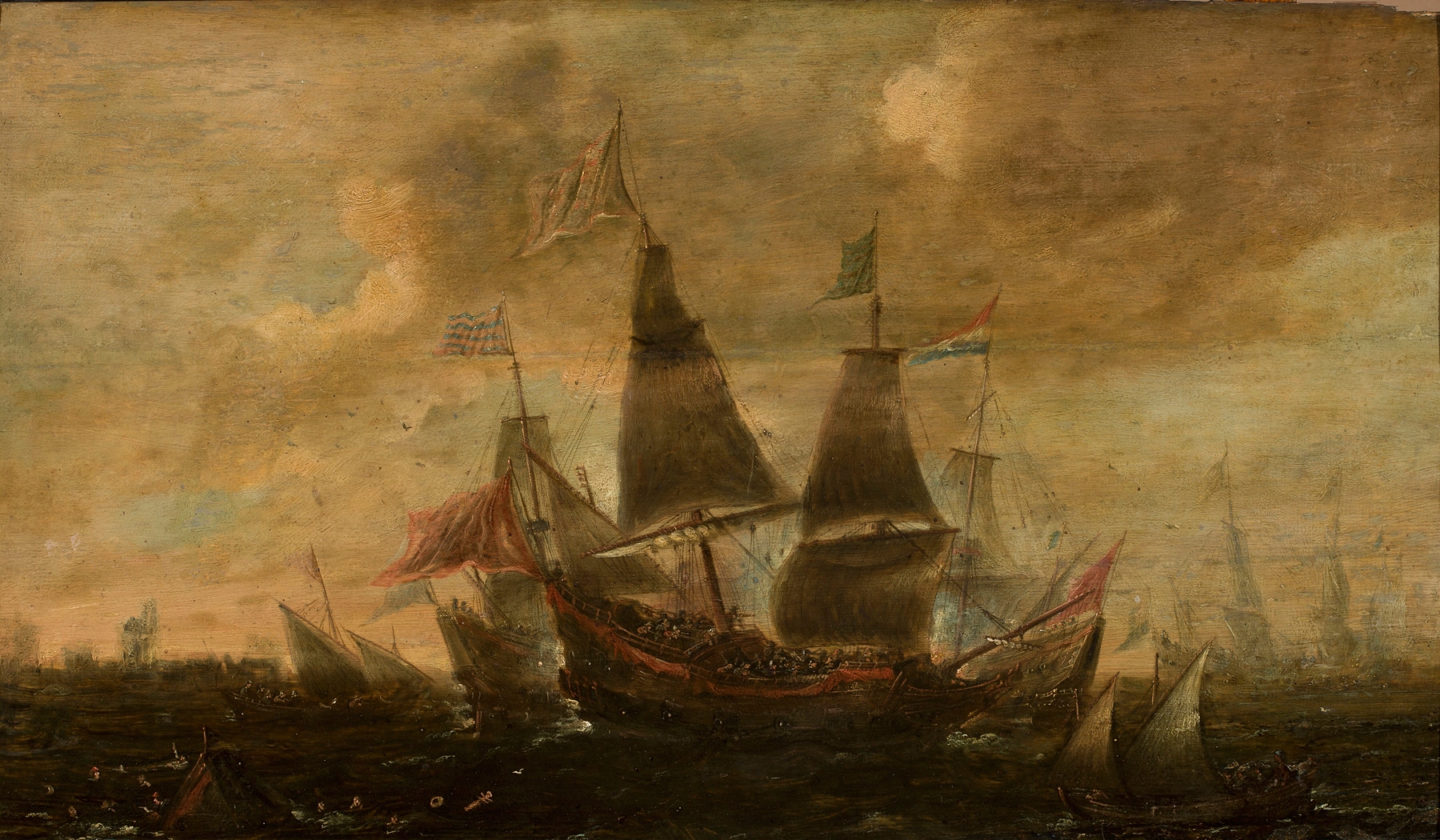
The roar of cannon fire shatters the peace of the Atlantic, filling the air with tension and smoke. Ships loom large against the murky horizon, their sails billowing like the wings of predatory birds, poised for the clash of empires. Amidst the chaos, sailors scramble frantically on deck, their voices mingling with the thunderous rhythm of battle, while the sun attempts to pierce the clouds, casting fleeting rays on the tumultuous scene below. Look to the center, where the clash of Dutch and English vessels intertwines with the imposing Spanish galleons. Notice how the artist captures the dynamic movement of the waves, swirling tumultuously beneath the painted ships.
The deep blues and greens of the sea contrast sharply with the vivid reds and whites of the flags unfurling in the wind, evoking both the fierce spirit of combat and the ever-shifting tides of fortune. The composition, with its diagonal lines and swirling forms, suggests both chaos and a sense of inevitable rebirth amid destruction. Beneath the surface of this momentous battle lies a metaphor for the struggle between old empires and the rising forces of change. The Spanish ships, once symbols of invincibility, are depicted in a state of vulnerability, as the united Dutch and English fleets assault their long-held dominance. Each cannonball blazing through the air symbolizes both the destruction of the past and the hope of a new world emerging from the ashes of conflict.
The viewer is left to ponder the cyclical nature of power, where every end births a new beginning. Aert Anthonisz painted this scene in 1608, during a time when the Dutch Republic was engaged in the Eighty Years' War for independence from Spanish rule. The conflict had profound implications in the European landscape, shifting the balance of power. Amidst the backdrop of artistic innovation and religious upheaval, Anthonisz sought to immortalize a key moment in naval warfare, providing a glimpse of emerging national identities that would define the modern age.