The Honorable Laura Lister — History & Analysis

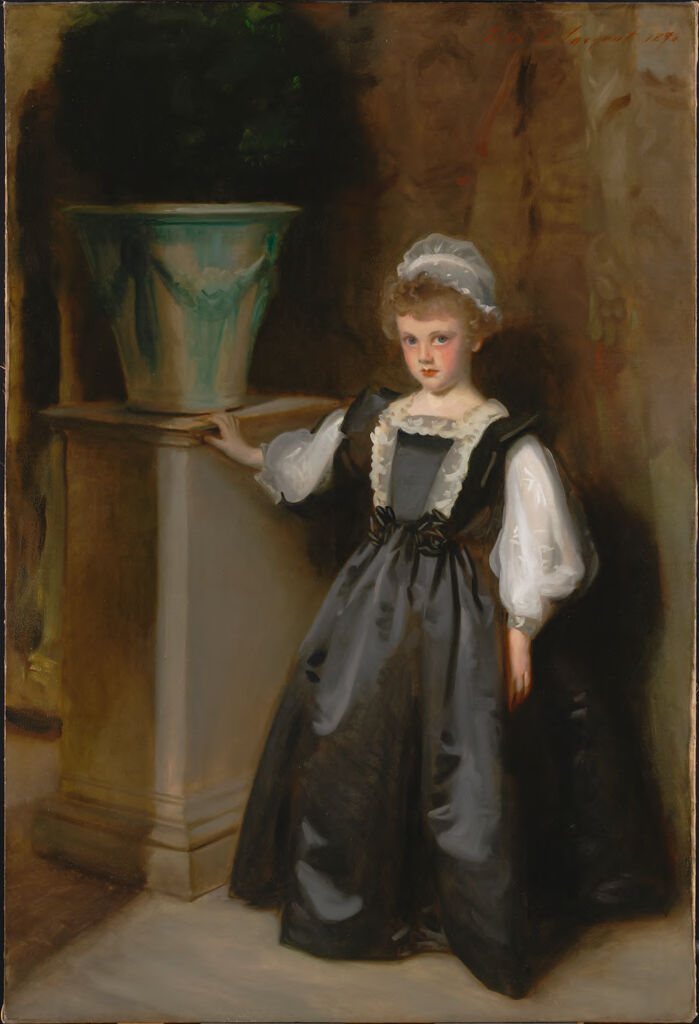
Can paint confess what words never could? In The Honorable Laura Lister, the canvas breathes with a vibrancy that speaks to the heart of its subject, capturing an ecstasy that transcends language and mere representation. Look to the left, where Laura's poised figure fills the space, her elegant attire cascading softly around her. The artist’s skilled brushwork reveals a shimmering depth in the fabric, each stroke conveying the intricate interplay of light and shadow.
Notice how the soft blush of her skin contrasts beautifully with the deep greens and blues that surround her, drawing the viewer’s gaze inward toward her serene yet enigmatic expression. The composition deliberately balances the rich textures of her gown against the smoothness of her features, creating a dialogue between the formal and the intimate. Delve deeper into the subtleties of the painting, where the slight tilt of Laura’s head suggests an unspoken thought, conjuring a mysterious tension. The delicate play of light on her face hints at an inner joy, while the backdrop remains muted, suggesting a world beyond the frame that may never fully understand her essence.
These elements combine to form a portrait not merely of a woman, but of a spirit caught between societal expectation and personal desire, echoing the complexity of identity in the late 19th century. In 1896, Sargent painted this striking portrait during a period of immense success, having already established himself as a leading portraitist in Europe and the United States. At this time, he was navigating the complexities of high society amidst an artistic milieu that was both traditional and innovative. The work reflects his mastery in capturing not only likeness but inner life, during a moment when the world was on the cusp of modernity, redefining perceptions of beauty and identity.