The Squirrel — History & Analysis
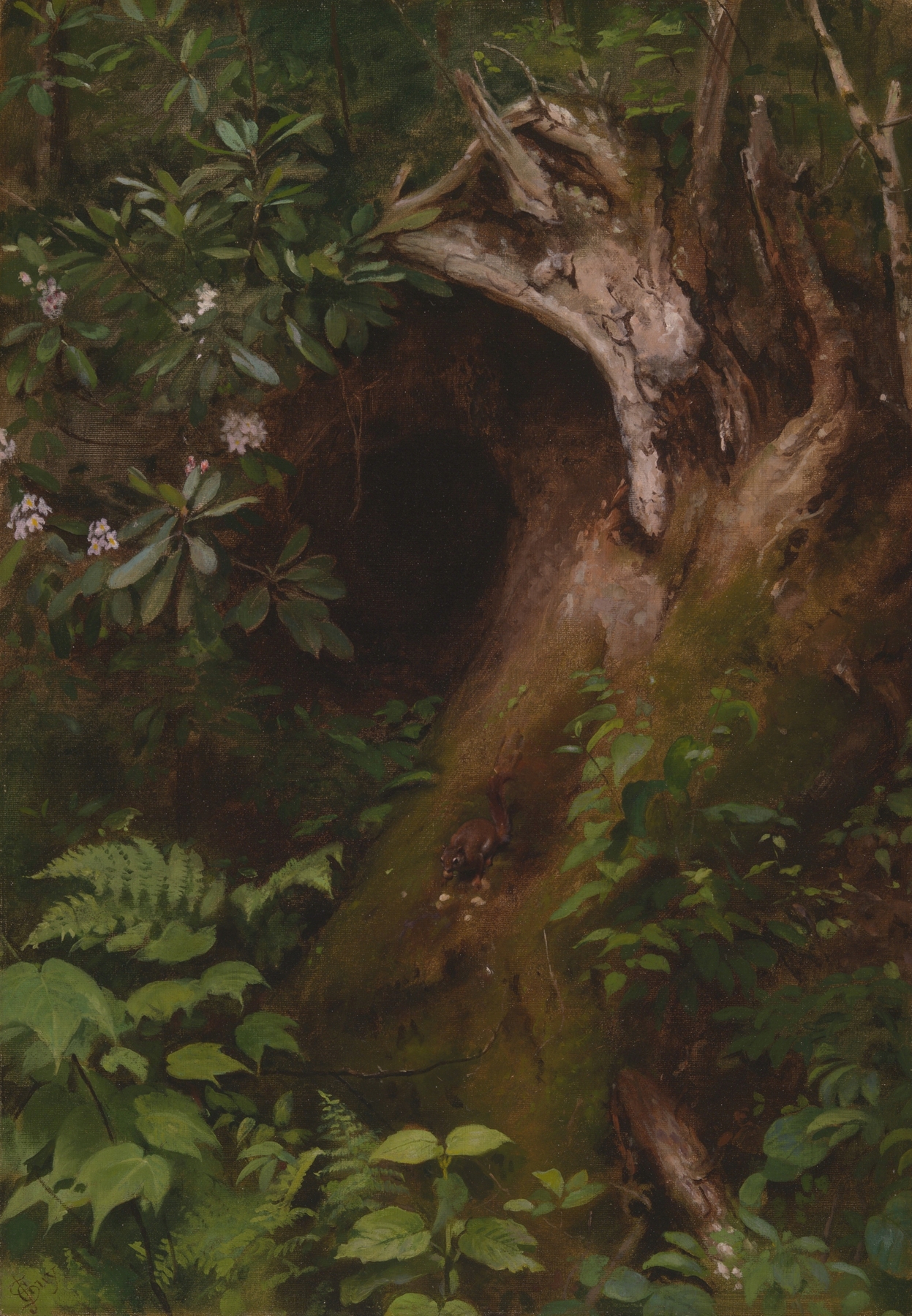
Could a single brushstroke hold eternity? In the delicate gaze of a small creature, we find an echo of the divine interwoven with the ordinary. Look to the left at the charming squirrel, its fur meticulously rendered in shades of brown and cream that shimmer with life. The brushstrokes convey a sense of movement, as if the animal might leap from the canvas at any moment.
Notice how the dappled light filters through the surrounding foliage, illuminating the creature's bright, inquisitive eyes and the gentle curve of its tail. The rich, earthy tones create a serene atmosphere, inviting the viewer to pause and absorb the moment. The juxtaposition between the squirrel’s innocence and the lush environment hints at the intricate balance of nature. Perhaps there’s a subtle commentary on the fleeting nature of life itself, as the squirrel—symbolic of vitality and curiosity—embodies both joy and fragility.
Each detail, from the texture of the bark to the faint play of shadow and light, reflects an underlying reverence for the natural world, celebrating its beauty while hinting at the fragility within. In the 1860s and 70s, Seymour Joseph Guy was establishing his reputation in America, influenced by the burgeoning realism movement. Living in a time of significant artistic transformation, he sought to capture the essence of everyday life with remarkable precision. This piece emerged from his deep connection to nature and a desire to immortalize the moments that often slip away unnoticed, encapsulating the spirit of a society in motion while remaining anchored to the tranquil beauty of the world around him.