
The Tyger — History & Facts
The six stanzas of the poem fill the page in hand-lettered script beneath the title The Tyger, with thin green tendrils winding between the lines. Below them a mottled, brownish tiger stands on the grass facing left, beside a dark tree trunk that rises the full height of the page, and the sky behind the animal is tinted blue. William Blake wrote, etched, printed and published the poem in Songs of Experience, dated 1794. His best-known invention was a method of printing text and image from a single copper plate, so the words and the tiger here were etched and printed together as one design.
In this copy, the Experience plates were color-printed in green, yellow ocher, blue and Indian red inks and then finished by hand in watercolor. Readers have long noticed that Blake's tiger is not ferocious at all; one critic said it looks like "a cat with a human face." In this copy the blue sky beside it even suggests daytime, despite the poem's "forests of the night." The page is plate 42 of copy F of Songs of Innocence and of Experience, which Paul Mellon bought in 1947 and gave to the museum in 1978. It is in the Yale Center for British Art in New Haven.
More Artworks by William Blake

Christ Blessing
William Blake
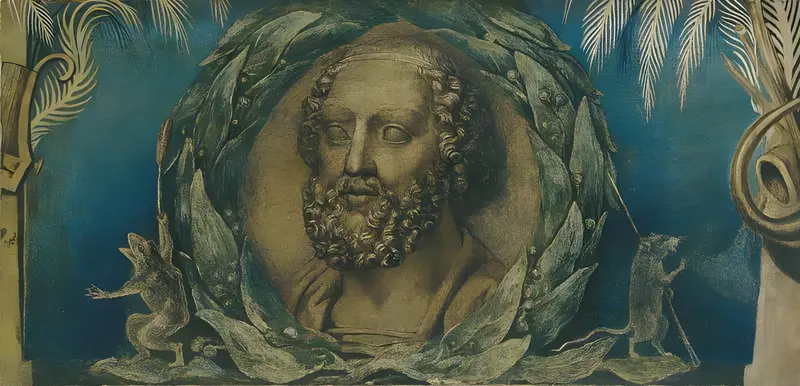
Homer
William Blake
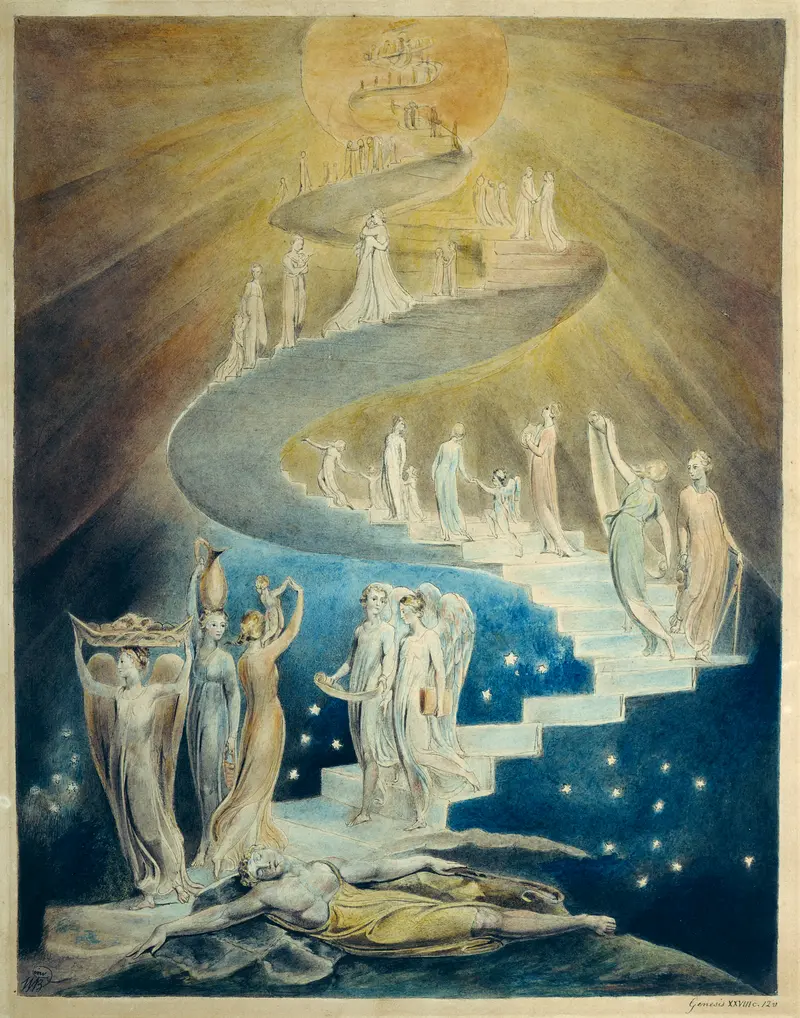
Jacob's Ladder
William Blake
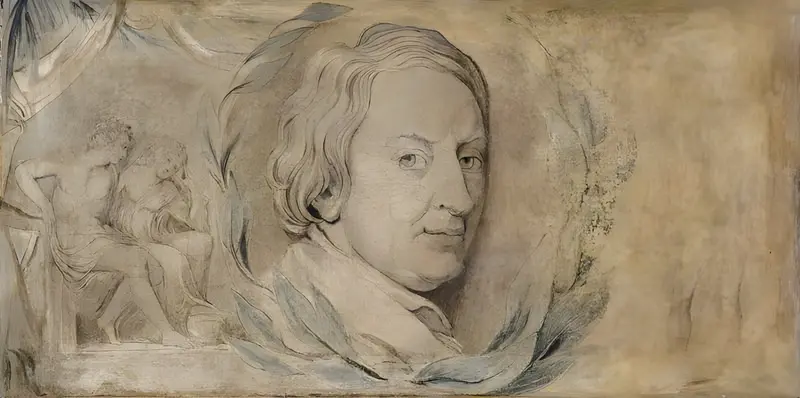
John Dryden (1631–1700)
William Blake
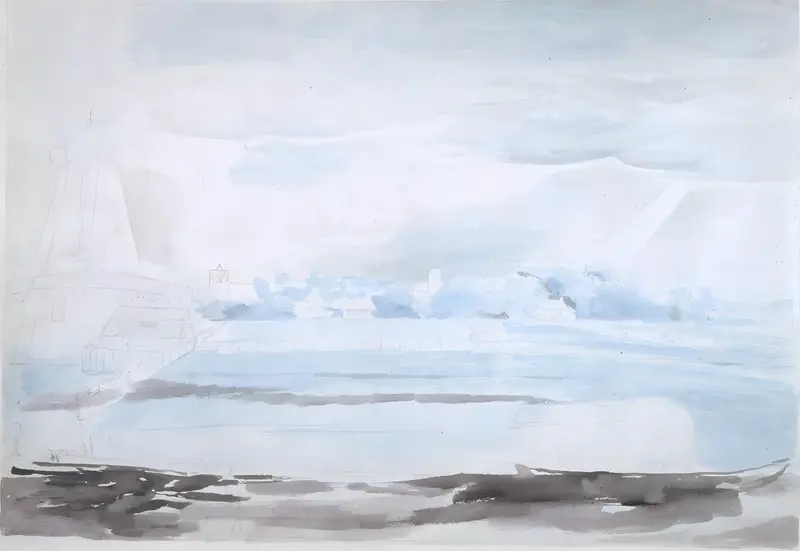
Landscape near Felpham
William Blake
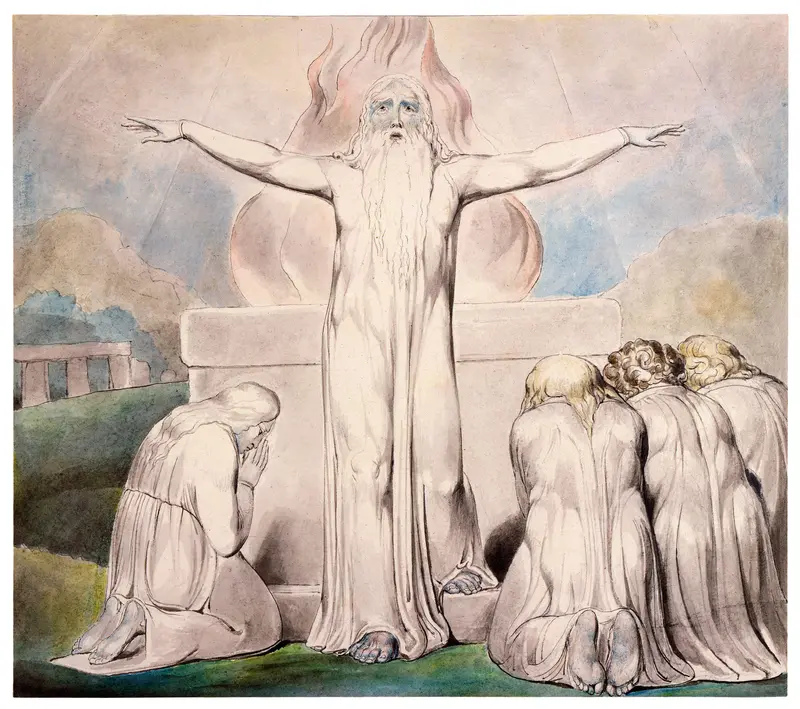
Sacrifice of Job
William Blake
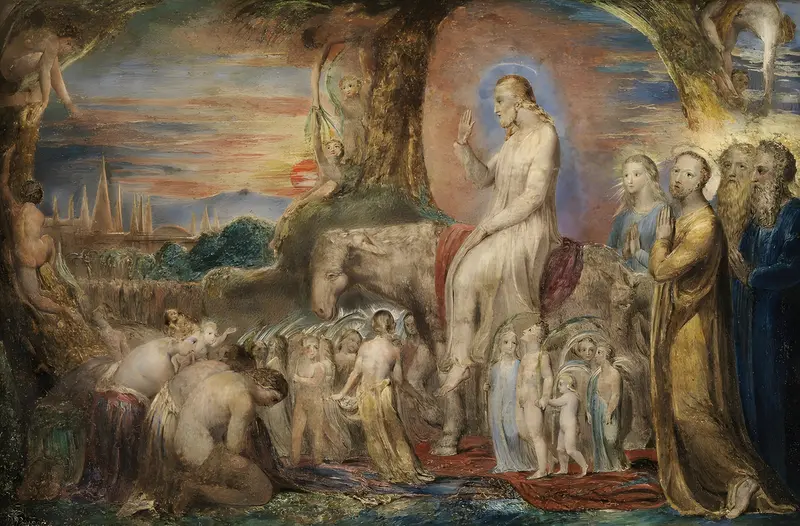
Christ's Entry into Jerusalem
William Blake
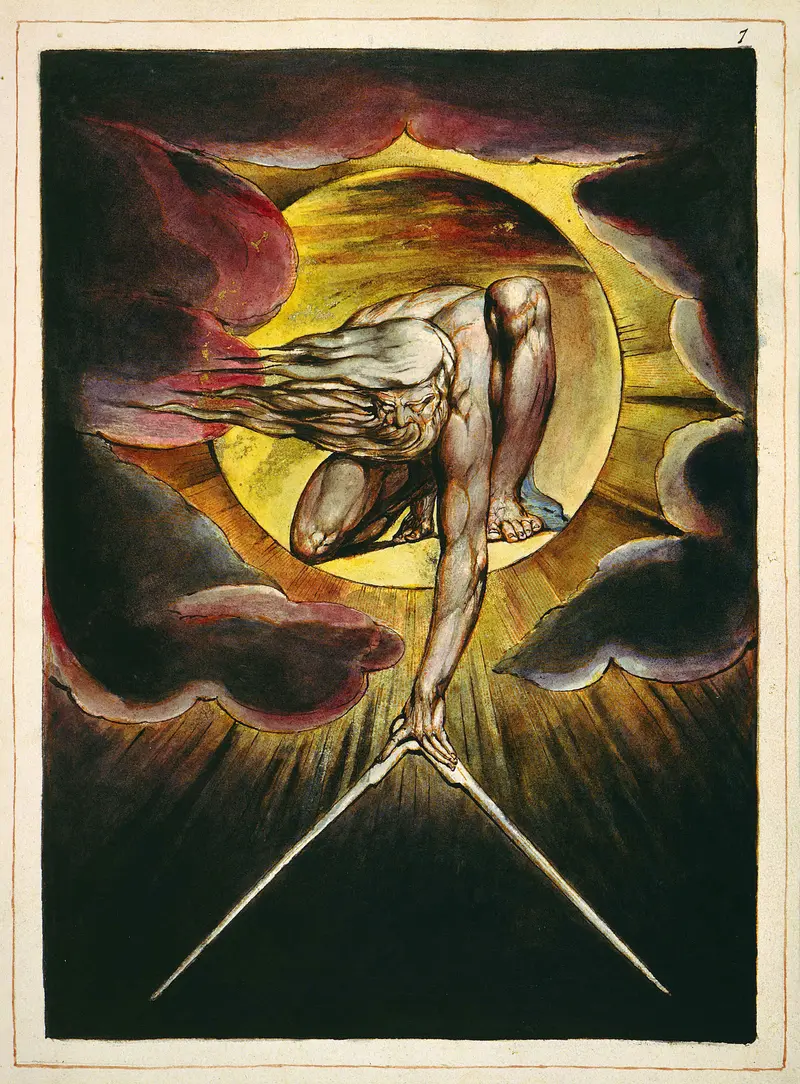
The Ancient of Days
William Blake
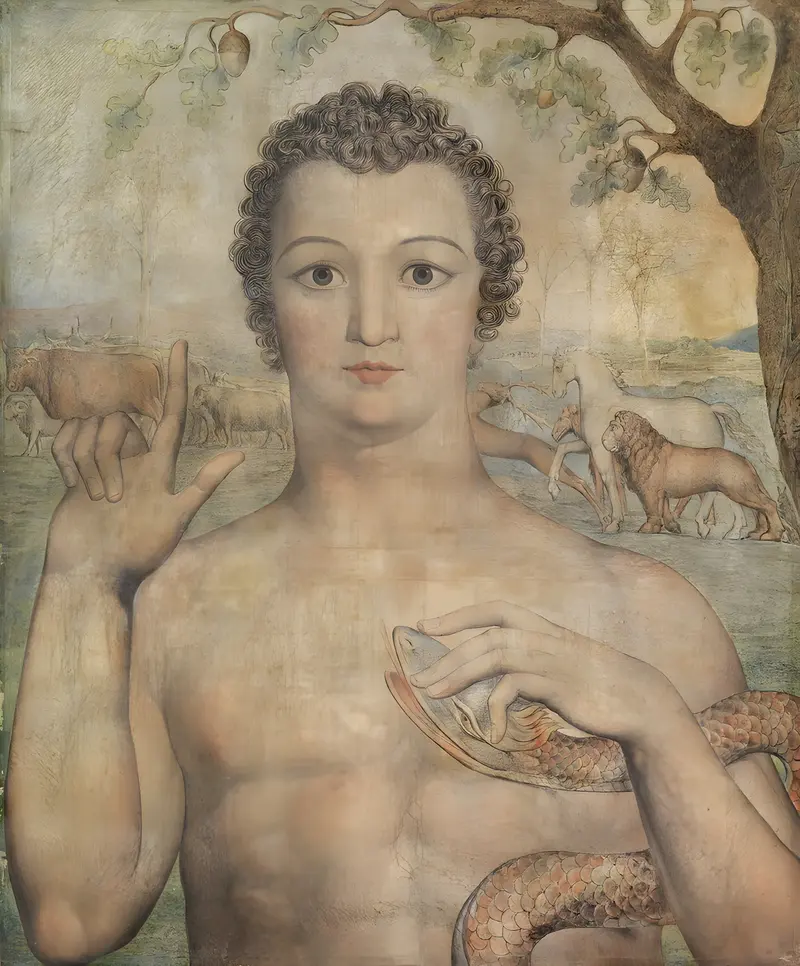
Adam Naming the Beasts
William Blake
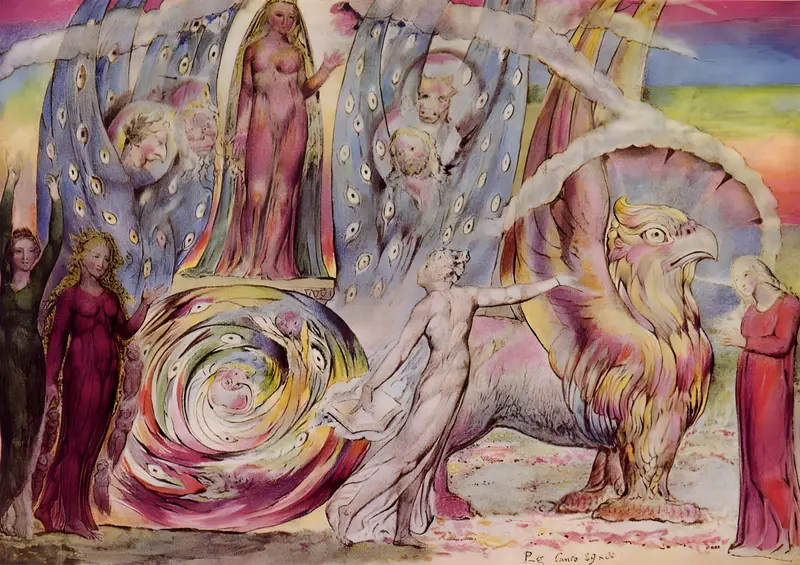
Beatrice Addressing Dante from the Car
William Blake





