The Veteran in a New Field — History & Facts
A farmer in a broad-brimmed hat and white shirt stands with his back to us in a field of ripe wheat, swinging a long scythe. Golden grain fills almost the whole canvas under a thin strip of blue sky, and cut sheaves lie at his feet. Winslow Homer completed it in 1865, following the surrender of General Robert E. Lee and the assassination of President Abraham Lincoln, the Met says.
A discarded Union Army jacket and canteen in the lower right corner identify the farmer as a veteran, and the "new field" of the title recalls his old one, the battlefield. The return to peaceful work echoes Isaiah 2:4, "They shall beat their swords into plowshares." While the bountiful Northern harvest suggests renewal, the single-bladed scythe evokes the Grim Reaper. Pigment that has become transparent over time shows that Homer first painted a more elaborate scythe and later simplified it, which strengthens the link to death.
Miss Adelaide Milton de Groot left the painting to the Met in 1967. It is in the Metropolitan Museum of Art in New York.
More Artworks by Winslow Homer
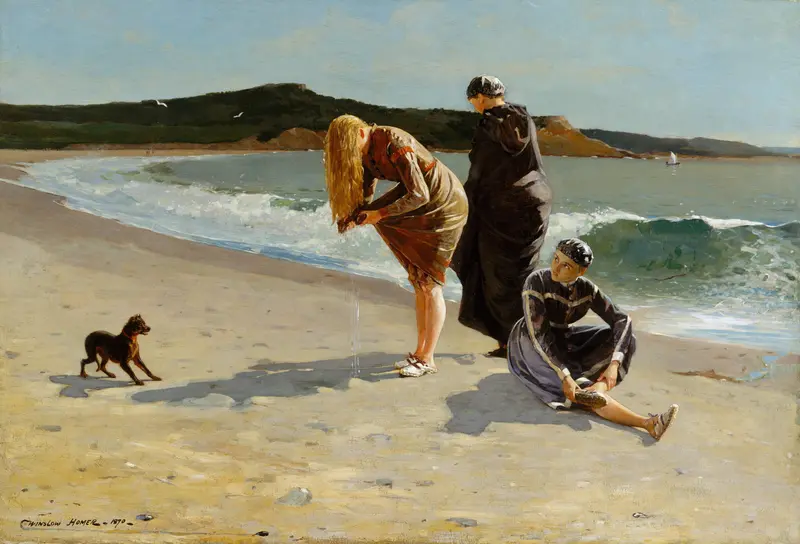
Eagle Head, Manchester, Massachusetts (High Tide)
Winslow Homer
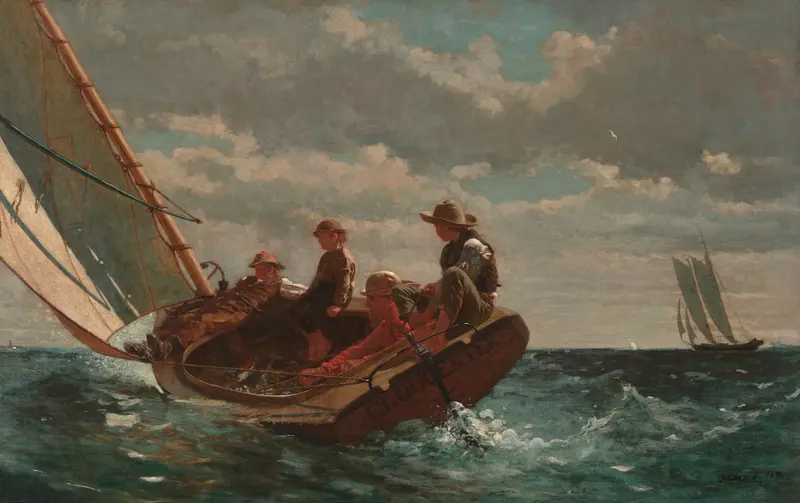
Breezing Up (A Fair Wind)
Winslow Homer
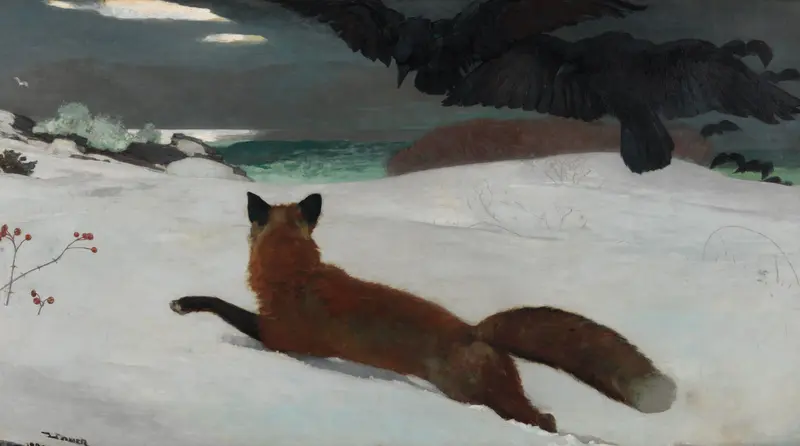
The Fox Hunt
Winslow Homer
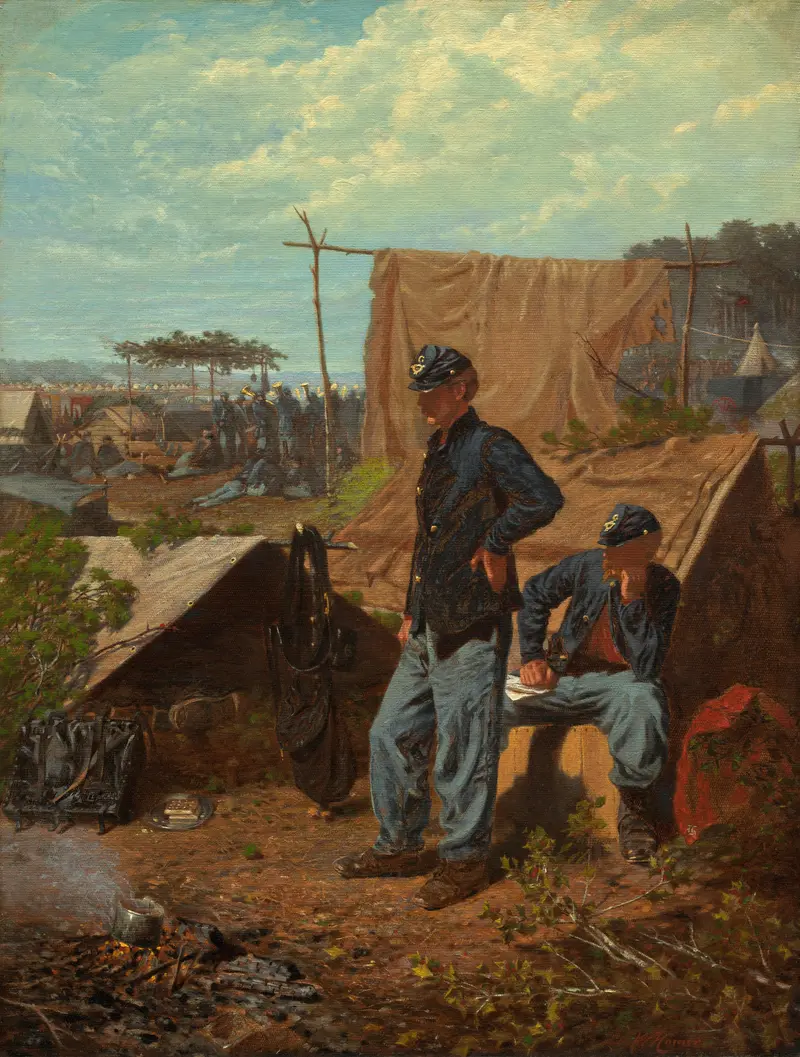
Home, Sweet Home
Winslow Homer
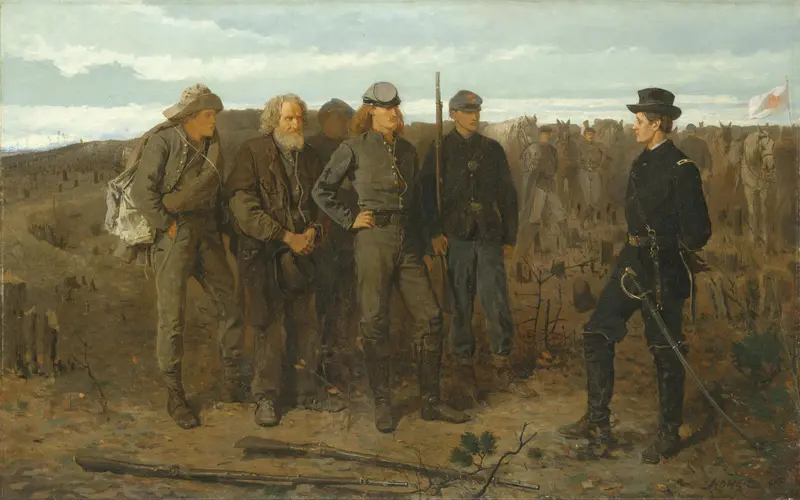
Prisoners from the Front
Winslow Homer
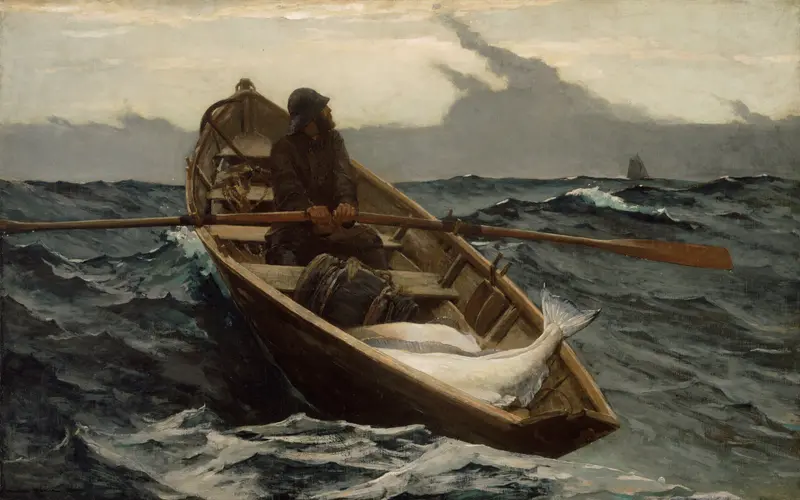
The Fog Warning
Winslow Homer
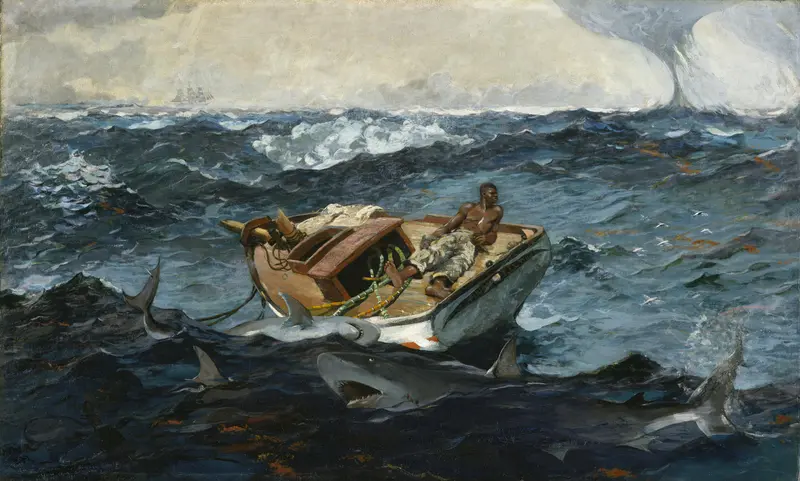
The Gulf Stream
Winslow Homer
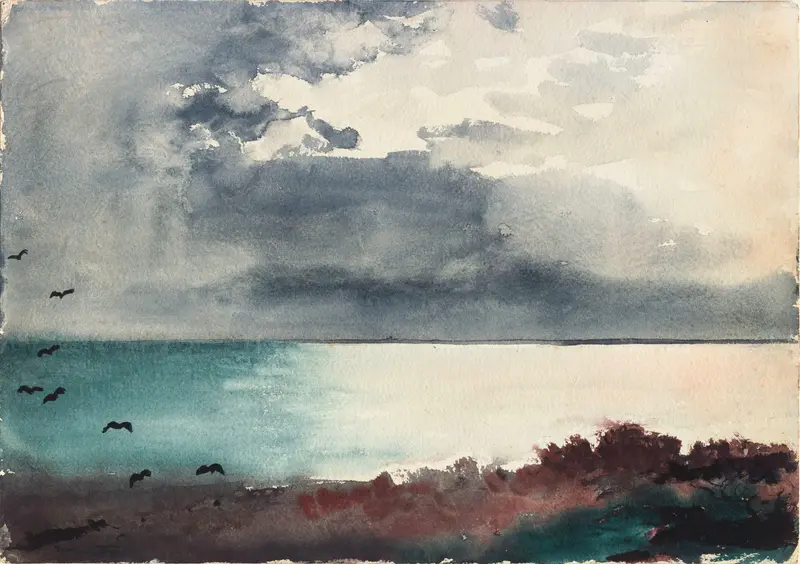
Breaking Storm, Coast of Maine
Winslow Homer
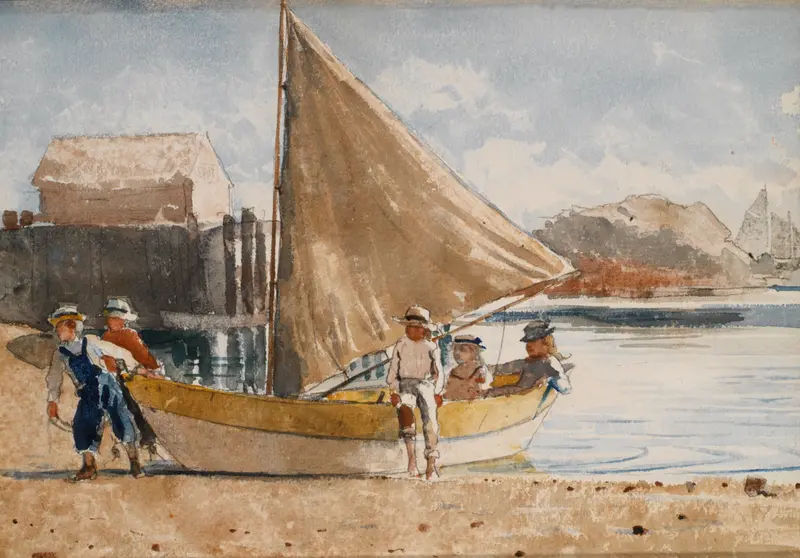
Summertime
Winslow Homer

The Herring Net
Winslow Homer