
The Virgin and Child with Two Angels — History & Analysis
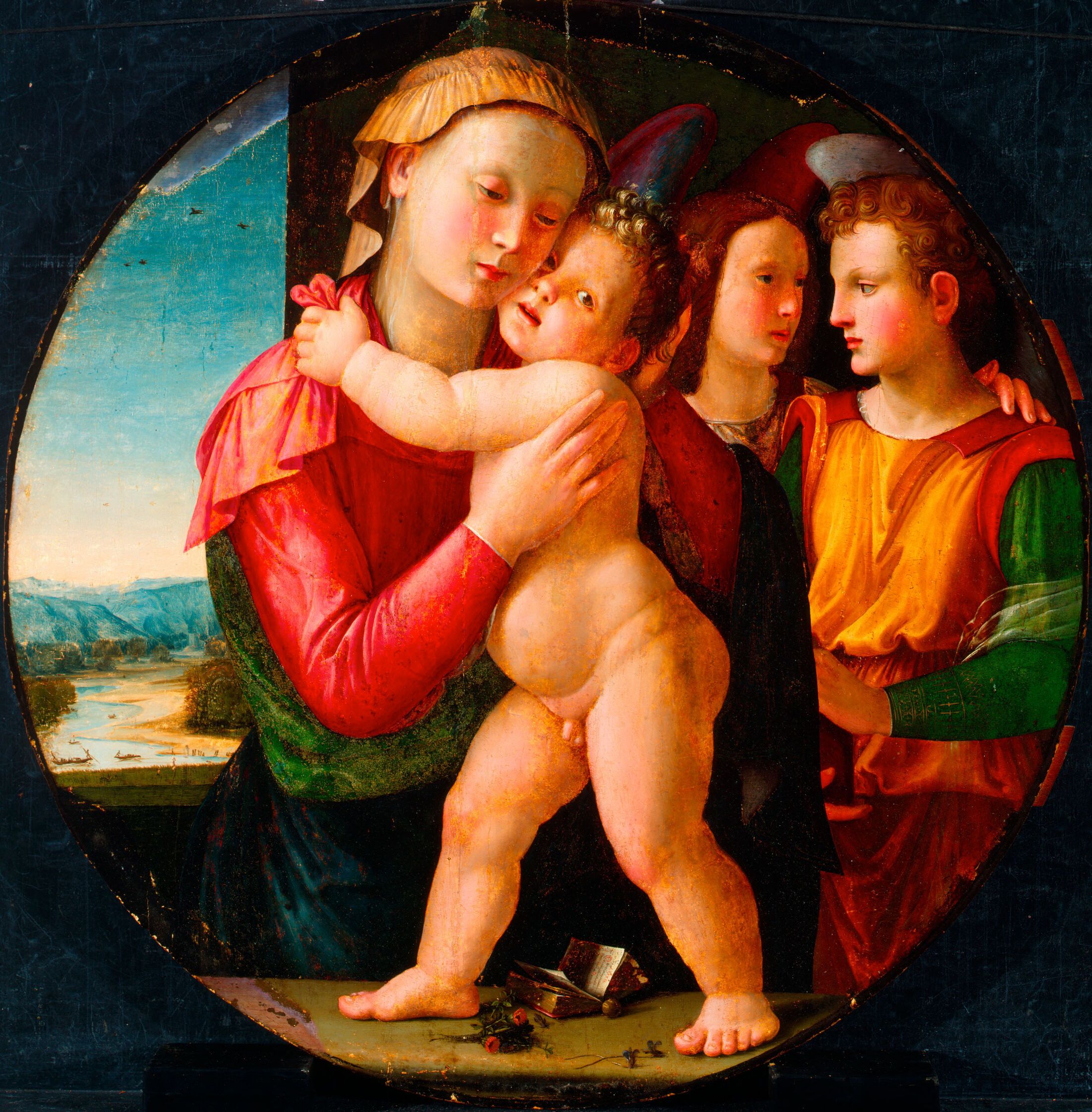
When did color learn to lie? In Ridolfo Ghirlandaio's luminous composition, The Virgin and Child with Two Angels, the interplay of hue and form unveils a world where divine innocence and earthly tenderness harmonize effortlessly. Look to the left at the serene expression on the Virgin's face, her gaze soft and nurturing as she cradles the Child. The rich, deep blues of her robe contrast beautifully with the warm golden tones surrounding them, creating a palpable sense of shelter and love. Notice how the angels, positioned on either side, lean in with delicate, almost ethereal gestures that seem to both protect and exalt.
The composition's careful balance draws the viewer's eye across the canvas, reinforcing the central theme of maternal devotion. Yet, within this tranquil scene, tensions lie beneath the surface. The subtle positioning of the angels creates a dynamic symmetry, suggesting the weight of divine responsibility that accompanies the Virgin's joys. The tenderness in the Child’s expression hints at the fragility of innocence in an imperfect world, a stark reminder of the struggles that lie ahead.
This delicate juxtaposition of joy and foreboding enriches the narrative, inviting contemplative reflection on motherhood and faith. Painted in Florence between 1510 and 1515, Ghirlandaio was part of a vibrant artistic milieu influenced by the Renaissance ideals of humanism and beauty. At this time, he was adopting a softer, more approachable style, moving away from the more rigid forms of earlier works. This painting, emblematic of his mastery, reflects not only the personal devotion of the artist but also the broader cultural shifts occurring within the world of art, where spiritual themes were infused with warmth and human emotion.
