Towboat ‘John Birkbeck’ — History & Analysis
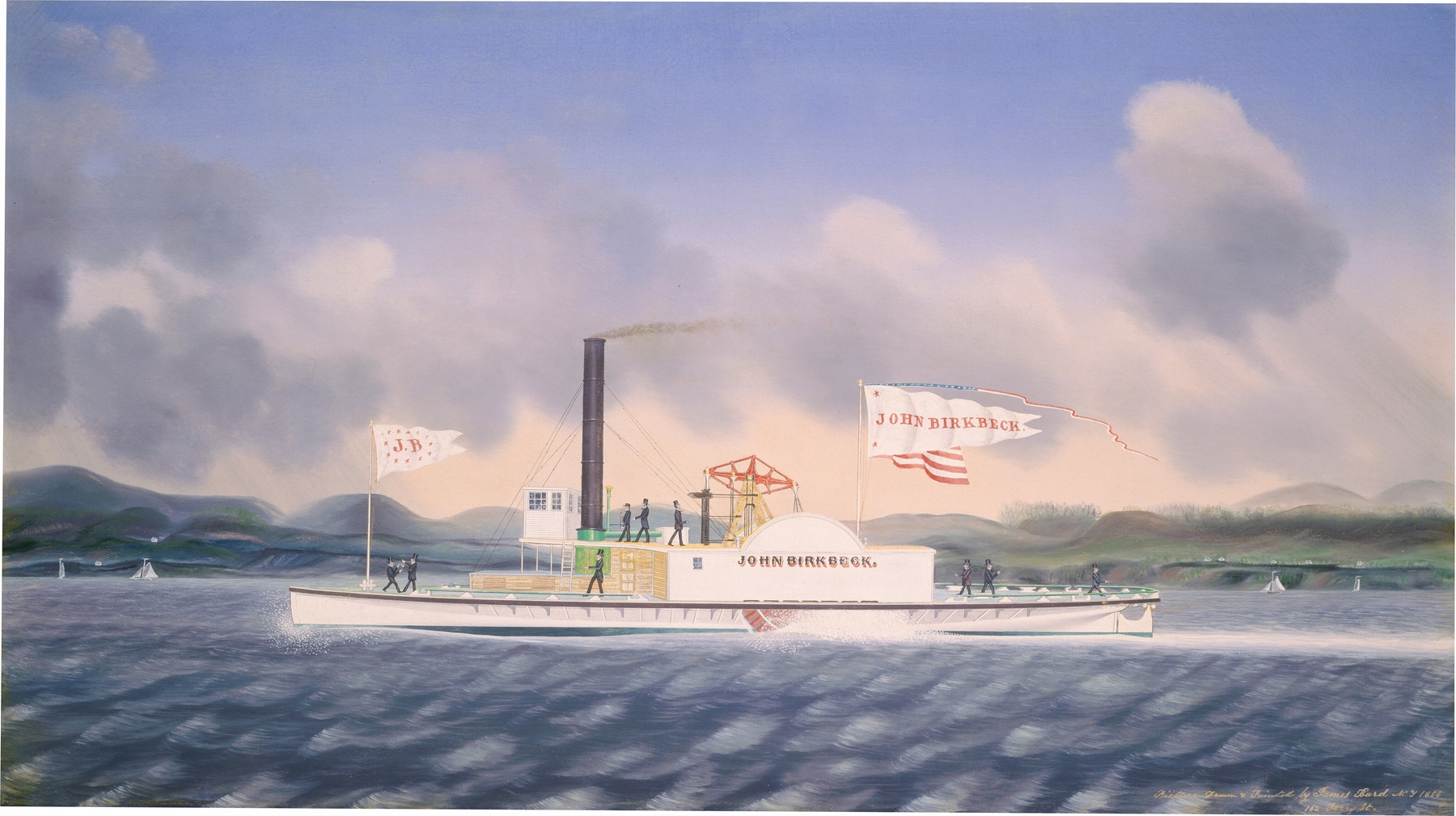
What if silence could speak through light? In James Bard's Towboat ‘John Birkbeck’, the stillness of the water holds whispers of history and labor, inviting viewers to listen closely to the reflections beneath the surface. Focus your gaze upon the shimmering waters that cradle the majestic vessel. The towboat, elegantly rendered in rich hues, stands proudly against a backdrop of gentle ripples and muted skies.
Notice how the light dances upon the water's surface, illuminating both the boat and its reflection, creating a harmonious dialogue between reality and its counterpart. The fine detailing of the boat’s structure draws your eye, leading you toward the intricate waves that seem to echo the vessel's journey. Beneath the serene exterior lies a narrative of industriousness and challenge. The contrast between the sturdy craftsmanship of the boat and the delicate fluidity of the water suggests the balance between man’s creation and nature’s embrace.
The interplay of light and shadow hints at the passage of time, as if the boat carries stories of forgotten journeys and enduring labor, silently urging us to contemplate our relationship with nature and the passage of time. In 1854, Bard painted this piece during a period when the American waterways were bustling with commerce and trade, reflecting the growing importance of steam-powered vessels in the economy. At this time, Bard was establishing himself as a noted maritime painter, capturing the essence of American shipping and the vibrant life along the rivers. His work not only documented the era's technological advancements but also celebrated the beauty and significance of the vessels that traversed these waterways.