View from the Augustus-Brücke in Moonlight — History & Analysis
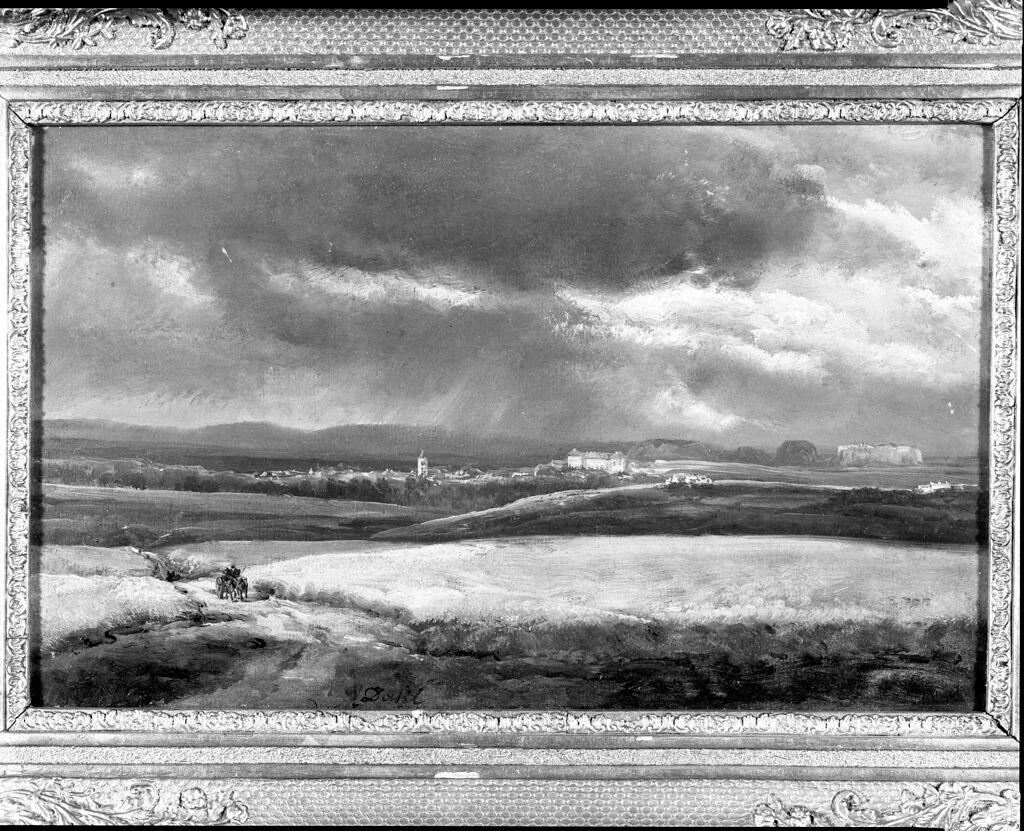
Did the painter know this moment would outlive them? The stillness of a moonlit night, a fleeting harmony between nature and man—a whisper captured on canvas. Look to the forefront, where the river glimmers under the soft caress of moonlight, its surface a mirror reflecting the twilight sky. Notice how the arc of the Augustus Bridge frames the scene, leading the viewer’s eye along its gentle curve.
The cool palette of blues and silvers contrasts against the warm glow of the scattered lamps, revealing Dahl’s meticulous attention to the interplay of light and shadow. Each brushstroke breathes life into the tranquil waters, where boats drift silently, evoking a sense of peace that envelops both the landscape and the onlooker. Amidst this serene tableau, hidden tensions emerge—the contrast between the stillness of the night and the potential for movement, the delicate balance of light against darkness. The moon’s glow hints at transient moments, as if time itself holds its breath, inviting reflection and contemplation.
The sense of balance extends beyond the visual; it speaks to the viewer’s experience of harmony and solitude, a reminder of nature's beauty and humanity's place within it. In the early 1830s, Dahl was painting in Dresden, a time when the Romantic movement was flourishing, drawing attention to emotive landscapes and the sublime. He sought to capture the essence of nature and its beauty, often reflecting a deep connection to the surroundings. This period marked a significant evolution in his style, as he became more focused on light, atmosphere, and the emotional resonance of landscapes, establishing himself as a pivotal figure in the development of Romantic art.