View of Fuenterrabía (fragment) — History & Analysis
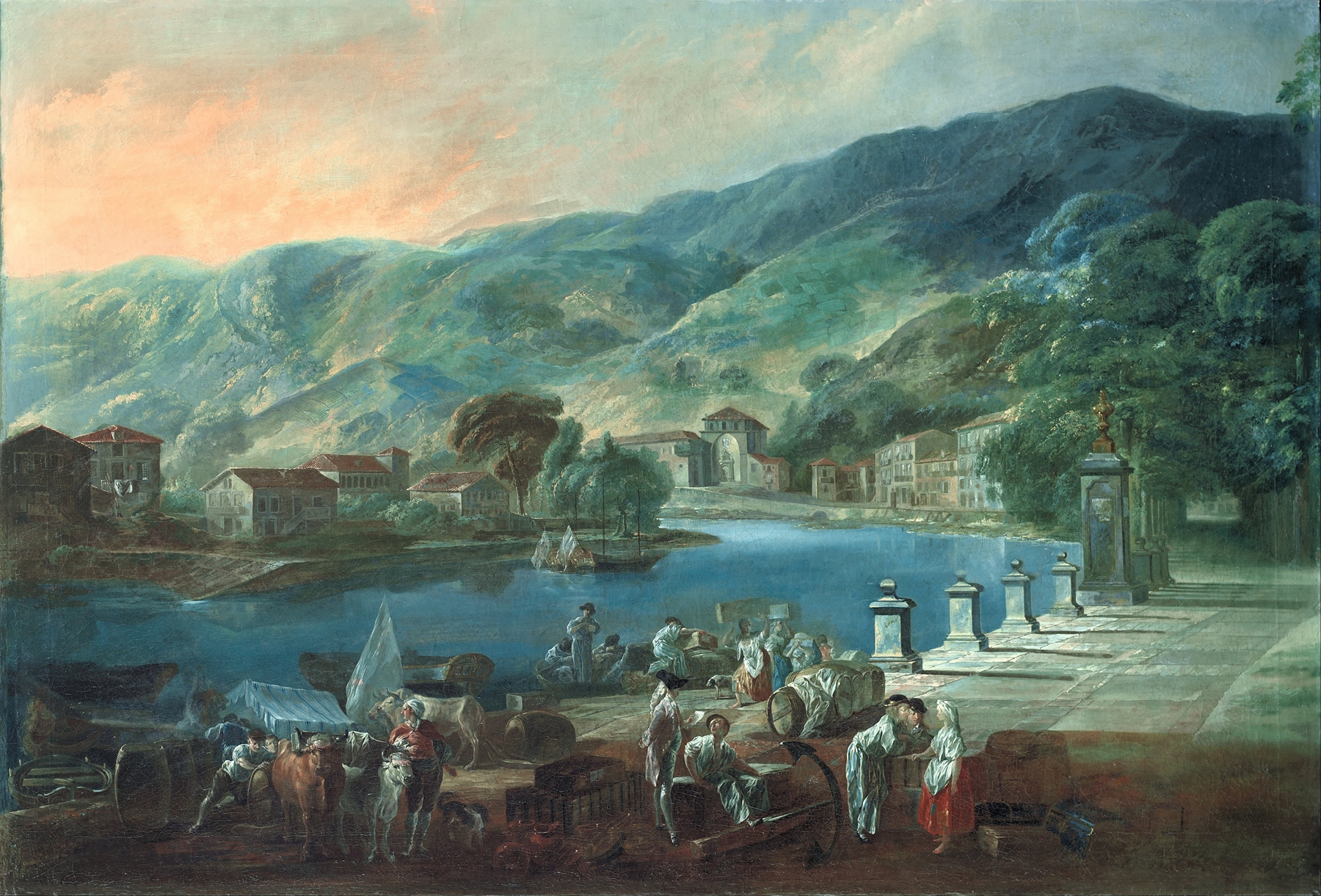
Can beauty exist without sorrow? In the delicate balance of nature and emotion, a dream unfolds before our eyes, breathtaking yet tinged with melancholy. Focus on the left side of the fragment, where the gentle curvature of the river cradles the town of Fuenterrabía. The intricate brushwork captures the shimmer of sunlight dancing on the water's surface, while the soft hues of the buildings reflect an ethereal glow.
Notice how the warm colors of the land contrast with the cooler tones of the sky, creating a harmonious yet fleeting moment in time. The meticulous details in the architecture invite you to linger, revealing the artist's deep appreciation for the beauty woven into everyday life. As you explore deeper, subtle tensions emerge in the interplay of light and shadow. The verdant hills loom protectively over the town, suggesting a nurturing embrace, yet their looming presence hints at the uncertainties of life.
The tranquil scene may evoke dreams of serenity, but the very stillness invites contemplation of what lies beyond the horizon—an acknowledgment of the bittersweet nature of existence that underscores the fragility of beauty. Luis Paret y Alcázar painted this work in 1786 while residing in Spain, during a period marked by shifting artistic sensibilities. The Enlightenment fueled a fascination with nature and landscape, and Paret was notably influenced by the Rococo style, blending Romanticism with a keen observation of his surroundings. This fragment encapsulates both the historical moment and the personal aspirations of an artist navigating the complexities of beauty, longing, and the passage of time.