
Yellow Dancers (In the Wings) — History & Facts
Three dancers in yellow tutus cluster closely at the right edge of the stage, their bodies turned inward as they adjust their costumes and hair. The foremost dancer bows her head, arms raised as she ties a black ribbon, while the second gazes down and the third leans in, her face partially hidden. The light falls from above and behind, illuminating the tops of their shoulders and the brilliant yellow tulle, which fans out in feathery, textured strokes.
The dancers’ faces and arms are rendered with delicate, soft brushwork, their features blending into the shadows created by the stage lighting. Behind them, a blur of more dancers is visible, their legs and bare feet painted with loose, sketchy marks that dissolve into the green and ochre background. The backdrop suggests foliage and stage scenery, with vertical streaks and patches of color that evoke a sense of movement and depth.
The composition is tightly cropped, pushing the three main figures to the foreground and leaving the stage floor and background dancers as hazy suggestions. The yellow of the tutus dominates the lower half of the canvas, while the upper half is filled with greens, browns, and muted oranges, creating a contrast between costume and setting. The brushwork varies from the finely blended faces to the rapid, expressive strokes that form the tutus and background, giving a sense of immediacy and atmosphere.
A signature, 'Degas,' appears at the lower right, confirming the artist’s hand. A group of at least six secondary dancers is visible in the left background, their legs and feet painted in pale pinks and beiges, standing together in a loose cluster. The lower left corner of the painting is filled with deep, shadowy browns and greens, contrasting with the brightness of the tutus.
Hints of turquoise and blue brushstrokes appear among the background foliage, adding cool tones to the otherwise warm palette. The upper right corner is densely layered with dark green paint, obscuring any details and framing the main figures with shadow. Light falls most strongly on the outer edges of the foremost dancer’s tutu, causing the yellow to glow against the muted surroundings.
Sources: Art Institute of Chicago, record 1963.923 · Wikidata Q20268501
More Artworks by Hilaire Germain Edgar Degas
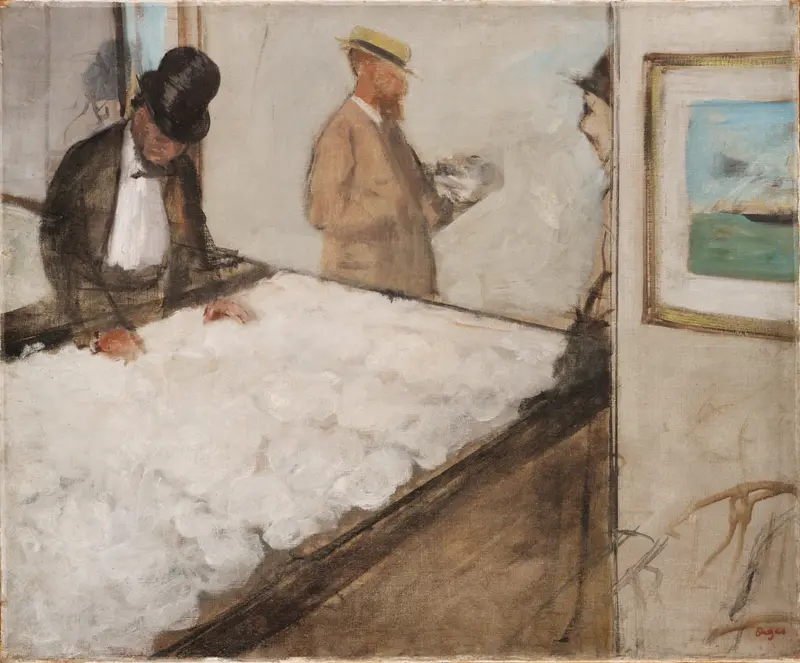
Cotton Merchants in New Orleans
Hilaire Germain Edgar Degas
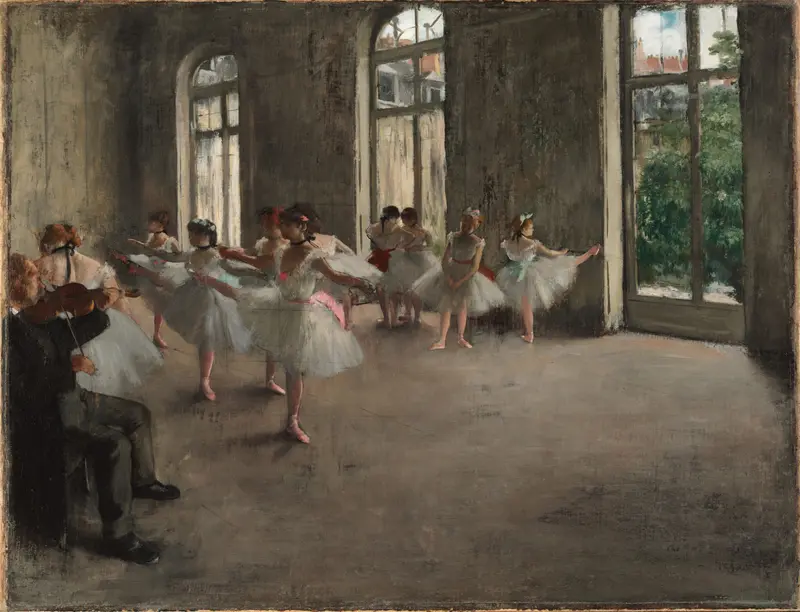
The Rehearsal
Hilaire Germain Edgar Degas
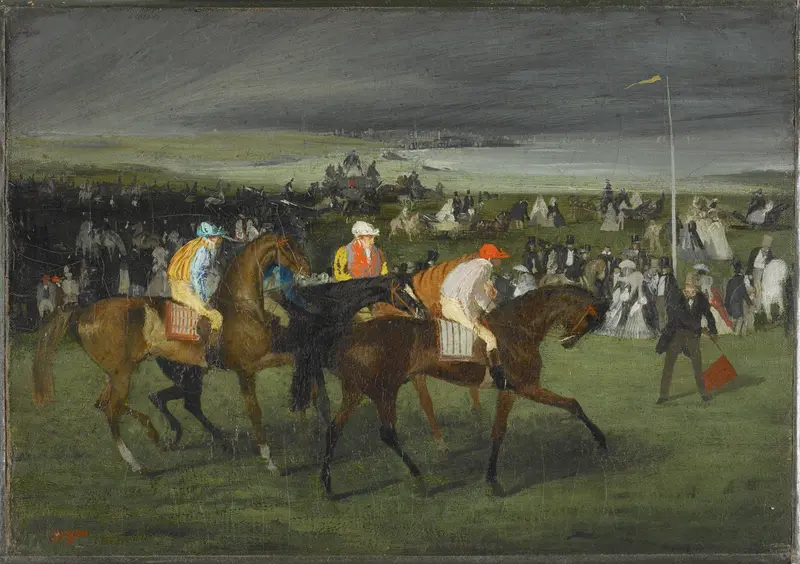
At the Races: The Start
Hilaire Germain Edgar Degas
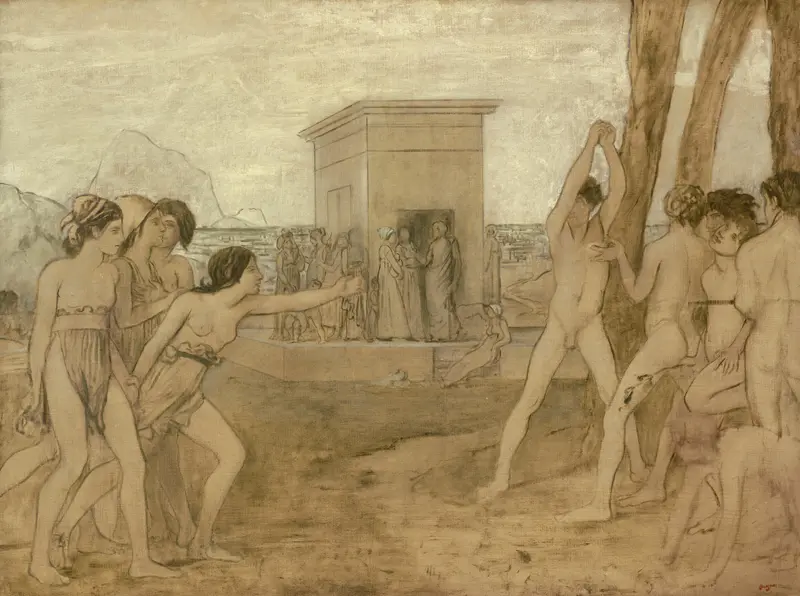
Young Spartan Girls Challenging Boys
Hilaire Germain Edgar Degas
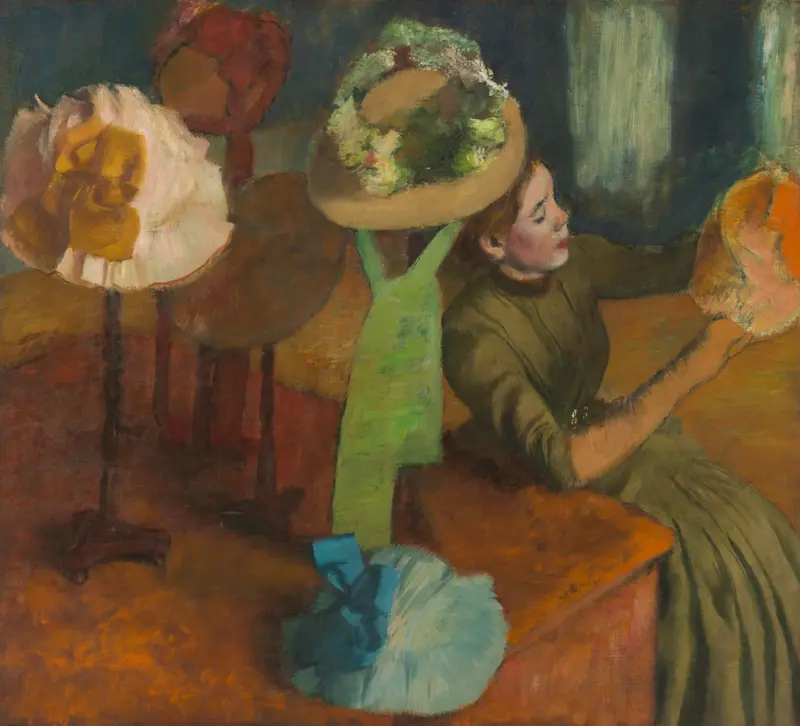
The Millinery Shop
Hilaire Germain Edgar Degas
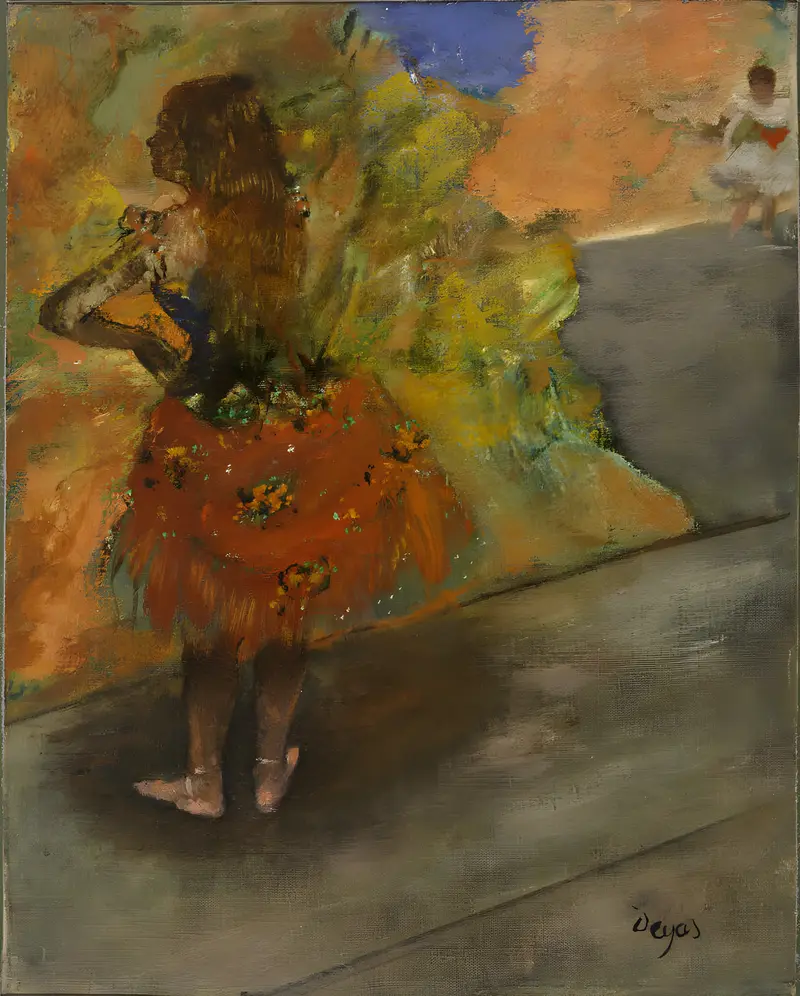
Ballet Dancer
Hilaire Germain Edgar Degas
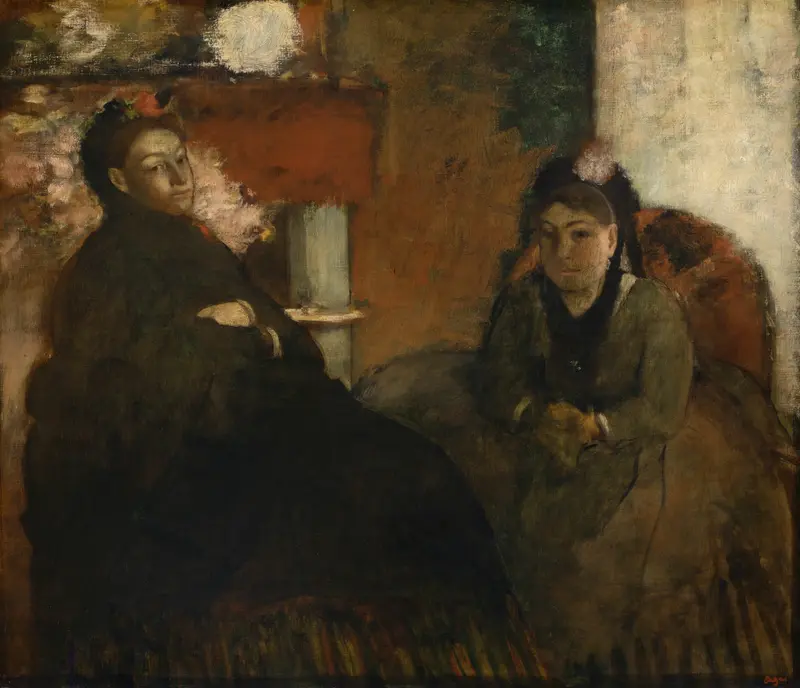
Portrait of Mme Lisle and Mme Loubens
Hilaire Germain Edgar Degas
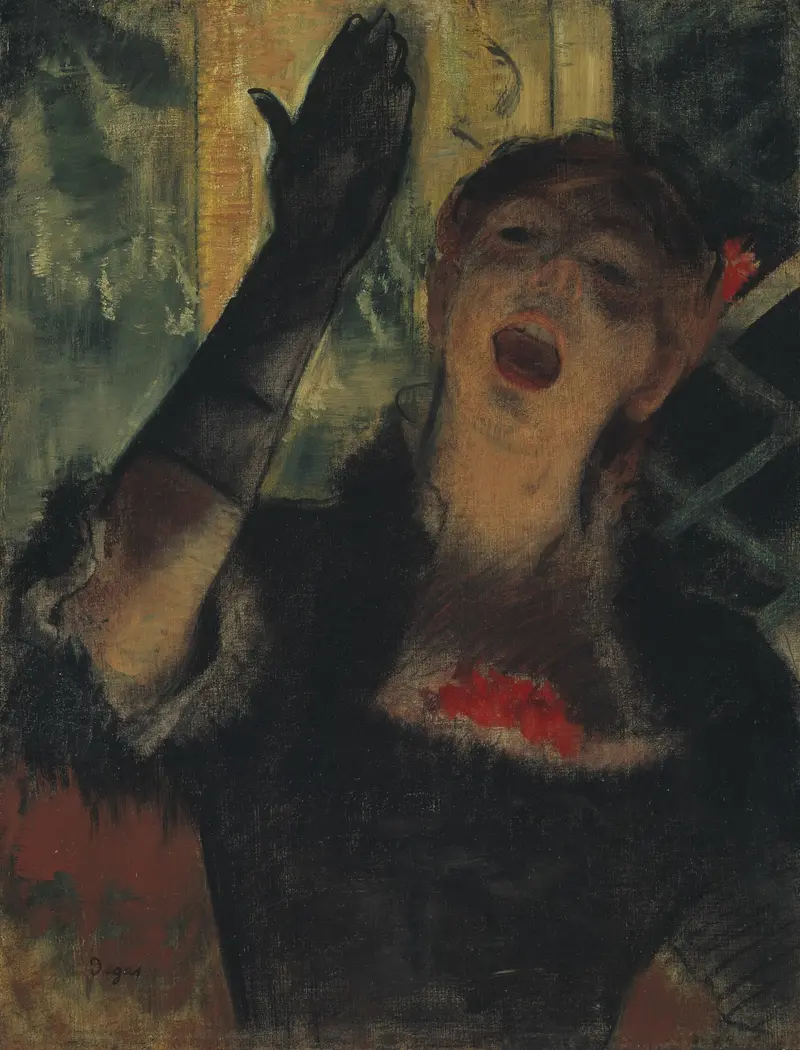
Café Singer
Hilaire Germain Edgar Degas
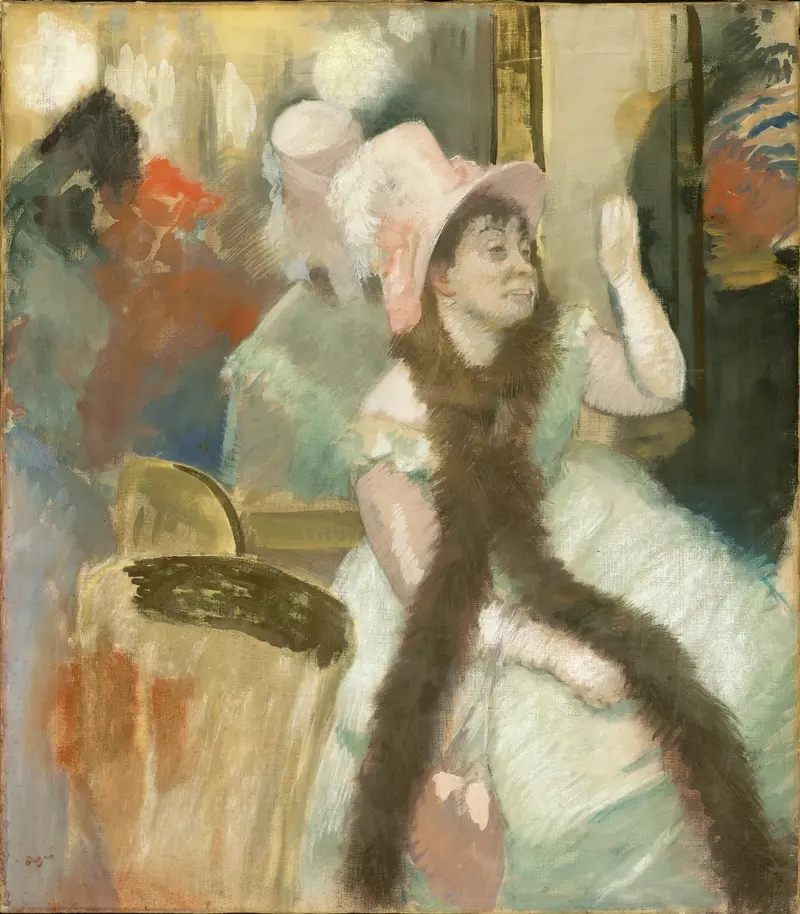
Portrait after a Costume Ball (Portrait of Madame Dietz-Monnin)
Hilaire Germain Edgar Degas
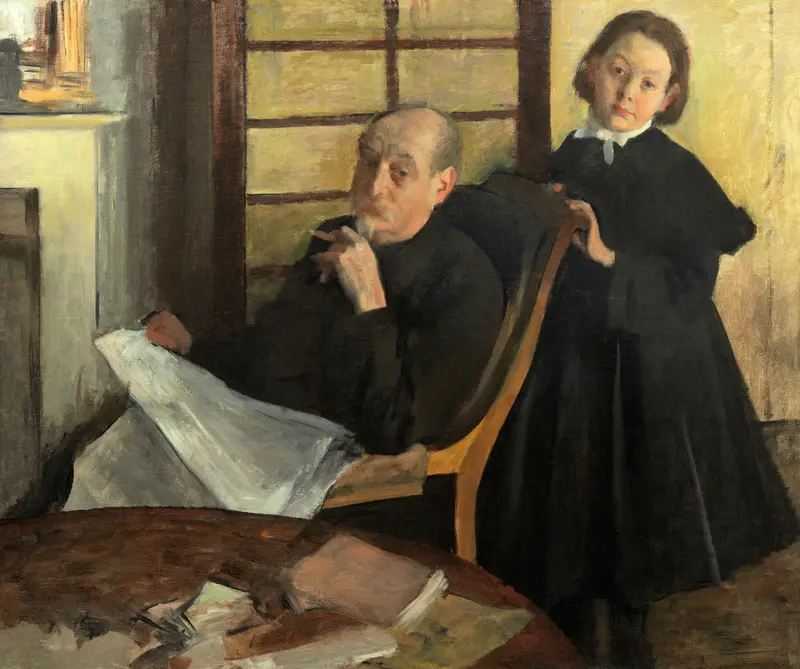
Henri Degas and His Niece Lucie Degas (The Artist's Uncle and Cousin)
Hilaire Germain Edgar Degas



