
Public domain · Free to download
Some paintings are famous enough that you know them before you have ever seen them: a smile in Paris, a swirling night sky, a figure screaming on a bridge. Here are the 50 most famous paintings of all time, starting with the most famous painting in the world, the Mona Lisa.
For each one you get the story behind it: who painted it, when, why it became famous and where you can see it today. Every image is a public-domain reproduction of the real painting, free to download and free to use.
No artist gets more than three places, so alongside Leonardo da Vinci and Van Gogh you will meet Vermeer, Goya, Hokusai, Klimt and many more.
Selected and written by Pavel MazuelasUpdated October 28, 2026
Ranked from 1 to 50 by worldwide fame. Click any painting to see it up close and download it free.

No. 1Renaissance
1503–1519 · Oil on poplar panel · 79.4 × 53.4 cm
Louvre, Paris
Leonardo da Vinci began the Mona Lisa, also known as La Gioconda, around 1503 and may still have been working on it in 1517. The sitter is traditionally identified as the Florentine noblewoman Lisa del Giocondo. Surprisingly, it was not a household name until 1911, when it was stolen from the Louvre and missing for over two years. It has hung in the Louvre in Paris since 1797.

No. 2Renaissance
c. 1495–1498 · Tempera on dry plaster · 460 × 880 cm
Santa Maria delle Grazie, Milan
Leonardo da Vinci painted The Last Supper in about 1495–1498 on the dining-hall wall of a convent in Milan, capturing the moment Jesus tells the apostles that one of them will betray him. It is the most famous painting of Jesus in the world. Leonardo used tempera on a dry wall so he could keep revising, which is why so little original paint survives. It is still in Santa Maria delle Grazie.

No. 3Expressionism
1893 · Oil, tempera and pastel on cardboard · 91 × 73.5 cm
National Museum, Oslo
Edvard Munch painted The Scream in 1893, after a walk at sunset when, he recalled, the sky turned "blood red" and he sensed "an infinite scream passing through nature". This first painted version is in the National Museum in Oslo. Munch made two painted and two pastel versions; his 1910 one is in our collection too.

No. 4Post-Impressionism
1889 · Oil on canvas · 73.7 × 92.1 cm
Museum of Modern Art, New York
In June 1889, looking out of his room at the asylum in Saint-Rémy-de-Provence just before sunrise, Vincent van Gogh painted The Starry Night, adding a village that was not really there. It is Van Gogh's most famous painting, and it has belonged to the Museum of Modern Art in New York since 1941.

No. 5Dutch Golden Age
c. 1665 · Oil on canvas · 44.5 × 39 cm
Mauritshuis, The Hague
Johannes Vermeer painted Girl with a Pearl Earring in about 1665, though the painting has gone by many names; this one only stuck in the late 20th century. The girl in the blue and yellow turban has been in the Mauritshuis in The Hague since 1902 and has inspired novels and films.
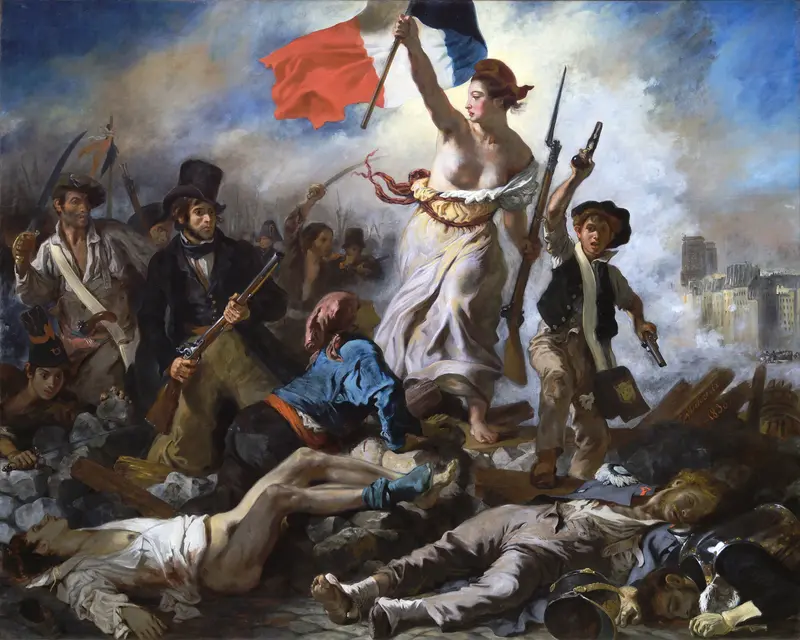
No. 6Romanticism
1830 · Oil on canvas · 260 × 325 cm
Louvre, Paris
Eugène Delacroix painted Liberty Leading the People in 1830, and it is not about the French Revolution of 1789, as many assume, but about the July Revolution that toppled King Charles X. Liberty, raising the tricolor flag over the barricade, became the symbol of France known as Marianne. It hangs in the Louvre in Paris.
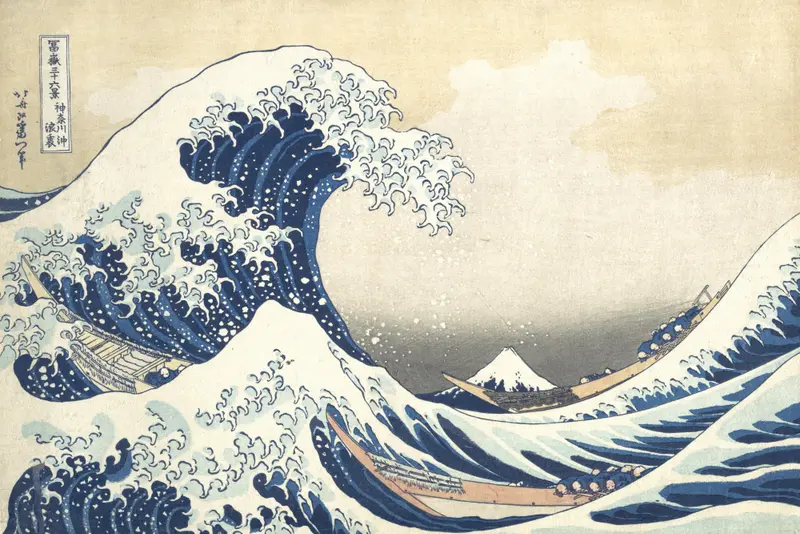
No. 7Ukiyo-e
c. 1831 · Color woodblock print · 25.7 × 37.9 cm (this impression)
Metropolitan Museum of Art (this impression), New York
The famous Japanese wave painting is actually a woodblock print: Katsushika Hokusai made The Great Wave off Kanagawa in about 1831, as the first of his Thirty-six Views of Mount Fuji. Three boats struggle under a giant wave while Mount Fuji sits small in the distance. Only about 100 impressions survive; this one belongs to the Metropolitan Museum of Art in New York.
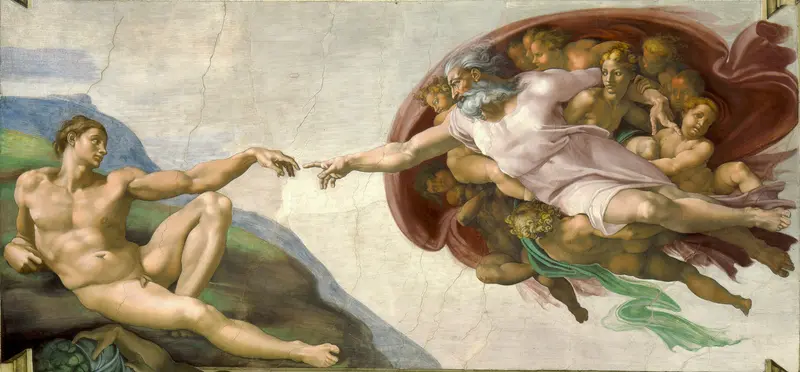
No. 8Renaissance
c. 1512 · Fresco · 280 × 570 cm
Sistine Chapel, Vatican City
The famous painting of two hands almost touching is The Creation of Adam, which Michelangelo painted on the ceiling of the Sistine Chapel between 1508 and 1512. God reaches out to give life to Adam, the first man. It is Michelangelo's most famous painting and one of the most copied images in art.
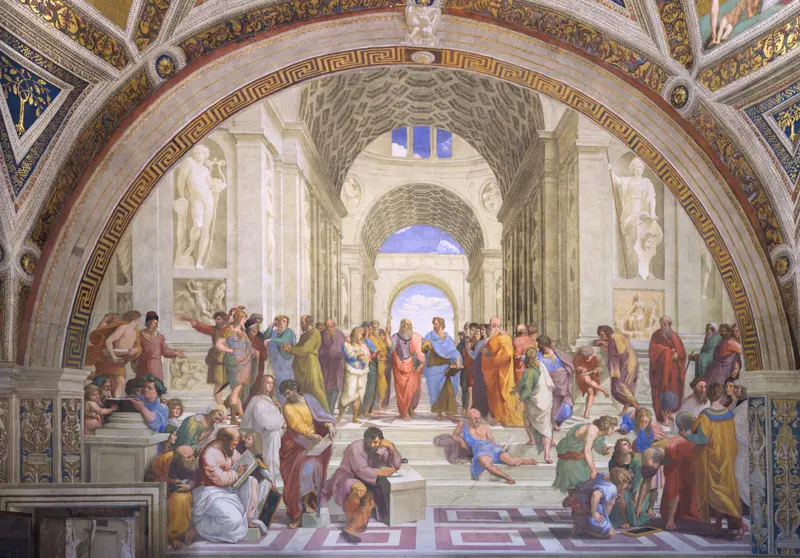
No. 9Renaissance
1509–1511 · Fresco · 500 × 770 cm
Apostolic Palace, Vatican Museums, Vatican City
Raphael painted The School of Athens in 1509–1511 for Pope Julius II, in a room of the Vatican's Apostolic Palace. The great philosophers and scientists of ancient Greece gather around Plato and Aristotle, and Raphael slipped in familiar faces: Plato is believed to be modeled on Leonardo da Vinci, and Raphael painted himself beside Ptolemy.
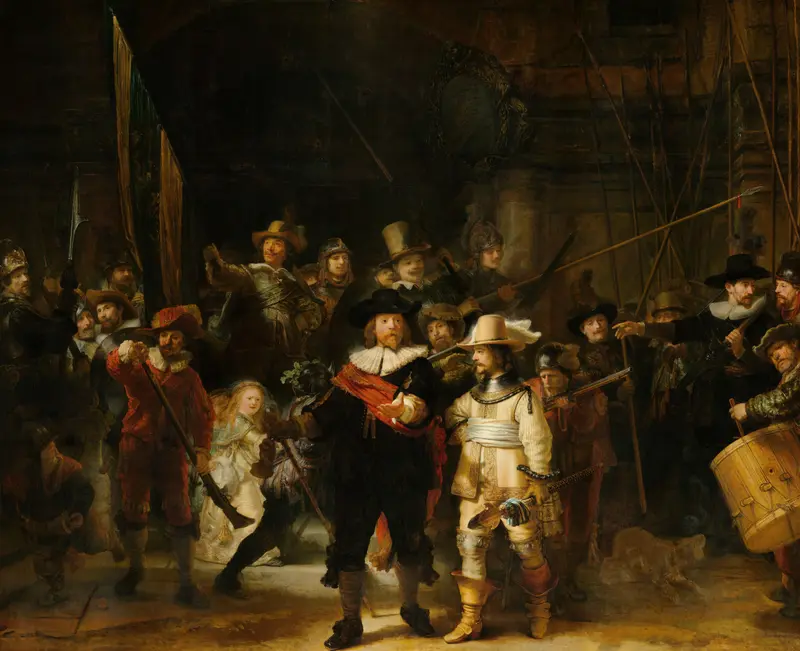
No. 10Dutch Golden Age
1642 · Oil on canvas · 363 × 437 cm
Rijksmuseum (on loan from the Amsterdam Museum), Amsterdam
Despite its name, The Night Watch is not a night scene. Rembrandt painted it in 1642 as a group portrait of an Amsterdam militia company under Captain Frans Banninck Cocq, and turned a routine commission into a drama of light and shadow. It belongs to the Amsterdam Museum and hangs in the Rijksmuseum.
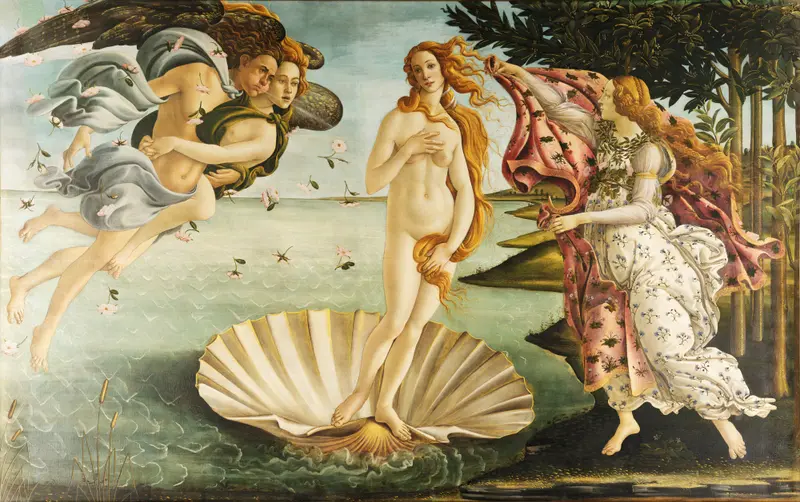
No. 11Renaissance
mid-1480s · Tempera on canvas · 172.5 × 278.5 cm
Uffizi, Florence
Sandro Botticelli painted The Birth of Venus in the mid-1480s: the goddess, born fully grown from the sea, drifts ashore on a shell. A large nude at the center of a mythological painting was almost unheard of since antiquity. It hangs in the Uffizi in Florence, near his Primavera.

No. 12Baroque
1656 · Oil on canvas · 318 × 276 cm
Museo del Prado, Madrid
Who is the real subject of Las Meninas? Diego Velázquez painted it in 1656 at the court of Philip IV of Spain: the young Infanta Margaret Theresa stands among her ladies-in-waiting, a chaperone, a bodyguard, two dwarfs and a dog, while Velázquez paints himself at a huge canvas. It is in the Prado in Madrid.
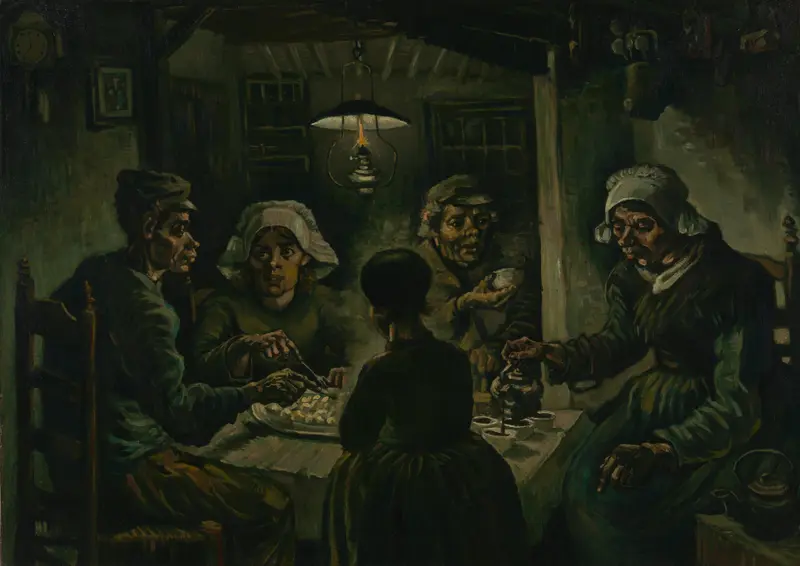
No. 13Post-Impressionism
1885 · Oil on canvas · 82 × 114 cm
Van Gogh Museum, Amsterdam
Vincent van Gogh painted The Potato Eaters in April and May 1885 in the Dutch village of Nuenen: a peasant family shares a meal of potatoes under a single oil lamp. It is in the Van Gogh Museum in Amsterdam; an oil sketch of the scene is in the Kröller-Müller Museum, and he also made lithographs of it.
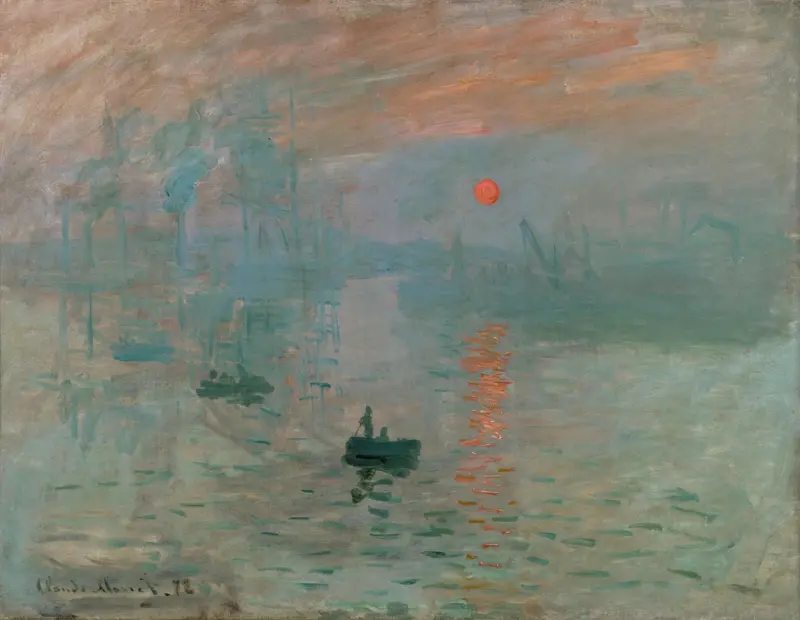
No. 14Impressionism
1872 · Oil on canvas · 50 × 65 cm
Musée Marmottan Monet, Paris
This misty view of a harbor gave a whole art movement its name. Claude Monet painted Impression, Sunrise in 1872 in Le Havre, his hometown, and showed it in Paris in 1874 at the exhibition that launched the Impressionists. It is Monet's most famous painting and hangs in the Musée Marmottan Monet in Paris.

No. 15Art Nouveau
1908–1909 · Oil and gold leaf on canvas · 180 × 180 cm
Belvedere, Vienna
Gustav Klimt painted The Kiss in 1908–1909, at the height of his "Golden Period": a couple locked in an embrace, wrapped in robes covered with real gold leaf. First shown in 1908 as Liebespaar ("Lovers"), it hangs in the Upper Belvedere in Vienna and is considered his most important work.
Sources: Belvedere
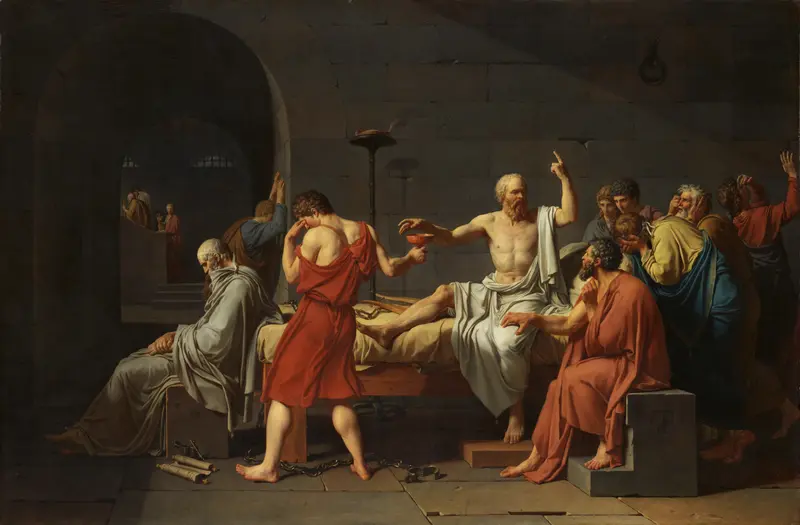
No. 16Neoclassicism
1787 · Oil on canvas · 129.5 × 196.2 cm
Metropolitan Museum of Art, New York
Jacques-Louis David painted The Death of Socrates in 1787. Condemned to drink poison hemlock, the Athenian philosopher reaches calmly for the cup while still teaching his grieving pupils, as Plato tells it in the Phaedo. It is in the Metropolitan Museum of Art in New York.
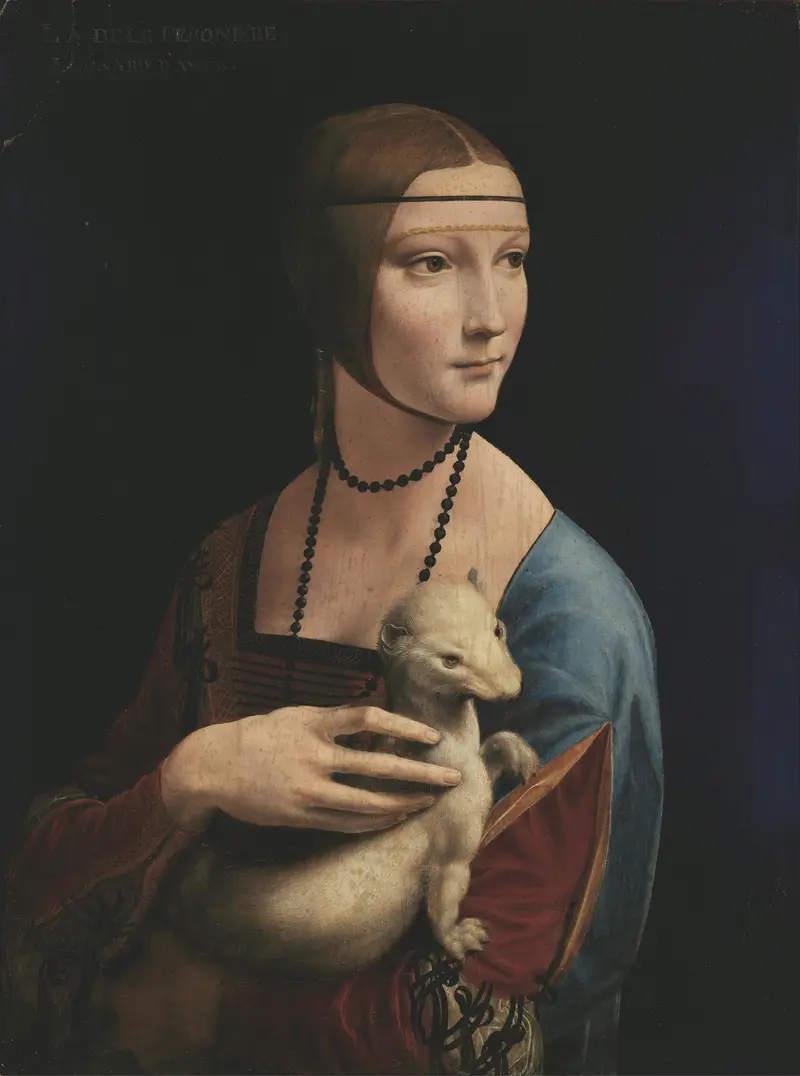
No. 17Renaissance
c. 1490 · Oil and tempera on walnut panel · 53.4 × 39.3 cm
Czartoryski Museum (National Museum in Kraków), Kraków
Leonardo da Vinci painted the Lady with an Ermine in about 1490. The sitter, Cecilia Gallerani, lived at the Milan court of Ludovico Sforza, where Leonardo worked, and she and the ermine in her arms turn in the same twisting pose. One of only four surviving portraits of women by Leonardo, it is in the Czartoryski Museum in Kraków.
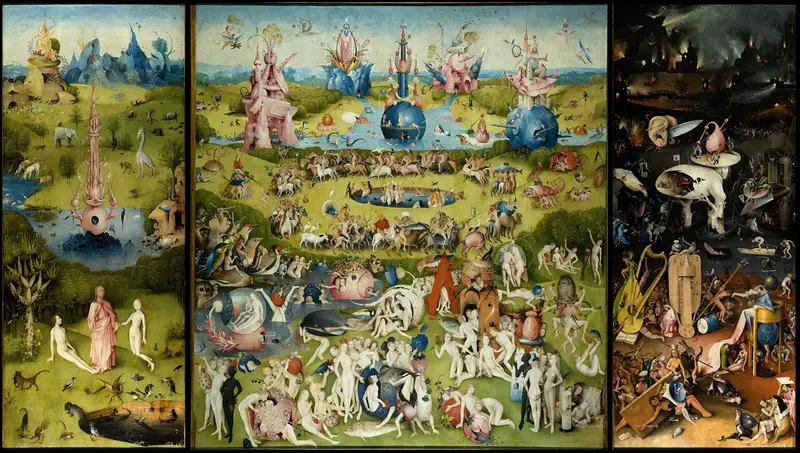
No. 18Northern Renaissance
1490–1500 · Oil on oak panels · 185.8 × 172.5 cm (center panel)
Museo del Prado, Madrid
Hieronymus Bosch painted The Garden of Earthly Delights between about 1490 and 1500, and scholars still argue about what it means. The triptych opens with the Garden of Eden; its crowded central panel of earthly pleasures reads either as a moral warning or as a vision of paradise lost. It is in the Prado in Madrid.
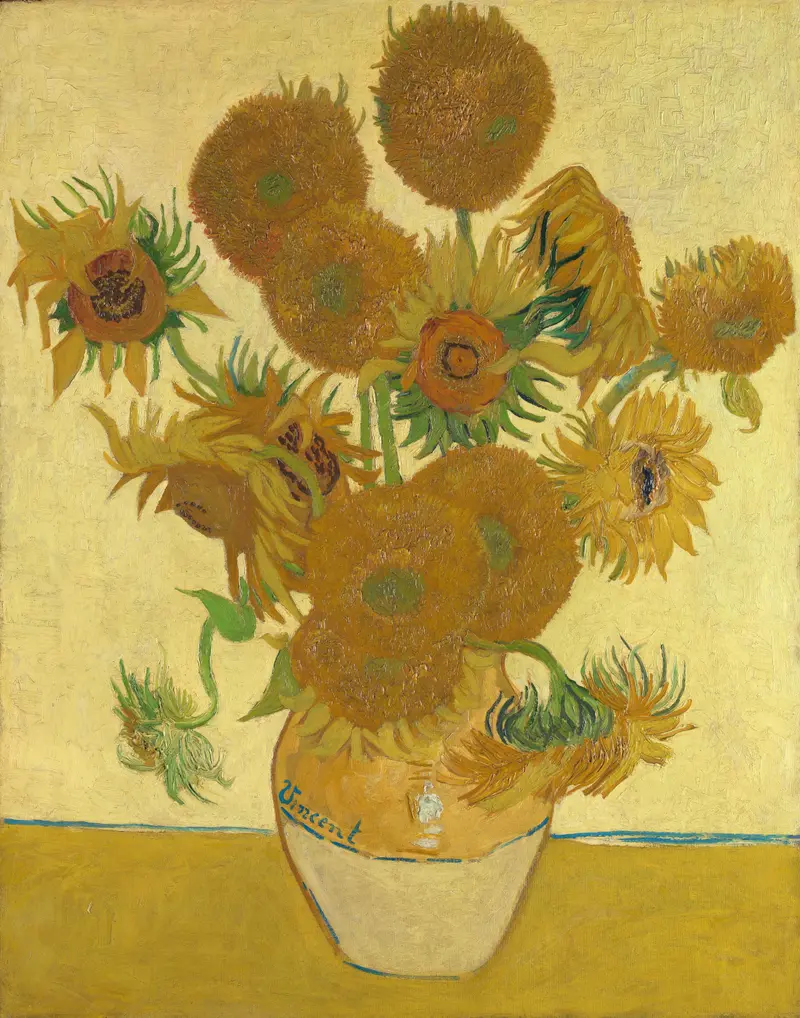
No. 19Post-Impressionism
1888 · Oil on canvas · 92.2 × 73 cm
National Gallery, London
Vincent van Gogh painted Sunflowers in Arles in 1888 to decorate the room where his friend Paul Gauguin was about to stay. He made several versions of the vase of sunflowers; this one is in the National Gallery in London, and his 1889 repeat of it hangs in the Van Gogh Museum in Amsterdam.
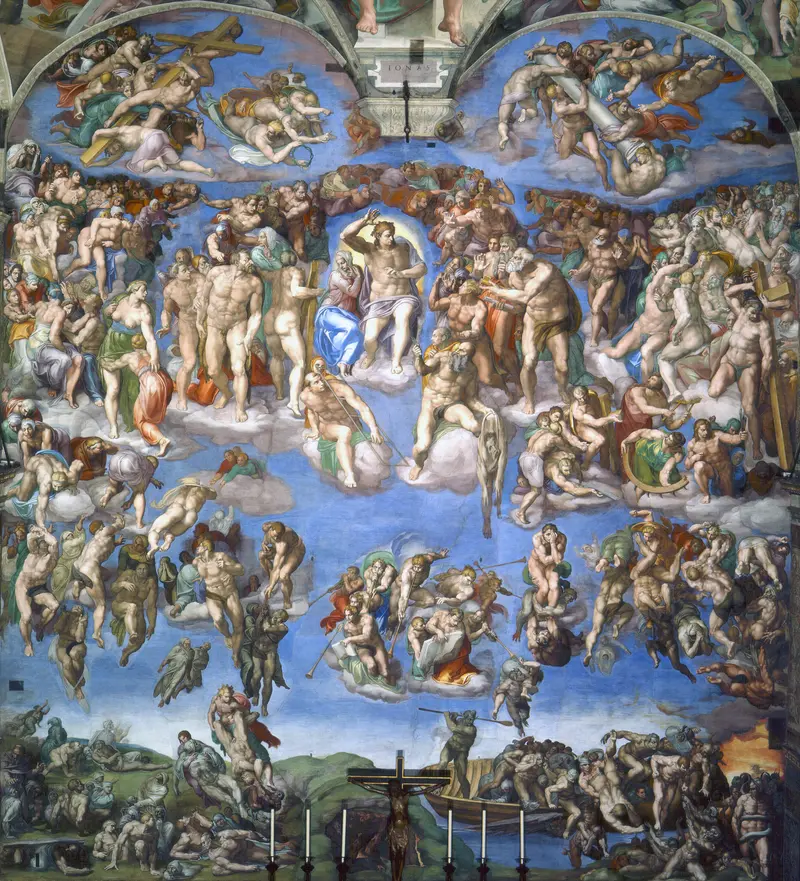
No. 20Mannerism
1536–1541 · Fresco · 1370 × 1200 cm
Sistine Chapel, Vatican City
Michelangelo was nearly 67 when he finished The Last Judgment, which covers the whole altar wall of the Sistine Chapel. He painted it between 1536 and 1541, 25 years after the ceiling: Christ judges humanity among more than 300 figures, and many of the nudes were later covered with painted drapery.
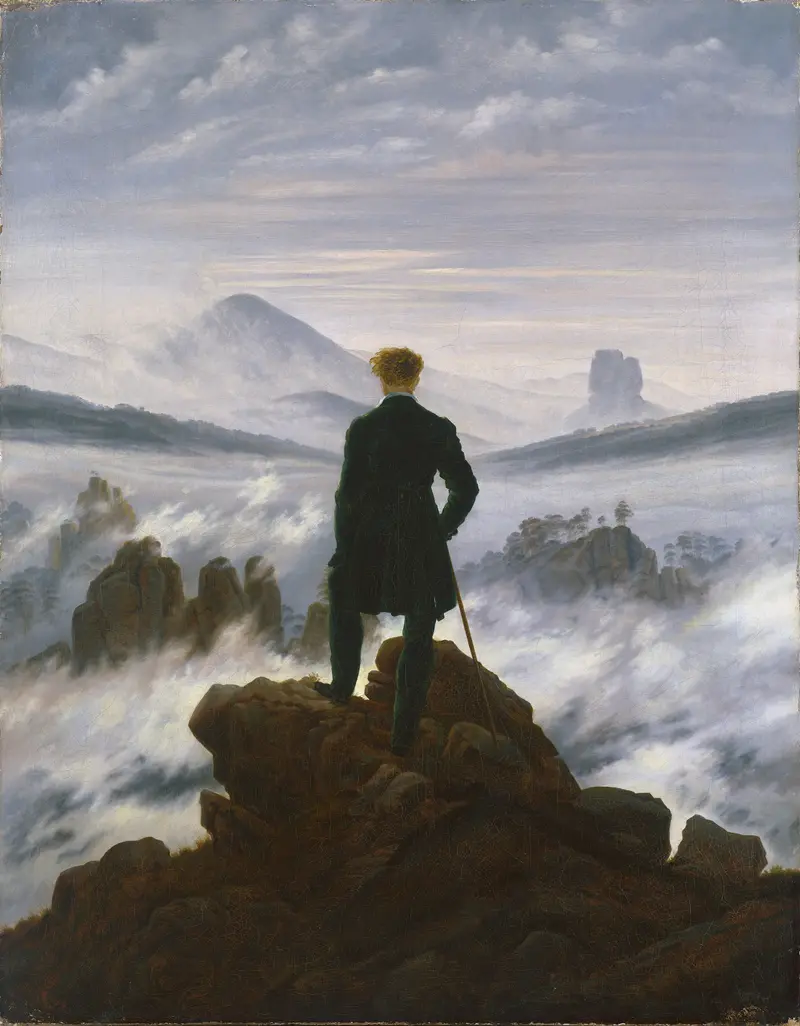
No. 21Romanticism
c. 1817 · Oil on canvas · 94.8 × 74.8 cm
Hamburger Kunsthalle, Hamburg
A man stands on a rocky peak with his back to us, looking out over a sea of fog. Caspar David Friedrich painted Wanderer above the Sea of Fog in about 1817, and it has become the defining image of German Romanticism. It is in the Hamburger Kunsthalle in Hamburg.
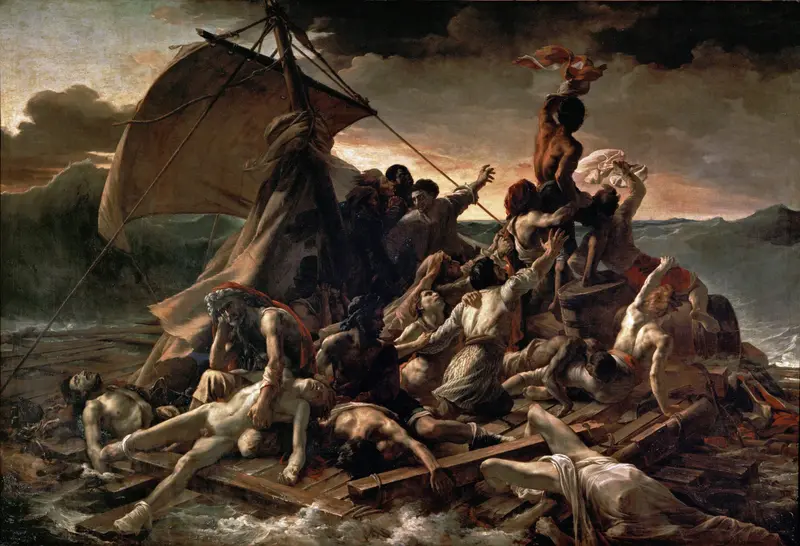
No. 22Romanticism
1818–1819 · Oil on canvas · 491 × 716 cm
Louvre, Paris
Théodore Géricault was 27 when he painted The Raft of the Medusa in 1818–1819, based on a real scandal: when the French frigate Méduse ran aground off present-day Mauritania in 1816, at least 150 people were set adrift on a makeshift raft, and only 15 survived. More than 7 meters wide, it hangs in the Louvre in Paris.
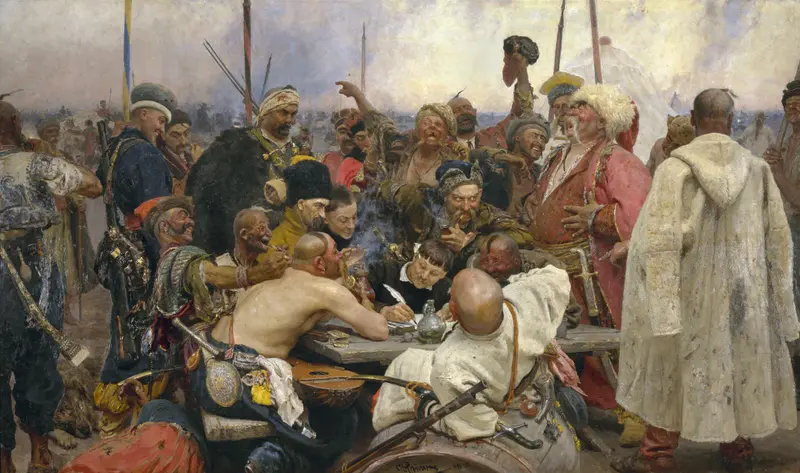
No. 23Realism
1880–1891 · Oil on canvas · 203 × 358 cm
State Russian Museum, Saint Petersburg
Ilya Repin spent eleven years, from 1880 to 1891, on Reply of the Zaporozhian Cossacks: a crowd of laughing Cossacks writing a defiant letter to the Turkish Sultan. Tsar Alexander III bought it for 35,000 rubles. It is in the State Russian Museum in Saint Petersburg, and a second version is in the Kharkiv Art Museum in Ukraine.
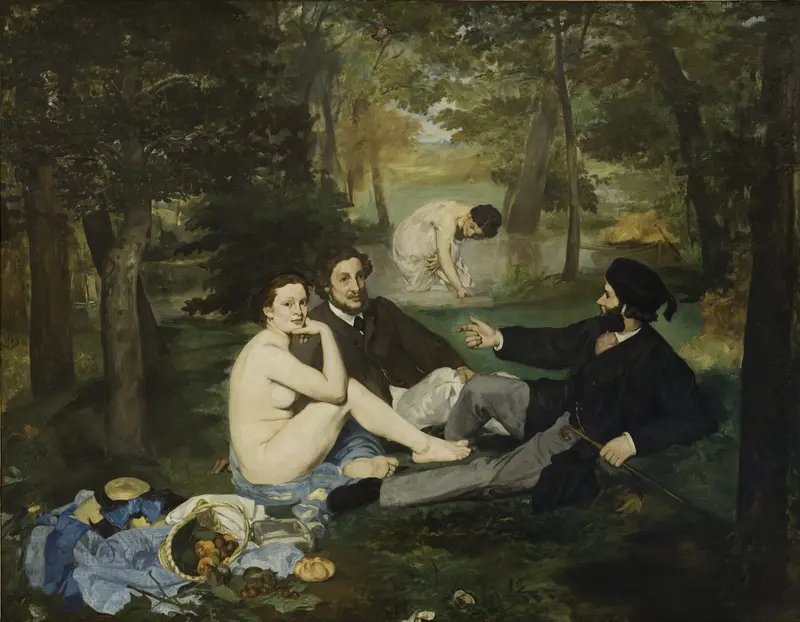
No. 24Impressionism
1862–1863 · Oil on canvas · 208 × 264.5 cm
Musée d'Orsay, Paris
Édouard Manet painted Luncheon on the Grass (Le Déjeuner sur l'herbe) in 1862–1863: a nude woman picnics with two fully dressed men and looks straight at us. Rejected by the official Salon jury in 1863, it caused a scandal at the Salon des Refusés, and the scandal made Manet famous. It is in the Musée d'Orsay in Paris.
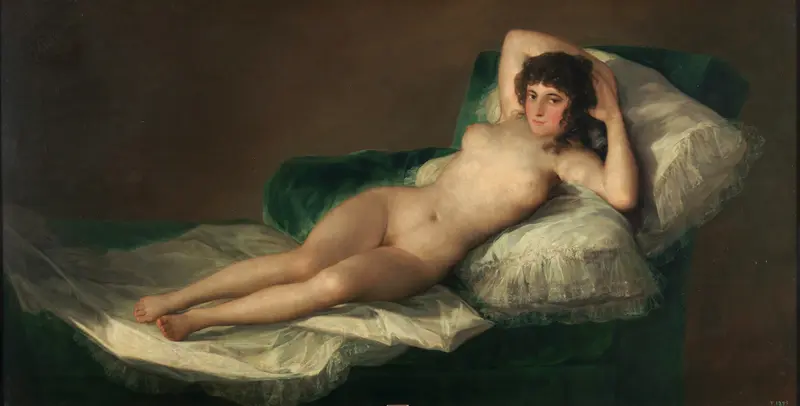
No. 25Romanticism
c. 1797–1800 · Oil on canvas · 97 × 190 cm
Museo del Prado, Madrid
Francisco Goya painted La maja desnuda (The Naked Maja) in about 1797–1800, probably for the statesman Manuel Godoy's private room of nude paintings. Goya painted the same woman in the same pose fully dressed, La maja vestida, and today the two hang side by side in the Prado in Madrid.
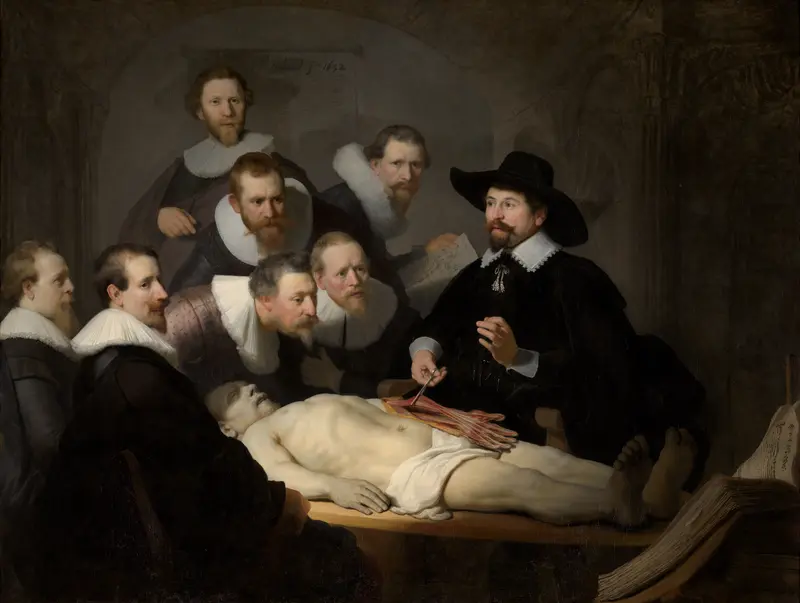
No. 26Dutch Golden Age
1632 · Oil on canvas · 169.5 × 216.5 cm
Mauritshuis, The Hague
Rembrandt painted The Anatomy Lesson of Dr Nicolaes Tulp in 1632 for the Amsterdam surgeons' guild: Dr Tulp demonstrates the muscles of the arm to a group of doctors, some of whom paid to be in the picture. One of Rembrandt's early masterpieces, it is in the Mauritshuis in The Hague.
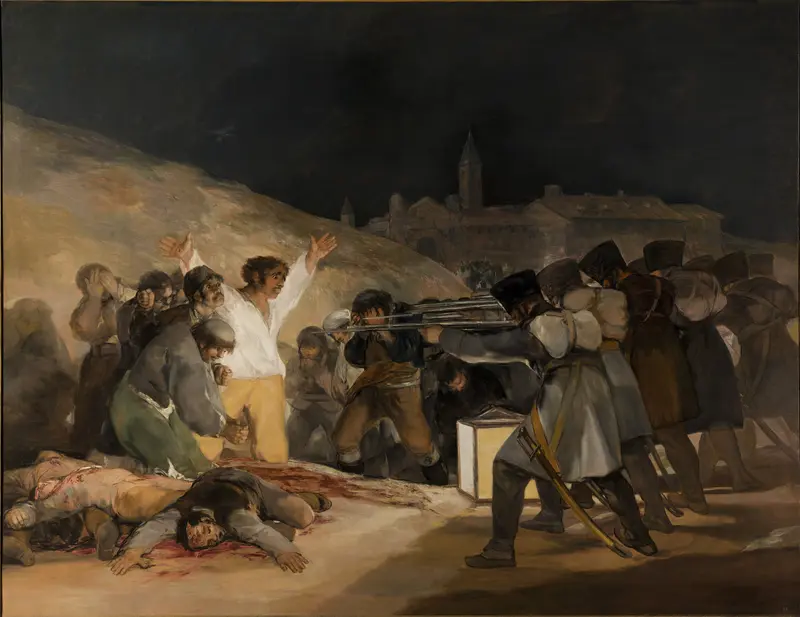
No. 27Romanticism
1814 · Oil on canvas · 268 × 347 cm
Museo del Prado, Madrid
Francisco Goya painted The Third of May 1808 in 1814: French soldiers execute Madrid civilians who had risen against Napoleon's occupation, and a man in a white shirt throws up his arms before the firing squad. It is considered one of the defining images of the horrors of war and hangs in the Prado in Madrid.
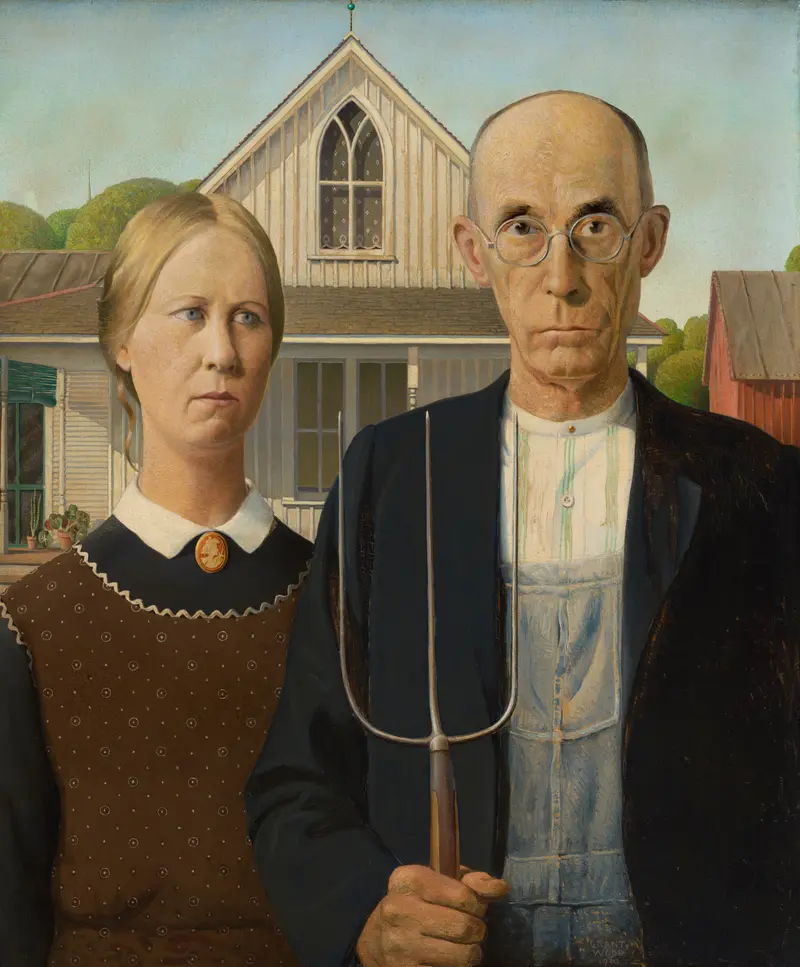
No. 28
1930 · Oil on beaverboard · 78 × 65.3 cm
Art Institute of Chicago, Chicago
Grant Wood painted American Gothic, the famous painting of a farmer with a pitchfork, in 1930. The woman beside him is often taken for his wife, but she is usually described as his daughter; Wood's sister Nan Wood Graham and the family dentist were the models. It is in the Art Institute of Chicago. In the US it has been in the public domain since 1958, when its copyright was not renewed.
Sources: Art Institute of Chicago · Duke Center for the Study of the Public Domain
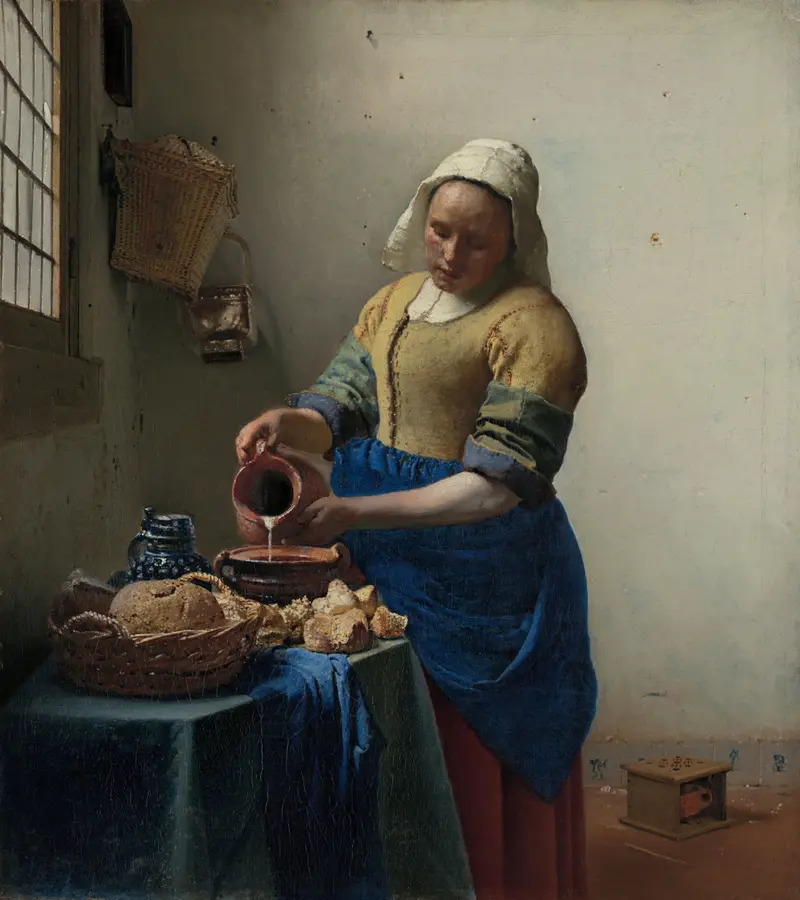
No. 29Dutch Golden Age
c. 1660 · Oil on canvas · 45.5 × 41 cm
Rijksmuseum, Amsterdam
Johannes Vermeer painted The Milkmaid in about 1660: a kitchen maid slowly pours milk in a quiet room lit from the window, and nothing else happens. The Rijksmuseum in Amsterdam calls it one of the finest works in its collection.
Sources: Rijksmuseum
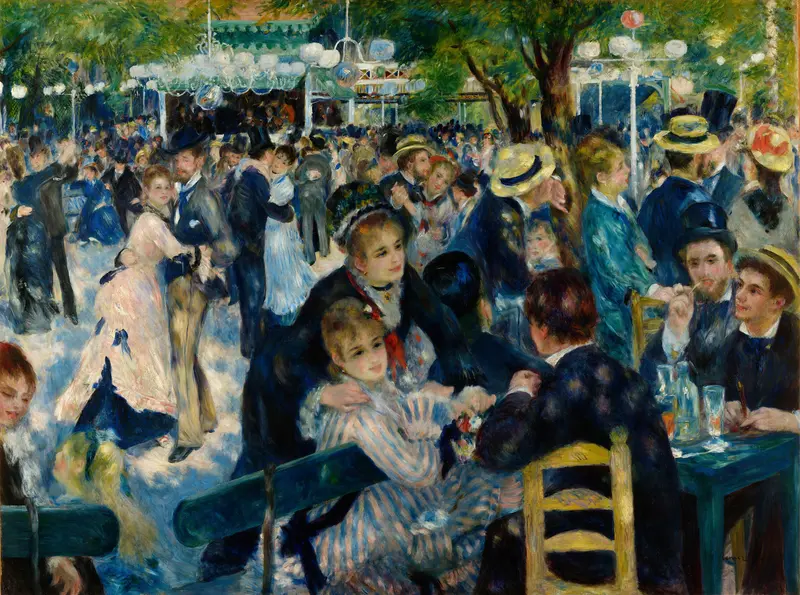
No. 30Impressionism
1876 · Oil on canvas · 131 × 175 cm
Musée d'Orsay, Paris
Pierre-Auguste Renoir painted Bal du moulin de la Galette (Dance at Le Moulin de la Galette) in 1876: working-class Parisians dancing and drinking on a Sunday afternoon in Montmartre, all in flickering, sun-dappled light. It once belonged to the painter Gustave Caillebotte and is now in the Musée d'Orsay in Paris.
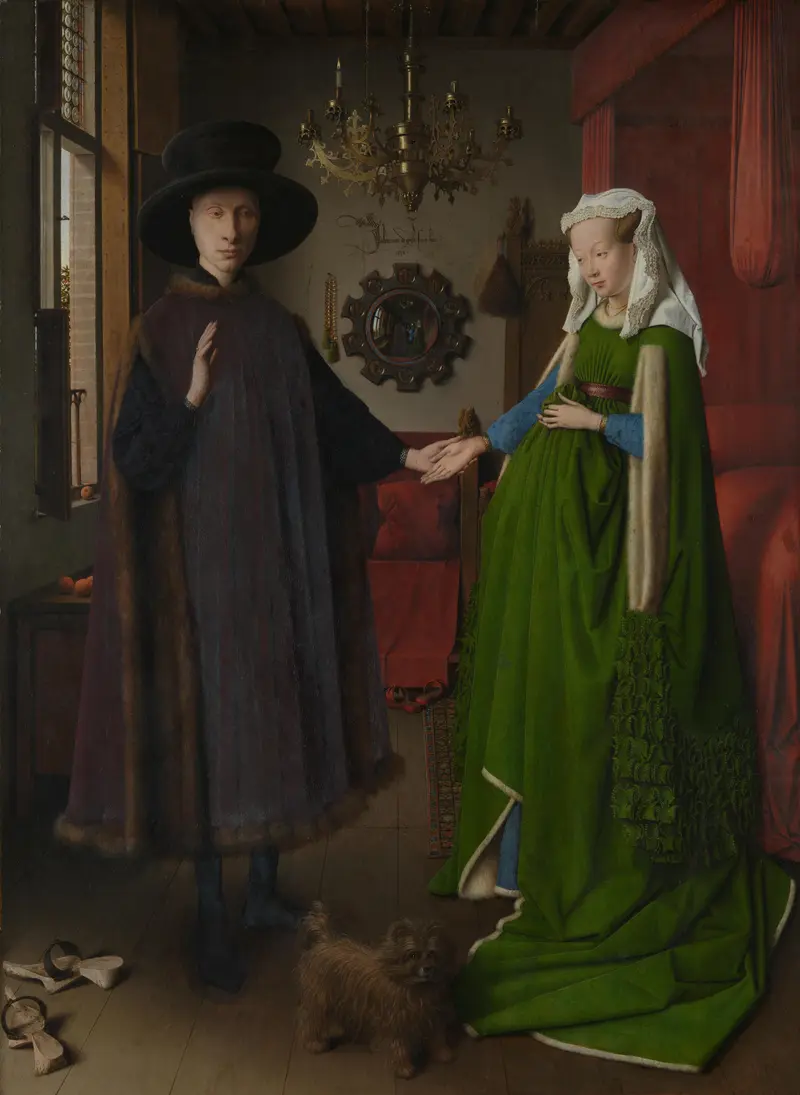
No. 31Northern Renaissance
1434 · Oil on oak panel · 82.2 × 60 cm
National Gallery, London
Jan van Eyck painted the Arnolfini Portrait in 1434: a full-length double portrait believed to show the Italian merchant Giovanni di Nicolao Arnolfini and his wife in their home in Bruges. Look at the round mirror on the back wall: it reflects the whole room. It is in the National Gallery in London.
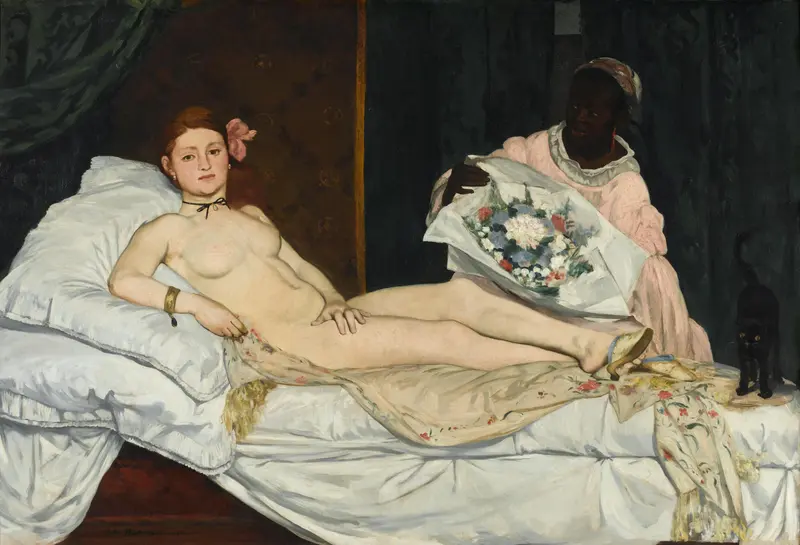
No. 32Impressionism
1863 · Oil on canvas · 130.5 × 190 cm
Musée d'Orsay, Paris
Édouard Manet painted Olympia in 1863, and her direct, unembarrassed gaze shocked visitors to the 1865 Paris Salon, where details marked her as a prostitute. Victorine Meurent posed for her. The French state acquired it in 1890 after a public subscription organized by Claude Monet; it is in the Musée d'Orsay in Paris.
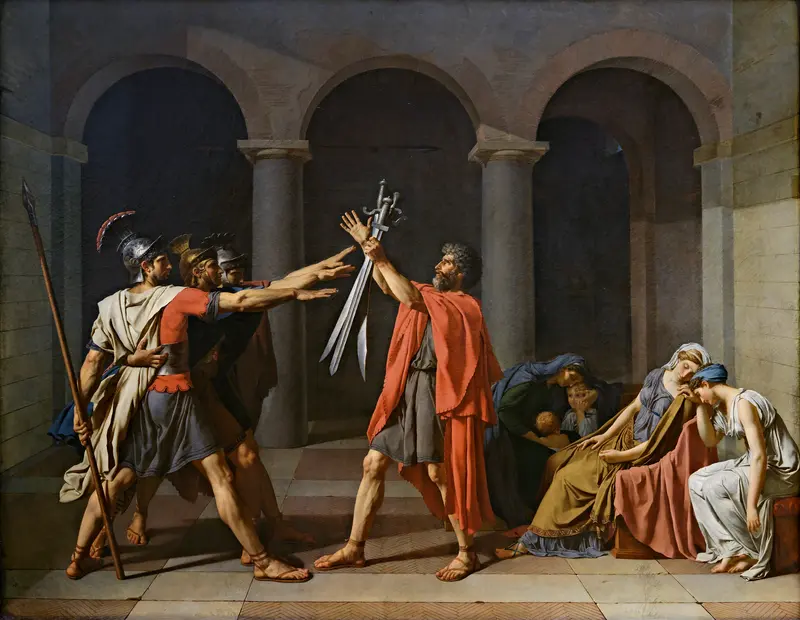
No. 33Neoclassicism
1784 · Oil on canvas · 330 × 425 cm
Louvre, Paris
Jacques-Louis David painted The Oath of the Horatii in 1784: three Roman brothers swear to fight to the death for Rome while the women of their family collapse in grief. It was an immediate success and remains one of the best-known Neoclassical paintings. It hangs in the Louvre in Paris.
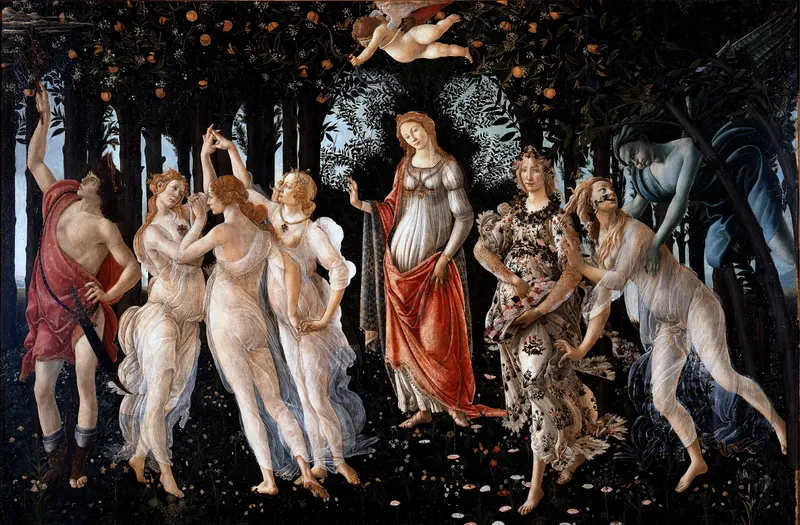
No. 34Renaissance
late 1470s or early 1480s · Tempera on panel · 202 × 314 cm
Uffizi, Florence
Sandro Botticelli painted Primavera ("Spring") in the late 1470s or early 1480s, and no one has ever found the story it tells. Gods and nymphs from classical mythology gather in a garden; most agree it is an allegory of spring, but the details are still debated. It is in the Uffizi in Florence.

No. 35Dutch Golden Age
c. 1660–1661 · Oil on canvas · 96.5 × 115.7 cm
Mauritshuis, The Hague
Johannes Vermeer painted View of Delft, his hometown seen across the water, in about 1660–1661. It is his only cityscape and one of just three known paintings of Delft by him. It has been in the Mauritshuis in The Hague since 1822.
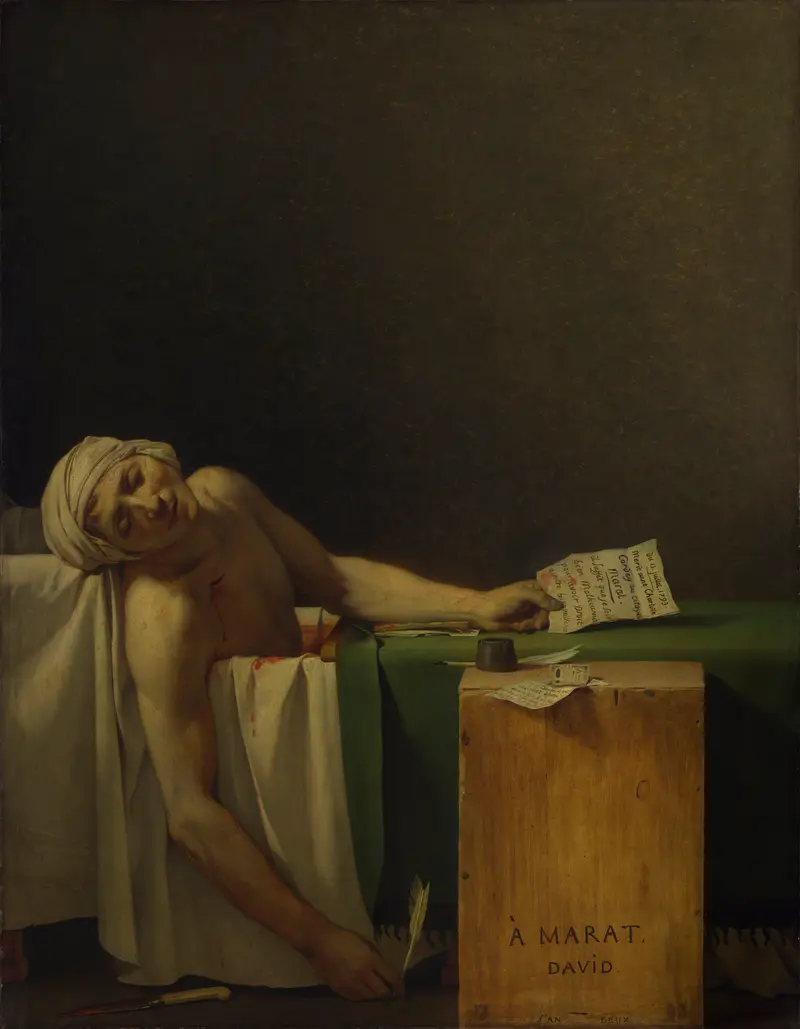
No. 36Neoclassicism
1793 · Oil on canvas · 162 × 128 cm
Royal Museums of Fine Arts of Belgium, Brussels
Jacques-Louis David painted The Death of Marat in 1793, months after his friend, the revolutionary leader Jean-Paul Marat, was stabbed in his bath by Charlotte Corday. It is one of the most famous images of the French Revolution and is in the Royal Museums of Fine Arts of Belgium in Brussels.
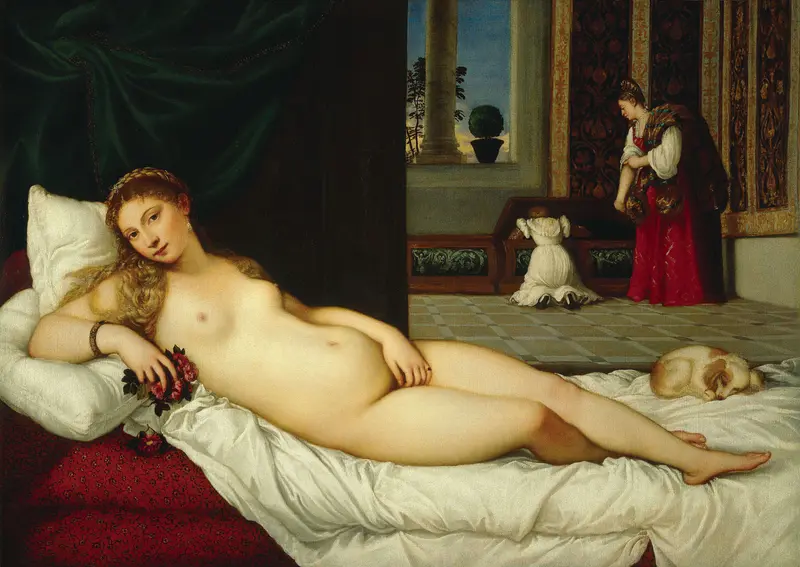
No. 37Renaissance
1538 · Oil on canvas · 119 × 165 cm
Uffizi, Florence
Titian painted the Venus of Urbino in the 1530s and sold it in 1538: a reclining nude who looks straight back at the viewer. He borrowed the pose from the Sleeping Venus in Dresden but moved the goddess indoors, into a Renaissance palace. It is in the Uffizi in Florence.
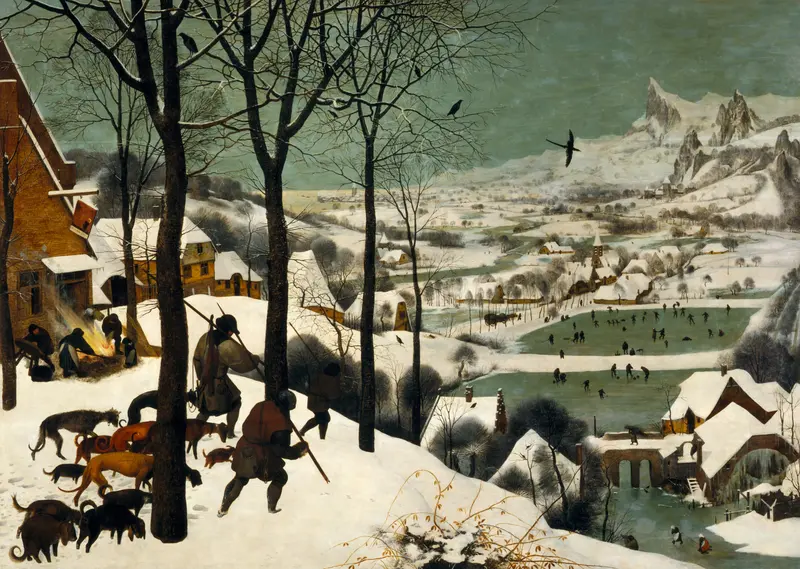
No. 38Northern Renaissance
1565 · Oil on oak panel · 116.5 × 162 cm
Kunsthistorisches Museum, Vienna
Pieter Bruegel the Elder painted The Hunters in the Snow in 1565: hunters and their dogs trudge home through deep winter, above a valley of frozen ponds full of skaters. It belongs to his series of the seasons, of which five paintings survive, and is in the Kunsthistorisches Museum in Vienna.
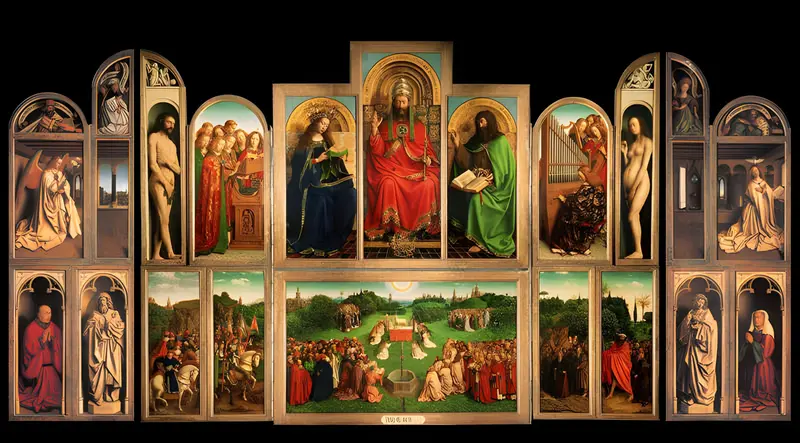
No. 39Northern Renaissance
completed 1432 · Oil on oak panels · 375 × 520 cm (open)
St Bavo's Cathedral, Ghent
Hubert and Jan van Eyck completed the Ghent Altarpiece, also called the Adoration of the Mystic Lamb, in 1432. The huge folding altarpiece marks the passage from medieval to Renaissance art, and some call it the first major oil painting. Almost six centuries later, it is still in St Bavo's Cathedral in Ghent.
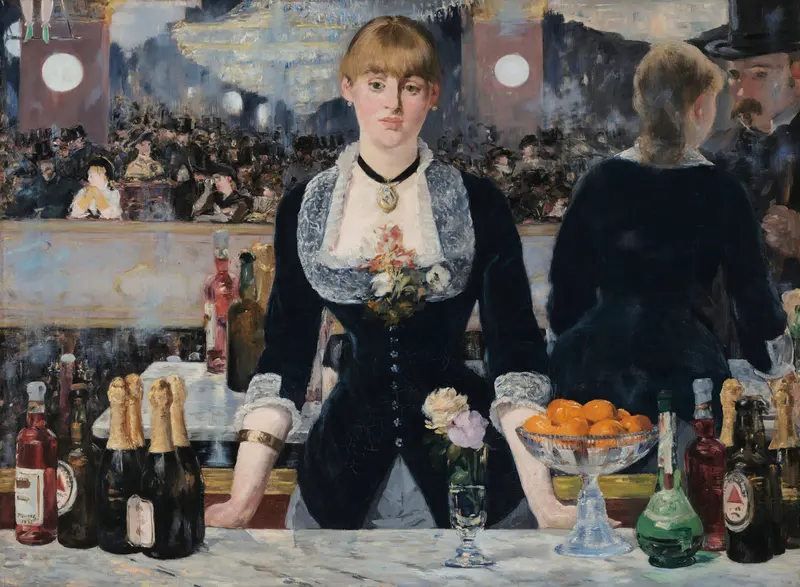
No. 40Impressionism
1882 · Oil on canvas · 96 × 130 cm
Courtauld Gallery, London
Édouard Manet painted A Bar at the Folies-Bergère in 1882, his last major work: a barmaid at the Paris nightclub stares out at us while the mirror behind her reflects the crowd. It once hung over the piano of his friend, the composer Emmanuel Chabrier, and is now in the Courtauld Gallery in London.
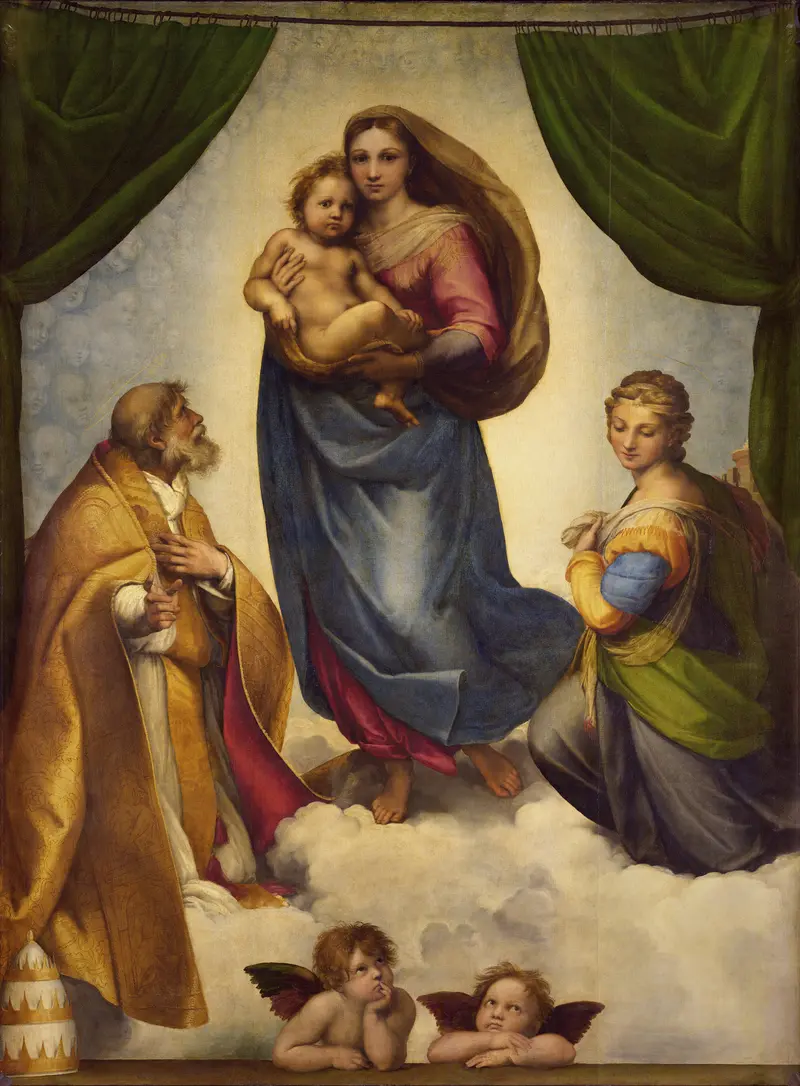
No. 41Renaissance
1512–1513 · Oil on canvas · 269.5 × 201 cm
Gemäldegalerie Alte Meister, Dresden
Raphael painted the Sistine Madonna in 1512–1513 for the church of San Sisto in Piacenza, one of the last Madonnas he painted. It has traveled: to Dresden in 1754, to Moscow for a decade after the Second World War, and back to the Gemäldegalerie Alte Meister in Dresden.
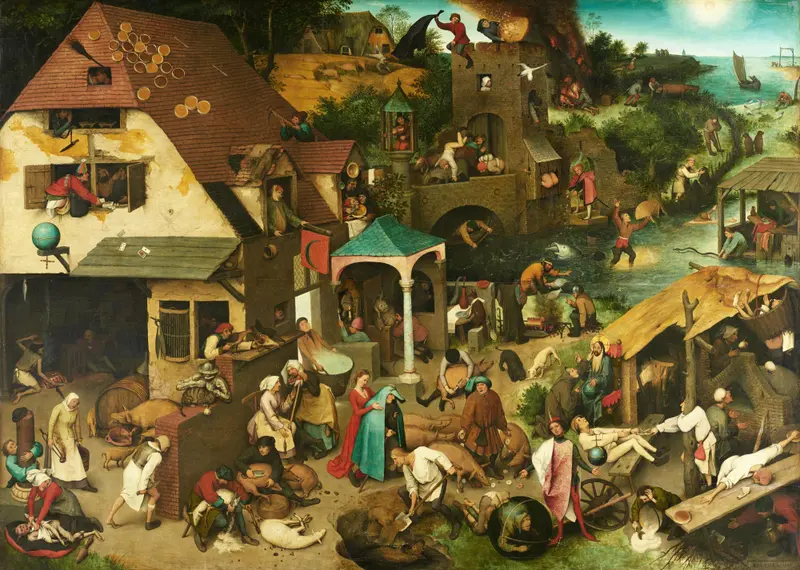
No. 42Northern Renaissance
1559 · Oil on oak panel · 117 × 163 cm
Gemäldegalerie, Berlin
Pieter Bruegel the Elder painted Netherlandish Proverbs in 1559: a whole village acts out Dutch proverbs and sayings, literally. Its original title, The Blue Cloak or The Folly of the World, shows he meant it as a catalog of human foolishness. It is in the Gemäldegalerie in Berlin.
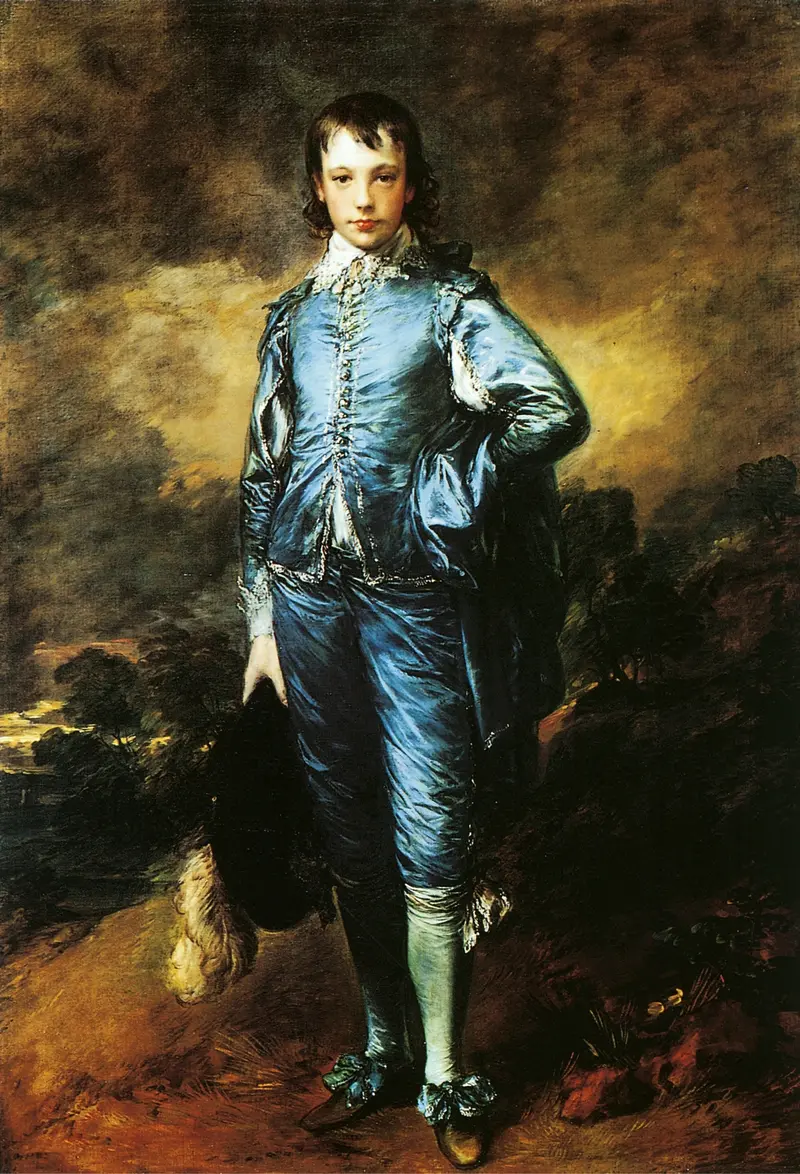
No. 43Romanticism
c. 1770 · Oil on canvas · 179.4 × 123.8 cm
The Huntington, San Marino, California
Thomas Gainsborough painted The Blue Boy in about 1770: a full-length portrait of a young man in a shimmering blue satin costume. The painting and the painter are both famous, yet who the boy was is still disputed. It is at The Huntington in San Marino, California.
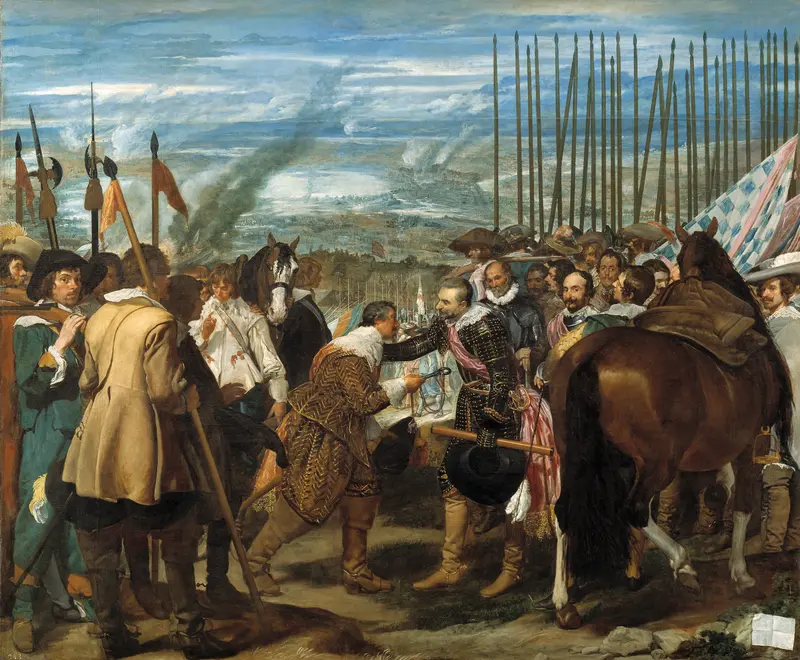
No. 44Baroque
1634–1635 · Oil on canvas · 307 × 367 cm
Museo del Prado, Madrid
Diego Velázquez painted The Surrender of Breda in 1634–1635: the defeated Dutch commander Justinus van Nassau hands the keys of the city to the Spanish general Ambrogio Spinola, who took Breda in 1625. The forest of upright lances gives it its Spanish nickname, Las lanzas. It is in the Prado in Madrid.
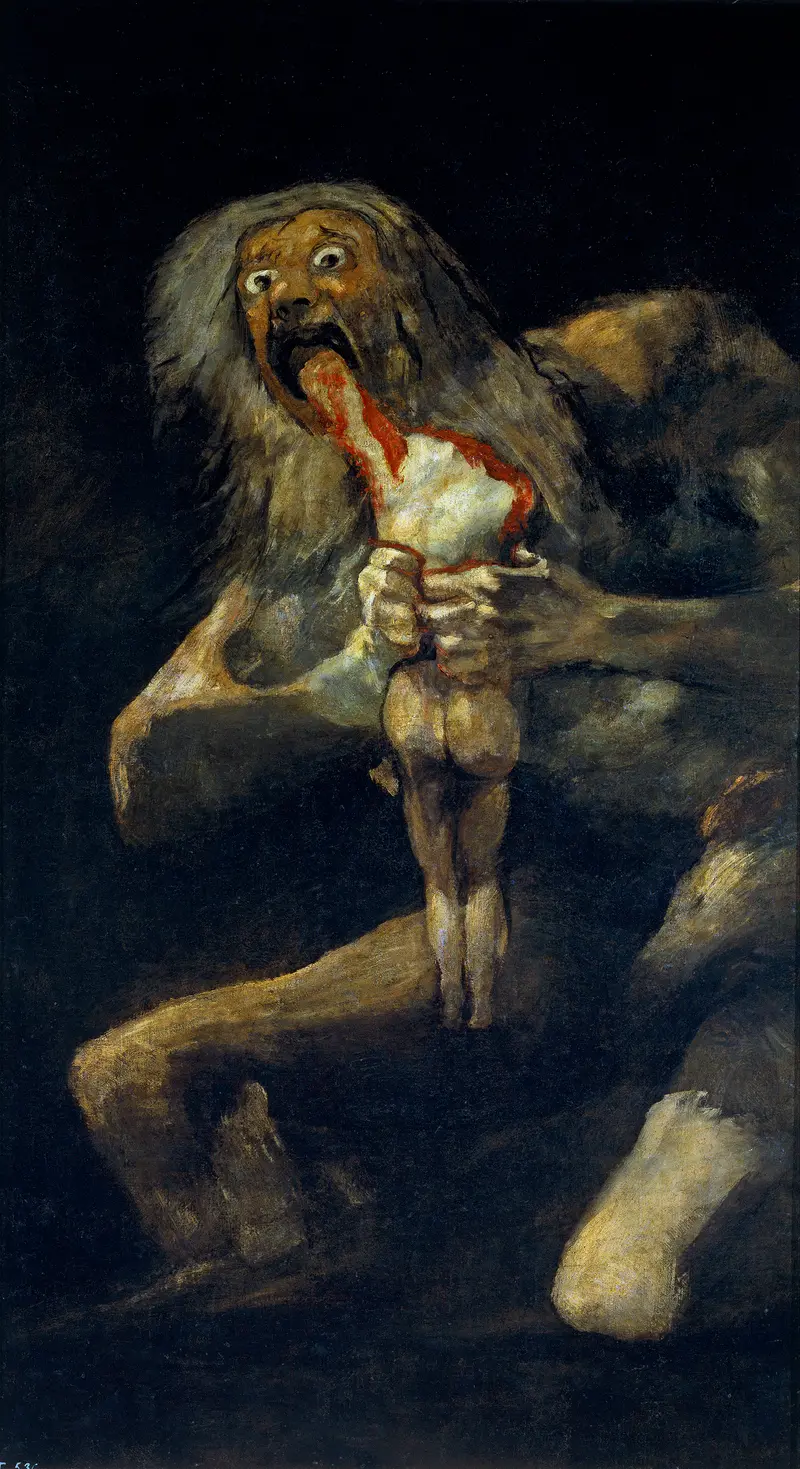
No. 45Romanticism
c. 1820–1823 · Mural transferred to canvas · 143.5 × 81.4 cm
Museo del Prado, Madrid
Francisco Goya painted Saturn Devouring His Son in about 1820–1823 directly onto a wall of his own house, one of 14 Black Paintings never meant to be seen in public. The Titan Saturn eats one of his children for fear of being overthrown. After Goya's death it was transferred to canvas; it is in the Prado in Madrid.
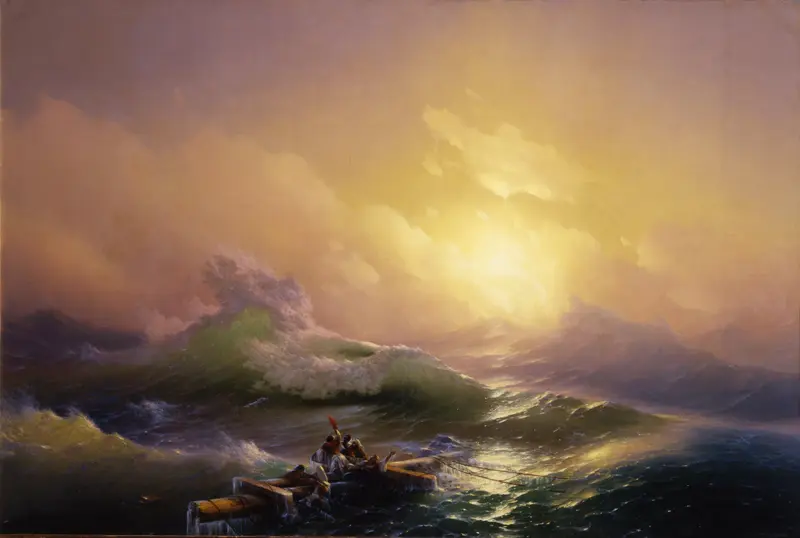
No. 46Romanticism
1850 · Oil on canvas · 221 × 332 cm
State Russian Museum, Saint Petersburg
Ivan Aivazovsky painted The Ninth Wave, his best-known work, in 1850: after a night storm, shipwreck survivors cling to a broken mast as the sun breaks through. The title comes from an old sailors' saying about the biggest wave in a series. It is in the State Russian Museum in Saint Petersburg.

No. 47Northern Renaissance
1563 · Oil on panel · 114 × 155 cm
Kunsthistorisches Museum, Vienna
Pieter Bruegel the Elder painted The Tower of Babel in 1563: the biblical tower spirals up over a busy harbor, still under construction. He painted the subject at least three times; this "Great" Tower of Babel is in the Kunsthistorisches Museum in Vienna, and a smaller version is in Rotterdam.
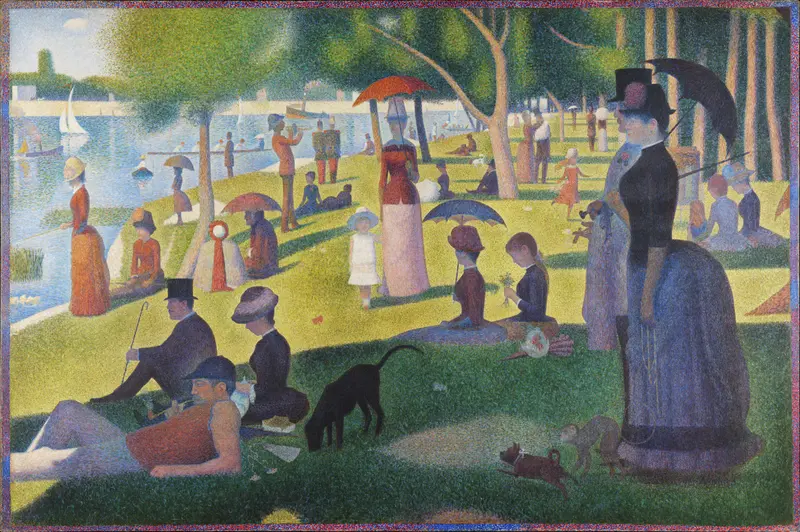
No. 48Post-Impressionism
1884–1886 · Oil on canvas · 207.6 × 308 cm
Art Institute of Chicago, Chicago
Georges Seurat spent two years, from 1884 to 1886, on A Sunday Afternoon on the Island of La Grande Jatte, building it from countless small dots of color: Parisians relax in a park on the banks of the Seine. His most famous work, it is the leading example of pointillism and hangs in the Art Institute of Chicago.

No. 49Art Nouveau
1907 · Oil, gold and silver on canvas · 140 × 140 cm
Neue Galerie, New York
Gustav Klimt painted the Portrait of Adele Bloch-Bauer I, also called The Woman in Gold, in 1903–1907, the last work of his golden phase. The Nazis stole it in 1941; in 2006 an arbitration ruling in Vienna returned it to Adele's niece, Maria Altmann, and today it is in the Neue Galerie in New York.
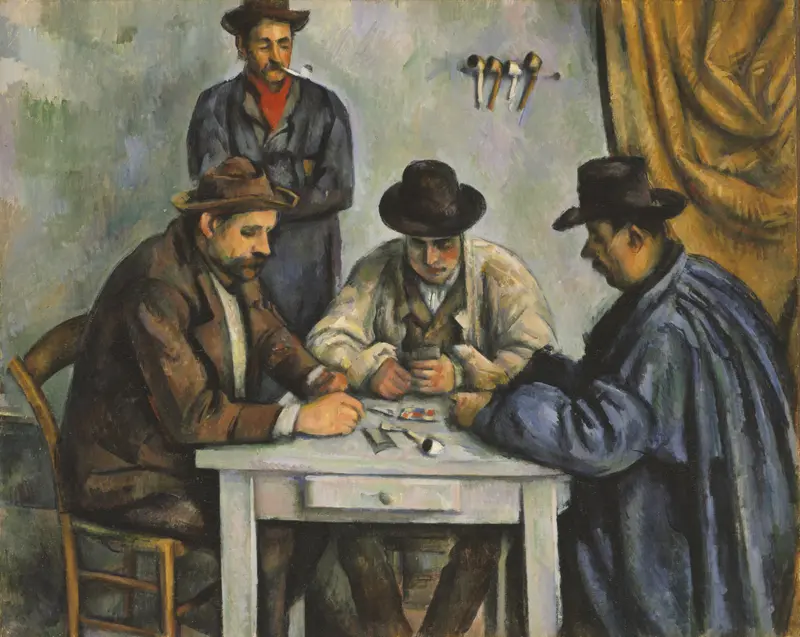
No. 50Post-Impressionism
1890–1892 · Oil on canvas · 65.4 × 81.9 cm
Metropolitan Museum of Art, New York
Paul Cézanne painted The Card Players five times in the early 1890s, each version with peasants from Provence absorbed in a game of cards. This version is in the Metropolitan Museum of Art in New York; another one sold in 2011 for an estimated $250 million, a record at the time.
Know what you like? Start with a theme. Each one opens thousands more public-domain works, from famous portraits, landscapes and still lifes to Greek myths, history, ocean, city and abstract paintings, and vintage illustrations.
Famous portrait paintingsFamous landscape paintingsFamous religious paintingsGreek mythology paintingsFamous historical paintingsFamous ocean paintingsFamous still life paintings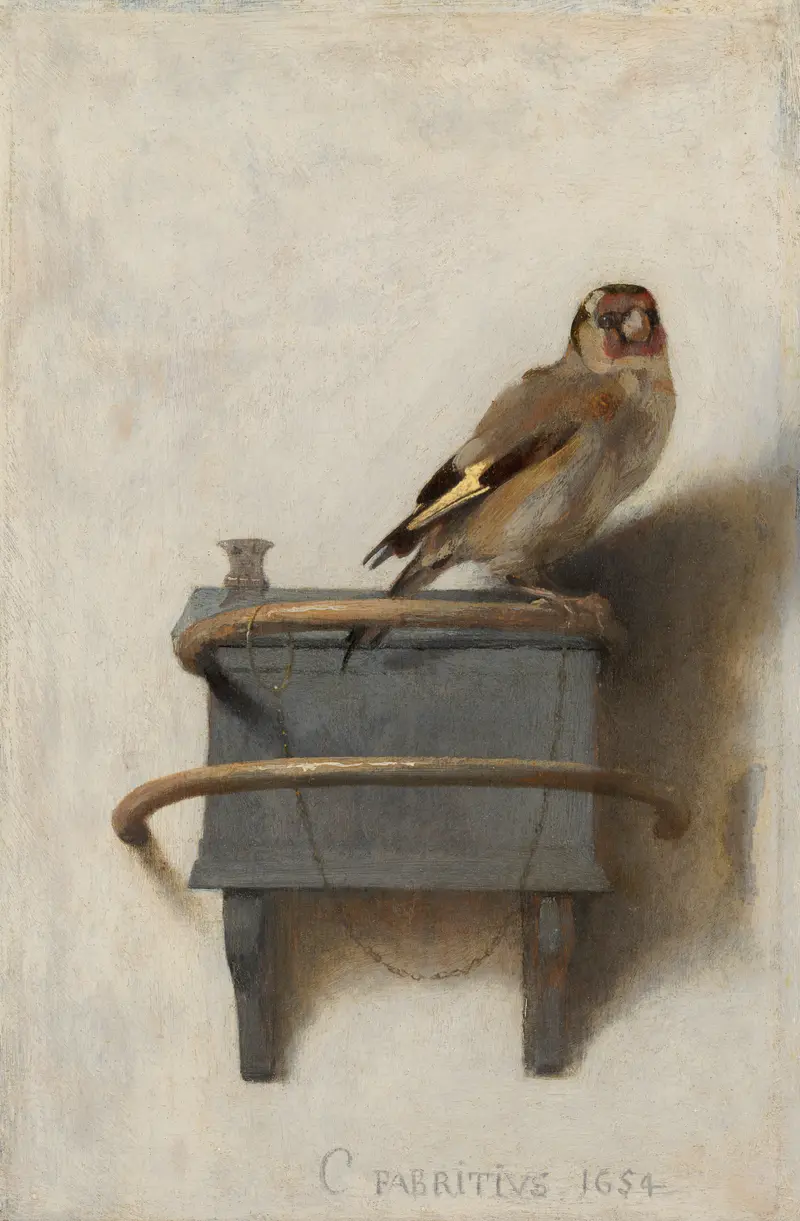 Famous animal paintingsFamous paintings of peopleFamous city paintings
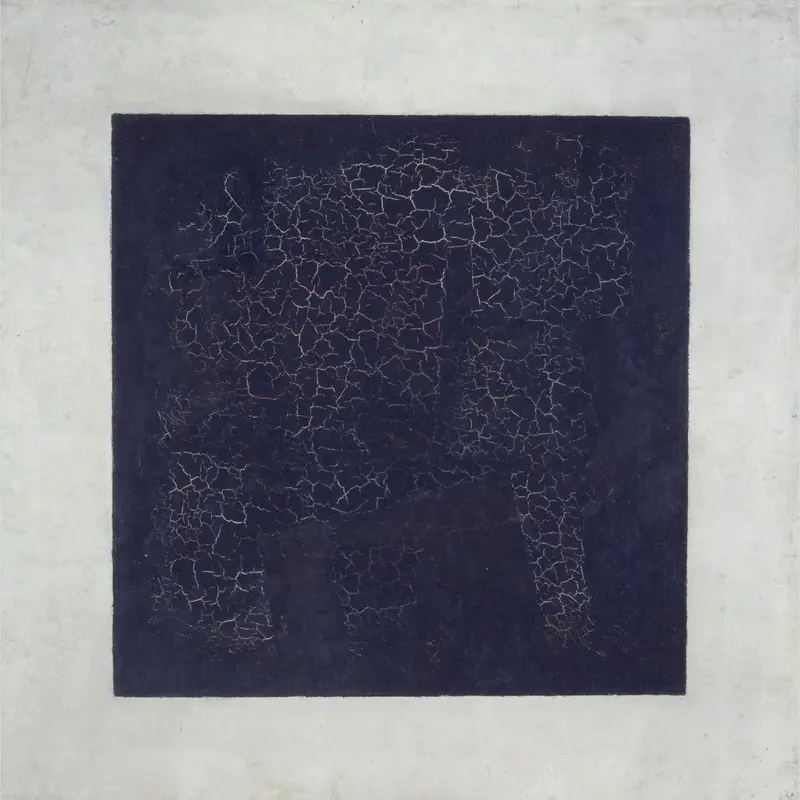 Famous abstract paintings
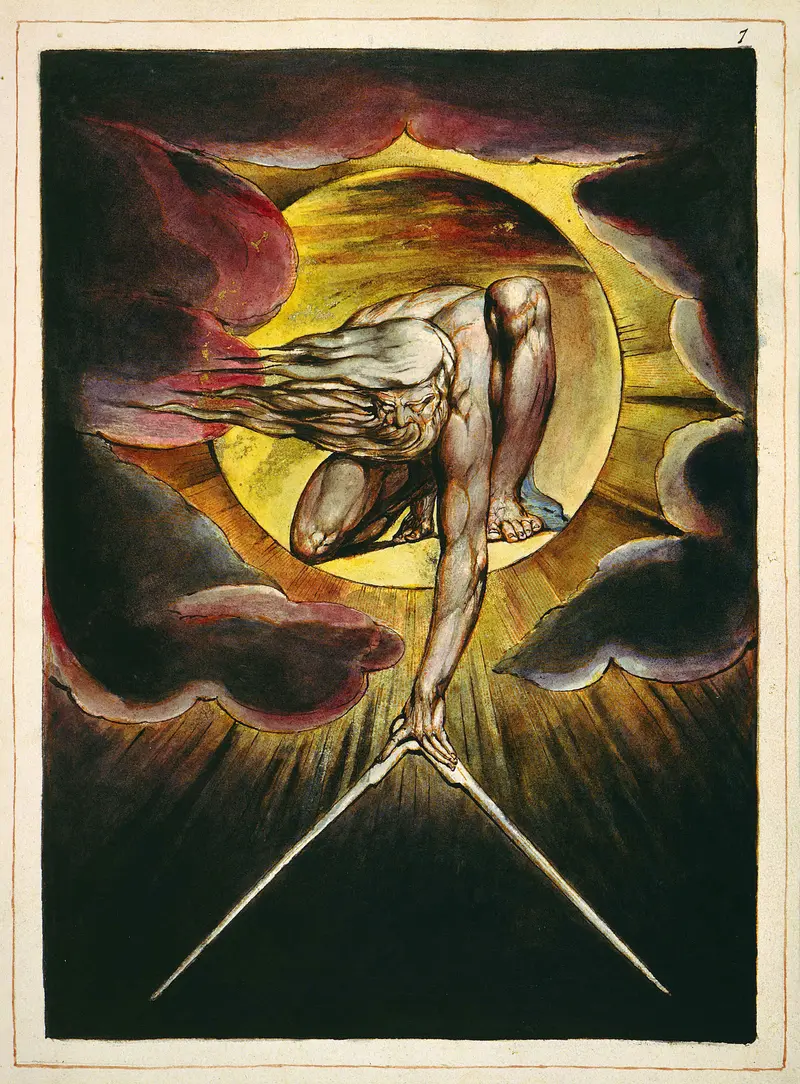 Famous illustrations
Beyond paintings: Vintage botanical prints
Three places per artist is a tough rule for Van Gogh. These famous paintings by him, Leonardo da Vinci, Vermeer and other masters missed the top 50 because of it, or by a whisker: from Café Terrace at Night, Irises and Bedroom in Arles to The Ambassadors, The Swing and The Jewish Bride.
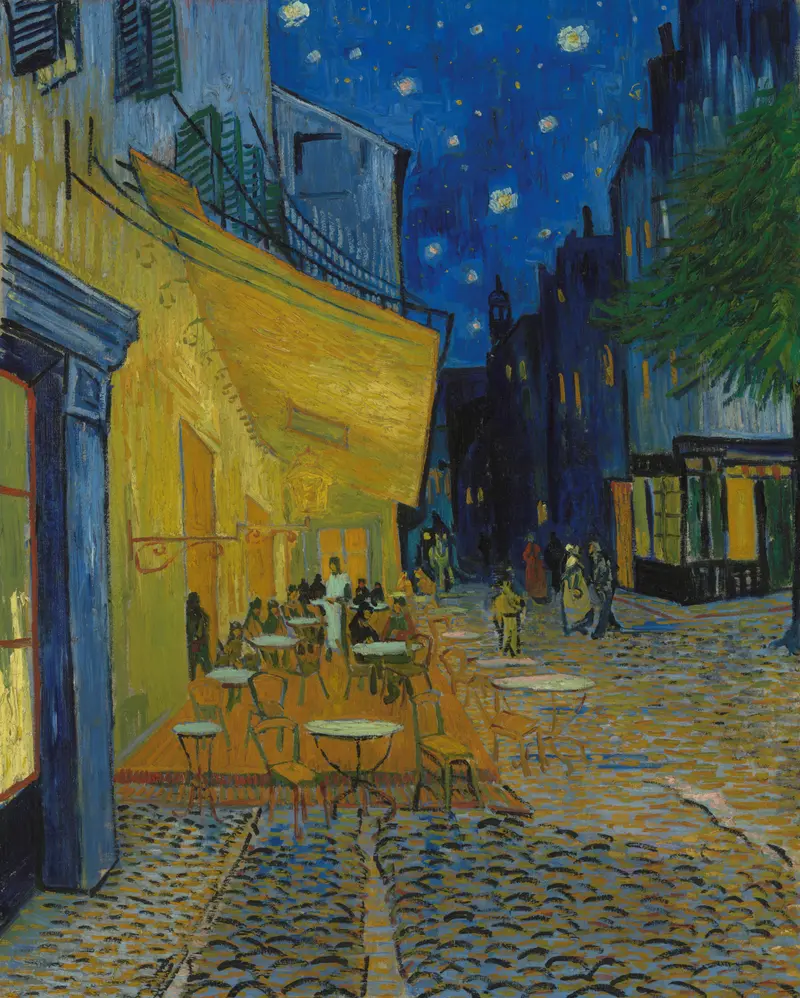 Café Terrace at NightVincent van Gogh
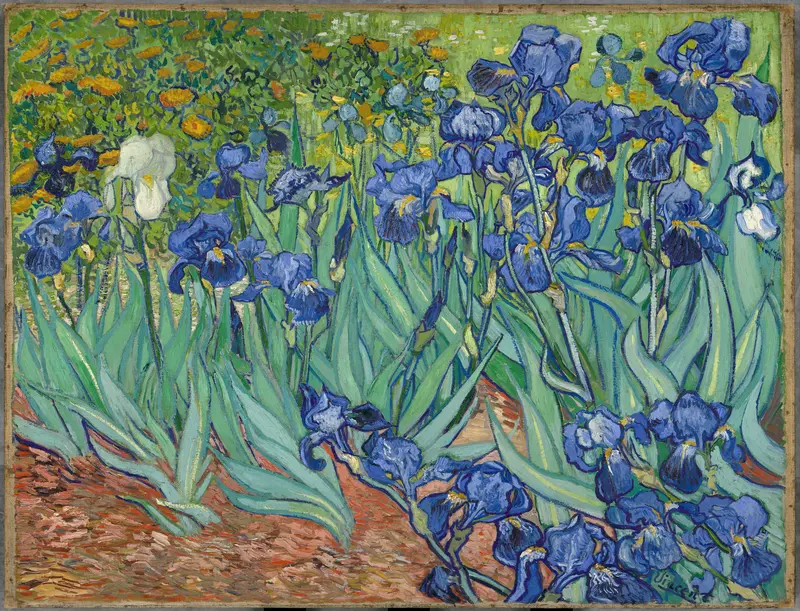 IrisesVincent van Gogh
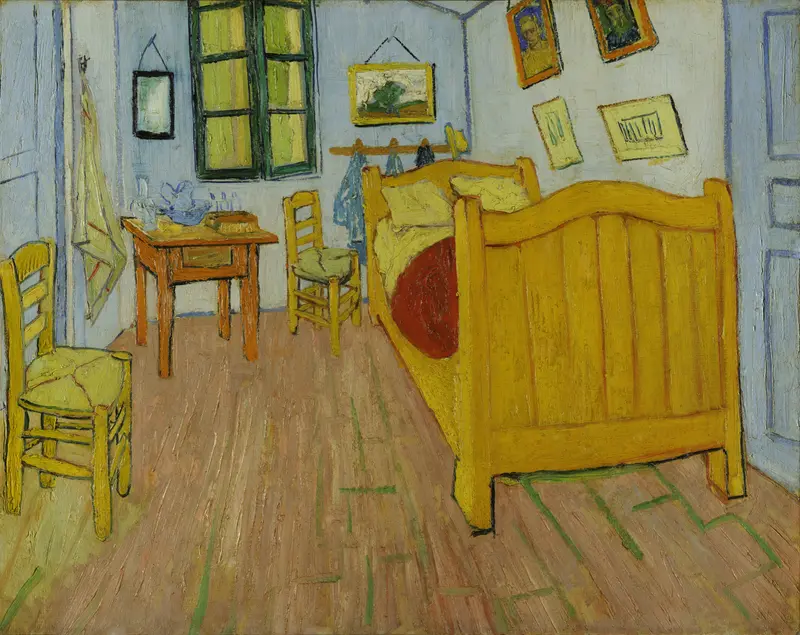 Bedroom in ArlesVincent van Gogh
 The Night CaféVincent van Gogh
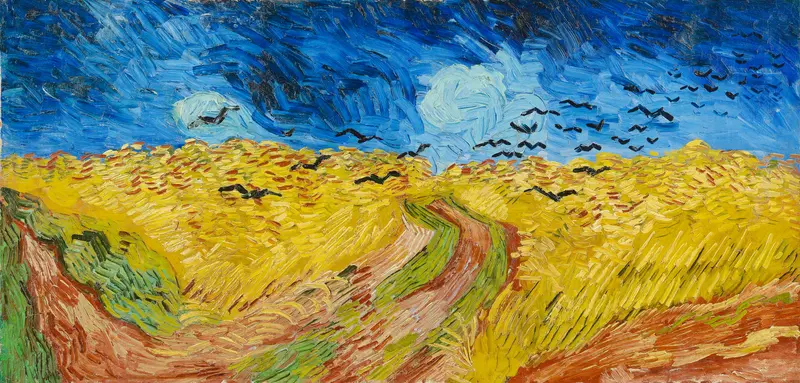 Wheatfield with CrowsVincent van Gogh
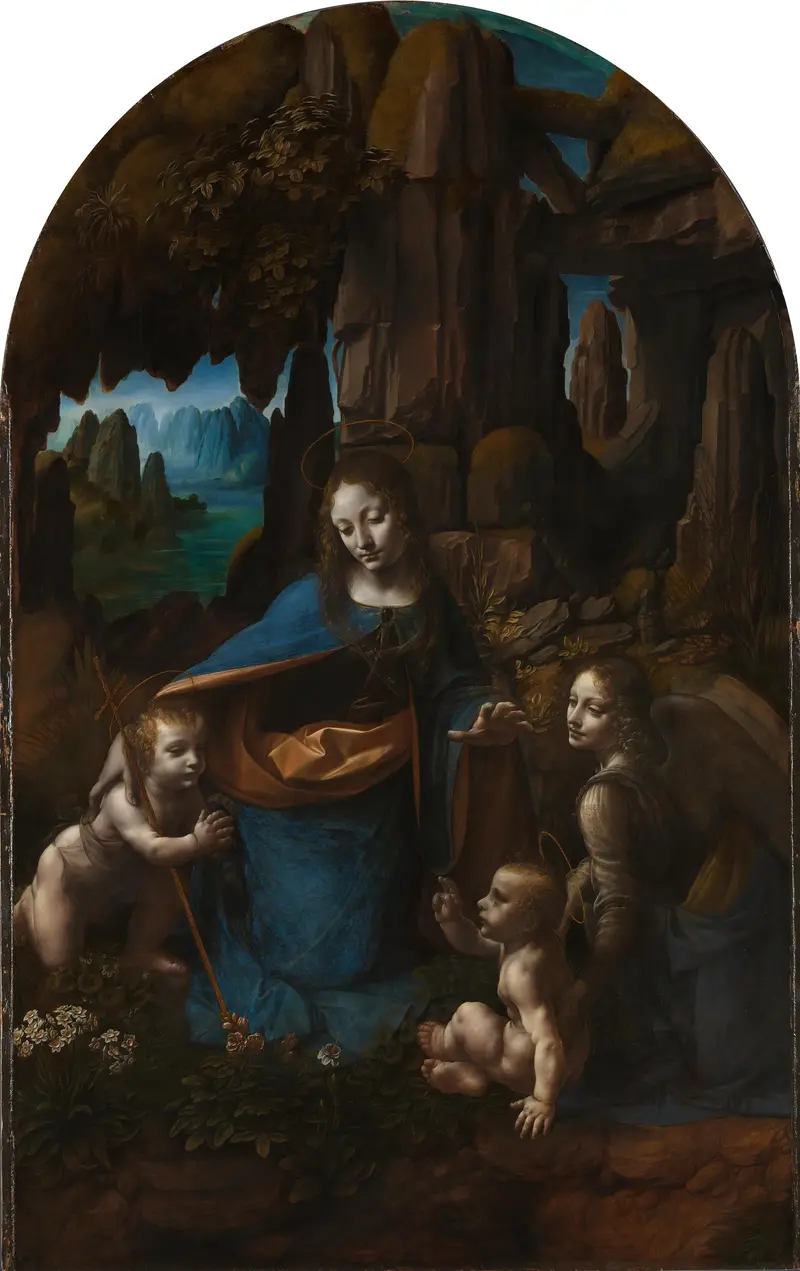 Virgin of the RocksLeonardo da Vinci
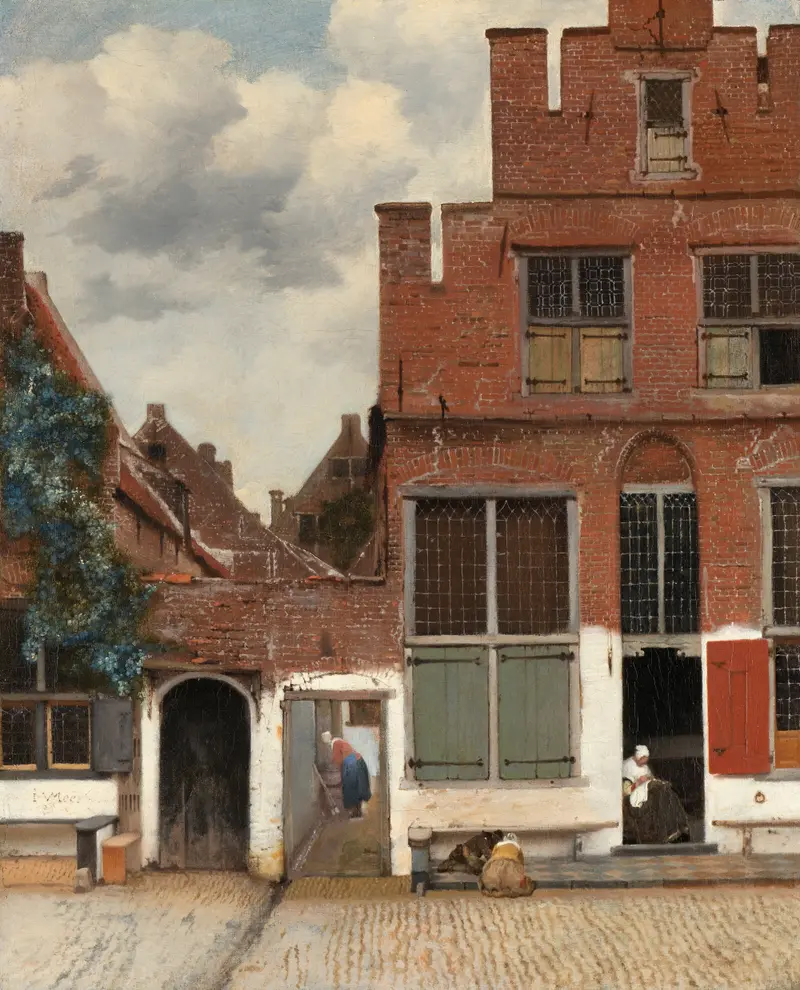 The Little StreetJohannes Vermeer
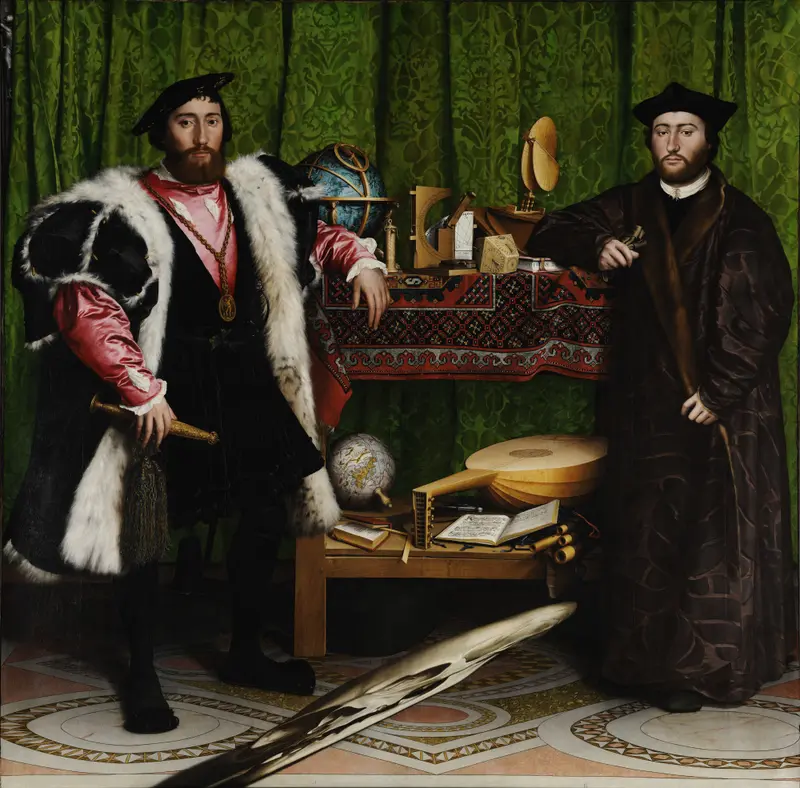 The AmbassadorsHans Holbein the Younger
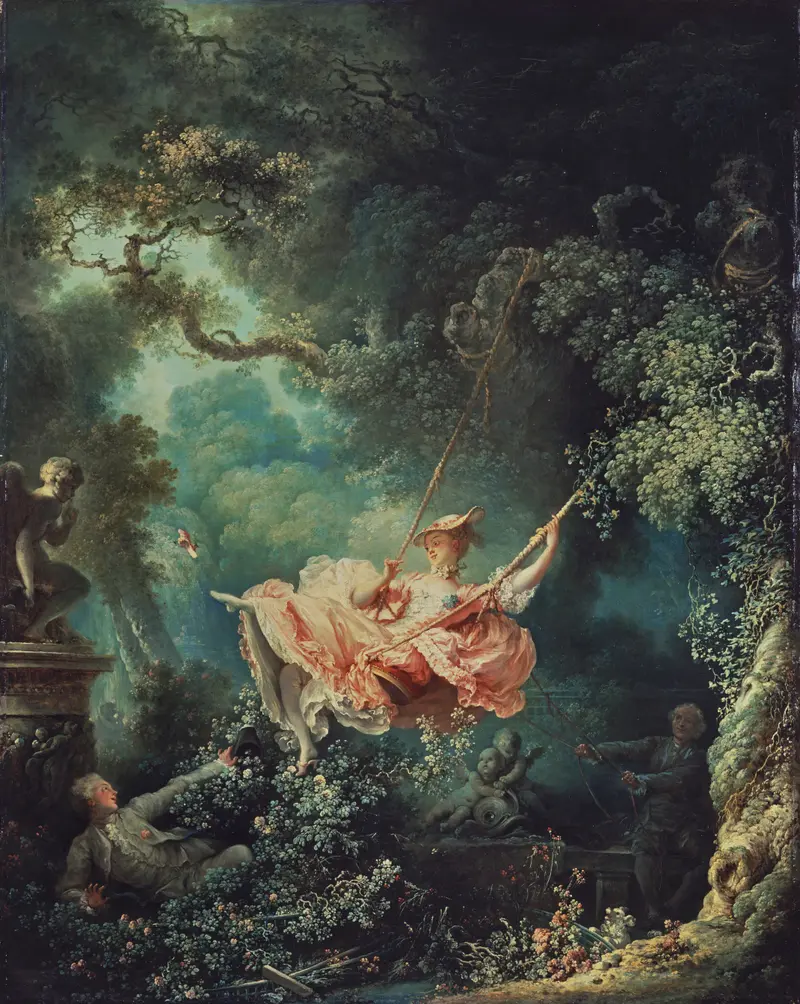 The SwingJean-Honoré Fragonard
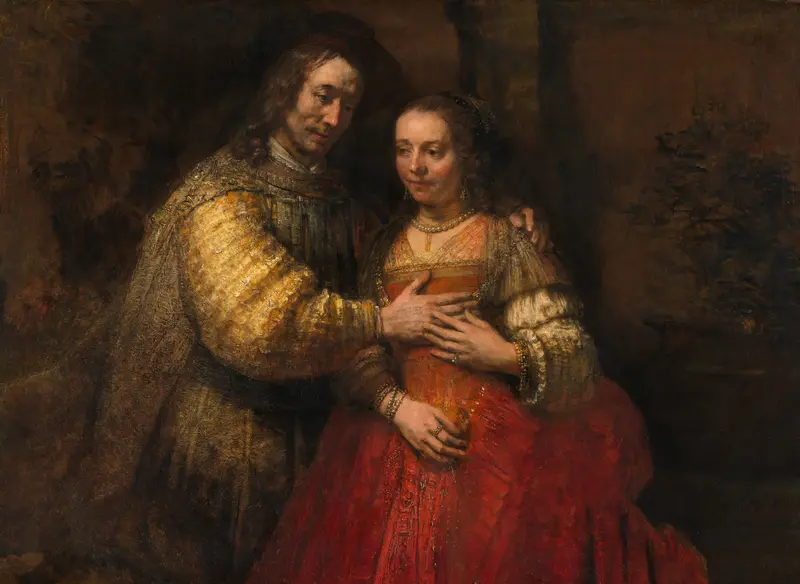 The Jewish BrideRembrandt van Rijn
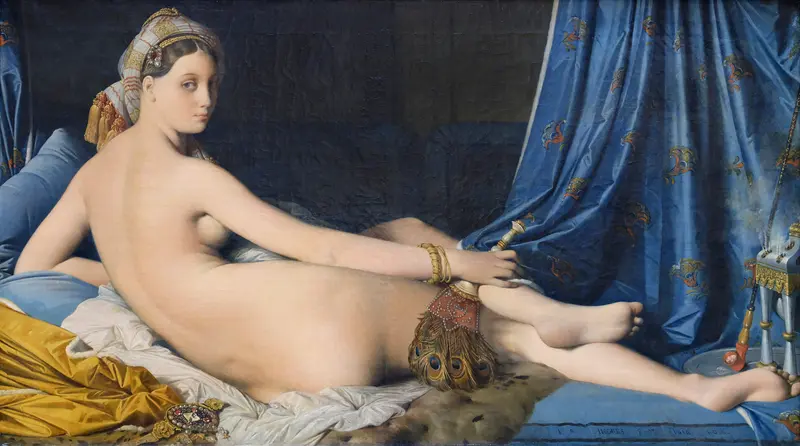 Grande OdalisqueJean Auguste Dominique Ingres
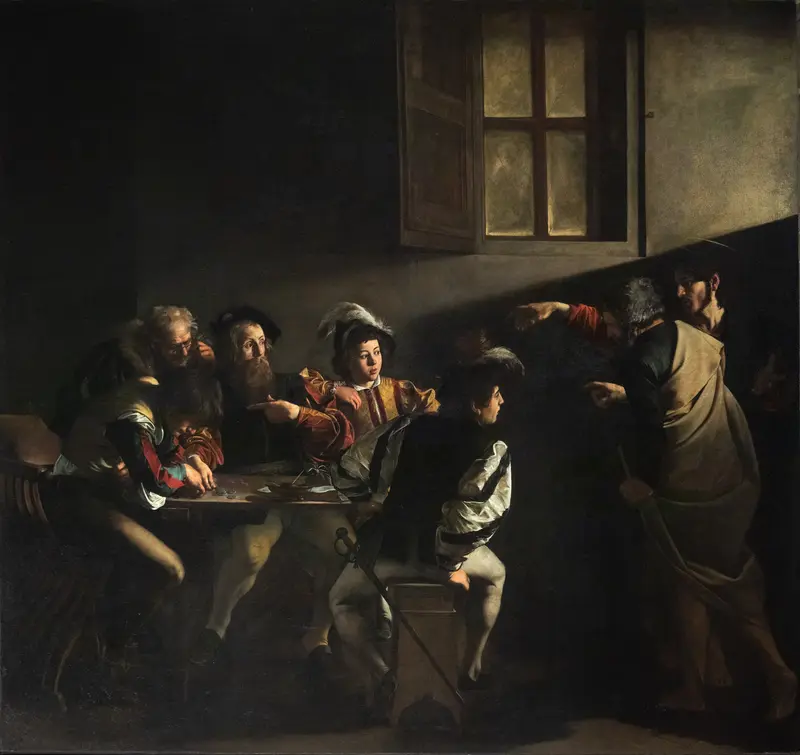 The Calling of Saint MatthewCaravaggio
The names of the 50 most famous paintings, who painted them, when, what they are painted on, how big they are, and where each one is located today.
| # | Painting | Painted by | Year | Medium | Size | Located in | City |
|---|---|---|---|---|---|---|---|
| 1 | Mona Lisa | Leonardo da Vinci | 1503–1519 | Oil on poplar panel | 79.4 × 53.4 cm (31.3 × 21 in) | Louvre | Paris |
| 2 | The Last Supper | Leonardo da Vinci | c. 1495–1498 | Tempera on dry plaster | 460 × 880 cm (181.1 × 346.5 in) | Santa Maria delle Grazie | Milan |
| 3 | The Scream | Edvard Munch | 1893 | Oil, tempera and pastel on cardboard | 91 × 73.5 cm (35.8 × 28.9 in) | National Museum | Oslo |
| 4 | The Starry Night | Vincent van Gogh | 1889 | Oil on canvas | 73.7 × 92.1 cm (29 × 36.3 in) | Museum of Modern Art | New York |
| 5 | Girl with a Pearl Earring | Johannes Vermeer | c. 1665 | Oil on canvas | 44.5 × 39 cm (17.5 × 15.4 in) | Mauritshuis | The Hague |
| 6 | Liberty Leading the People | Eugène Delacroix | 1830 | Oil on canvas | 260 × 325 cm (102.4 × 128 in) | Louvre | Paris |
| 7 | The Great Wave off Kanagawa | Katsushika Hokusai | c. 1831 | Color woodblock print | 25.7 × 37.9 cm (10.1 × 14.9 in) (this impression) | Metropolitan Museum of Art (this impression) | New York |
| 8 | The Creation of Adam | Michelangelo | c. 1512 | Fresco | 280 × 570 cm (110.2 × 224.4 in) | Sistine Chapel | Vatican City |
| 9 | The School of Athens | Raphael | 1509–1511 | Fresco | 500 × 770 cm (196.9 × 303.1 in) | Apostolic Palace, Vatican Museums | Vatican City |
| 10 | The Night Watch | Rembrandt van Rijn | 1642 | Oil on canvas | 363 × 437 cm (142.9 × 172 in) | Rijksmuseum (on loan from the Amsterdam Museum) | Amsterdam |
| 11 | The Birth of Venus | Sandro Botticelli | mid-1480s | Tempera on canvas | 172.5 × 278.5 cm (67.9 × 109.6 in) | Uffizi | Florence |
| 12 | Las Meninas | Diego Velázquez | 1656 | Oil on canvas | 318 × 276 cm (125.2 × 108.7 in) | Museo del Prado | Madrid |
| 13 | The Potato Eaters | Vincent van Gogh | 1885 | Oil on canvas | 82 × 114 cm (32.3 × 44.9 in) | Van Gogh Museum | Amsterdam |
| 14 | Impression, Sunrise | Claude Monet | 1872 | Oil on canvas | 50 × 65 cm (19.7 × 25.6 in) | Musée Marmottan Monet | Paris |
| 15 | The Kiss | Gustav Klimt | 1908–1909 | Oil and gold leaf on canvas | 180 × 180 cm (70.9 × 70.9 in) | Belvedere | Vienna |
| 16 | The Death of Socrates | Jacques-Louis David | 1787 | Oil on canvas | 129.5 × 196.2 cm (51 × 77.2 in) | Metropolitan Museum of Art | New York |
| 17 | Lady with an Ermine | Leonardo da Vinci | c. 1490 | Oil and tempera on walnut panel | 53.4 × 39.3 cm (21 × 15.5 in) | Czartoryski Museum (National Museum in Kraków) | Kraków |
| 18 | The Garden of Earthly Delights | Hieronymus Bosch | 1490–1500 | Oil on oak panels | 185.8 × 172.5 cm (73.1 × 67.9 in) (center panel) | Museo del Prado | Madrid |
| 19 | Sunflowers | Vincent van Gogh | 1888 | Oil on canvas | 92.2 × 73 cm (36.3 × 28.7 in) | National Gallery | London |
| 20 | The Last Judgment | Michelangelo | 1536–1541 | Fresco | 1370 × 1200 cm (539.4 × 472.4 in) | Sistine Chapel | Vatican City |
| 21 | Wanderer above the Sea of Fog | Caspar David Friedrich | c. 1817 | Oil on canvas | 94.8 × 74.8 cm (37.3 × 29.4 in) | Hamburger Kunsthalle | Hamburg |
| 22 | The Raft of the Medusa | Théodore Géricault | 1818–1819 | Oil on canvas | 491 × 716 cm (193.3 × 281.9 in) | Louvre | Paris |
| 23 | Reply of the Zaporozhian Cossacks | Ilya Repin | 1880–1891 | Oil on canvas | 203 × 358 cm (79.9 × 140.9 in) | State Russian Museum | Saint Petersburg |
| 24 | Luncheon on the Grass | Édouard Manet | 1862–1863 | Oil on canvas | 208 × 264.5 cm (81.9 × 104.1 in) | Musée d'Orsay | Paris |
| 25 | La maja desnuda | Francisco Goya | c. 1797–1800 | Oil on canvas | 97 × 190 cm (38.2 × 74.8 in) | Museo del Prado | Madrid |
| 26 | The Anatomy Lesson of Dr Nicolaes Tulp | Rembrandt van Rijn | 1632 | Oil on canvas | 169.5 × 216.5 cm (66.7 × 85.2 in) | Mauritshuis | The Hague |
| 27 | The Third of May 1808 | Francisco Goya | 1814 | Oil on canvas | 268 × 347 cm (105.5 × 136.6 in) | Museo del Prado | Madrid |
| 28 | American Gothic | Grant Wood | 1930 | Oil on beaverboard | 78 × 65.3 cm (30.7 × 25.7 in) | Art Institute of Chicago | Chicago |
| 29 | The Milkmaid | Johannes Vermeer | c. 1660 | Oil on canvas | 45.5 × 41 cm (17.9 × 16.1 in) | Rijksmuseum | Amsterdam |
| 30 | Bal du moulin de la Galette | Pierre-Auguste Renoir | 1876 | Oil on canvas | 131 × 175 cm (51.6 × 68.9 in) | Musée d'Orsay | Paris |
| 31 | Arnolfini Portrait | Jan van Eyck | 1434 | Oil on oak panel | 82.2 × 60 cm (32.4 × 23.6 in) | National Gallery | London |
| 32 | Olympia | Édouard Manet | 1863 | Oil on canvas | 130.5 × 190 cm (51.4 × 74.8 in) | Musée d'Orsay | Paris |
| 33 | The Oath of the Horatii | Jacques-Louis David | 1784 | Oil on canvas | 330 × 425 cm (129.9 × 167.3 in) | Louvre | Paris |
| 34 | Primavera | Sandro Botticelli | late 1470s or early 1480s | Tempera on panel | 202 × 314 cm (79.5 × 123.6 in) | Uffizi | Florence |
| 35 | View of Delft | Johannes Vermeer | c. 1660–1661 | Oil on canvas | 96.5 × 115.7 cm (38 × 45.6 in) | Mauritshuis | The Hague |
| 36 | The Death of Marat | Jacques-Louis David | 1793 | Oil on canvas | 162 × 128 cm (63.8 × 50.4 in) | Royal Museums of Fine Arts of Belgium | Brussels |
| 37 | Venus of Urbino | Titian | 1538 | Oil on canvas | 119 × 165 cm (46.9 × 65 in) | Uffizi | Florence |
| 38 | The Hunters in the Snow | Pieter Bruegel the Elder | 1565 | Oil on oak panel | 116.5 × 162 cm (45.9 × 63.8 in) | Kunsthistorisches Museum | Vienna |
| 39 | Ghent Altarpiece | Hubert and Jan van Eyck | completed 1432 | Oil on oak panels | 375 × 520 cm (147.6 × 204.7 in) (open) | St Bavo's Cathedral | Ghent |
| 40 | A Bar at the Folies-Bergère | Édouard Manet | 1882 | Oil on canvas | 96 × 130 cm (37.8 × 51.2 in) | Courtauld Gallery | London |
| 41 | Sistine Madonna | Raphael | 1512–1513 | Oil on canvas | 269.5 × 201 cm (106.1 × 79.1 in) | Gemäldegalerie Alte Meister | Dresden |
| 42 | Netherlandish Proverbs | Pieter Bruegel the Elder | 1559 | Oil on oak panel | 117 × 163 cm (46.1 × 64.2 in) | Gemäldegalerie | Berlin |
| 43 | The Blue Boy | Thomas Gainsborough | c. 1770 | Oil on canvas | 179.4 × 123.8 cm (70.6 × 48.7 in) | The Huntington | San Marino, California |
| 44 | The Surrender of Breda | Diego Velázquez | 1634–1635 | Oil on canvas | 307 × 367 cm (120.9 × 144.5 in) | Museo del Prado | Madrid |
| 45 | Saturn Devouring His Son | Francisco Goya | c. 1820–1823 | Mural transferred to canvas | 143.5 × 81.4 cm (56.5 × 32 in) | Museo del Prado | Madrid |
| 46 | The Ninth Wave | Ivan Aivazovsky | 1850 | Oil on canvas | 221 × 332 cm (87 × 130.7 in) | State Russian Museum | Saint Petersburg |
| 47 | The Tower of Babel | Pieter Bruegel the Elder | 1563 | Oil on panel | 114 × 155 cm (44.9 × 61 in) | Kunsthistorisches Museum | Vienna |
| 48 | A Sunday Afternoon on the Island of La Grande Jatte | Georges Seurat | 1884–1886 | Oil on canvas | 207.6 × 308 cm (81.7 × 121.3 in) | Art Institute of Chicago | Chicago |
| 49 | Portrait of Adele Bloch-Bauer I | Gustav Klimt | 1907 | Oil, gold and silver on canvas | 140 × 140 cm (55.1 × 55.1 in) | Neue Galerie | New York |
| 50 | The Card Players | Paul Cézanne | 1890–1892 | Oil on canvas | 65.4 × 81.9 cm (25.7 × 32.2 in) | Metropolitan Museum of Art | New York |
The Mona Lisa by Leonardo da Vinci. It is written about in more languages than any other painting and is often called the best-known work of art in the world. It has hung in the Louvre in Paris since 1797. The next most famous paintings of all time are The Last Supper, The Scream and The Starry Night.
Sources: Louvre: Mona Lisa
There is no official ranking, but Leonardo da Vinci leads by our measure: two of the three most widely documented paintings in the world, the Mona Lisa and The Last Supper, are his. Among the 167 most widely documented public-domain artworks, 17 are by Leonardo and 14 by Vincent van Gogh, followed by Vermeer and Caravaggio.
The Mona Lisa, followed by The Last Supper: they are the two most widely documented paintings in the world. Among his other paintings, the Lady with an Ermine comes next, although his drawing of the Vitruvian Man is better known than either.
Sources: Louvre: Mona Lisa · Cenacolo Vinciano: The Last Supper (official site)
The Starry Night, painted in June 1889 from the window of his room at the asylum in Saint-Rémy-de-Provence. It is written about in more languages than any other Van Gogh and has been in the Museum of Modern Art in New York since 1941. The Potato Eaters and Sunflowers come next; Café Terrace at Night, Irises and Bedroom in Arles just missed the list.
Sources: MoMA: The Starry Night
The Creation of Adam, the famous painting of God and Adam with their fingers almost touching, on the ceiling of the Sistine Chapel (1508–1512). His second most famous painting is The Last Judgment, which covers the chapel's altar wall (1536–1541). Both are frescoes in the Vatican.
Sources: Vatican Museums: Sistine Chapel ceiling · Vatican Museums: The Last Judgment
Impression, Sunrise (1872), a misty view of the port of Le Havre. Shown at the first Impressionist exhibition in Paris in 1874, it gave Impressionism its name, and it is better known than any other Monet. His Water Lilies series comes next.
The Great Wave off Kanagawa, a woodblock print made by the Japanese artist Katsushika Hokusai in about 1831. It is the first of his series Thirty-six Views of Mount Fuji and shows three boats under a giant wave, with Mount Fuji small in the distance.
Sources: The Met: The Great Wave off Kanagawa
Leonardo da Vinci's The Last Supper (c. 1495–1498), which shows Jesus with his twelve apostles on the wall of a convent dining hall in Milan. After the Mona Lisa, it is the most widely documented painting in the world.
Michelangelo's The Creation of Adam and The Last Judgment in the Sistine Chapel, and Raphael's The School of Athens in the Vatican, are true frescoes, painted into wet plaster. Leonardo's The Last Supper is often called a fresco but is not one: he painted it in tempera on a dry wall, which is why so little of the original paint survives.
Sources: Vatican Museums: Sistine Chapel ceiling · Vatican Museums: Room of the Segnatura (The School of Athens) · Cenacolo Vinciano: The Last Supper (official site)
Partly the painting itself: the sitter's enigmatic expression, Leonardo's soft modeling of form and the hazy, atmospheric landscape. Partly its story: in 1911 Vincenzo Peruggia stole it from the Louvre, and it was not recovered until 1914. The worldwide press coverage of the theft turned it into a household name.
Sources: Louvre: Mona Lisa
It has no price, because it is not for sale: the Mona Lisa belongs to the French state. It holds the Guinness World Record for the highest insurance valuation of any painting, US$100 million in 1962, equivalent to about $1 billion today.
Sources: Guinness World Records: highest insurance valuation for a painting
Salvator Mundi, attributed to Leonardo da Vinci, sold for about US$450.3 million including fees at Christie's in New York in November 2017. Its attribution is disputed, which is why it is not on our list. The previous record, an estimated $250 million in 2011, was for a version of Cézanne's The Card Players.
Sources: Christie's: Salvator Mundi
The Mona Lisa, Liberty Leading the People, The Raft of the Medusa and The Oath of the Horatii, all four in our top 50. The Louvre also holds Leonardo's Virgin of the Rocks and La Belle Ferronnière, Vermeer's The Astronomer and Ingres's Grande Odalisque.
Sources: Louvre: Mona Lisa · Louvre: Liberty Leading the People · Louvre: The Raft of the Medusa · Louvre: The Oath of the Horatii
Mostly in a handful of European museums. Of the 50 on this page, six are in the Prado in Madrid and four in the Louvre in Paris. The Uffizi in Florence, the Vatican, the Musée d'Orsay and the Mauritshuis in The Hague have three each. The Rijksmuseum, the Kunsthistorisches Museum in Vienna, the National Gallery in London and the Russian Museum in Saint Petersburg have two each. In the United States, the Art Institute of Chicago and the Metropolitan Museum of Art also have two each.
The Mona Lisa was taken from the Louvre in 1911 and recovered in 1914. Both painted versions of Munch's The Scream have been stolen from museums in Oslo, in 1994 and in 2004, and both were recovered. Rembrandt's The Storm on the Sea of Galilee, taken in the 1990 Isabella Stewart Gardner Museum robbery in Boston, has never been found.
Most famous old paintings are. In the United States, works published before 1931 are in the public domain as of 2026; in the European Union and the UK, copyright ends 70 years after the artist's death. Every painting on this page passes both tests. Faithful photographs of public-domain paintings are generally not protected either. This is general information, not legal advice.
Sources: Cornell University: Copyright term and the public domain · U.S. Copyright Office: How long does copyright last?
Right here. Every painting on this page links to its own page on Fine Art Free, where you can download it free, without signing up, at 1,200 pixels wide, enough for screens, slides and classroom handouts. The full-resolution files, up to 16,000 pixels for some works, are part of Fine Art Pro. The images come from museums' open-access collections and Wikimedia Commons.
Sources: Fine Art Free: public domain images for commercial use
Yes, as long as the painting is in the public domain, and all 50 on this page are. You can print them on shirts, posters or mugs, sell them, crop them or change them, without permission or fees. Just don't suggest that a museum endorses your product.
Sources: Fine Art Free: public domain images for commercial use · Cornell University: Copyright term and the public domain
We ranked the paintings by how widely each one is known around the world: the number of languages that have an encyclopedia entry about it, checked in October 2026. The more cultures write about a painting, the higher it ranks.
A few rules keep the list useful. Every painting is in the public domain, so you can download and use it freely. No artist has more than three places. We left out works whose authorship is disputed or shared, such as Salvator Mundi, drawings such as the Vitruvian Man, and one sexually explicit painting. When a painting exists in several versions, we show the one most people mean and tell you which.
Dates, sizes and locations come from museum records and open reference sources, and each painting's own page lists its sources.
Spotted a mistake? Tell us and we will correct it.
Keep exploring
These 50 are a starting point. Browse all 500,000 public-domain artworks, or search by famous artists, movement or museum.