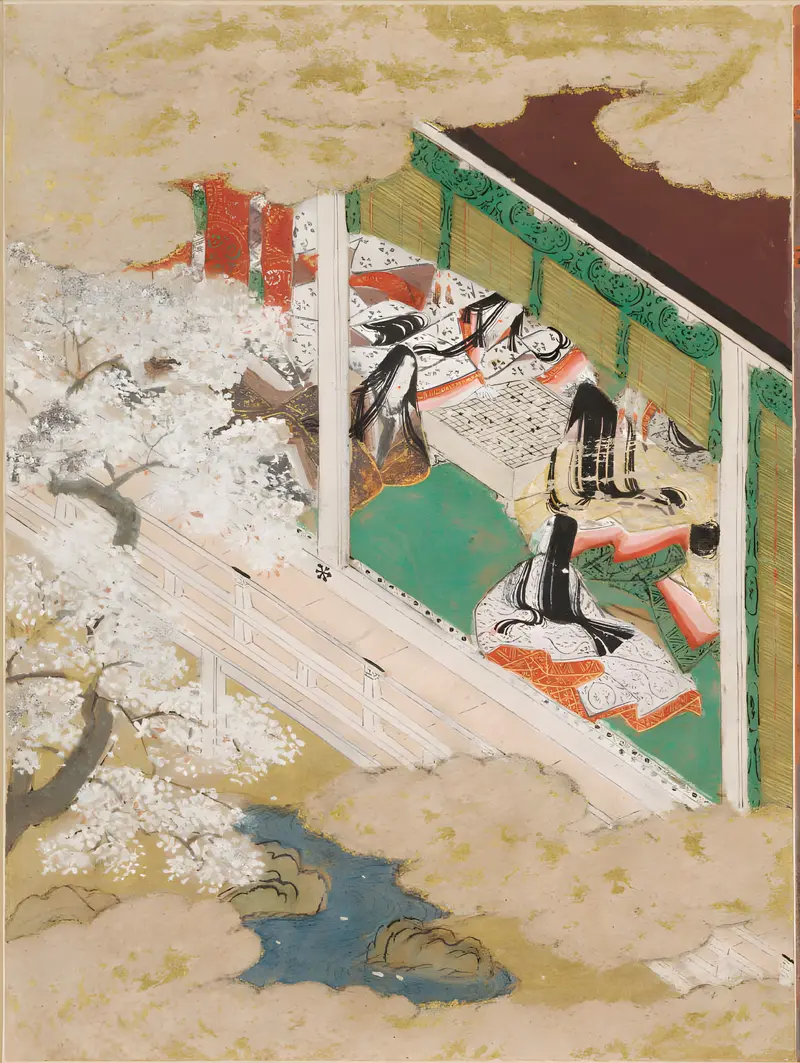
Public domain · Free to download
Famous Illustrations
From William Blake's Ancient of Days to John Tenniel's Mad Tea-Party and Arthur Rackham's fairies, these are the most famous illustrations: the pictures made for books, magazines and newspapers that fixed how we imagine their stories. We added a section of Gustave Doré's illustrations and one of fairy tale pictures from the golden age of illustration.
For each one you get the story it shows, who made it and how it was printed, one detail to look for, and, where known, where the copy we show is kept. Every image is a public-domain scan, free to download and free to use.
Selected and written by Pavel MazuelasUpdated October 30, 2026
Part of The Most Famous Paintings in the WorldRelated: Botanical Art: Vintage Botanical Prints, Greek Mythology Paintings
The 25 most famous illustrations
Ranked by the fame of their illustrators. Click any picture to see it up close and download it free.
No. 1Romanticism
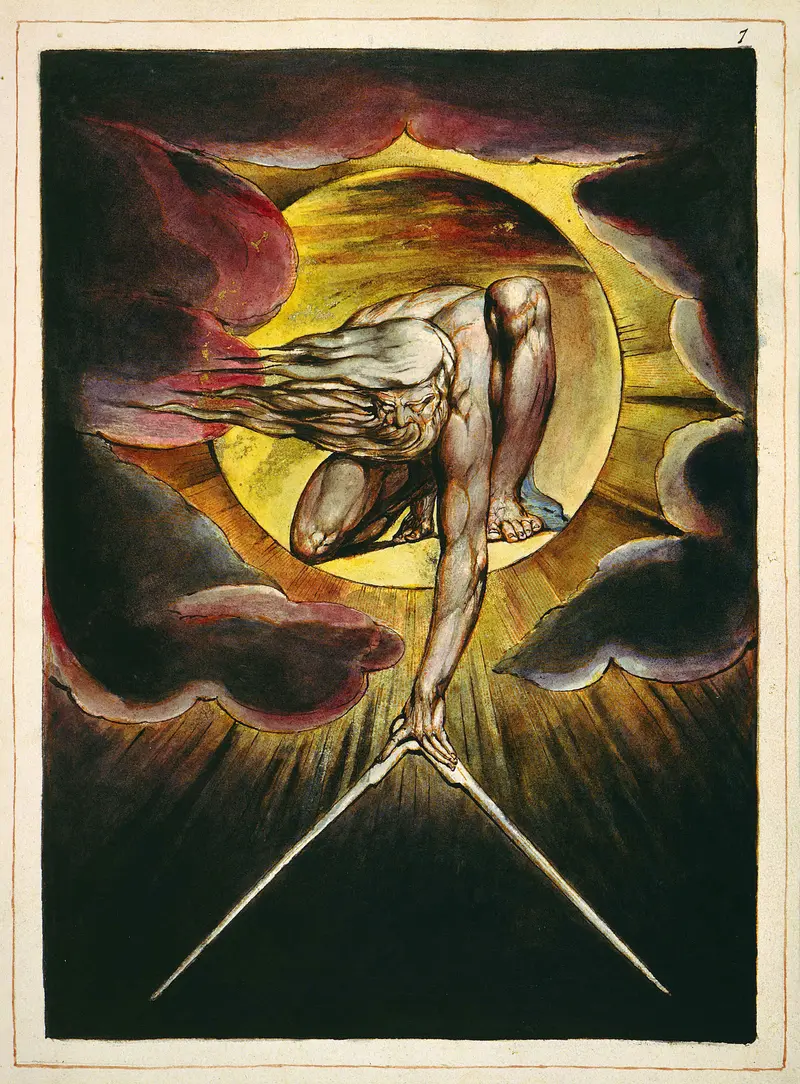
The Ancient of Days by William Blake
From: Europe a Prophecy (1794)
1794 · Relief etching with hand coloring · 23.4 × 16.9 cm
Fitzwilliam Museum, Cambridge
A bearded figure crouches inside a blazing sun and reaches down with a pair of golden dividers to measure out the world. William Blake made it as the frontispiece of Europe a Prophecy (1794); the figure is very probably Urizen, his own mythic creator-god. This impression comes from copy K, which Blake printed and colored around 1821 and sold to his friend John Linnell, together with another book, for £1. It is in the Fitzwilliam Museum in Cambridge.
Sources: Fitzwilliam Museum
No. 2
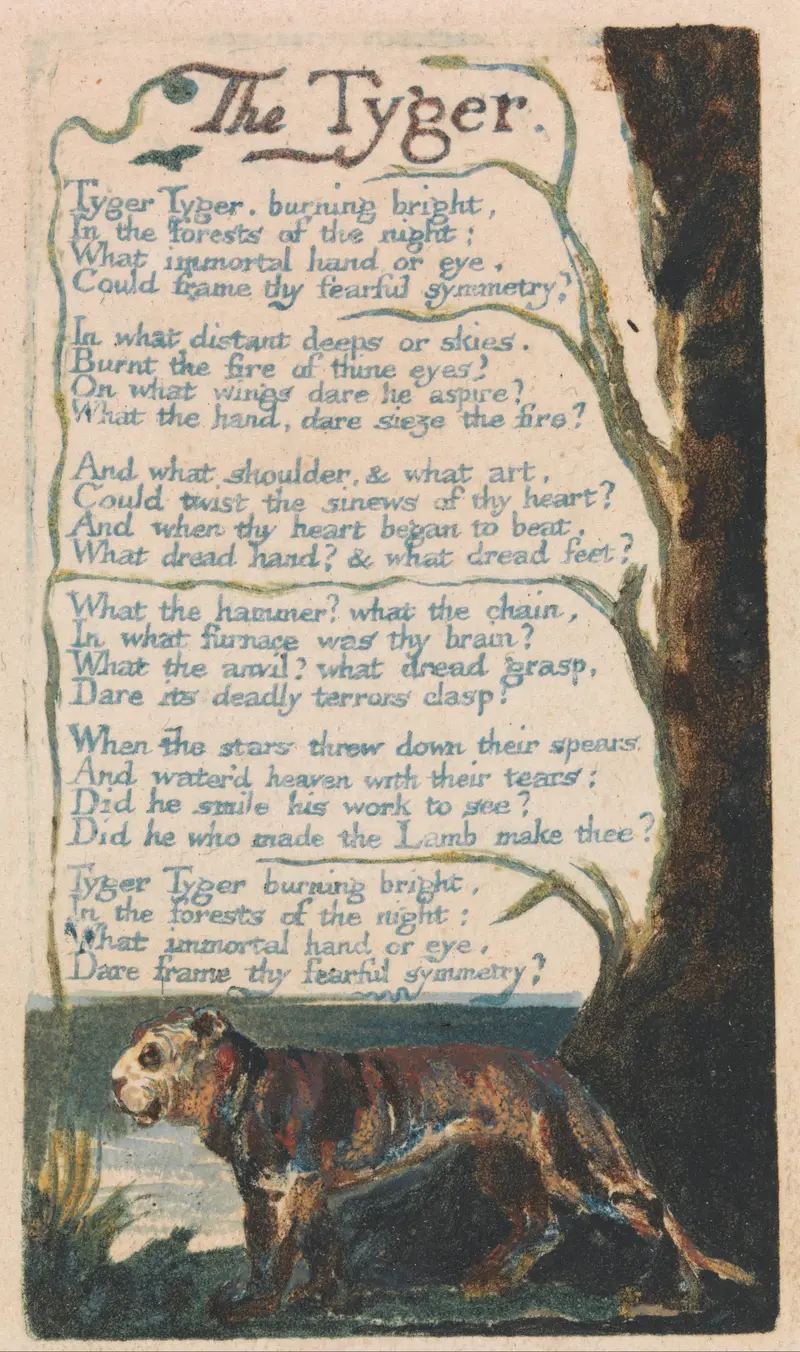
The Tyger by William Blake
From: Songs of Experience (1794)
1794 · Color-printed relief etching with watercolor · 11.1 × 6.4 cm
Yale Center for British Art, New Haven
The poem and the tiger beneath it were etched, printed and colored together from a single copper plate, the method that was William Blake's best-known invention. This plate from Songs of Experience (1794) was color-printed and then finished by hand. Readers have long noticed that the tiger is not ferocious at all, and in this copy the blue sky beside it even suggests daytime, despite the poem's forests of the night. It is in the Yale Center for British Art in New Haven.
Sources: Yale Center for British Art
No. 3
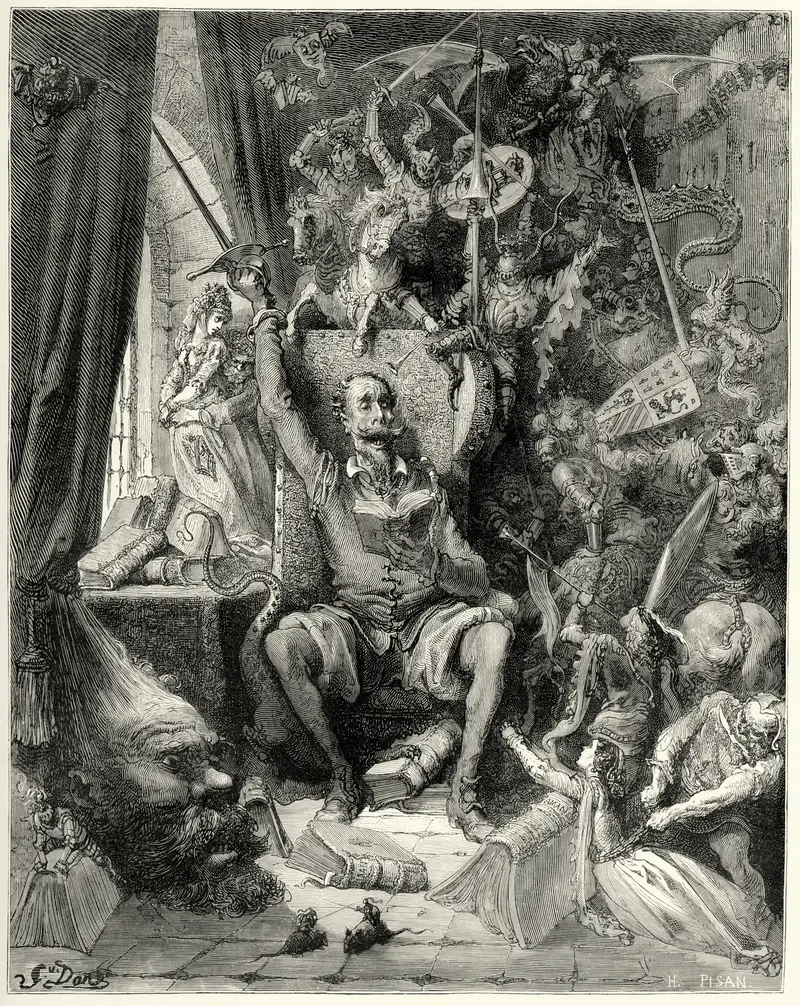
Don Quixote in His Library by Gustave Doré
From: Don Quixote (1863)
1863 · Wood engraving · 24.5 × 20 cm
Don Quixote sits reading in his armchair, sword raised, while knights, damsels, giants and monsters from his books swarm around him. Gustave Doré drew it and Héliodore Pisan cut it as a wood engraving for the frontispiece of the 1863 Hachette edition of Cervantes; it shows the first chapter, where the hidalgo reads so much that he believes his books are true. Doré toured Spain in 1862 to prepare, and the same plates later appeared in Cassell's English edition.
No. 4
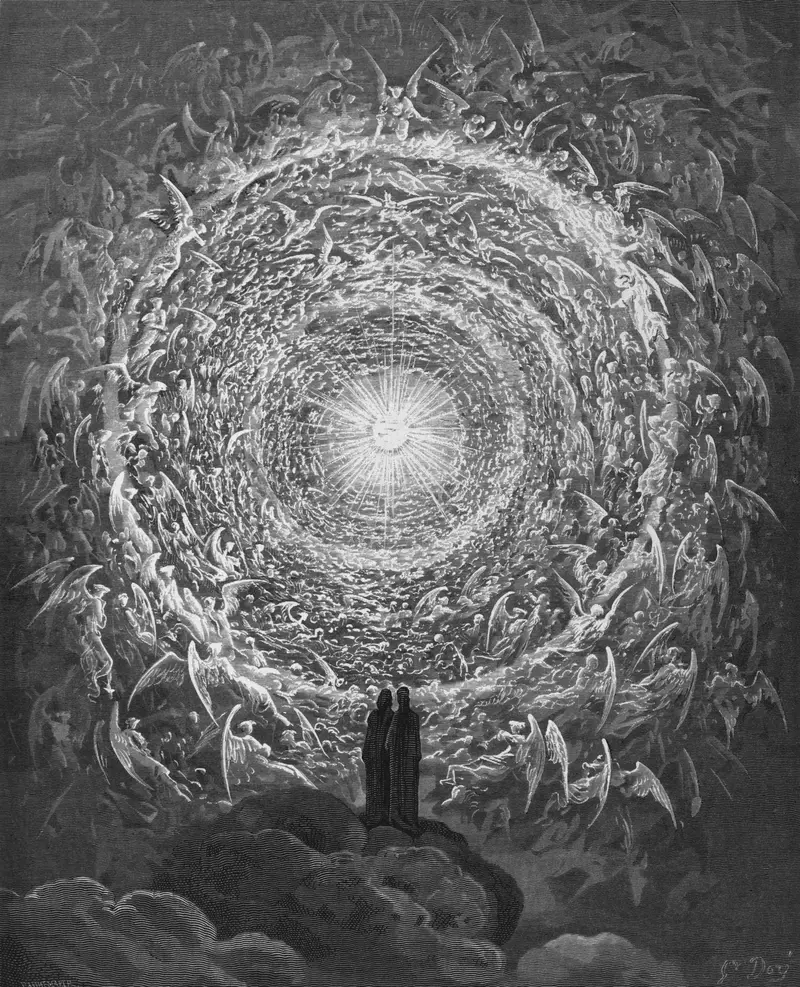
The Empyrean by Gustave Doré
From: Dante, Paradiso (1868)
1868 · Wood engraving
National Library of Poland, Warsaw
Dante and Beatrice stand before Heaven's white rose, a vast whirl of angels and saints spiraling toward the light of God. Gustave Doré completed his Divine Comedy with the Paradiso in 1868, seven years after the Inferno, which he paid to publish himself because no publisher would risk it. Dante had fascinated him since boyhood. This impression comes from a German edition of 1871 in the National Library of Poland.
Sources: National Library of Poland
No. 5Naturalism
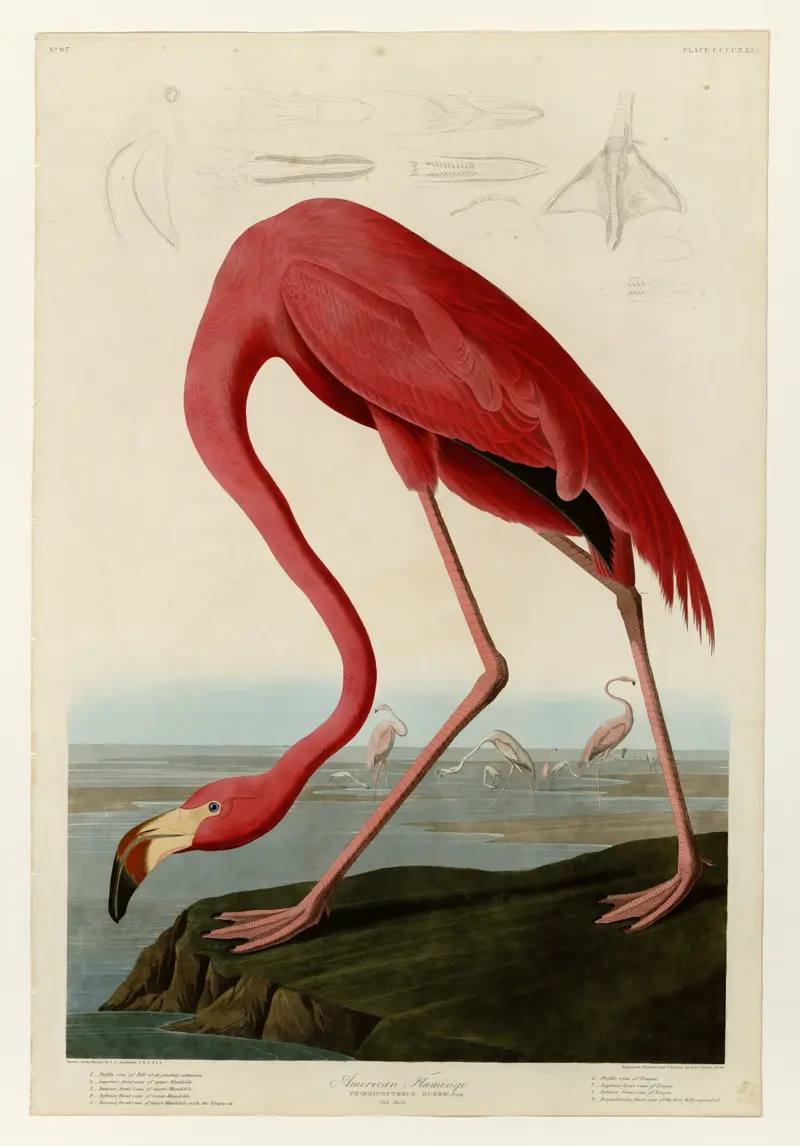
American Flamingo by John James Audubon
From: The Birds of America (1827–1838)
1838 · Hand-colored engraving and aquatint
University of Pittsburgh Library System, Pittsburgh
A life-size American flamingo bends its long neck down to the water, with a flock of tiny flamingos in the distance. John James Audubon insisted on showing every bird at life size, so he curved the four-foot bird to fit the huge double-elephant page; Robert Havell engraved and hand-colored the plate in 1838 and added the background flock. This copy, one of only about 120 complete sets of The Birds of America, belongs to the University of Pittsburgh.
No. 6
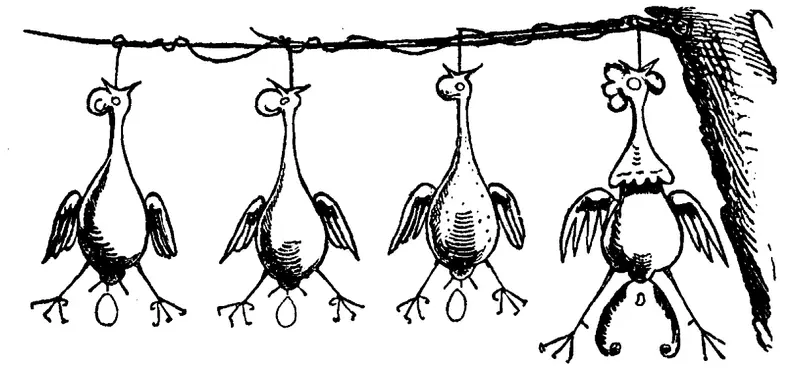
Max and Moritz: The Widow Bolte's Hens by Wilhelm Busch
From: Max and Moritz (1865)
1865
The widow Bolte's hens hang from an apple-tree branch, caught by the boys' bait. In Wilhelm Busch's verse each bird lays one last egg before it dies, and the widow laments that her fondest dream hangs on the tree. Busch drew on his own village boyhood and sold the rights in 1865 for a one-time fee of 1,000 guilders; the book became an instant bestseller and has been translated into more than 280 languages and dialects.
No. 7Realism
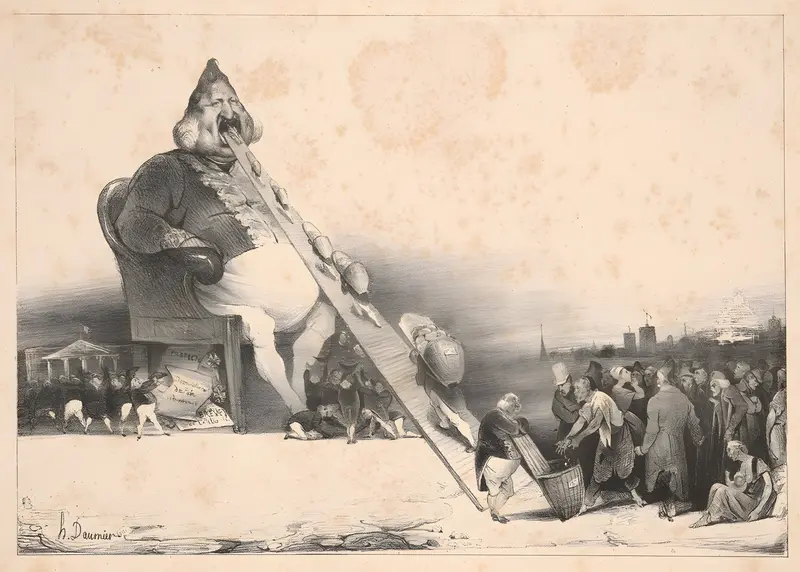
Gargantua by Honoré Daumier
From: La Caricature (1831)
1831 · Lithograph
King Louis-Philippe sits as the giant Gargantua on a throne that is really a commode, swallowing baskets of coins carried up a ladder from the poor, while well-dressed deputies below catch the favors that drop from him. Honoré Daumier's lithograph of 1831 was displayed in a shop window to draw passers-by until the authorities seized the copies and smashed the stone. In 1832 it earned him six months in prison, and it made his name.
No. 8Realism
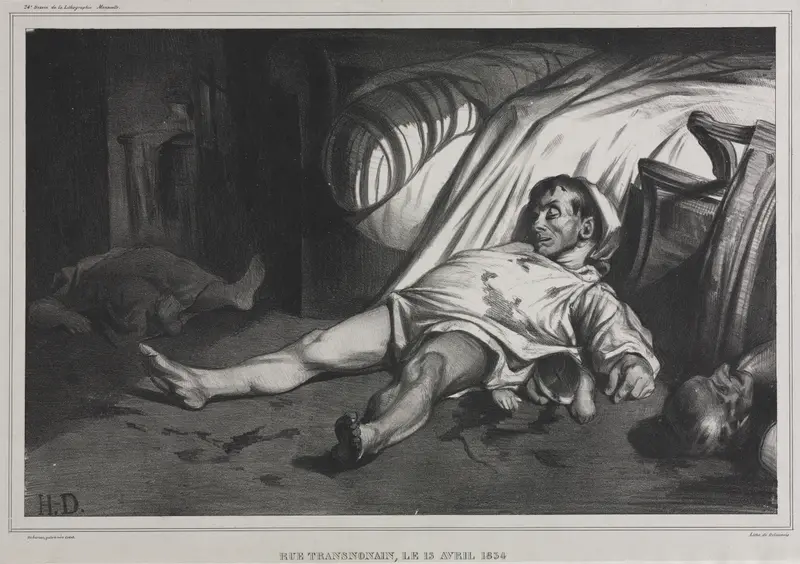
Rue Transnonain, April 15, 1834 by Honoré Daumier
From: L'Association mensuelle (1834)
1834 · Lithograph · 28.6 × 44 cm
Cleveland Museum of Art, Cleveland
A man in a nightshirt lies dead beside his bed with his small child crushed beneath him, among other victims in the room. Honoré Daumier drew the massacre of April 15, 1834, when soldiers killed the residents of a Paris house after shots were fired at them from it. Published that July with a commentary by Charles Philipon, it became his most famous lithograph and helped prompt an official inquiry. This impression is in the Cleveland Museum of Art.
Sources: Cleveland Museum of Art
No. 9
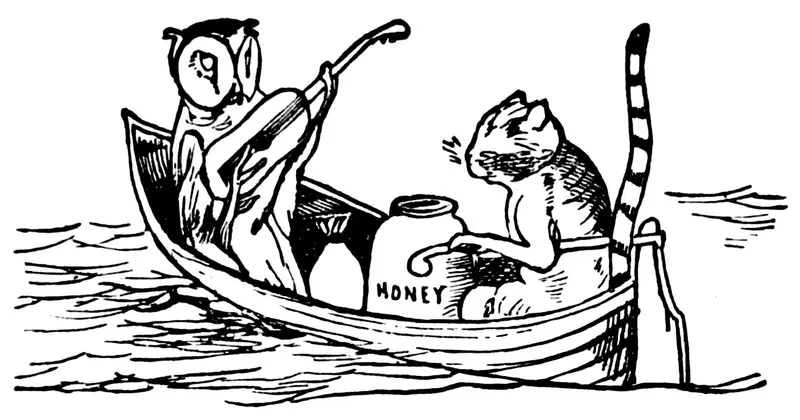
The Owl and the Pussy-cat by Edward Lear
From: Nonsense Songs (1871)
1871
The Owl plays a small guitar to the Pussy-cat in their pea-green boat, with a pot of honey and plenty of money aboard. Edward Lear wrote the poem in 1867; it first appeared in a Boston children's magazine in 1870, where the Owl looked up "to the moon above", and it opened his illustrated Nonsense Songs of 1871, where the line became "to the stars above". Beatrix Potter later retold the story in a letter to a child.
No. 10
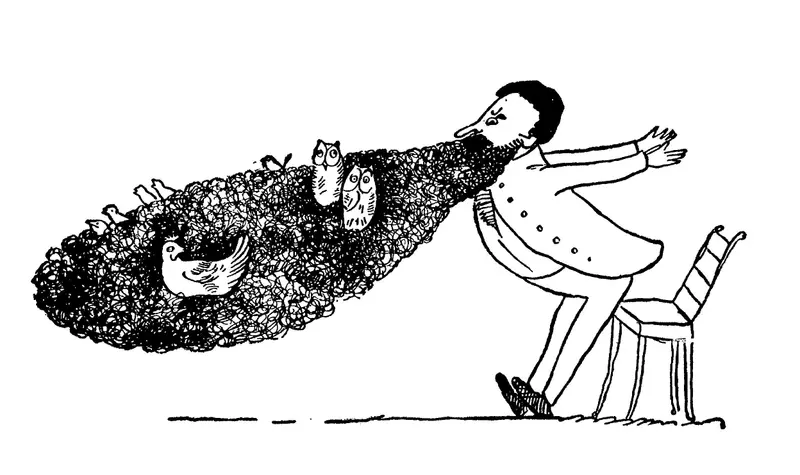
There Was an Old Man with a Beard by Edward Lear
From: A Book of Nonsense (1846)
1846
An old man throws up his hands: his enormous beard has become a nest for two owls, a hen, four larks and a wren, as the limerick explains. Edward Lear published it in A Book of Nonsense in 1846 under the pen name Derry Down Derry; he said the rhymes and pictures were struck off with a pen and transferred to lithographic stones. When the first edition sold out, he had the whole book recut as wood engravings by the Dalziel brothers and sold the copyright to Routledge and Warne.
No. 11Naturalism
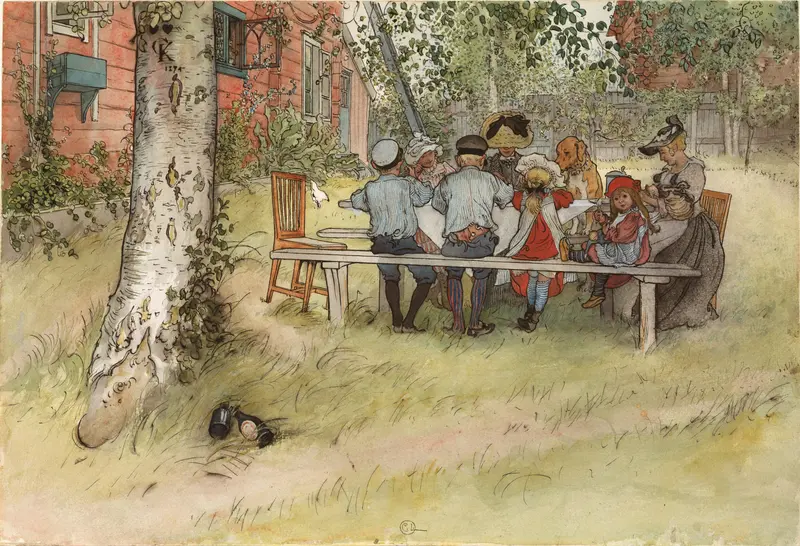
Breakfast under the Big Birch by Carl Larsson
From: A Home (Ett hem, 1899)
1895 · Watercolor on paper · 32 × 43 cm
Nationalmuseum, Stockholm
The Larsson family and household eat breakfast at a long table set out under the big birch behind their house at Sundborn. Carl Larsson painted the watercolor in 1895, and it became a plate in Ett hem (A Home, 1899), where he wrote that on sunny summer days the family ate under the birch, calling it the very best of everything. His wife Karin designed the furniture and textiles, and the book made their home famous. It is in the Nationalmuseum in Stockholm.
Sources: Nationalmuseum
No. 12
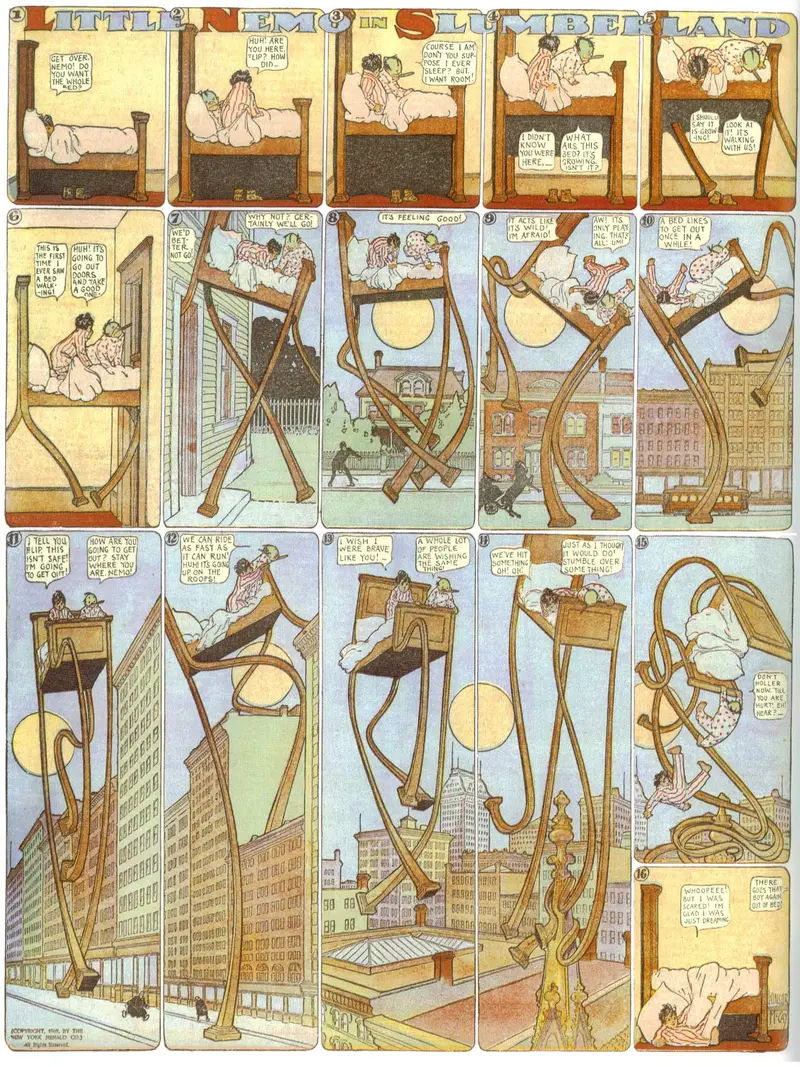
Little Nemo in Slumberland: The Walking Bed by Winsor McCay
From: New York Herald (1908)
1908 · Color newspaper print
Nemo's bed grows long legs and strides over the rooftops with Nemo and his friend Flip on board, until the dream breaks and Nemo wakes up on his bedroom floor. Winsor McCay drew this Sunday page of Little Nemo in Slumberland for the New York Herald in 1908; the full-color strip had begun there in October 1905. Its dream worlds, with buildings that could walk, influenced artists from Maurice Sendak to Hayao Miyazaki, and McCay went on to animate Nemo in his first film in 1911.
No. 13Symbolism
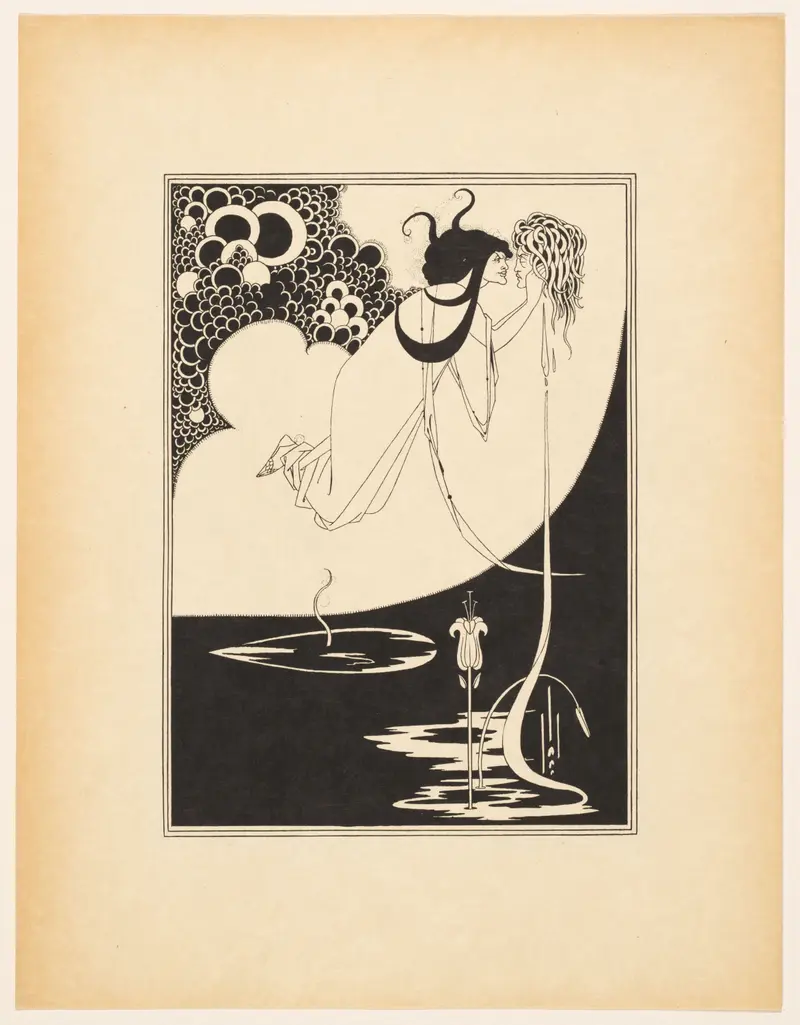
The Climax by Aubrey Beardsley
From: Salome (1894)
1893 · Line block · 22.8 × 16.2 cm
Rijksmuseum, Amsterdam
Salome floats in the air holding the severed head of John the Baptist, which she has just kissed; its blood drips into a pool where a white lily grows. Aubrey Beardsley first drew the scene on his own after Oscar Wilde's Salome appeared in French in 1893, and its publication in The Studio won him the commission to illustrate the English edition of 1894, for which he redrew it. This impression, printed from a line block, is in the Rijksmuseum in Amsterdam.
Sources: Rijksmuseum
No. 14Victorian
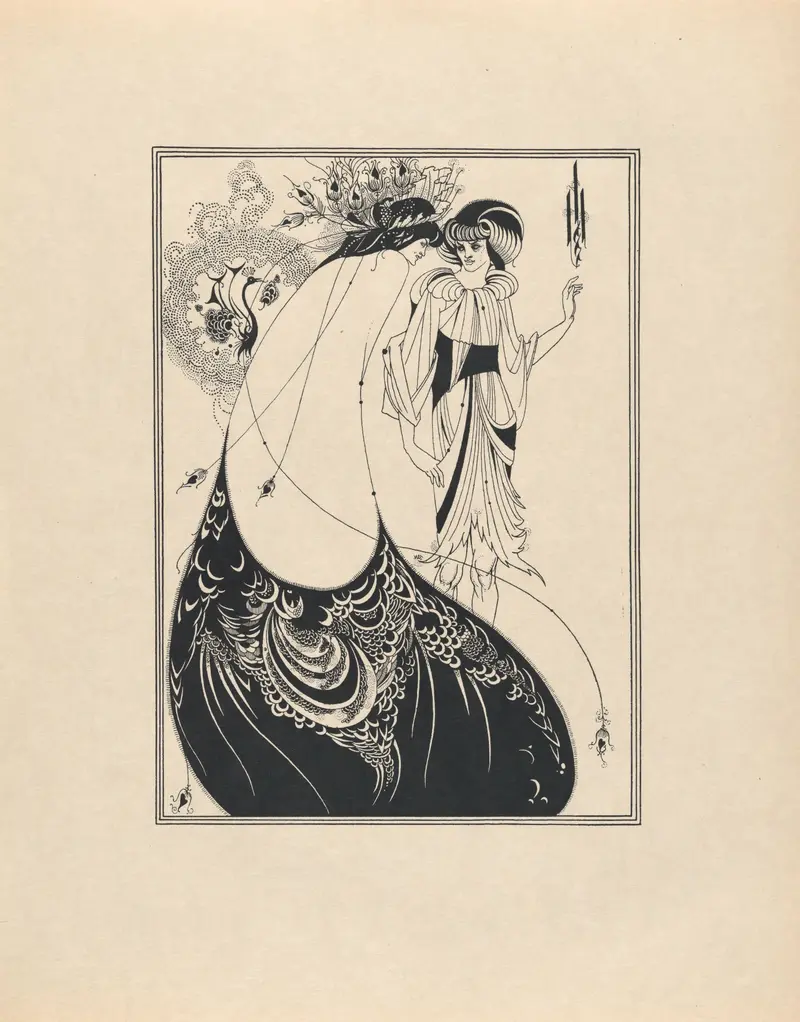
The Peacock Skirt by Aubrey Beardsley
From: Salome (1894)
1893 · Line block · 22.8 × 16.4 cm
Metropolitan Museum of Art, New York
Salome, seen from behind in a robe patterned with peacock feathers, leans toward a young man, generally taken to be the Young Syrian, while a real peacock glances at her from the background. Aubrey Beardsley drew it in 1893 for Wilde's Salome, and the design shows his debt to Whistler's painted decorations in Frederick Leyland's house. His original pen drawing is at Harvard; this impression, from John Lane's 1907 portfolio of the Salome drawings, is in the Metropolitan Museum of Art in New York.
Sources: Metropolitan Museum of Art
No. 15
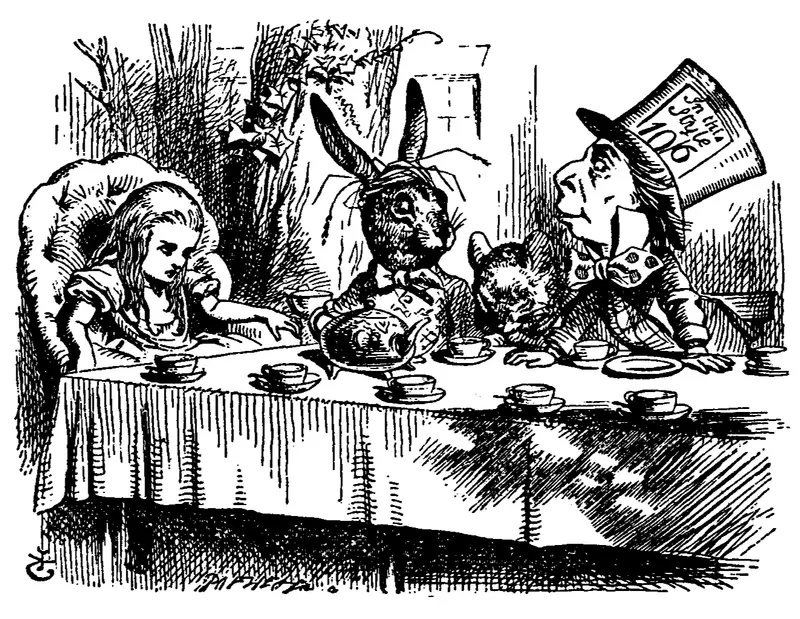
A Mad Tea-Party by John Tenniel
From: Alice's Adventures in Wonderland (1865)
1865 · Wood engraving
Alice sits in a large armchair at the crowded tea table with the March Hare, the Hatter and the Dormouse, fast asleep and used as a cushion between them. Look at the Hatter's hat: its card reads "In this Style 10/6", a price ticket, since he keeps hats to sell. John Tenniel drew his designs straight onto woodblocks, which the Dalziel brothers engraved, and the first printing of 1865 was withdrawn after he complained about the printing. This impression comes from the German edition of 1869.
No. 16
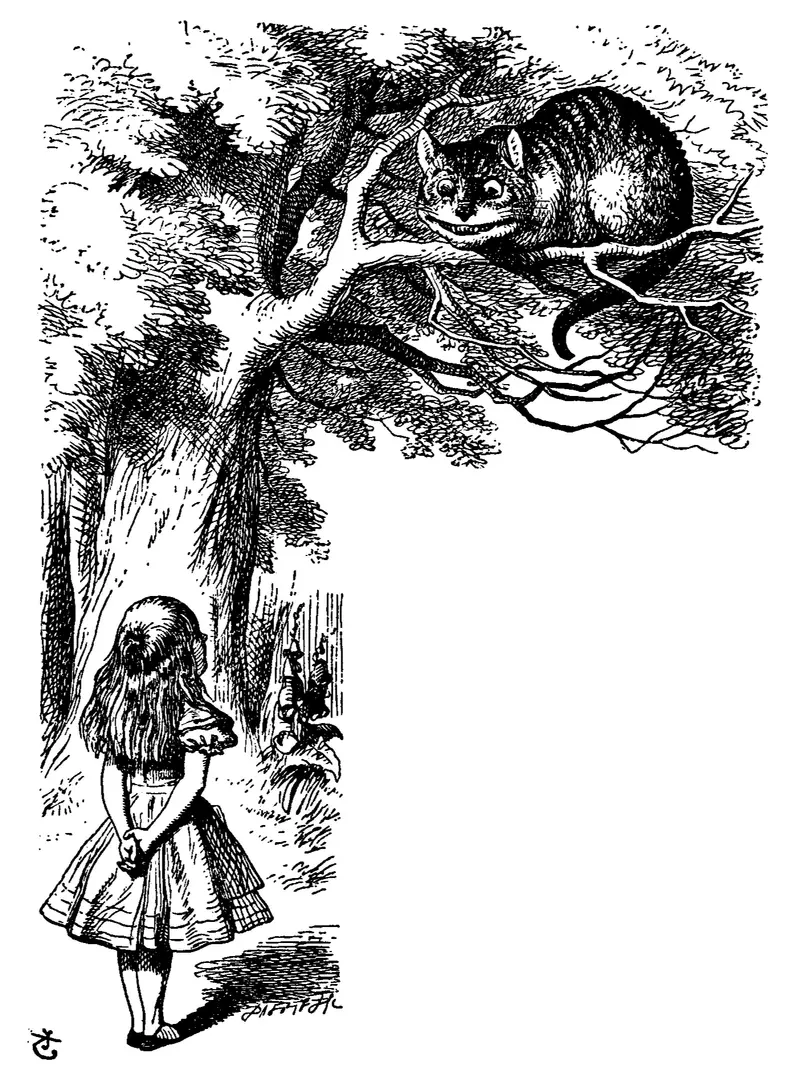
Alice and the Cheshire Cat by John Tenniel
From: Alice's Adventures in Wonderland (1865)
1865 · Wood engraving
Alice looks up at the Cheshire Cat grinning on a bough a few yards off; with its long claws and many teeth, she decides it should be treated with respect. In the same scene the Cat vanishes slowly, tail first, until only its grin is left. John Tenniel's interpretations of the characters helped make Lewis Carroll's 1865 book a success, and only 31 of his pencil sketches for it are known to survive. This impression comes from the German edition of 1869.
No. 17Folk Art
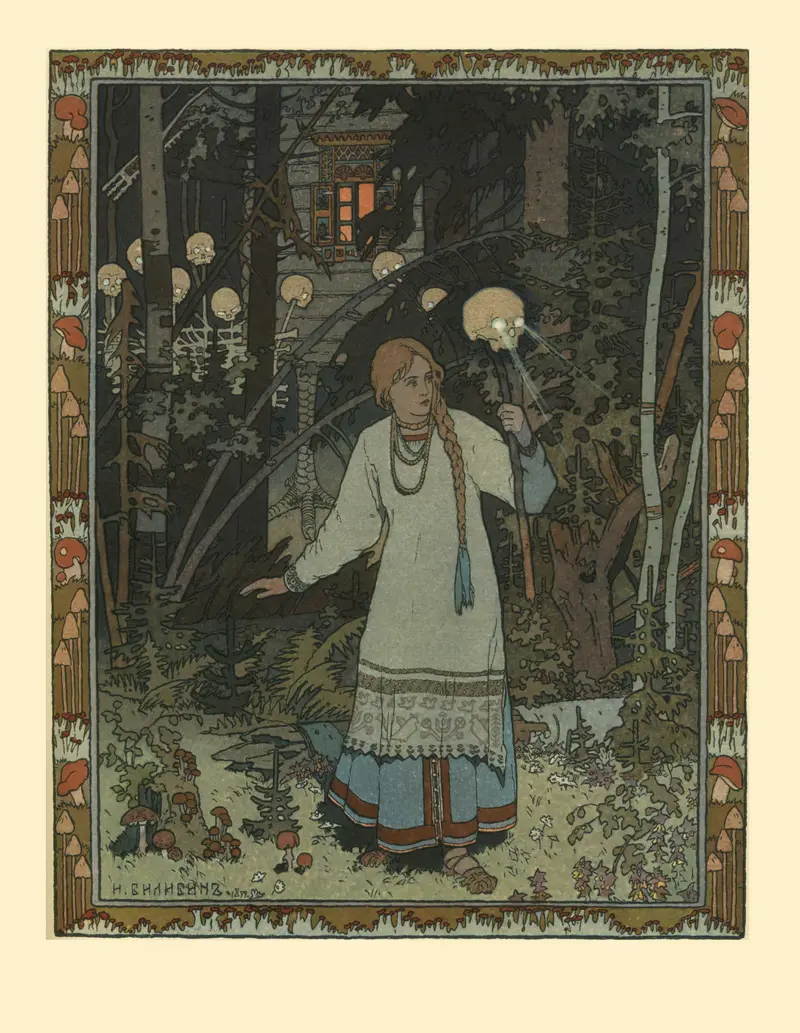
Vasilisa the Beautiful at the Hut of Baba Yaga by Ivan Bilibin
From: Vasilisa the Beautiful (1902)
1899 · Color-printed book illustration
Vasilisa carries a skull with burning eyes on a stick past the hut of the witch Baba Yaga, ringed by a fence of bones; in the tale, the witch gives her the skull to light her way home. Ivan Bilibin drew it after a summer in a village in Tver province in 1899, designing whole books for Russia's state printing house, ornamental frames and lettering included. These fairy tales made the Bilibin style famous. The booklet was published in St. Petersburg in 1902.
No. 18
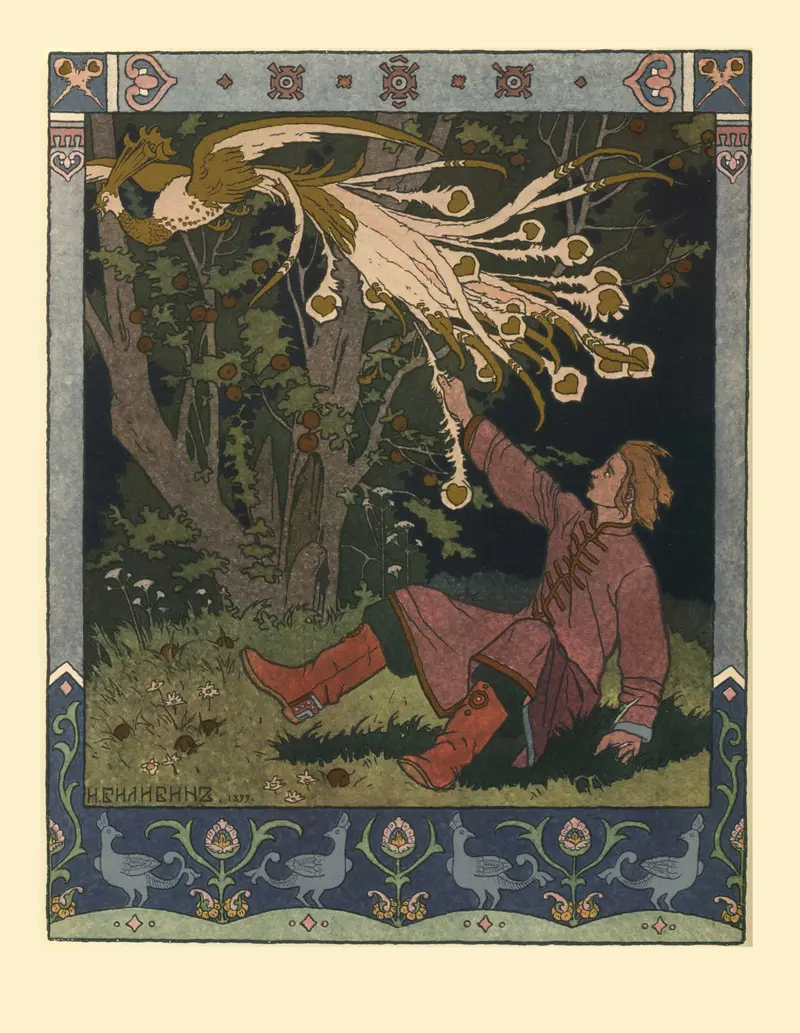
Ivan Tsarevich and the Firebird by Ivan Bilibin
From: Ivan Tsarevich, the Firebird and the Gray Wolf (1901)
1899 · Color-printed book illustration
Ivan Tsarevich, sprawled on the grass beneath the apple trees at night, grabs the tail of the Firebird as it escapes. In the folk tale the bird steals the tsar's golden apples every night, and Ivan is left holding a single tail feather. Ivan Bilibin painted it in 1899 for the first of his fairy-tale picture books for Russia's state printing house, today Goznak, which still keeps his original watercolors for this tale.
No. 19
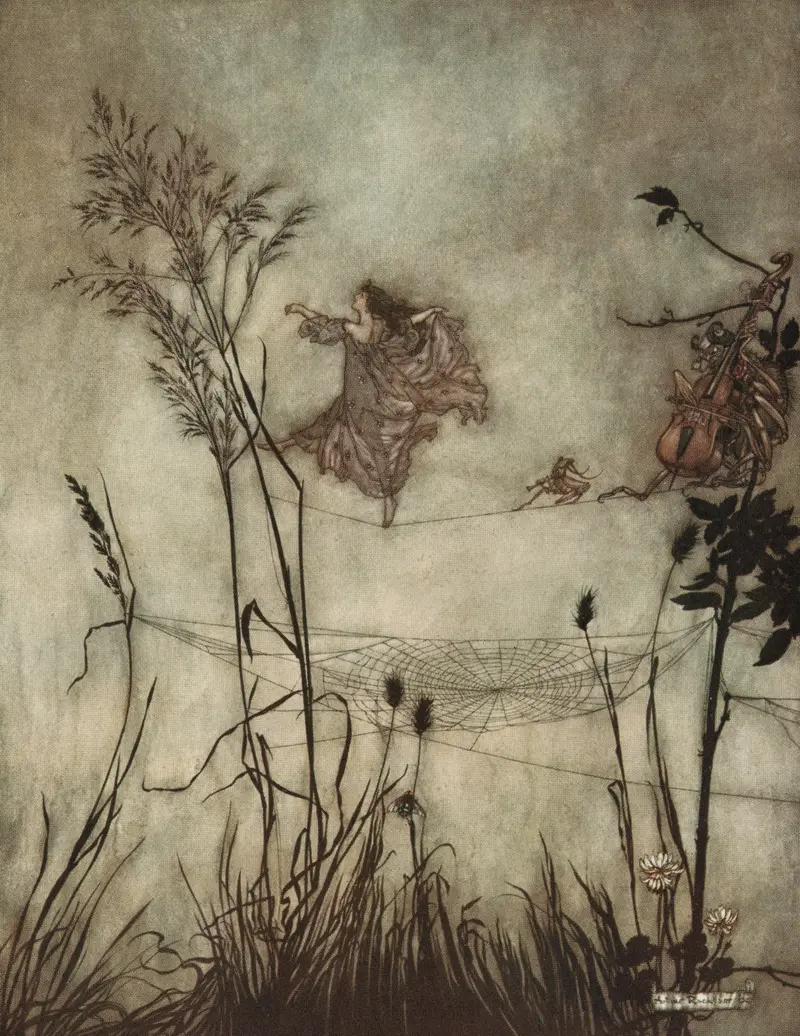
The Fairies Are Exquisite Dancers by Arthur Rackham
From: Peter Pan in Kensington Gardens (1906)
1906 · Color plate
Houghton Library, Harvard University, Cambridge, Massachusetts
A fairy dances along a thread of spider silk above a cobweb, while tiny musicians play beside her. The caption is J. M. Barrie's line from Peter Pan in Kensington Gardens (1906), where the fairies hold their balls in fairy rings after the Gardens close. Arthur Rackham's color plates were mounted in the book, each with a guard sheet printed with its caption, and it became one of his most successful books. This copy is in Harvard's Houghton Library.
Sources: Houghton Library, Harvard University
No. 20
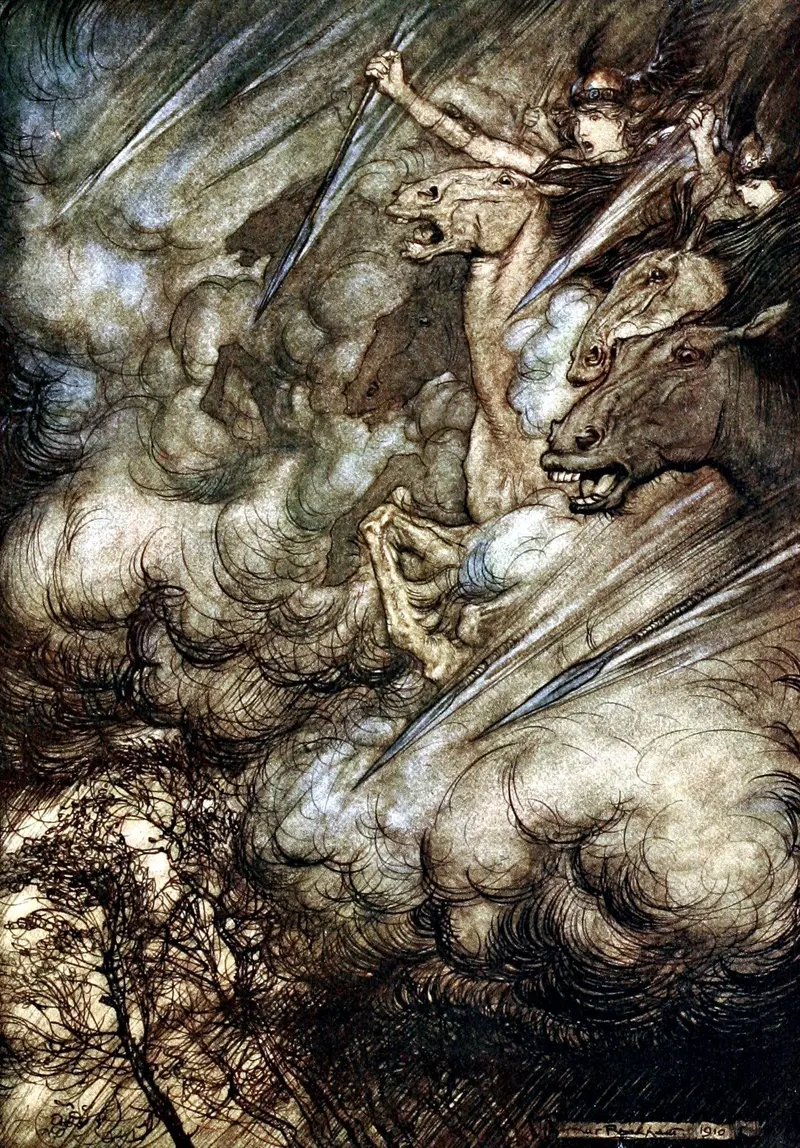
The Ride of the Valkyries by Arthur Rackham
From: The Rhinegold & the Valkyrie (1910)
1910 · Color plate
Maastricht University Library, Maastricht
The Valkyries gallop away through storm clouds split by lightning, spears raised. Arthur Rackham's plate faces the end of Act III, scene 2 of Wagner's The Valkyrie, when a flash of lightning shows them riding wildly away after Wotan's decree against Brünnhilde. It is plate 31 of the 34 in The Rhinegold & the Valkyrie (Heinemann, 1910), signed and dated 1910 in the lower right corner. This copy is in Maastricht University Library.
Sources: Maastricht University Library
No. 21
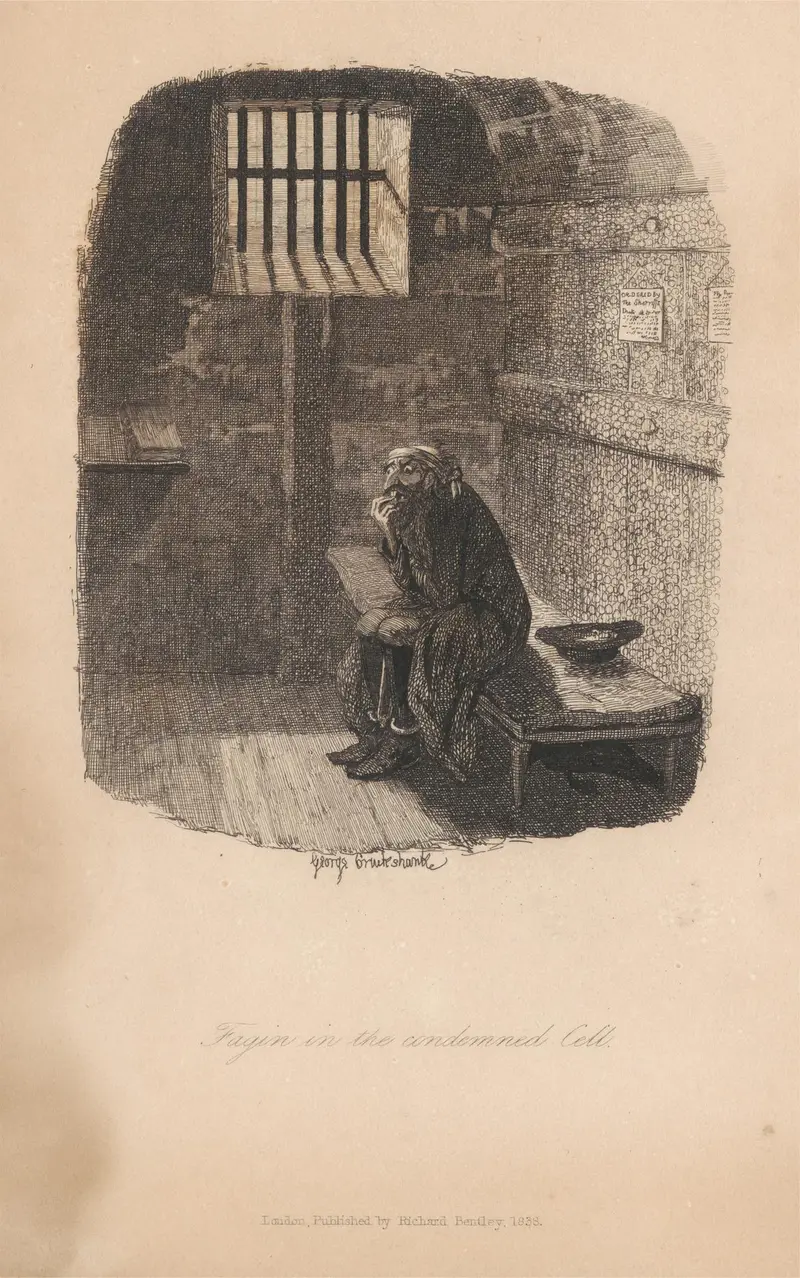
Fagin in the Condemned Cell by George Cruikshank
From: Oliver Twist (1838)
1838 · Etching
Yale Center for British Art, New Haven
Fagin, condemned to hang, sits hunched on the bench of his cell in Newgate Prison, biting his fingernails. George Cruikshank etched it for Charles Dickens's Oliver Twist (1838), and G. K. Chesterton said it looked less like a picture of Fagin than a picture by Fagin. After Dickens died, Cruikshank claimed he had invented the novel's characters, a claim Dickens's biographer John Forster refuted. This impression is in the Yale Center for British Art in New Haven.
Sources: Yale Center for British Art
No. 22
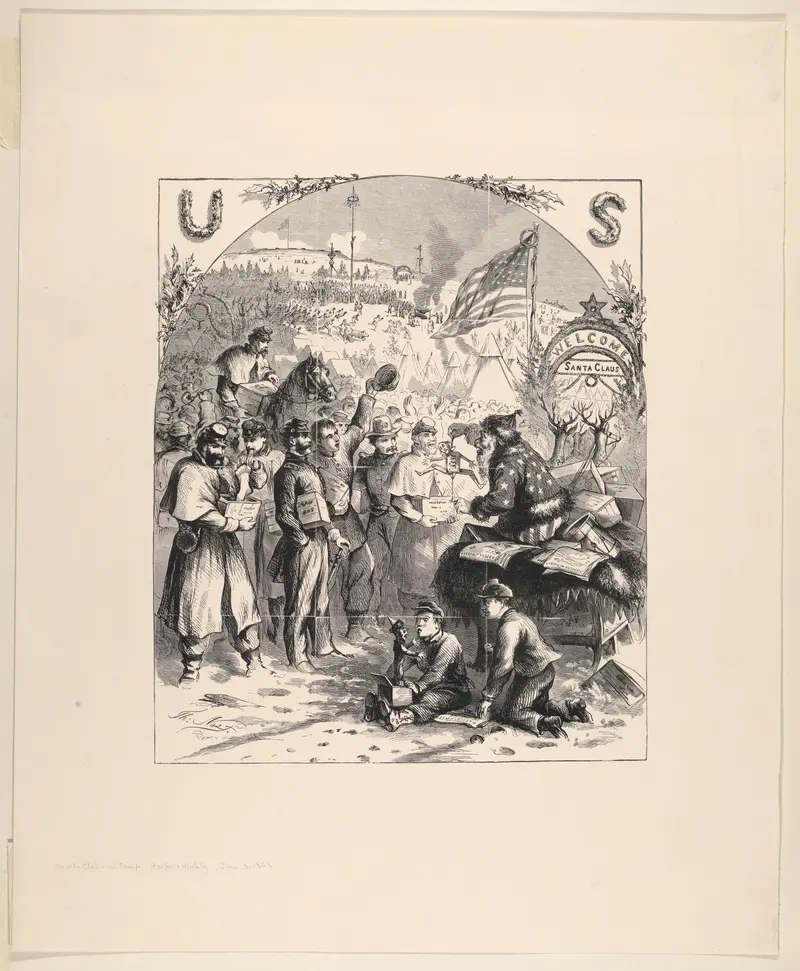
Santa Claus in Camp by Thomas Nast
From: Harper's Weekly (January 3, 1863)
1863 · Wood engraving · 27.3 × 23.1 cm
Metropolitan Museum of Art, New York
Santa Claus arrives by sleigh at a Union army camp, hands out gifts and dangles a jumping jack labeled "Jeff", a jab at Confederate president Jefferson Davis. Thomas Nast drew it for the cover of Harper's Weekly on January 3, 1863: his first Santa, drawing on the German Saint Nicholas of his childhood in a dark winter of the Civil War. Santa's red coat, pipe and North Pole workshop came only in his later drawings. This impression is in the Metropolitan Museum of Art in New York.
Sources: Metropolitan Museum of Art
No. 23
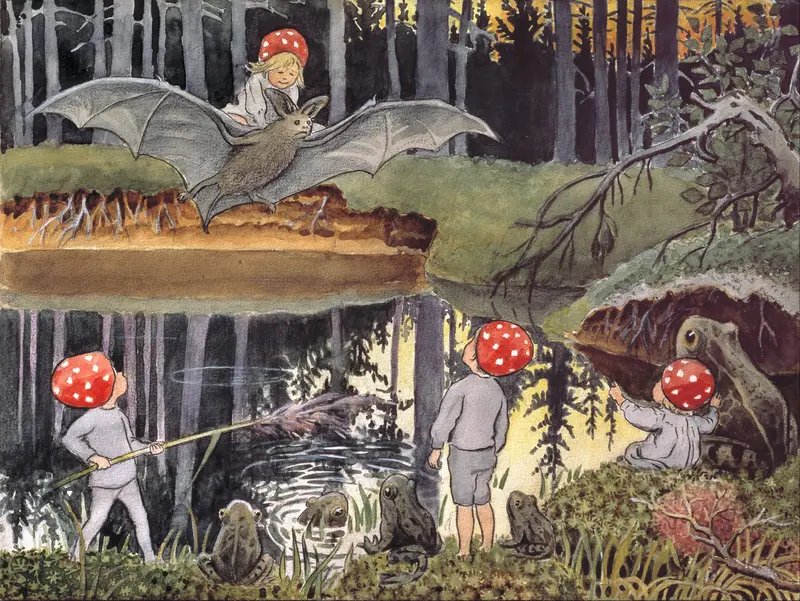
Children of the Forest by Elsa Beskow
From: Children of the Forest (Tomtebobarnen, 1910)
1910 · Watercolor on paper · 23.7 × 31.3 cm
Nationalmuseum, Stockholm
The forest children, in red caps with white spots, play by a woodland pond: one rides on a bat while the others watch the frogs. Elsa Beskow painted this watercolor for the third spread of Tomtebobarnen (Children of the Forest, 1910), the story of a tiny family who live in the roots of an old pine. She took inspiration from British illustrators such as Walter Crane and from Art Nouveau. The Nationalmuseum in Stockholm owns all 32 original sheets for the book.
Sources: Nationalmuseum
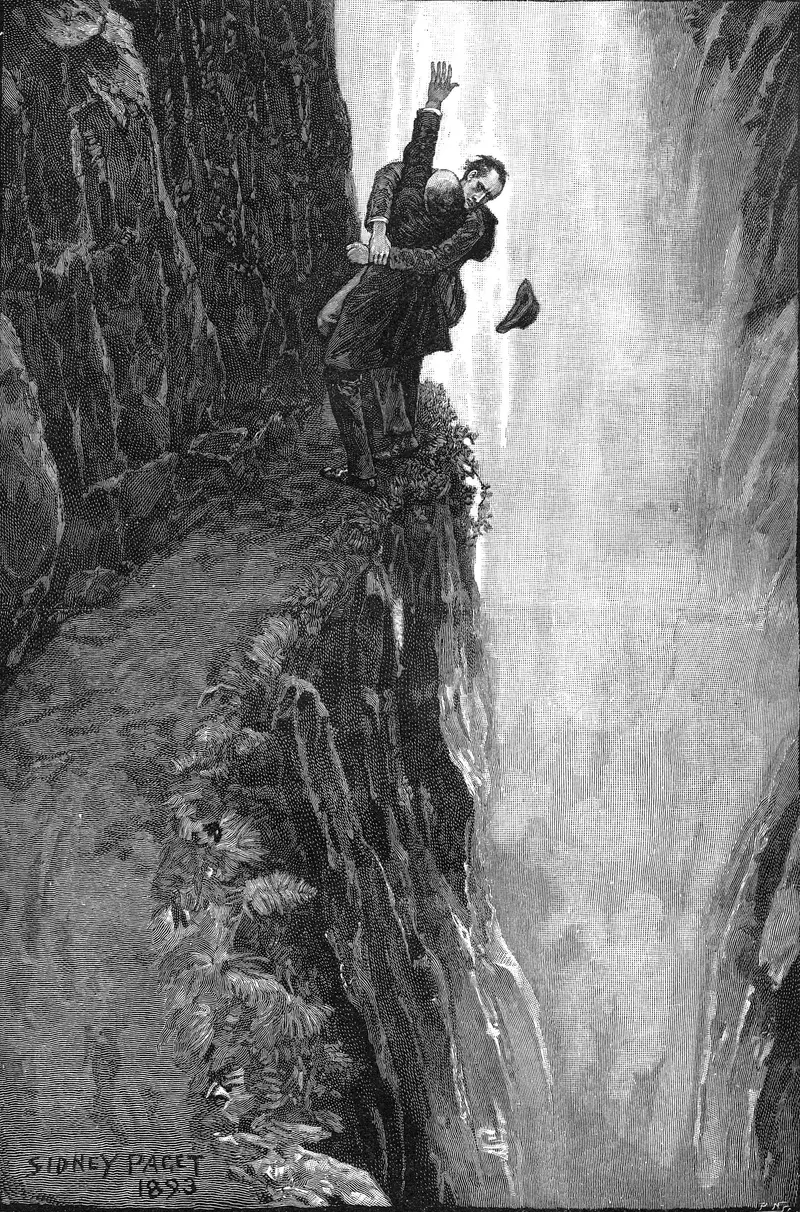
No. 24
The Death of Sherlock Holmes by Sidney Paget
From: The Strand Magazine (December 1893)
1893 · Printed magazine illustration
Sherlock Holmes and Professor Moriarty grapple on the path above the Reichenbach Falls. Sidney Paget's picture ran as the frontispiece of The Strand Magazine in December 1893, with the story "The Final Problem"; that month Arthur Conan Doyle wrote "Killed Holmes" in his diary. It was Paget, not Doyle, who gave Holmes his deerstalker cap. His original wash drawing, one of only about thirty Holmes originals known to survive, was offered at Sotheby's in 2024.
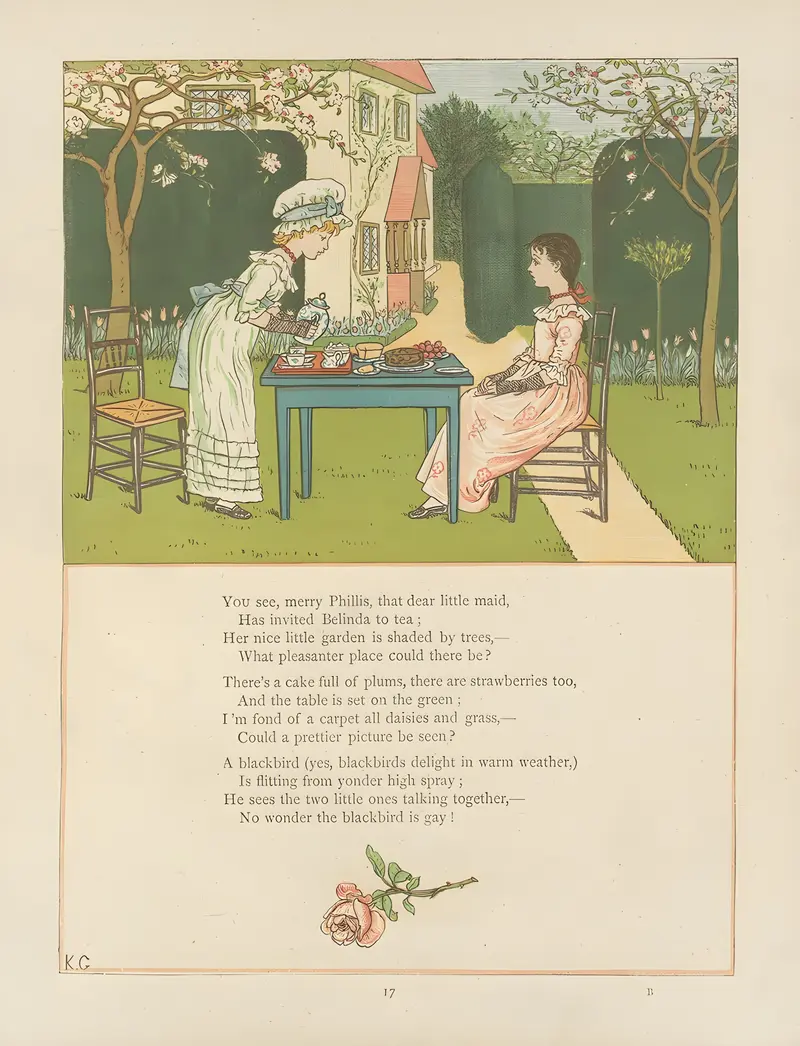
No. 25Victorian
You See, Merry Phillis by Kate Greenaway
From: Under the Window (1879)
1879 · Color wood engraving
Two little girls take tea at a blue table on the lawn of a blossoming garden; the rhyme below says merry Phillis has invited Belinda to tea. Kate Greenaway's Under the Window was engraved and printed in color by Edmund Evans, whose simple outlines and flat colors made the pictures cheap to reproduce. Though it cost six shillings, the book sold out at Christmas 1878, and the craze for her children brought Greenaway dolls, wallpaper, fabrics and clothes.
Want to see more? Browse every illustration in the collection.
Browse all 2,190 illustrationsGustave Doré illustrations
Six more of Gustave Doré's best-known engravings, from the Bible's Deluge to Dante's Lucifer and Victorian London.
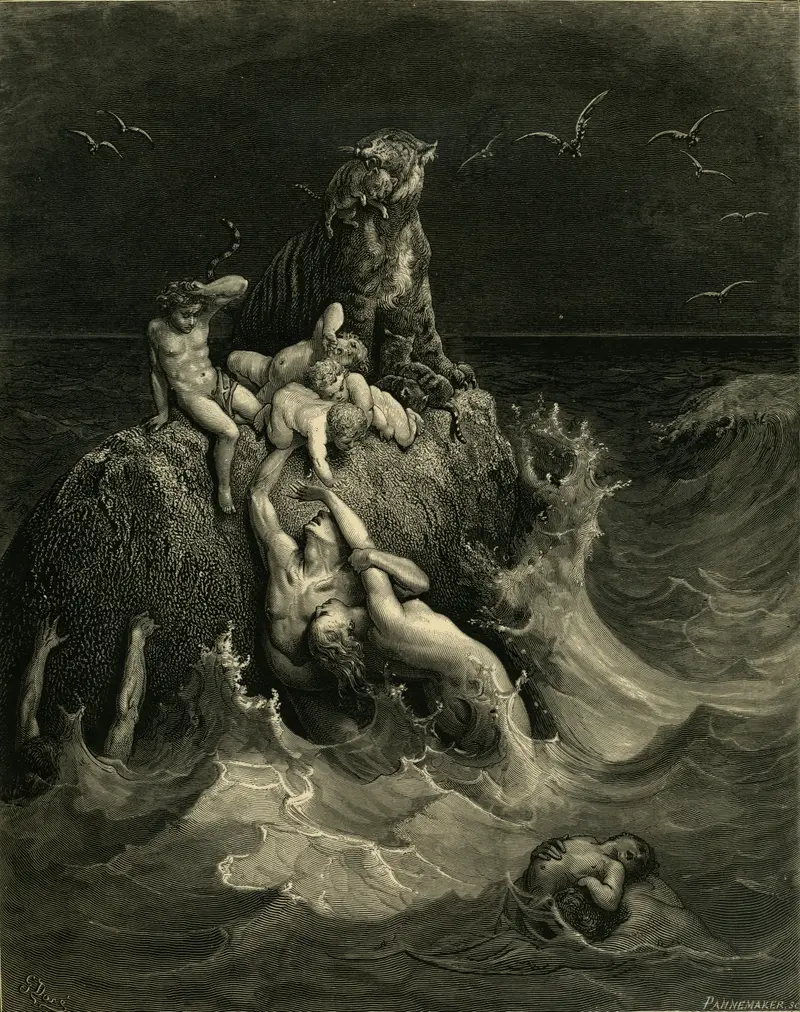
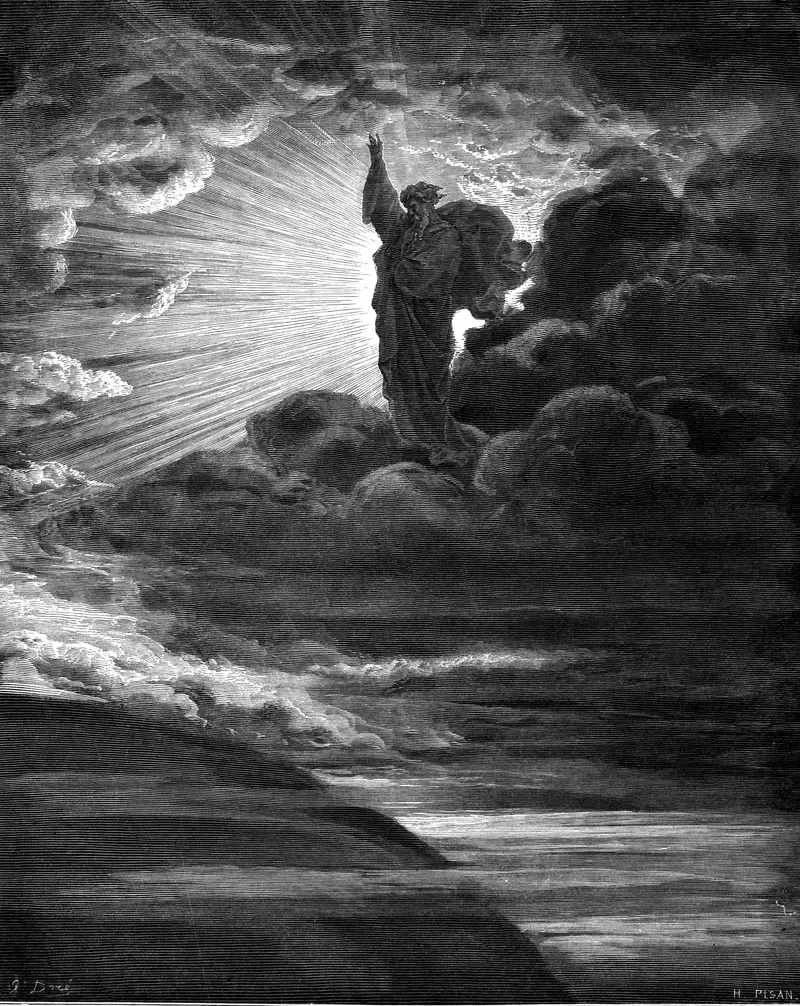
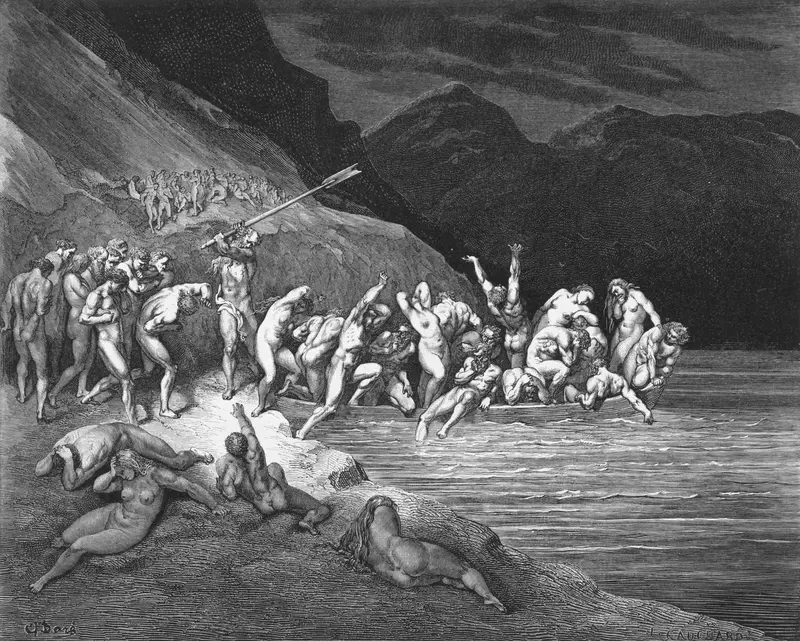
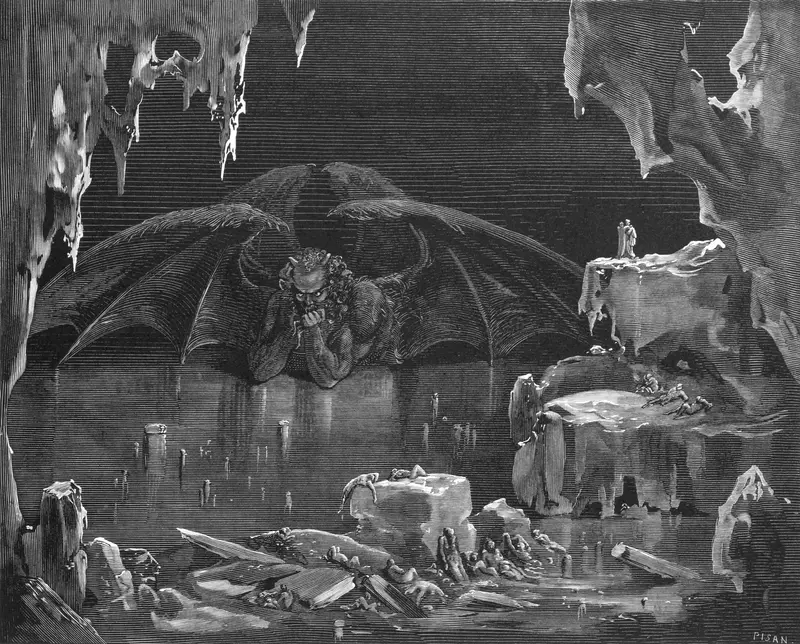
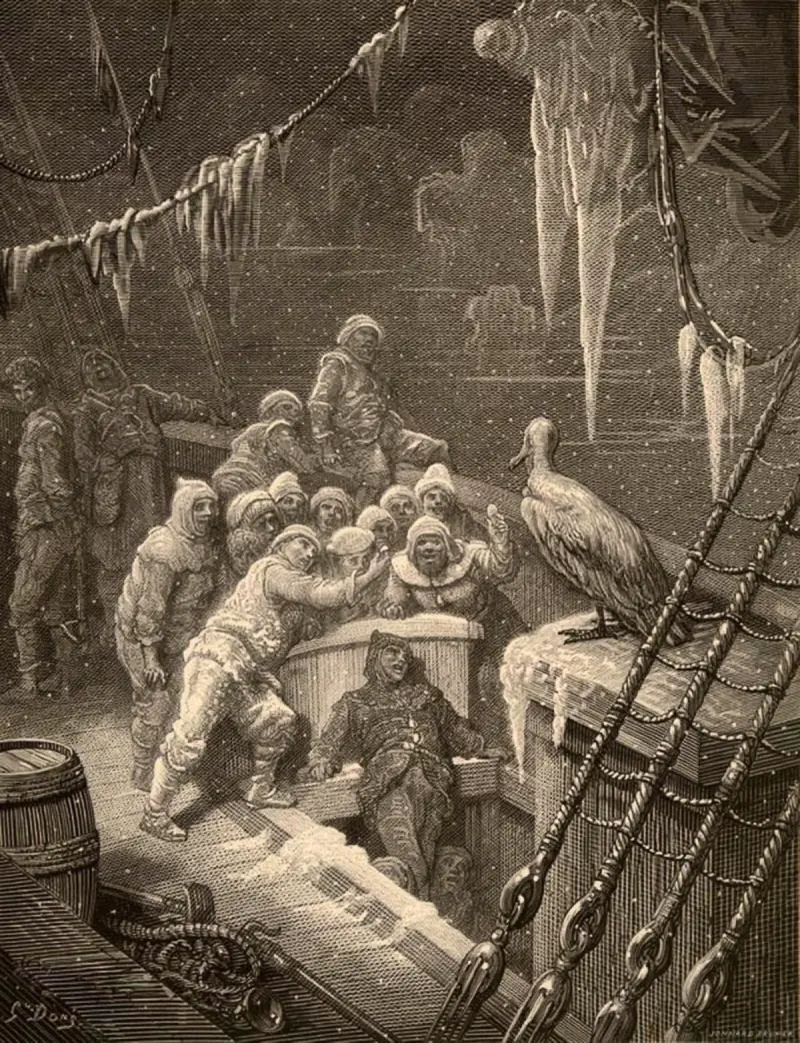
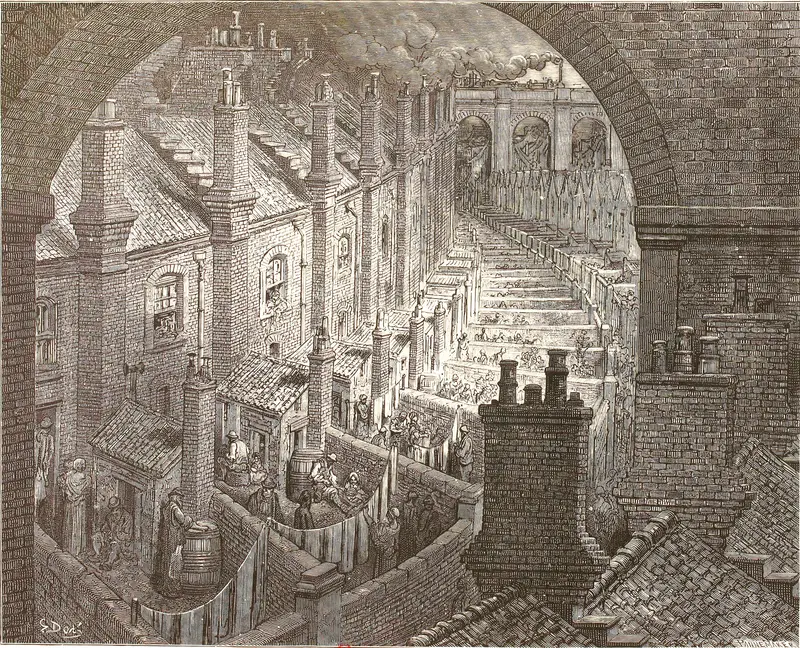
Fairy tale illustrations
Six fairy tale pictures from the golden age of illustration, from Dulac's Little Mermaid to Walter Crane's Beauty and the Beast.
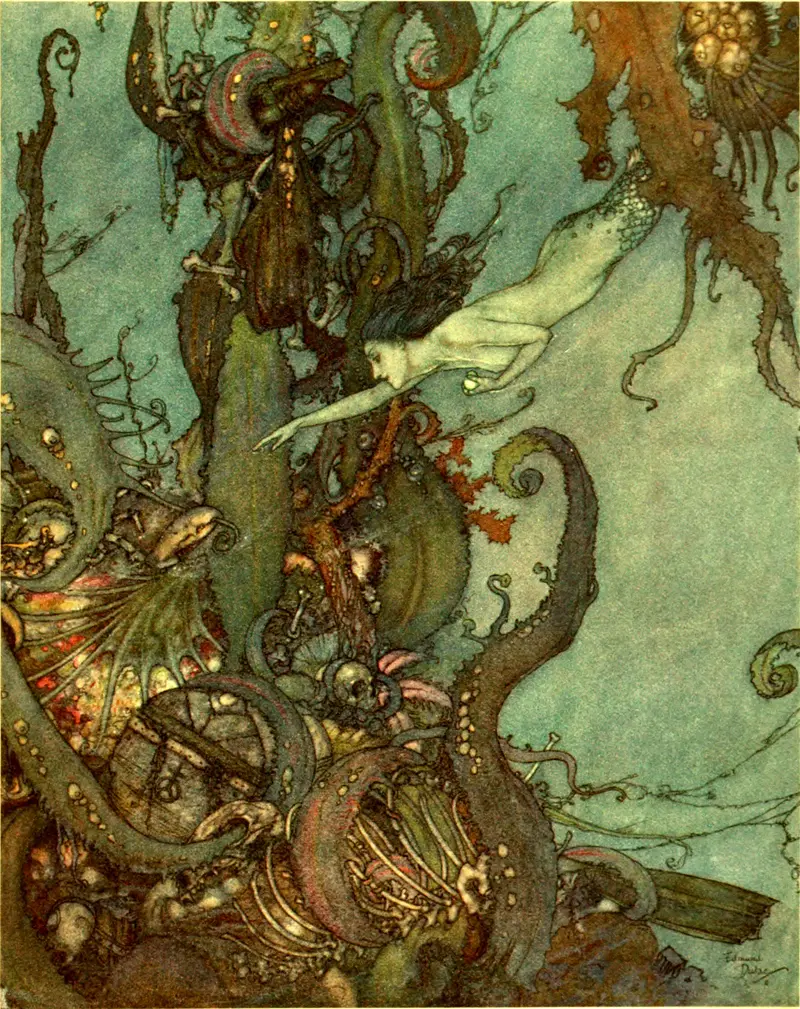
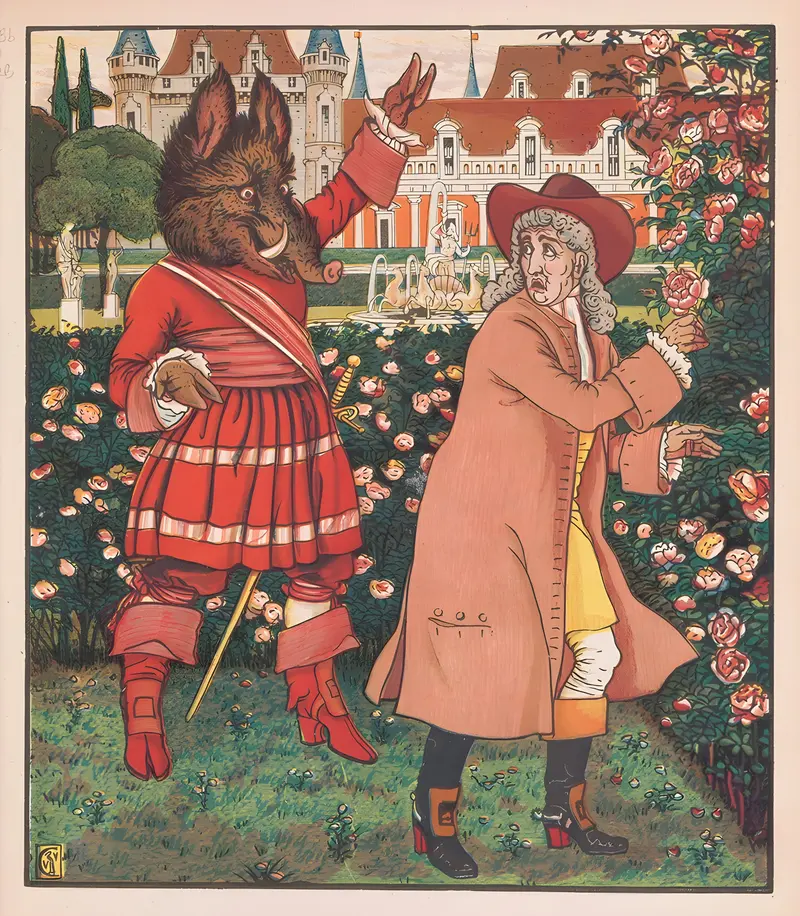
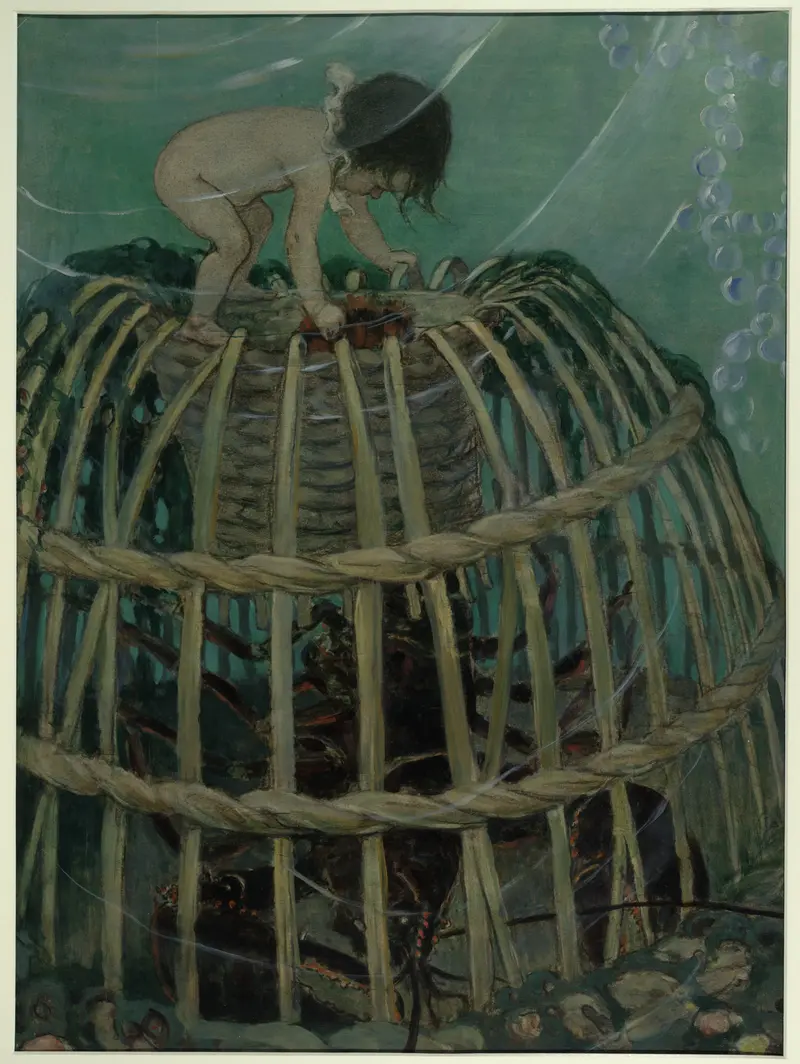
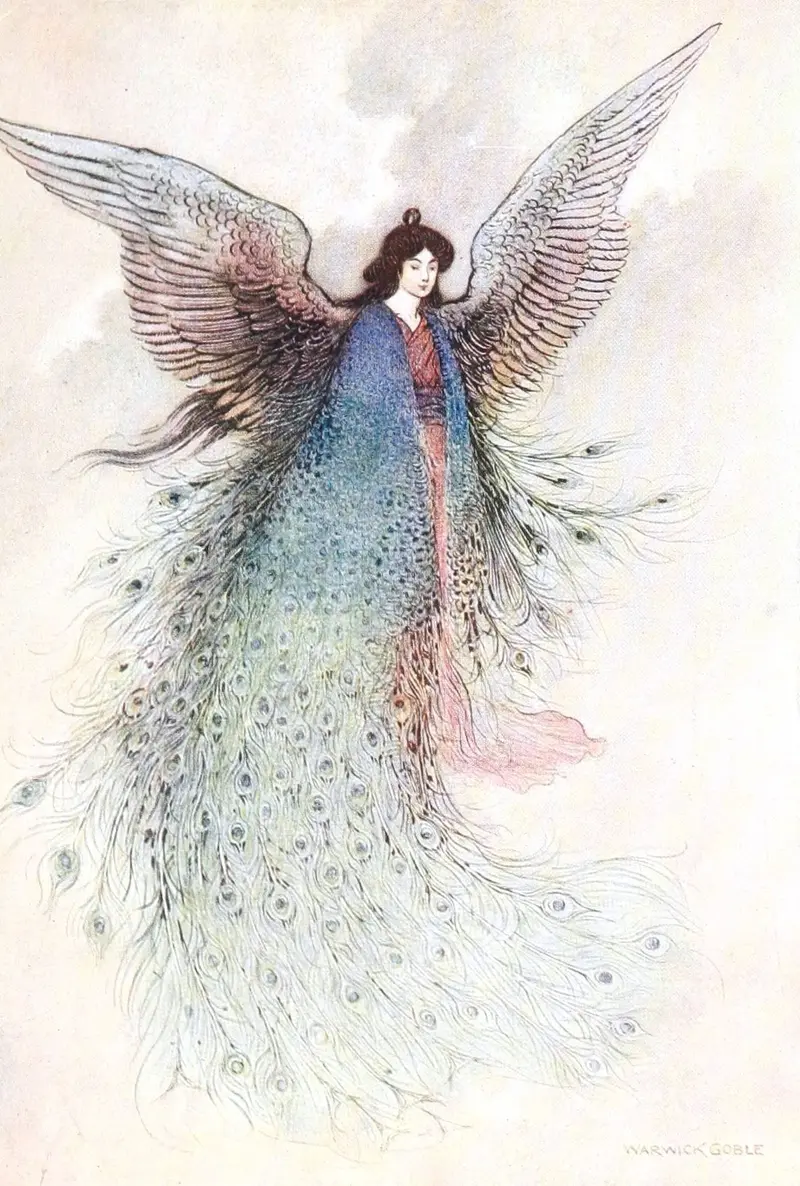
Famous illustrators
The masters of book illustration, from Doré and Tenniel to Rackham and Dulac. Each link opens all their work.
- Gustave DoréFor Don Quixote (1863), Doré drew in pen, ink and wash with gouache highlights, and engraver Heliodore Pisan translated those grays into wood engravings.
- John TennielBecause Carroll's text was light on description, Tenniel invented the characters' looks, drawing on fine art, natural history, heraldry, caricature and his Punch work.
- Arthur RackhamRackham's first success was the Brothers Grimm Fairy Tales of 1900; new color halftone printing let his watercolors be reproduced in soft, faithful tones.
- Aubrey BeardsleyBeardsley's Salome drawings (1894) for John Lane drew on Whistler's peacocks and Japanese woodblock prints; The Times called them "fantastic, grotesque, unintelligible, repulsive."
- Ivan BilibinA British Library curator writes that Bilibin's pictures of Vasilisa the Beautiful and Baba Yaga became the definitive visual foundation of those tales internationally.
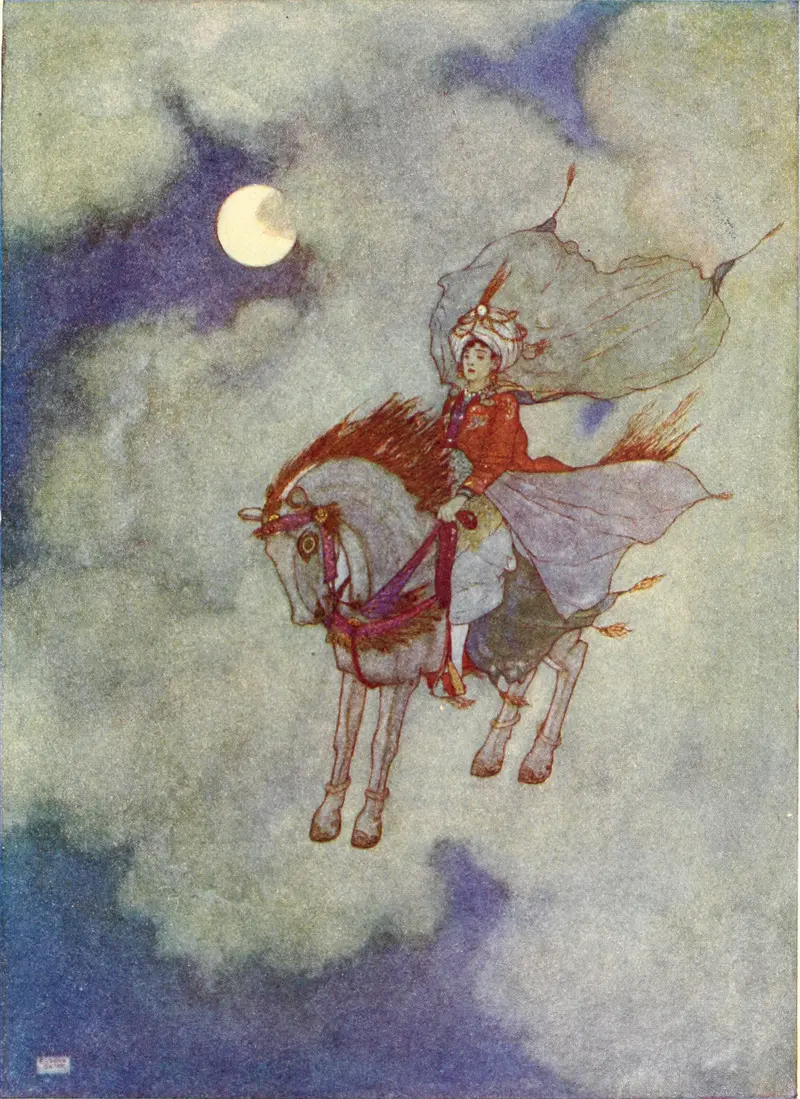 Edmund DulacDulac's first major illustration work was The Arabian Nights (1907); he admired Persian miniatures and favored flat planes and pattern over Western perspective.
List of famous illustrations and their artists
The 25 most famous illustrations: who made them, the book they come from, when, and where the copy we show is kept.
Show the list of 25 illustrationsHide the list
| # | Work | From | Artist | Year | Medium | Size | Located in | City |
|---|---|---|---|---|---|---|---|---|
| 1 | The Ancient of Days | Europe a Prophecy (1794) | William Blake | 1794 | Relief etching with hand coloring | 23.4 × 16.9 cm (9.2 × 6.7 in) | Fitzwilliam Museum | Cambridge |
| 2 | The Tyger | Songs of Experience (1794) | William Blake | 1794 | Color-printed relief etching with watercolor | 11.1 × 6.4 cm (4.4 × 2.5 in) | Yale Center for British Art | New Haven |
| 3 | Don Quixote in His Library | Don Quixote (1863) | Gustave Doré | 1863 | Wood engraving | 24.5 × 20 cm (9.6 × 7.9 in) | ||
| 4 | The Empyrean | Dante, Paradiso (1868) | Gustave Doré | 1868 | Wood engraving | National Library of Poland | Warsaw | |
| 5 | American Flamingo | The Birds of America (1827–1838) | John James Audubon | 1838 | Hand-colored engraving and aquatint | University of Pittsburgh Library System | Pittsburgh | |
| 6 | Max and Moritz: The Widow Bolte's Hens | Max and Moritz (1865) | Wilhelm Busch | 1865 | ||||
| 7 | Gargantua | La Caricature (1831) | Honoré Daumier | 1831 | Lithograph | |||
| 8 | Rue Transnonain, April 15, 1834 | L'Association mensuelle (1834) | Honoré Daumier | 1834 | Lithograph | 28.6 × 44 cm (11.3 × 17.3 in) | Cleveland Museum of Art | Cleveland |
| 9 | The Owl and the Pussy-cat | Nonsense Songs (1871) | Edward Lear | 1871 | ||||
| 10 | There Was an Old Man with a Beard | A Book of Nonsense (1846) | Edward Lear | 1846 | ||||
| 11 | Breakfast under the Big Birch | A Home (Ett hem, 1899) | Carl Larsson | 1895 | Watercolor on paper | 32 × 43 cm (12.6 × 16.9 in) | Nationalmuseum | Stockholm |
| 12 | Little Nemo in Slumberland: The Walking Bed | New York Herald (1908) | Winsor McCay | 1908 | Color newspaper print | |||
| 13 | The Climax | Salome (1894) | Aubrey Beardsley | 1893 | Line block | 22.8 × 16.2 cm (9 × 6.4 in) | Rijksmuseum | Amsterdam |
| 14 | The Peacock Skirt | Salome (1894) | Aubrey Beardsley | 1893 | Line block | 22.8 × 16.4 cm (9 × 6.5 in) | Metropolitan Museum of Art | New York |
| 15 | A Mad Tea-Party | Alice's Adventures in Wonderland (1865) | John Tenniel | 1865 | Wood engraving | |||
| 16 | Alice and the Cheshire Cat | Alice's Adventures in Wonderland (1865) | John Tenniel | 1865 | Wood engraving | |||
| 17 | Vasilisa the Beautiful at the Hut of Baba Yaga | Vasilisa the Beautiful (1902) | Ivan Bilibin | 1899 | Color-printed book illustration | |||
| 18 | Ivan Tsarevich and the Firebird | Ivan Tsarevich, the Firebird and the Gray Wolf (1901) | Ivan Bilibin | 1899 | Color-printed book illustration | |||
| 19 | The Fairies Are Exquisite Dancers | Peter Pan in Kensington Gardens (1906) | Arthur Rackham | 1906 | Color plate | Houghton Library, Harvard University | Cambridge, Massachusetts | |
| 20 | The Ride of the Valkyries | The Rhinegold & the Valkyrie (1910) | Arthur Rackham | 1910 | Color plate | Maastricht University Library | Maastricht | |
| 21 | Fagin in the Condemned Cell | Oliver Twist (1838) | George Cruikshank | 1838 | Etching | Yale Center for British Art | New Haven | |
| 22 | Santa Claus in Camp | Harper's Weekly (January 3, 1863) | Thomas Nast | 1863 | Wood engraving | 27.3 × 23.1 cm (10.7 × 9.1 in) | Metropolitan Museum of Art | New York |
| 23 | Children of the Forest | Children of the Forest (Tomtebobarnen, 1910) | Elsa Beskow | 1910 | Watercolor on paper | 23.7 × 31.3 cm (9.3 × 12.3 in) | Nationalmuseum | Stockholm |
| 24 | The Death of Sherlock Holmes | The Strand Magazine (December 1893) | Sidney Paget | 1893 | Printed magazine illustration | |||
| 25 | You See, Merry Phillis | Under the Window (1879) | Kate Greenaway | 1879 | Color wood engraving |
Famous illustrations: questions and answers
Who is the most famous illustrator?
There is no official answer, but museums single out a few names. The National Gallery of Canada calls Gustave Doré one of the most successful and prolific illustrators of the late 19th century. The V&A says the two Alice books would not have become world favorites without John Tenniel's illustrations, and calls Arthur Rackham one of the foremost illustrators of his era. Beatrix Potter's 23 Tales, which she wrote and illustrated, have sold more than 250 million copies.
Sources: National Gallery of Canada · Victoria and Albert Museum (V&A), "Alice: through the pages" · V&A Blog, "Wartime fairy tales" (Lucy Shaw, 2019) · Victoria and Albert Museum (V&A), "Introducing Beatrix Potter"
What were Gustave Doré's most famous illustrations?
Doré is most famous for his illustrations to Dante's Divine Comedy and Milton's Paradise Lost. His most ambitious projects included the Bible, published in 1866. He also illustrated Cervantes's Don Quixote, Coleridge's Rime of the Ancient Mariner, published by the Doré Gallery in London, and London: A Pilgrimage (1872), a striking, exaggerated vision of the Victorian city made with the journalist Blanchard Jerrold. Doré drew the designs, and teams of wood engravers cut them into printing blocks.
Sources: London Museum, "Gustave Doré's London pilgrimage" · Musées de Strasbourg, catalogue page for "La constellation Gustave Doré" (2024, in French) · The Metropolitan Museum of Art, collection record "La Sainte Bible" · Victoria and Albert Museum, collection record O601539 (Doré drawing for The Rime of the Ancient Mariner)
What is the golden age of illustration?
It is the era, roughly the 1880s to the 1920s, when illustrated books and magazines boomed. Color halftone printing, developed in the 1890s, reproduced watercolors in soft tones close to the originals, making lavish gift books with color plates hugely popular. Arthur Rackham, Edmund Dulac and Kay Nielsen made some of their best work for these books; in America, Howard Pyle and his students, such as N. C. Wyeth and Jessie Willcox Smith, worked when illustration was in high demand. The First World War began to end it.
Sources: V&A Blog, "Wartime fairy tales" (Lucy Shaw, 2019) · Norman Rockwell Museum, IllustrationHistory.org, "The Decade 1910-1920" · Delaware Art Museum, "American Illustration" collection page
Who illustrated Alice in Wonderland?
John Tenniel illustrated Alice's Adventures in Wonderland (1865). He drew his final designs directly onto woodblocks, which the Dalziel Brothers engraved. Tenniel disliked the poor printing of the first edition, so Carroll withdrew its 2,000 copies. After the book entered the public domain in 1907, many new illustrated editions followed, including Arthur Rackham's watercolor version that same year, which proved controversial because readers already loved Tenniel's pictures.
Sources: Victoria and Albert Museum, collection record O128860 (Tenniel, "Alice and the fawn", engraved by Dalziel Brothers) · Bodleian Libraries, University of Oxford, news release on the 'Michelson Alice' (6 January 2026) · Library of Congress blog, "Page from the Past: Alice's Adventures in Wonderland" (2016) · Norman Rockwell Museum, IllustrationHistory.org, "Arthur Rackham"
How were old book illustrations printed?
Most were printed from blocks, plates or stones prepared by specialists. For wood engravings, professional engravers cut the artist's drawing into the end grain of a wood block. Steel engraving, often combined with etching, replaced less durable copper plates in the early 19th century. Chromolithography printed color from several stones, one per color. Late in the 1800s, photoengraving and halftone screens began reproducing artwork directly, and color plates for gift books were printed separately and mounted into the book.
Sources: Getty Art & Architecture Thesaurus, "wood engraving (process)" · Getty Art & Architecture Thesaurus, "steel engraving (printing process)" · Norman Rockwell Museum, IllustrationHistory.org, "Late 19th Century" · Victoria and Albert Museum, collection record O1515391 (Edmund Dulac's Fairy-Book, 1916)
Can I download these illustrations for free?
Yes. Every work on this page is in the public domain where we checked it: the artists died by 1955, so the EU's life-plus-70 term has run out, and the works were published by 1930, so U.S. copyright has expired. The U.S. Copyright Office treats a photo or scan that is merely a "slavish copy" as uncopyrightable, and EU Directive 2019/790, Article 14, denies copyright to non-original reproductions of public-domain art. Open any picture: its standard download is free for any use, including commercial.
Sources: U.S. Copyright Office, Compendium of U.S. Copyright Office Practices, Third Edition, Chapter 900, §909.3(A) · Directive (EU) 2019/790, Article 14 "Works of visual art in the public domain" · Directive 2006/116/EC on the term of protection, Article 1 · Cornell University Library, "Copyright Term and the Public Domain in the United States"
How we chose the most famous illustrations
We ranked the illustrators by how widely each one is known around the world: the number of languages that have an encyclopedia entry about them, checked in October 2026. For each, we chose up to two of their best-known pictures, the ones their museums, libraries and publishers single out.
A few rules keep the list useful. Every picture is in the public domain: it was published by 1930, by an artist who died by 1955, so you can download and use it freely. Where the only scan we could find was too small or showed a page mount, the picture is left out. That is why Beatrix Potter, who would rank second, is missing for now.
Dates and holders come from museum and library records, and each entry links to its sources.
Spotted a mistake? Tell us and we will correct it.
Browse all 2,190 illustrations
Every one is public domain and free to download: illustrations, book plates and prints by famous artists.