Public domain · Free to download
Famous Religious Paintings
We curated the 25 most famous religious paintings of all time, from Leonardo's The Last Supper and Michelangelo's Sistine Chapel to Rembrandt's Return of the Prodigal Son, and added the best of the rest: famous paintings of Jesus, of the Virgin Mary, of angels and of Bible stories.
For each one you get the story it tells, who it was painted for, a detail to look for and where to see it today. Every image is a public-domain reproduction of the real painting, free to download and free to use.
For centuries the Church was the biggest patron of European painters. Most of these works were made for a particular altar, chapel or monastery, and several still hang exactly where they were painted, from a dining hall in Milan to a parish church in Toledo.
Selected and written by Pavel MazuelasUpdated October 29, 2026
Part of The Most Famous Paintings in the WorldRelated: Greek Mythology Paintings, Famous Historical Paintings
The 25 most famous religious paintings of all time
Ranked from 1 to 25 by worldwide fame. Click any painting to see it up close and download it free.

No. 1Renaissance
The Last Supper by Leonardo da Vinci
Story: Jesus's last supper with the twelve apostles
1495–1498 · Tempera on dry plaster · 460 × 880 cm
Santa Maria delle Grazie, Milan
Jesus has just told his twelve apostles that one of them will betray him, and the table erupts. Leonardo painted it in 1495–1498 on the wall of the friars' dining hall at Santa Maria delle Grazie in Milan, for the city's ruler, Ludovico Sforza. Look for Judas, shrinking back with the bag of silver he was paid. Leonardo painted on dry plaster instead of true fresco, so the paint began to decay within a few years. It is still on that wall in Milan.
Sources: Santa Maria delle Grazie
No. 2Renaissance
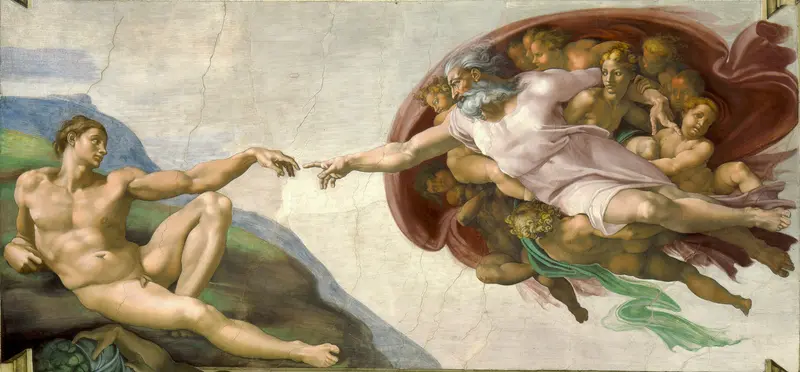
The Creation of Adam by Michelangelo
Story: God giving life to Adam (Genesis)
c. 1512 · Fresco · 280 × 570 cm
Sistine Chapel, Vatican City
God, carried by angels, reaches toward Adam, and the gap between their fingers is where, as the Vatican Museums put it, the breath of life passes to the first man. It is one of nine scenes from Genesis that Michelangelo painted on the Sistine Chapel ceiling for Pope Julius II between 1508 and 1512, although his contract had asked only for the twelve apostles. It is in the Sistine Chapel in Vatican City.
Sources: Sistine Chapel
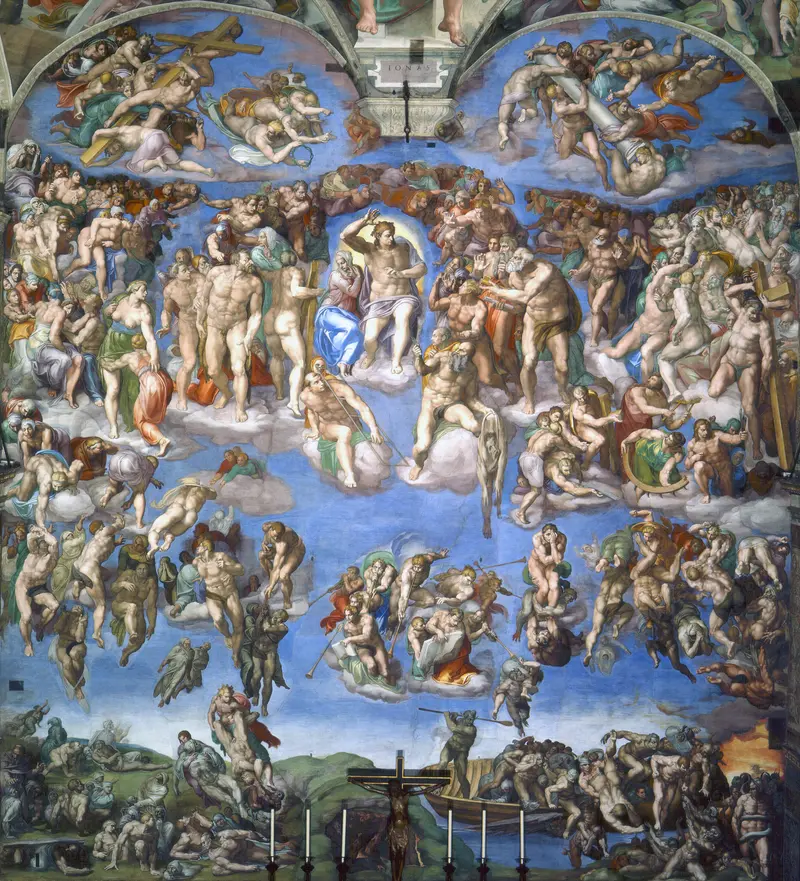
No. 3Mannerism
The Last Judgment by Michelangelo
Story: Christ's judgment at the end of time
1536–1541 · Fresco · 1370 × 1200 cm
Sistine Chapel, Vatican City
Christ is about to give his verdict at the end of time, as the dead rise toward heaven and the damned are dragged down to hell. Michelangelo painted the altar wall of the Sistine Chapel in 1536–1541, more than 20 years after its ceiling, with 391 figures. Saint Bartholomew holds up his own flayed skin, usually seen as Michelangelo's self-portrait. The nudes caused such an outcry that in 1564 some were painted over with drapery.
Sources: Sistine Chapel
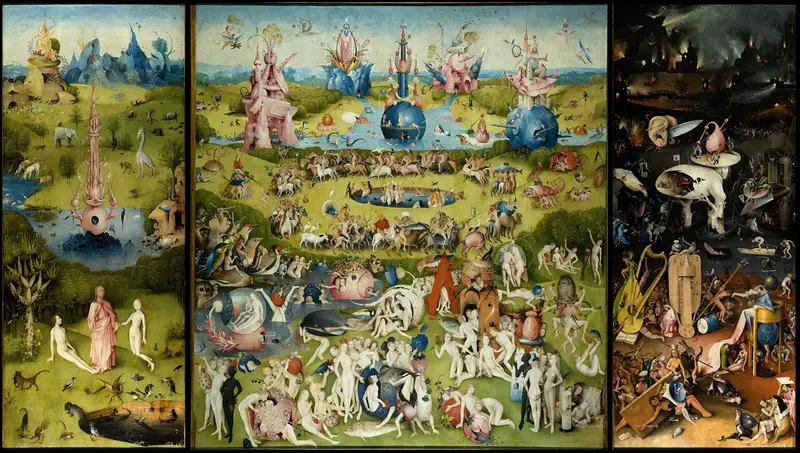
No. 4Northern Renaissance
The Garden of Earthly Delights by Hieronymus Bosch
Story: Eden, a false paradise and Hell
1490–1500 · Grisaille and oil on oak panel · 185.8 × 172.5 cm (center panel)
Museo del Prado, Madrid
Read it from left to right: God presents Eve to Adam in Eden, the center panel shows a false paradise given over to pleasure, and the right wing is Hell. Bosch painted it around 1490–1500, probably for Engelbert II of Nassau, and a visitor saw it in the Nassau palace in Brussels in 1517. In the center, look for the lovers inside a glass bubble, which the Prado links to a proverb: happiness, like glass, soon breaks. It is in the Prado in Madrid.
Sources: Museo del Prado
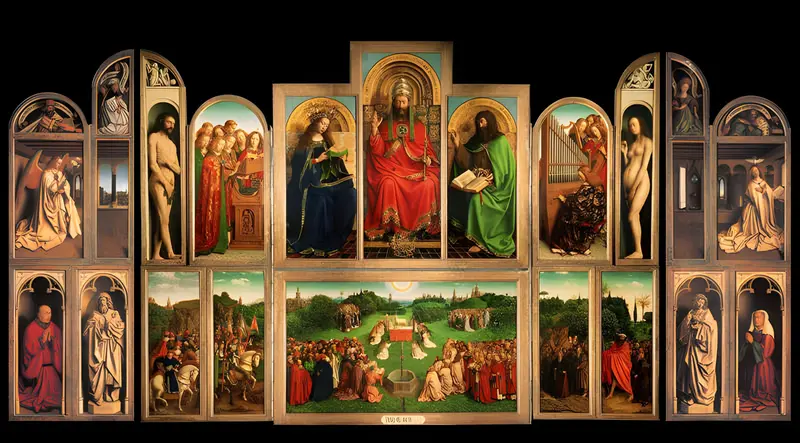
No. 5Northern Renaissance
Ghent Altarpiece by Hubert and Jan van Eyck
Story: The Adoration of the Mystic Lamb
1432 · Oil on oak panels · 375 × 520 cm (open)
St Bavo's Cathedral, Ghent
At the center of this huge altarpiece, angels and saints adore the Lamb of God, beneath God enthroned between the Virgin Mary and John the Baptist. An inscription says Hubert van Eyck began it and his brother Jan finished it, and it was set up in Ghent on May 6, 1432. In 1934 two panels were stolen; the Just Judges has never been found, and a copy hangs in its place. It is in St Bavo's Cathedral in Ghent.
Sources: St Bavo's Cathedral
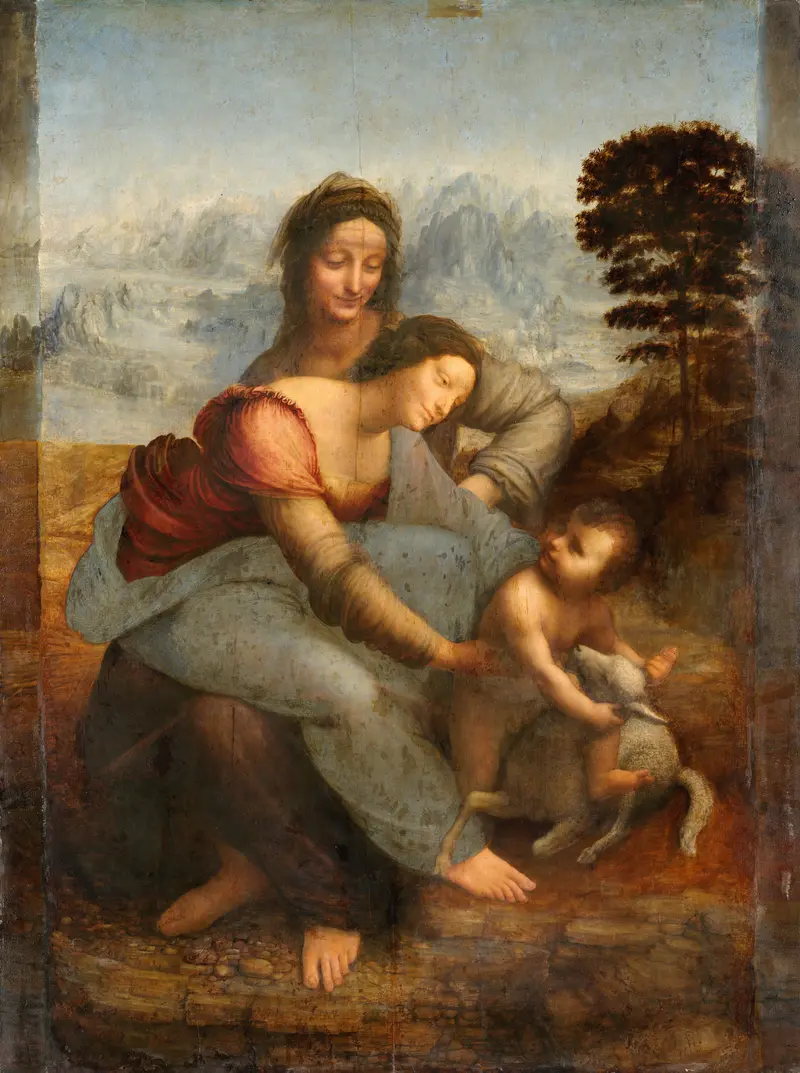
No. 6Renaissance
The Virgin and Child with Saint Anne by Leonardo da Vinci
Story: Mary, her mother Saint Anne and the infant Jesus
c. 1503–1519 · Oil on poplar panel · 168 × 113 cm
Louvre, Paris
Mary, sitting on the lap of her mother, Saint Anne, reaches for the infant Jesus, who grabs a lamb, the symbol of his future sacrifice. Leonardo began it by 1503 and was still changing poses and costumes when he died in 1519. Infrared images show that he first painted Anne's arm trying to stop Mary from taking Jesus away from the lamb. It is in the Louvre in Paris.
Sources: Louvre
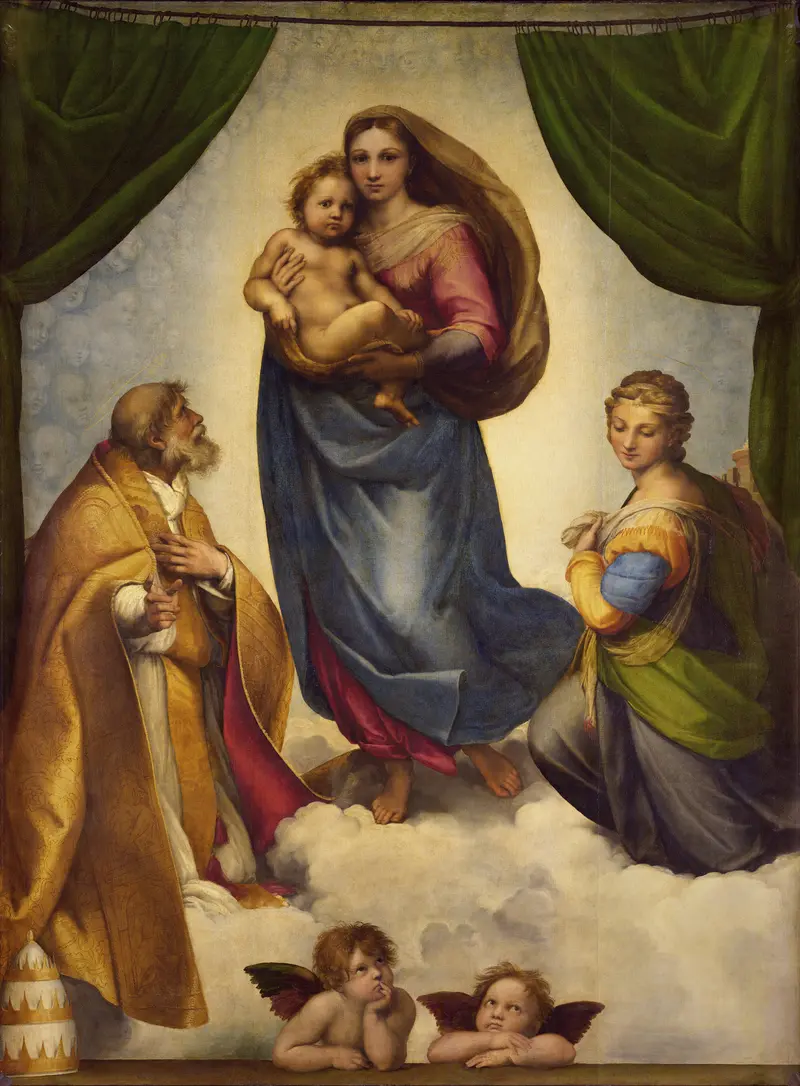
No. 7Renaissance
Sistine Madonna by Raphael
Story: The Virgin and Child with Pope Sixtus II and Saint Barbara
1512–1513 · Oil on canvas · 269.5 × 201 cm
Gemäldegalerie Alte Meister, Dresden
A curtain opens and the Virgin Mary steps toward us on the clouds, carrying the Christ Child, between Pope Sixtus II and Saint Barbara. Pope Julius II commissioned it for the high altar of the church of San Sisto in Piacenza, and Raphael added the two famous little angels at the bottom only at the very end. Taken to Moscow after World War II, it came back in 1956. It is in the Gemäldegalerie Alte Meister in Dresden.
Sources: Gemäldegalerie Alte Meister
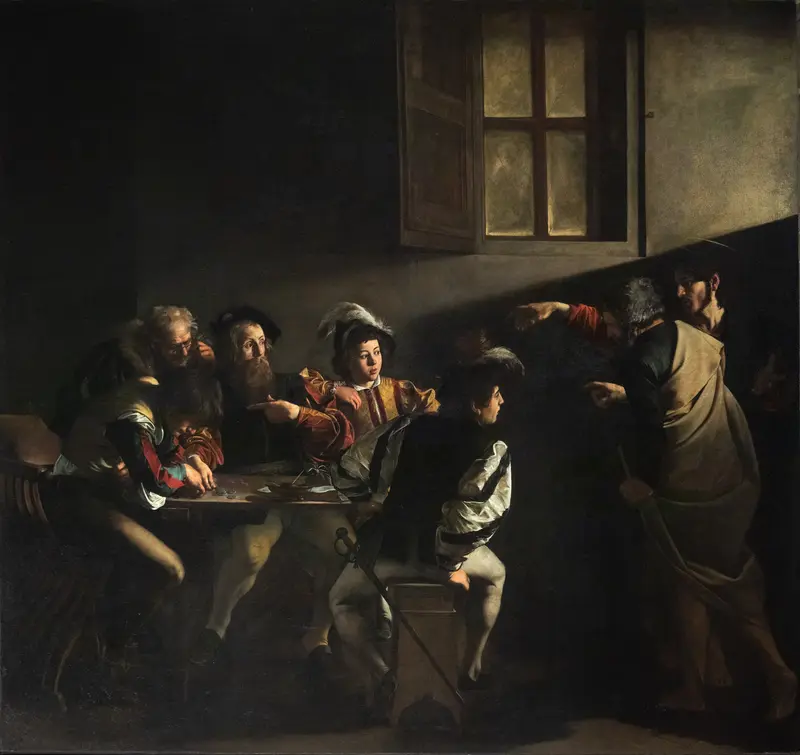
No. 8Baroque
The Calling of Saint Matthew by Caravaggio
Story: Jesus calling the tax collector Matthew
1599–1600 · Oil on canvas · 322 × 340 cm
San Luigi dei Francesi, Rome
Christ, with Saint Peter beside him, points at a table of tax collectors to call one of them, Matthew, to follow him. Caravaggio painted it in 1599–1600 for the Contarelli Chapel in Rome's church of San Luigi dei Francesi. X-rays show that Saint Peter was added later. Scholars still argue about which man at the table is Matthew. It still hangs in the chapel it was painted for.
Sources: Treccani
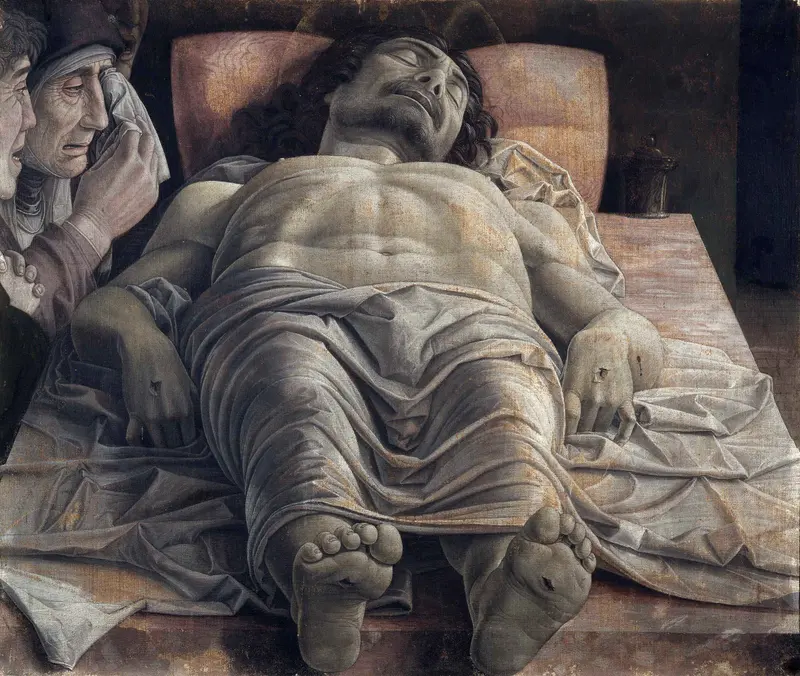
No. 9Renaissance
Lamentation of Christ by Andrea Mantegna
Story: Mourners over the dead Christ
c. 1483 · Tempera on canvas · 68 × 81 cm
Pinacoteca di Brera, Milan
Christ's body lies on a stone slab, seen feet first in startling foreshortening, with the wounds in his hands and feet right in front of us, while Mary, Saint John and a third mourner weep at the left. Mantegna probably painted it around 1483 for his own devotion: it was most likely the “foreshortened Christ” found in his studio when he died. It is in the Pinacoteca di Brera in Milan.
Sources: Pinacoteca di Brera
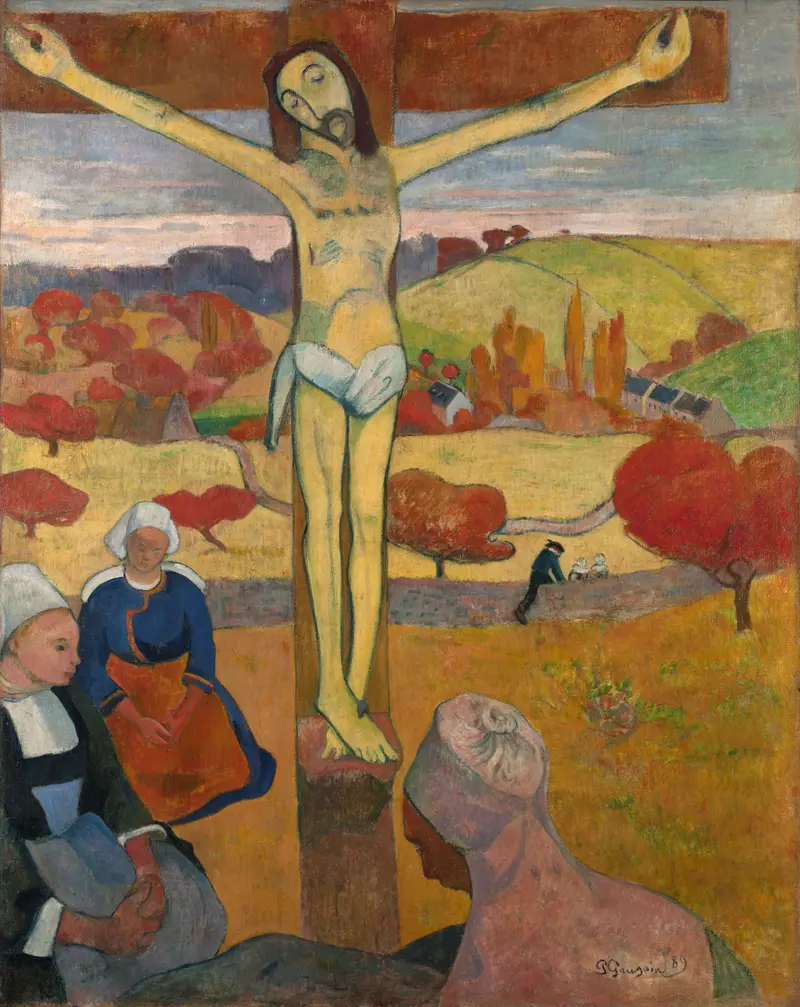
No. 10Post-Impressionism
The Yellow Christ by Paul Gauguin
Story: The Crucifixion, with Breton women
1889 · Oil on canvas · 92.1 × 73.3 cm
Buffalo AKG Art Museum, Buffalo, New York
Gauguin painted Christ on the cross in bright yellow in 1889, basing the figure on a 17th-century painted wooden crucifix in the Trémalo Chapel near Pont-Aven, in Brittany. Breton women in local costume kneel at its foot. Seized by the Nazis from a Paris dealer in 1940 and returned after the war, it is now in the Buffalo AKG Art Museum in Buffalo, New York.
Sources: Buffalo AKG Art Museum
No. 11Renaissance
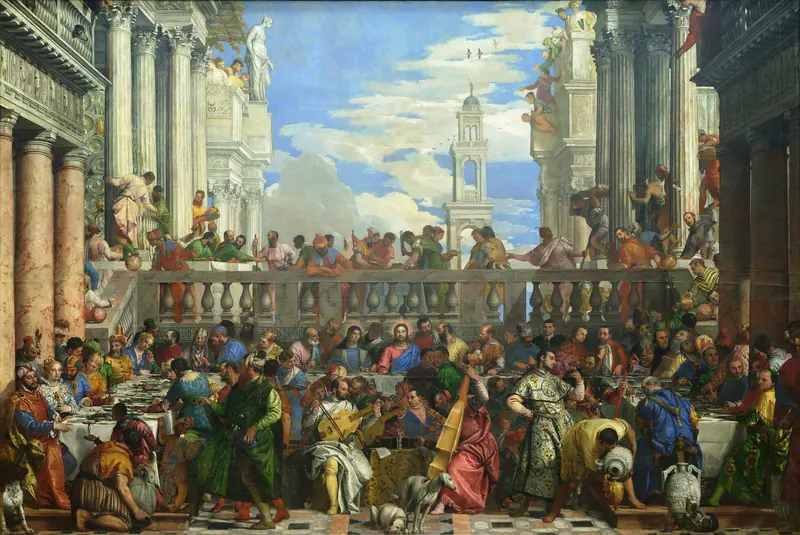
The Wedding at Cana by Paolo Veronese
Story: Jesus turns water into wine at a wedding
1562–1563 · Oil on canvas · 677 × 994 cm
Louvre, Paris
Jesus turns water into wine at a wedding, but Veronese set the Bible story at a lavish Venetian banquet of his own day, with some 130 figures. He painted it in 1562–1563 for the dining hall of the monastery of San Giorgio Maggiore in Venice. Napoleon's troops rolled it up and shipped it to Paris in 1797, and it never went back. Almost 10 meters wide, it is the largest painting in the Louvre.
Sources: Louvre
No. 12Dutch Golden Age
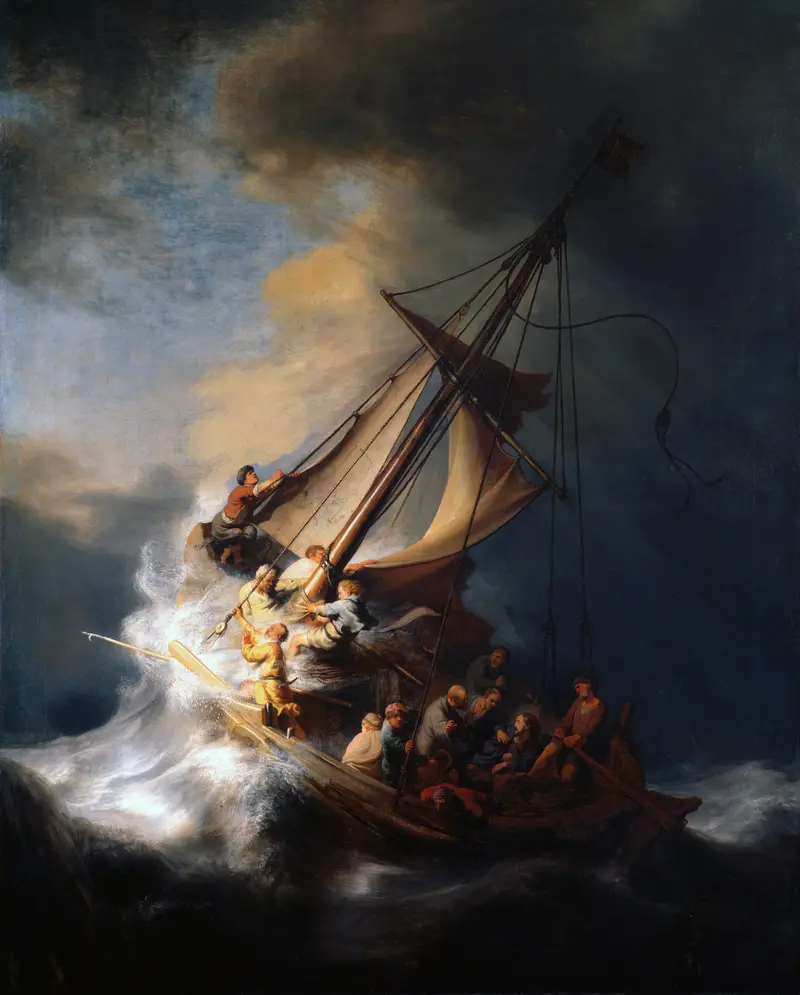
The Storm on the Sea of Galilee by Rembrandt
Story: Jesus and his disciples in a storm
1633 · Oil on canvas · 160 × 128 cm
Isabella Stewart Gardner Museum (stolen in 1990), Boston
Christ's disciples fight to keep their boat afloat in a violent storm, before he wakes and calms the waves. Painted in 1633, it is Rembrandt's only known seascape. On March 18, 1990, two thieves dressed as police officers took it from the Isabella Stewart Gardner Museum in Boston, and it has never been found. Its empty frame still hangs in the museum's Dutch Room.
Sources: Isabella Stewart Gardner Museum
No. 13Dutch Golden Age
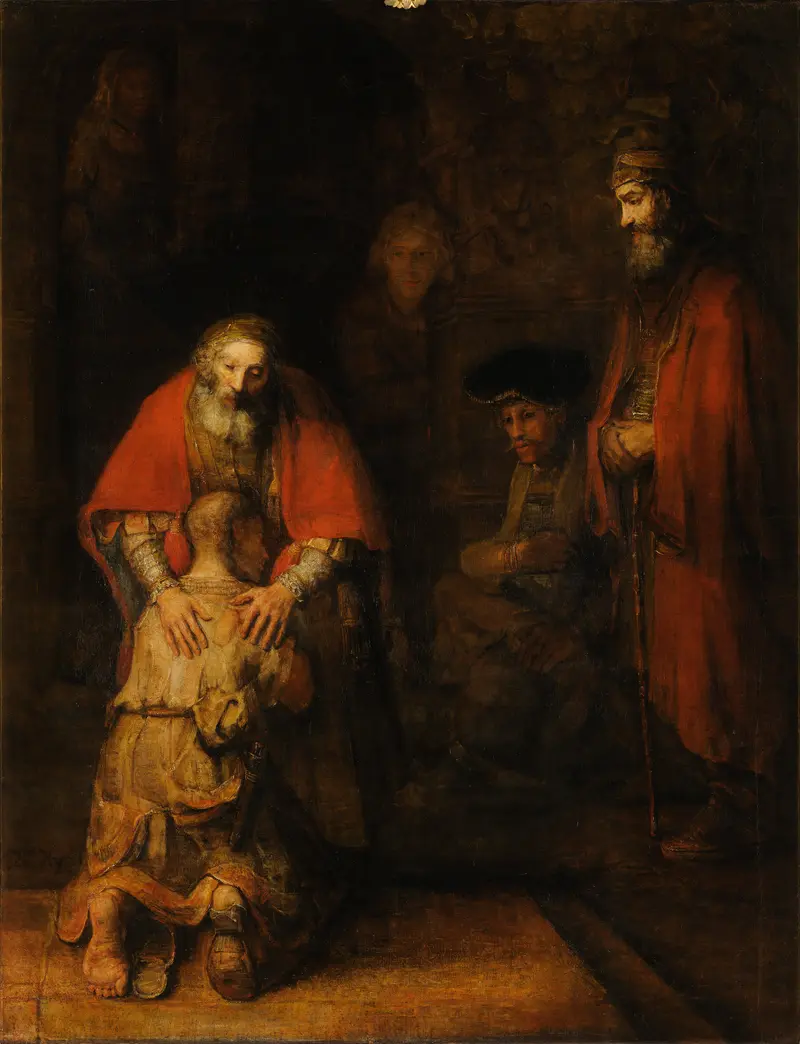
The Return of the Prodigal Son by Rembrandt
Story: Jesus's parable of the prodigal son
c. 1668 · Oil on canvas · 262 × 205 cm
Hermitage Museum, St. Petersburg
The son who wasted his inheritance comes home in rags and falls to his knees, and his father bends over him in forgiveness, his red cloak spread like a canopy. Rembrandt painted Jesus's parable in about 1668, months before his death, without any commission. It came to the Hermitage in 1766 with Catherine the Great's collection and is in St. Petersburg.
Sources: Hermitage Museum
No. 14Renaissance
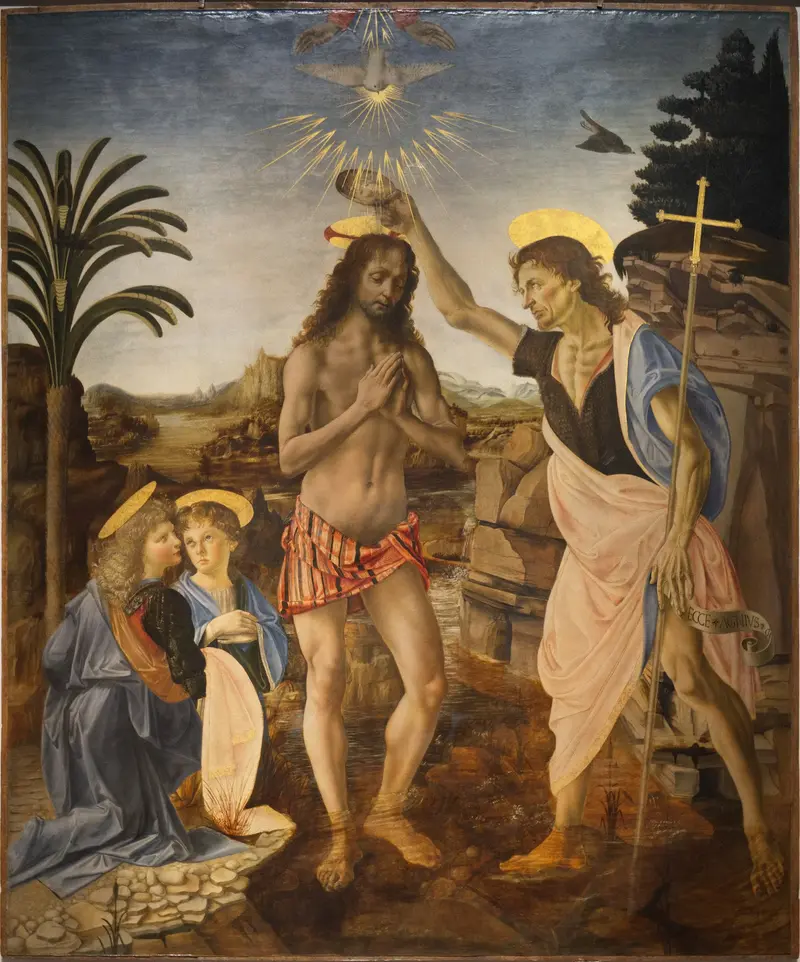
The Baptism of Christ by Andrea del Verrocchio and Leonardo da Vinci
Story: John the Baptist baptizing Jesus
c. 1470–1475 · Tempera and oil on panel · 177 × 151 cm
Uffizi, Florence
John the Baptist baptizes Jesus in the River Jordan as two angels kneel at the left, one holding his clothes. The panel was made in Verrocchio's Florence workshop around 1470–1475, and Vasari wrote that the young Leonardo painted the left-hand angel so well that he upset his master. Today the Uffizi credits Leonardo with the river landscape and the figure of Christ too. It is in the Uffizi in Florence.
Sources: Uffizi
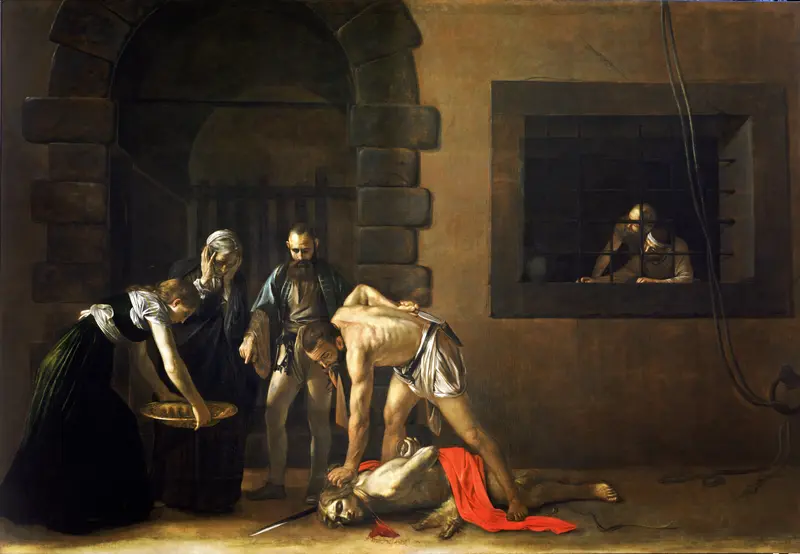
No. 15Baroque
The Beheading of Saint John the Baptist by Caravaggio
Story: The execution of John the Baptist
c. 1608 · Oil on canvas · 360 × 520 cm
St John's Co-Cathedral, Valletta, Malta
Caravaggio's Beheading of Saint John the Baptist was unveiled in the Oratory of St John's Co-Cathedral in Valletta, Malta, on the saint's feast day, August 29, 1608. The cathedral calls it his largest painting and the only one he signed. That December, the Knights of Malta expelled Caravaggio from their order at a meeting held in front of it. It still hangs in the same Oratory.
Sources: St John's Co-Cathedral
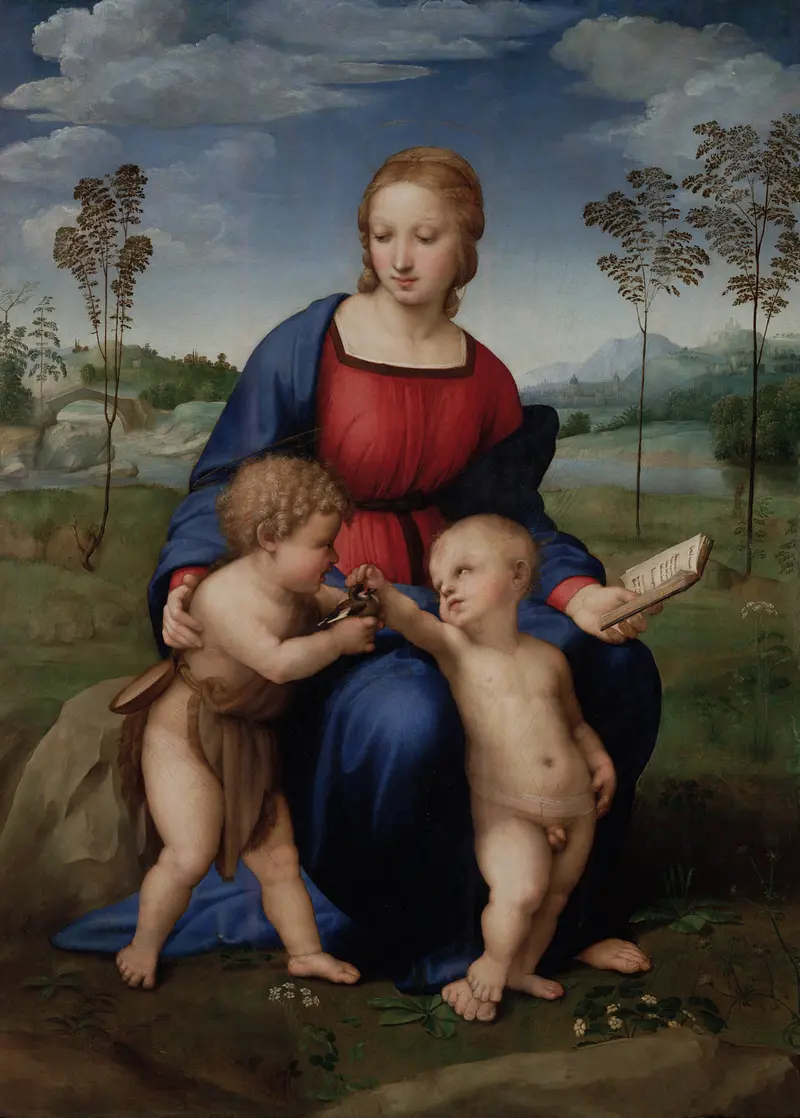
No. 16Renaissance
Madonna of the Goldfinch by Raphael
Story: Mary, the Christ Child and the young John the Baptist
c. 1505–1506 · Oil on panel · 107 × 77.2 cm
Uffizi, Florence
The young John the Baptist holds out a goldfinch, and the Christ Child reaches to stroke it, while Mary holds a small book; the bird and the book both hint at Christ's future sacrifice. According to Vasari, Raphael painted it for the wedding of Lorenzo Nasi in 1506. When a landslide destroyed the Nasi house in 1547, the panel broke into 17 pieces and was put back together. It is in the Uffizi in Florence.
Sources: Uffizi
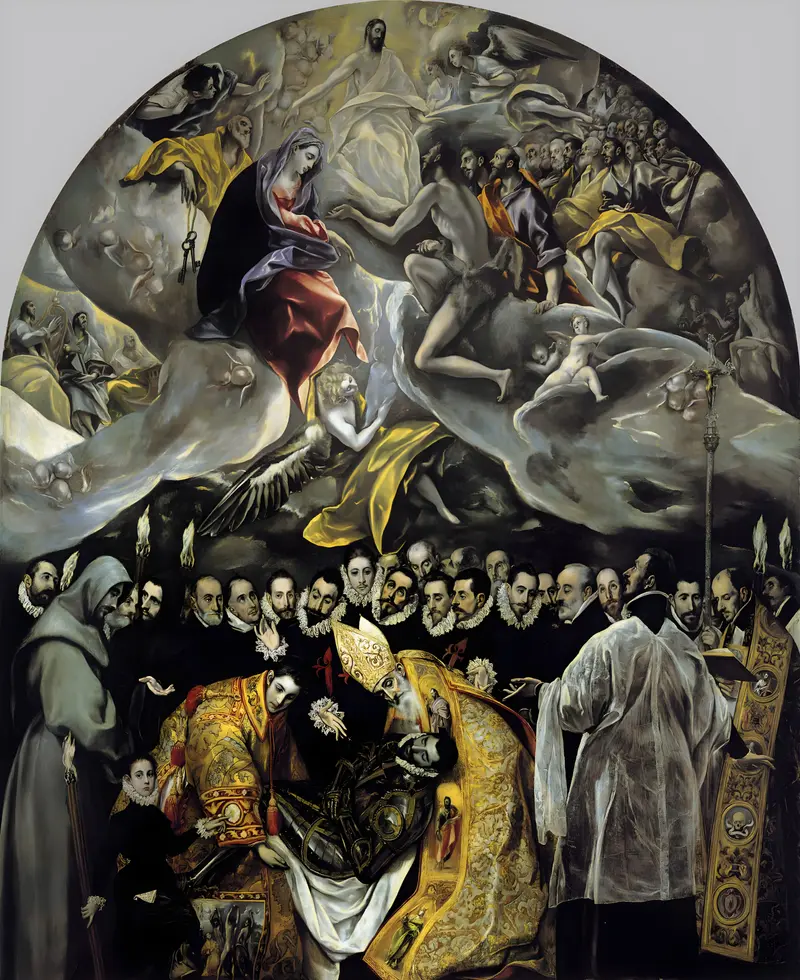
No. 17Mannerism
The Burial of the Count of Orgaz by El Greco
Story: A miracle at the funeral of the lord of Orgaz
1586–1588 · Oil on canvas · 480 × 360 cm
Church of Santo Tomé, Toledo
Legend says that at the funeral of the lord of Orgaz in the 1300s, Saints Stephen and Augustine came down from heaven to lay him in his tomb, while above, an angel carries his soul up to Christ. The parish priest of Santo Tomé in Toledo commissioned El Greco to paint the miracle in 1586. Look at the count's polished armor: it reflects Saint Stephen's face. It is still in the church of Santo Tomé in Toledo.
Sources: Church of Santo Tomé
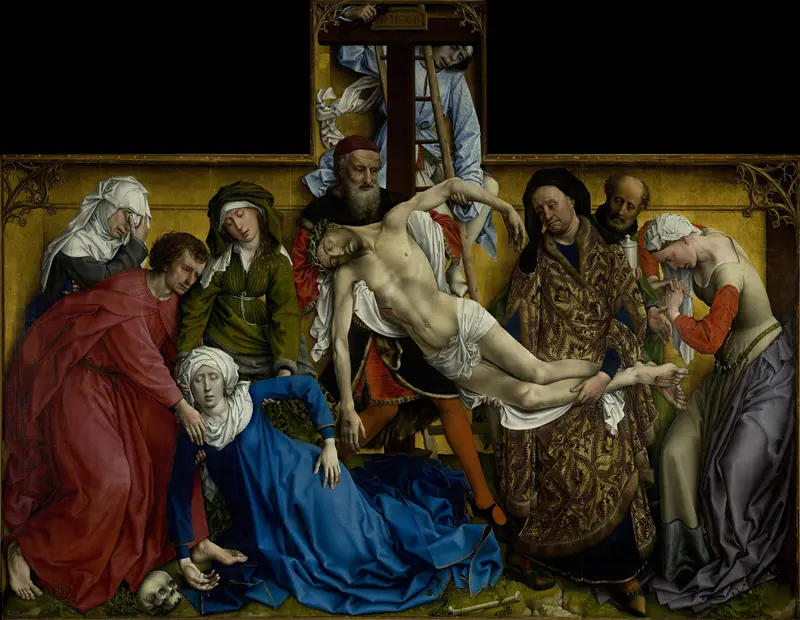
No. 18Northern Renaissance
The Descent from the Cross by Rogier van der Weyden
Story: Christ's body taken down from the cross
before 1443 · Oil on panel · 204.5 × 261.5 cm
Museo del Prado, Madrid
Christ's body is lowered from the cross while the Virgin Mary collapses in a faint. Rogier van der Weyden painted it before 1443 for the chapel of the Crossbowmen's Guild in Leuven: look for the two little crossbows hanging in the upper corners. He made the figures look like painted sculptures standing in a gilded shrine. Philip II of Spain hung it in El Escorial, and it is now in the Prado in Madrid.
Sources: Museo del Prado
No. 19Renaissance
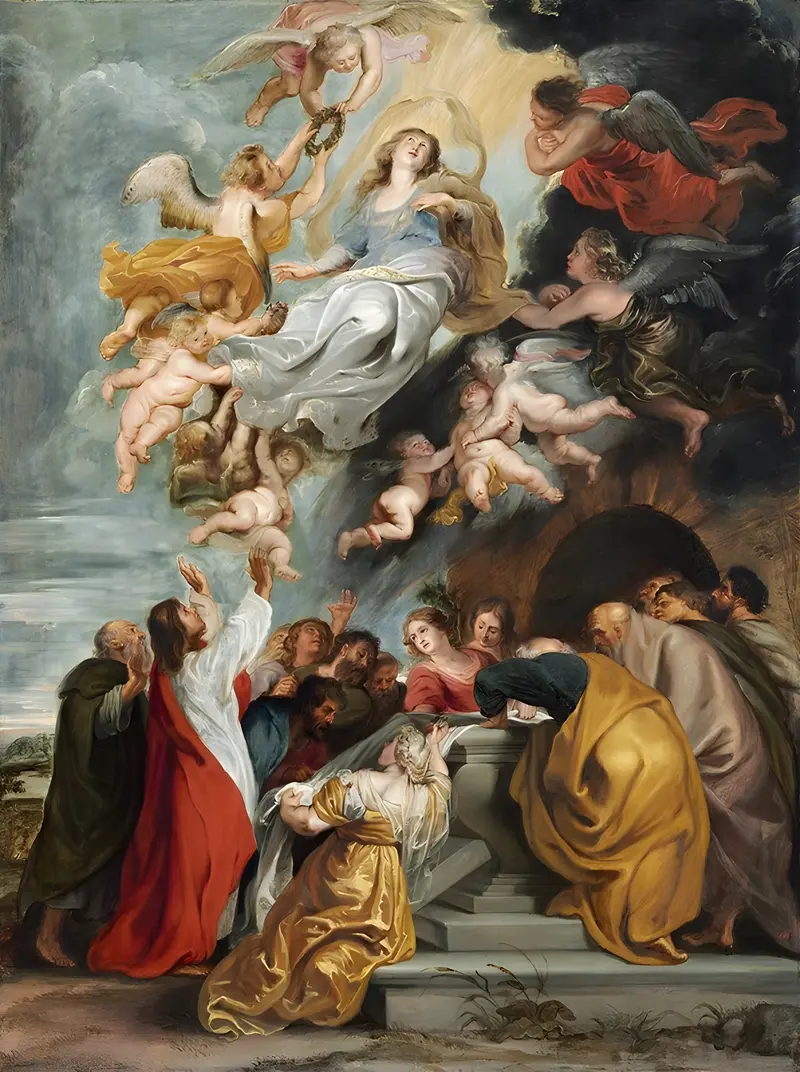
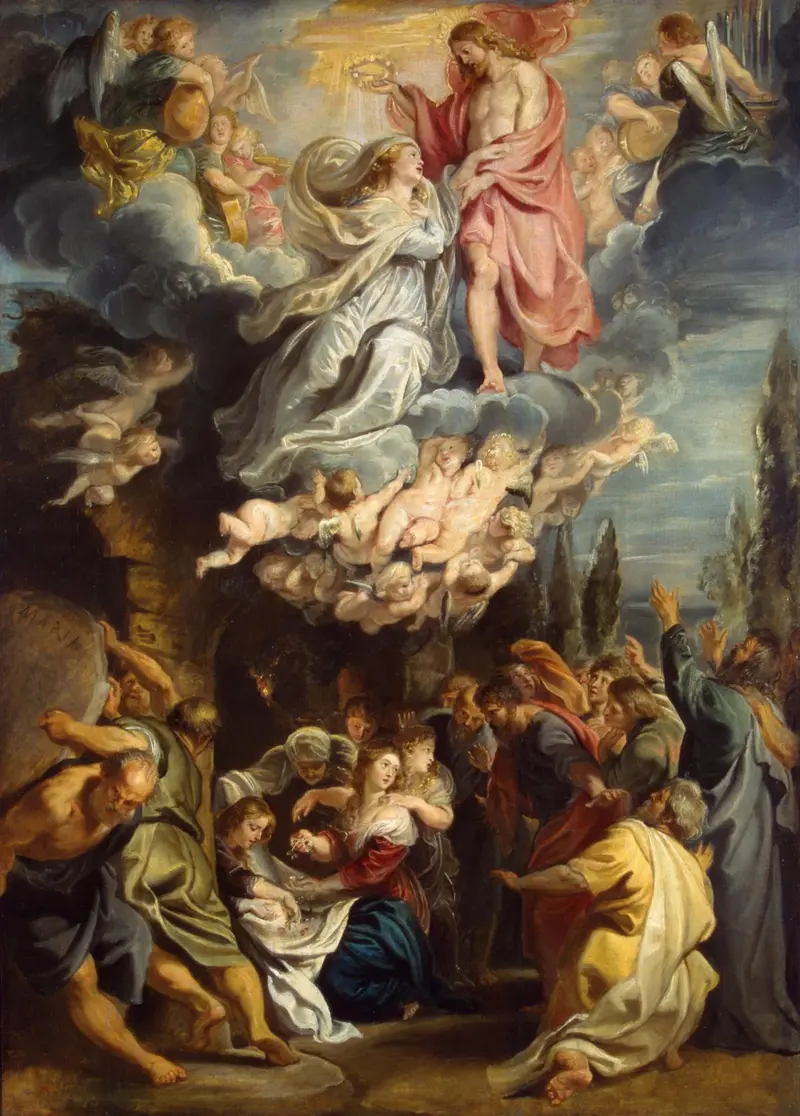
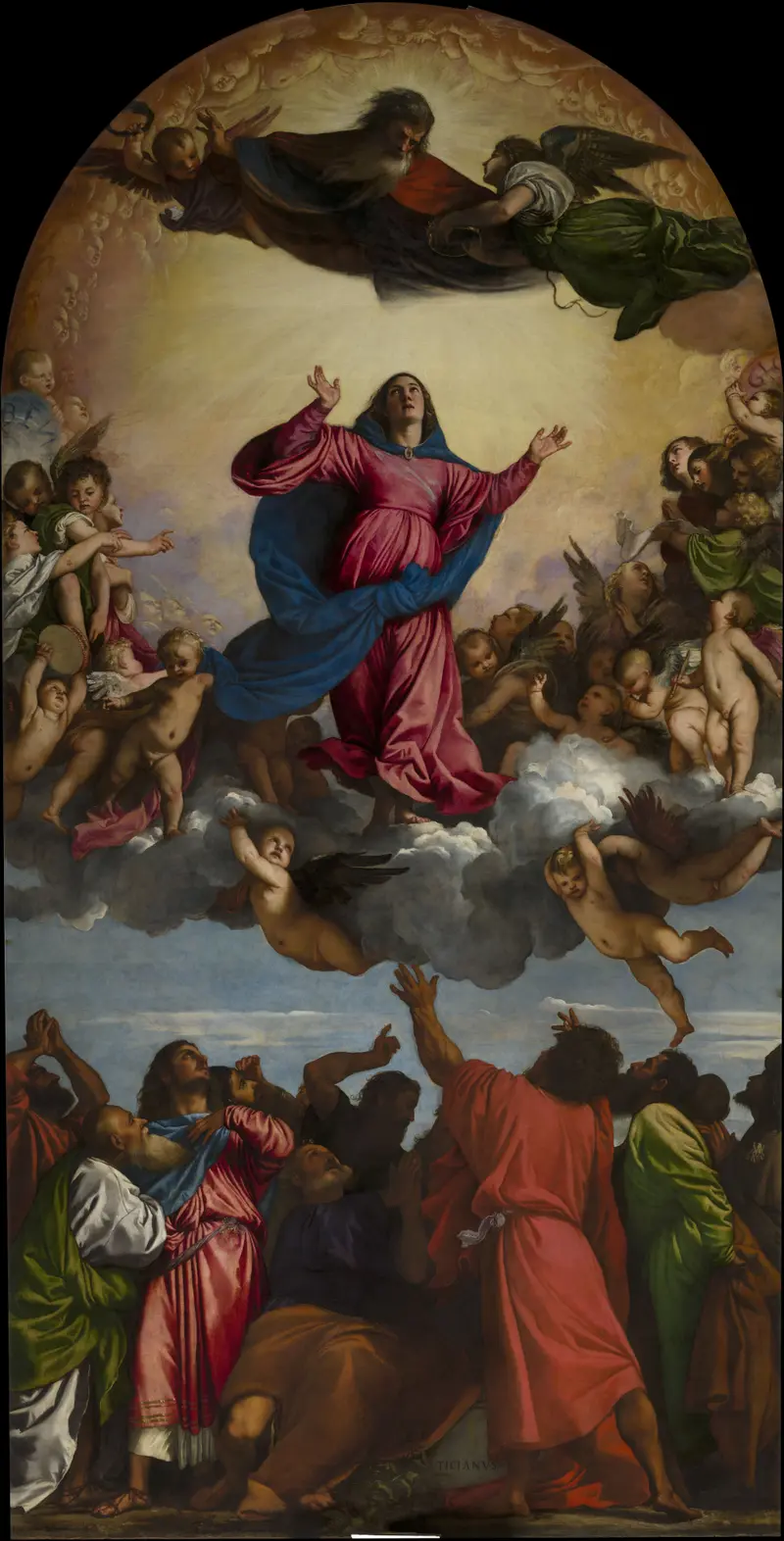
Assumption of the Virgin by Titian
Story: Mary rising to heaven
1516–1518 · Oil on poplar panel · 668 × 344 cm
Santa Maria Gloriosa dei Frari, Venice
The Virgin Mary rises to heaven on a cloud of angels as the apostles below throw up their arms in amazement and God the Father waits above. Titian painted it in 1516–1518 for the high altar of the Frari church in Venice; almost seven meters tall, it reportedly shocked people when it was unveiled. The sculptor Canova later called it the most beautiful picture in the world. It still hangs on the Frari's high altar.
Sources: Basilica dei Frari
No. 20Northern Renaissance
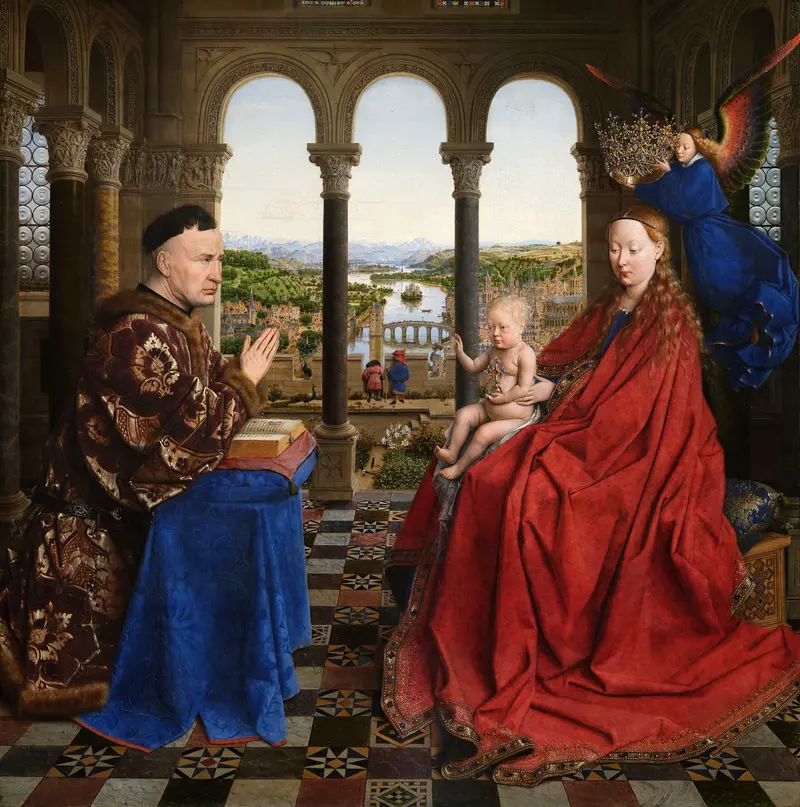
The Madonna of Chancellor Rolin by Jan van Eyck
Story: Chancellor Rolin praying to the Virgin and Child
c. 1430–1435 · Oil on oak panel · 66 × 62 cm
Louvre, Paris
Nicolas Rolin, chancellor to the Duke of Burgundy, kneels in prayer face to face with the Virgin and Child, while an angel crowns Mary. Jan van Eyck painted it around 1430–1435. Look through the three arches behind them: a garden, a river city with tiny strolling figures and snowy mountains, a city no one has ever identified. It is the only Van Eyck in France, and it is in the Louvre in Paris.
Sources: Louvre
No. 21Renaissance
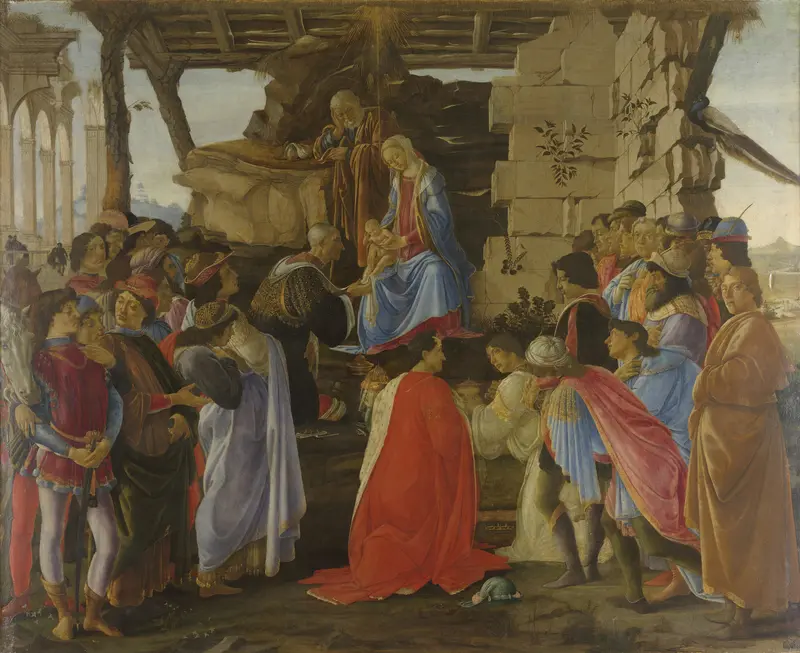
Adoration of the Magi by Sandro Botticelli
Story: The Three Magi visit the infant Jesus
1470–1475 · Tempera on panel · 111 × 137 cm
Uffizi, Florence
The Three Magi kneel before the infant Jesus, but the crowd is Medici Florence: Vasari says the oldest king resembles Cosimo de' Medici. Botticelli painted it around 1470–1475 for the chapel of the banker Gaspare del Lama in Santa Maria Novella, and del Lama is the white-haired man on the right pointing to himself. The young blond man at the far right, looking straight at us, may be Botticelli. It is in the Uffizi in Florence.
Sources: Uffizi
No. 22
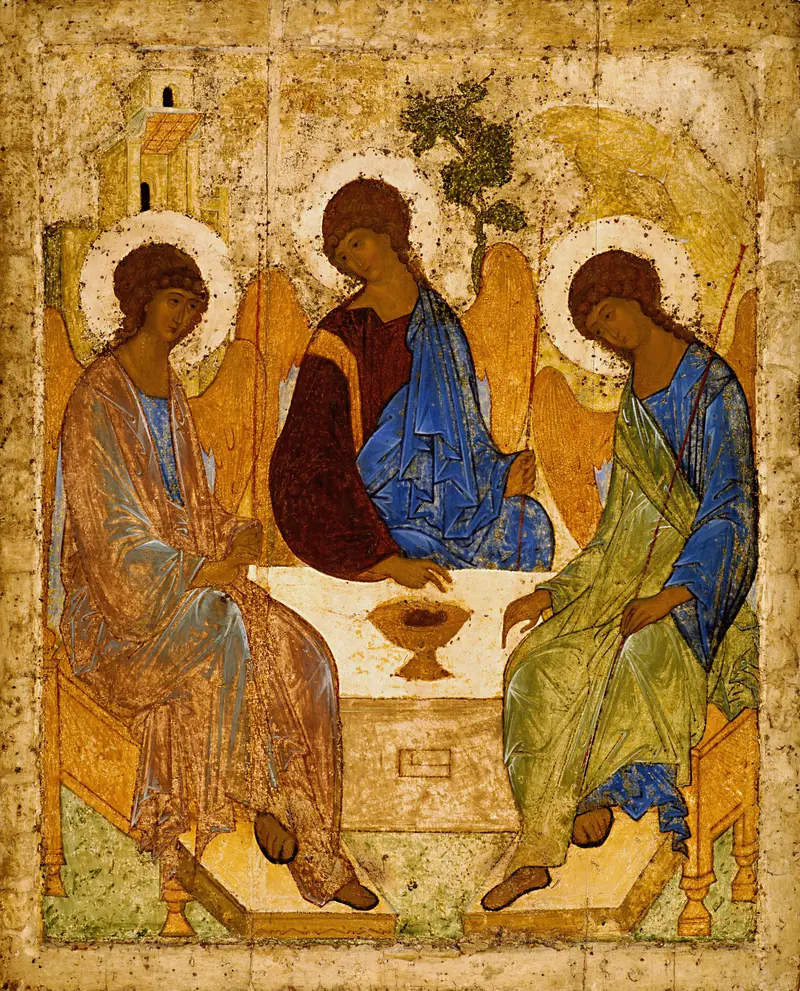
Trinity by Andrei Rublev
Story: Abraham's three angelic visitors, an image of the Holy Trinity
1422–1427 · Tempera on panel · 141.5 × 114 cm
Trinity Lavra of St. Sergius, Sergiev Posad
Three angels sit around a table with a chalice. They are the three visitors who came to Abraham in the Bible, read as an image of the Holy Trinity. Rublev painted the icon, most likely in 1422–1427, for the Trinity Cathedral of the Trinity-Sergius Lavra, a monastery outside Moscow. It spent 95 years in Moscow's Tretyakov Gallery before it was moved back to the cathedral in Sergiev Posad in 2024.
Sources: State Tretyakov Gallery
No. 23Baroque
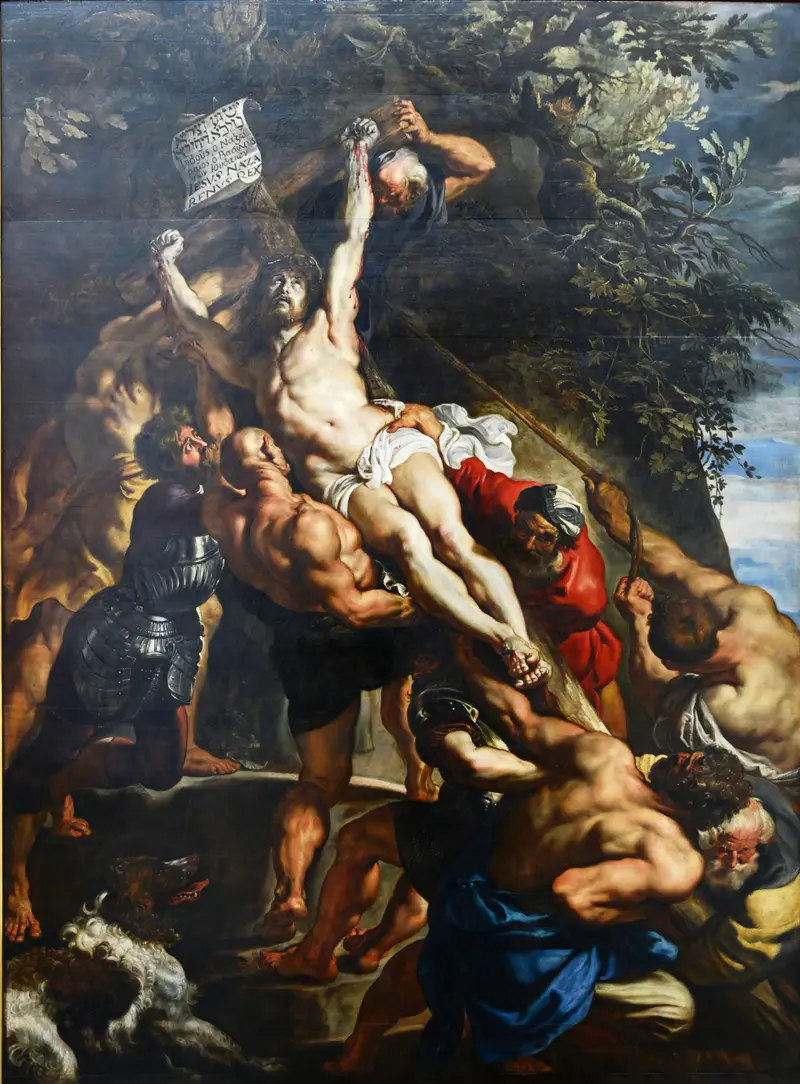
The Elevation of the Cross by Peter Paul Rubens
Story: Christ's cross being raised
1609–1610 · Oil on panel · 460 × 340 cm (center panel)
Cathedral of Our Lady, Antwerp
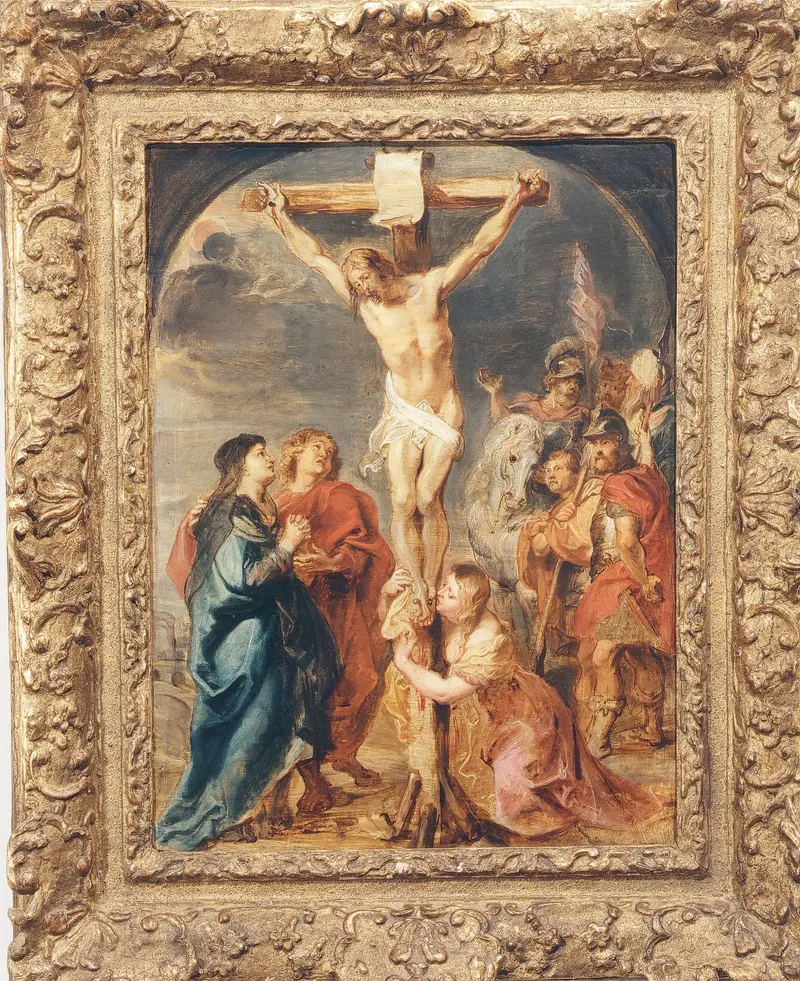
Muscular men strain to haul the cross upright, with Christ already nailed to it. Rubens painted this triptych in 1609–1610 for Antwerp's church of St Walburga; unusually, its three panels show one continuous scene. Taken to Paris under French rule, it came back after Napoleon's fall and now hangs in Antwerp's Cathedral of Our Lady. Shown here is the central panel.
Sources: Cathedral of Our Lady
No. 24Baroque
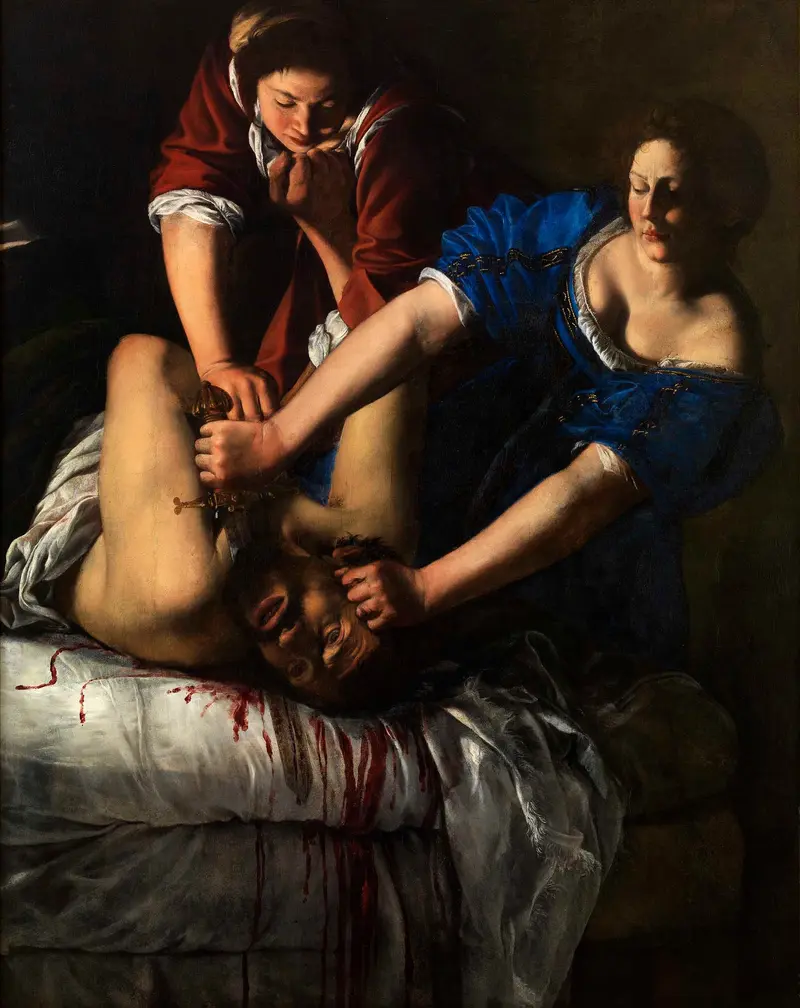
Judith Slaying Holofernes by Artemisia Gentileschi
Story: Judith beheading Holofernes (Book of Judith)
c. 1613 · Oil on canvas · 158.8 × 125.5 cm
Museo di Capodimonte, Naples
Judith, a young Jewish widow, beheads the Assyrian general Holofernes in his tent while her maid Abra pins him down; in the Bible, the maid waited outside. Artemisia Gentileschi painted it around 1613, soon after the 1612 trial of the painter Agostino Tassi for raping her. She painted a second version, now in the Uffizi; this one is in the Museo di Capodimonte in Naples.
Sources: Museo di Capodimonte
No. 25Northern Renaissance
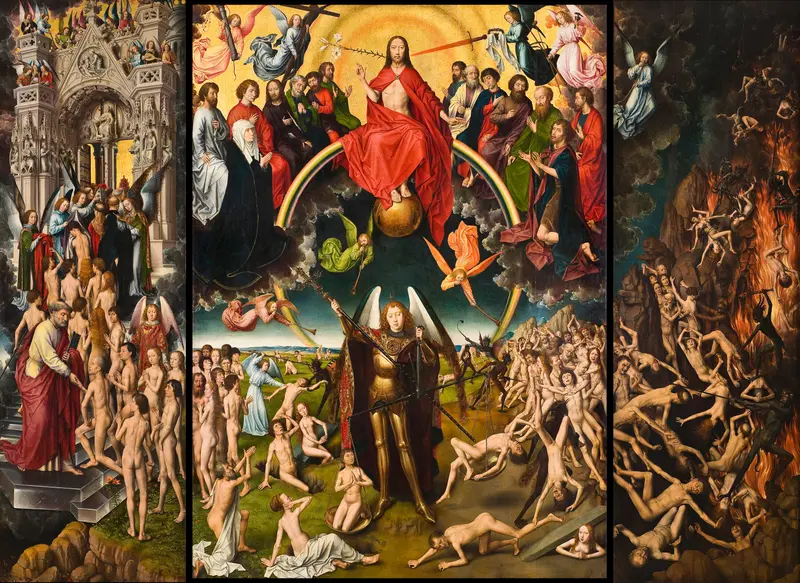
The Last Judgment by Hans Memling
Story: The Last Judgment, with the Archangel Michael weighing souls
1467–1473 · Tempera and oil on oak panel · 224 × 162 cm (center panel)
National Museum in Gdańsk, Gdańsk
Christ judges the world from a rainbow while the Archangel Michael, in golden armor, weighs souls; the saved climb crystal stairs to heaven and the damned fall into hell. A Florentine banker ordered the triptych in Bruges, but in 1473 Gdańsk privateers seized the ship carrying it to Florence, and it stayed in Gdańsk. It is in the National Museum in Gdańsk.
Sources: National Museum in Gdańsk
Want to see more? Browse every religious painting in the collection.
Browse all 7,347 religious paintingsFamous paintings of Jesus
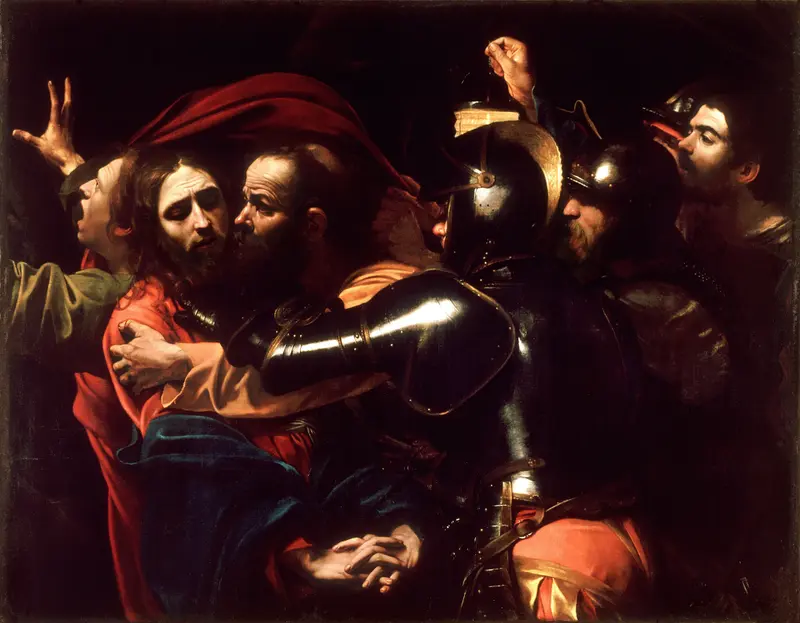
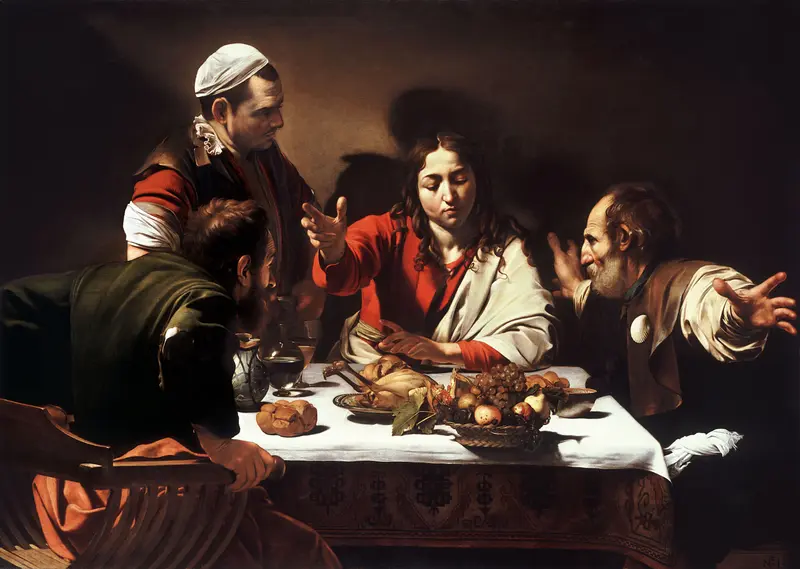
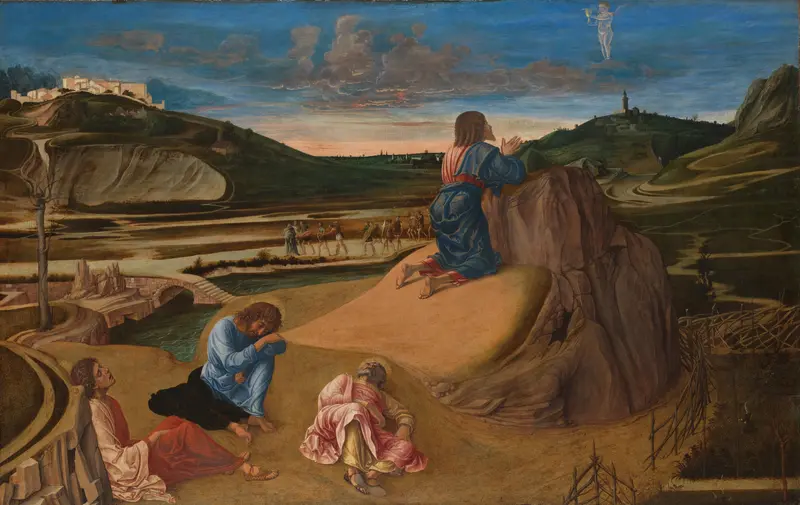
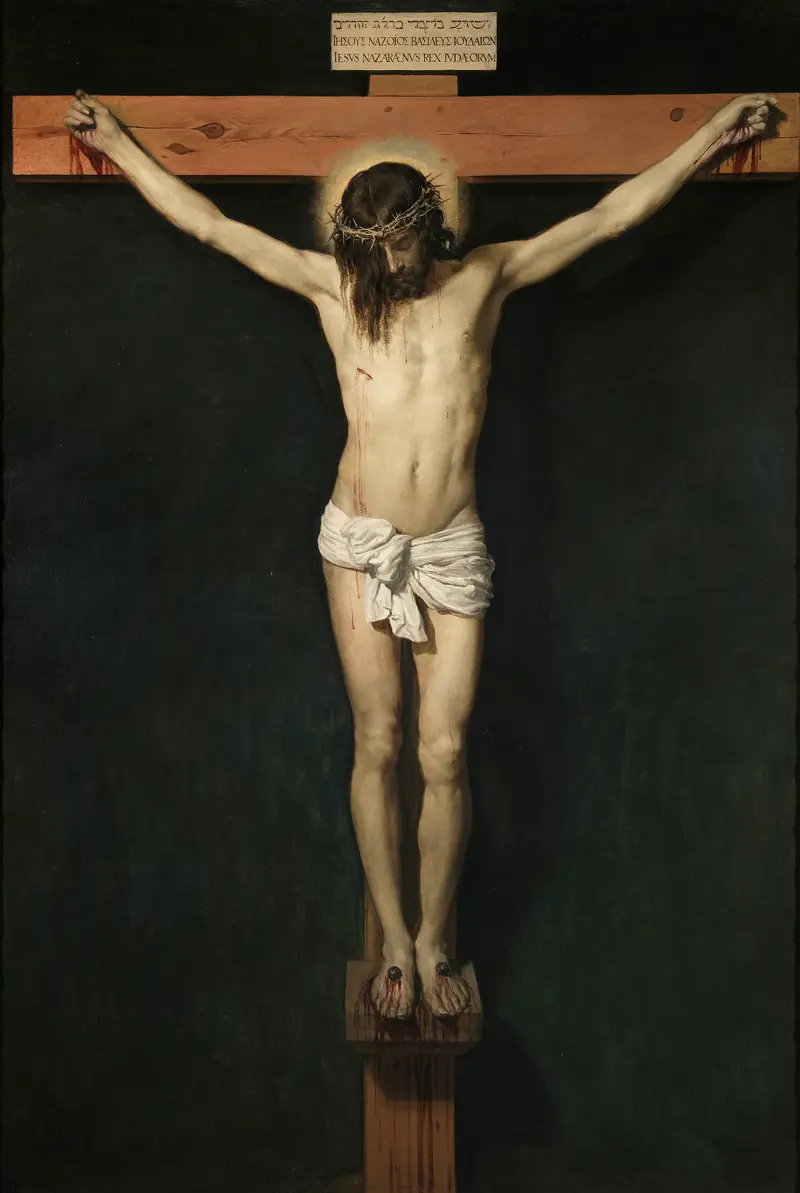
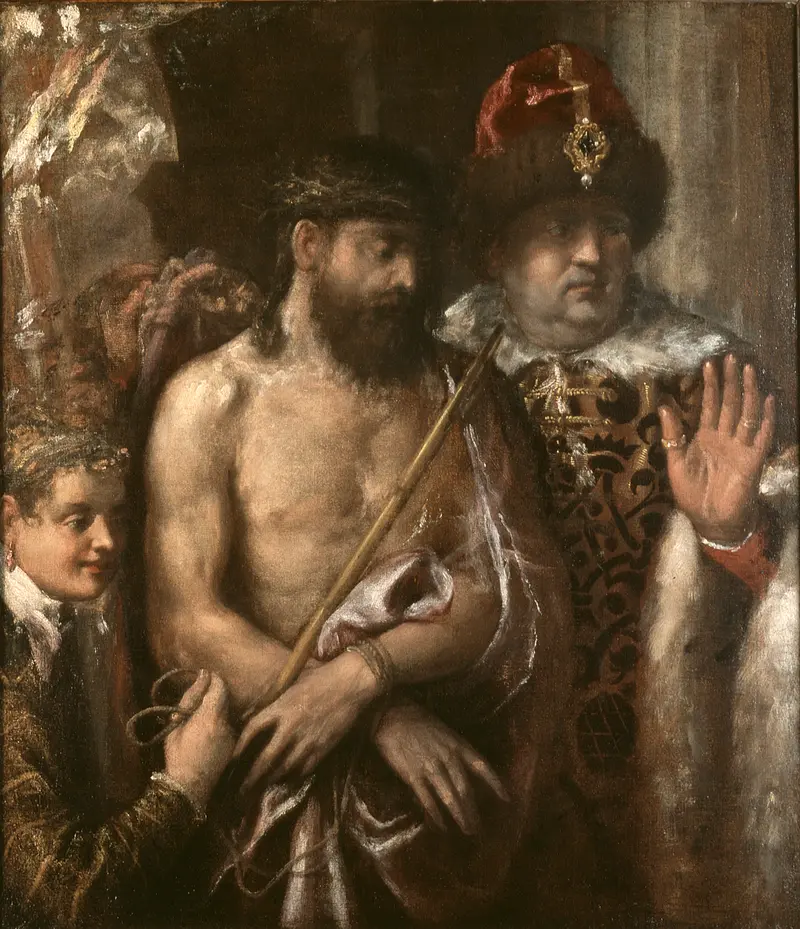
Six more famous paintings of Jesus, from his arrest to the supper at Emmaus, by Caravaggio, Velázquez, Bellini, Titian and Millais.
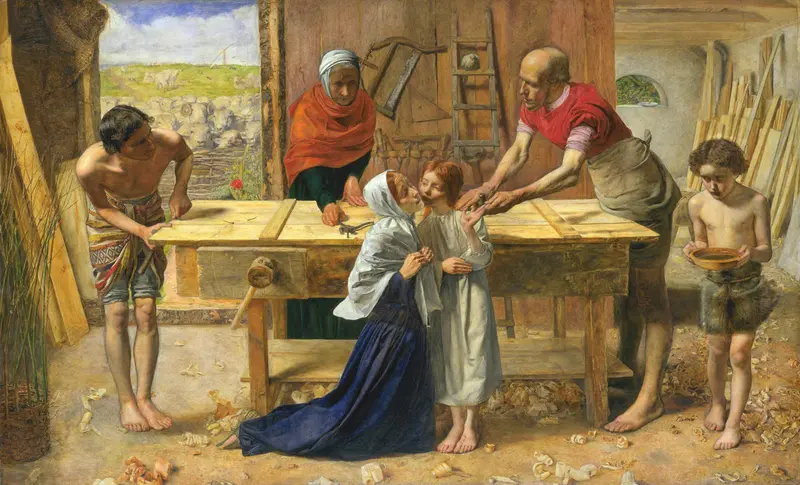
Famous paintings of the Virgin Mary
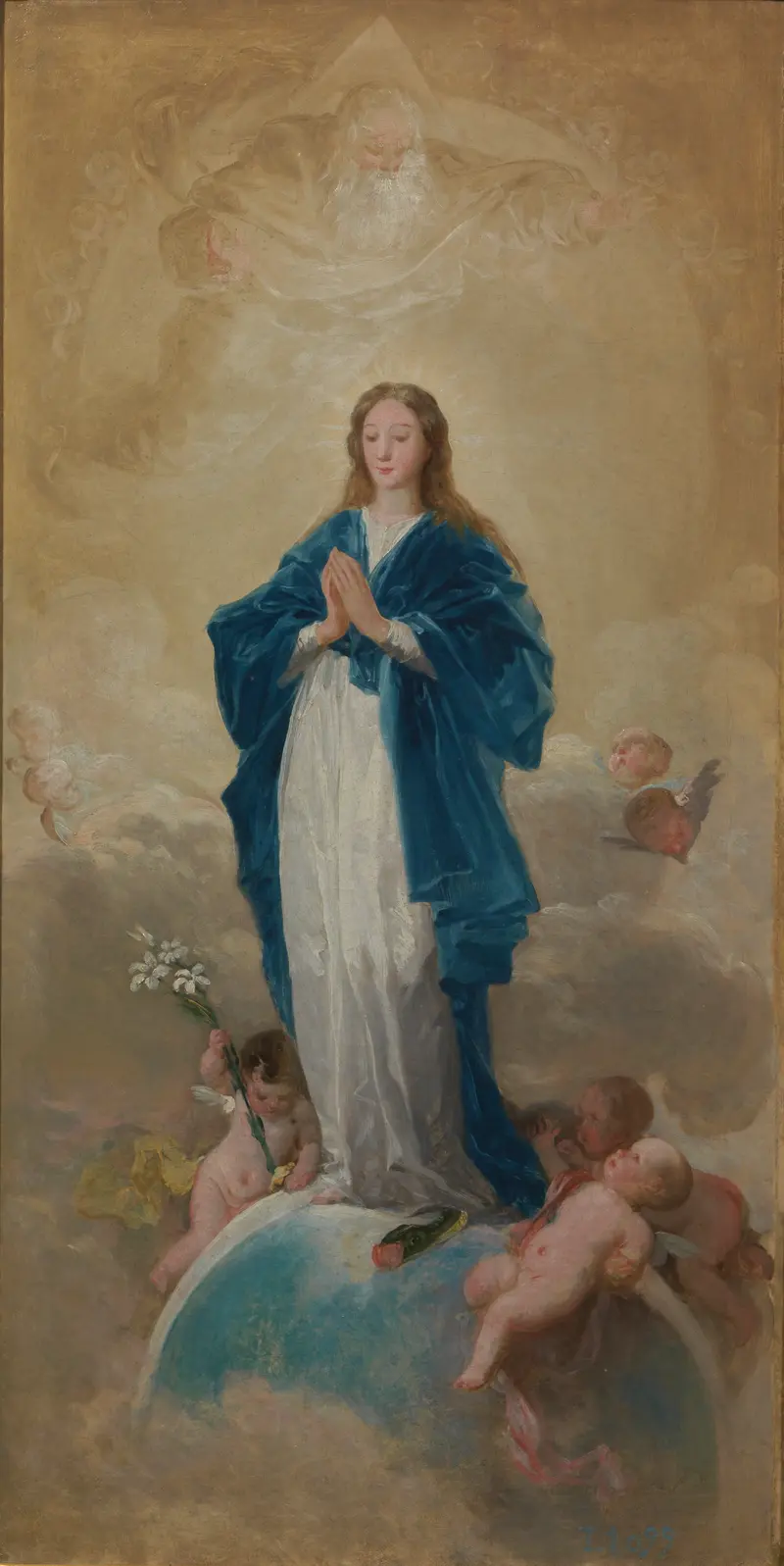
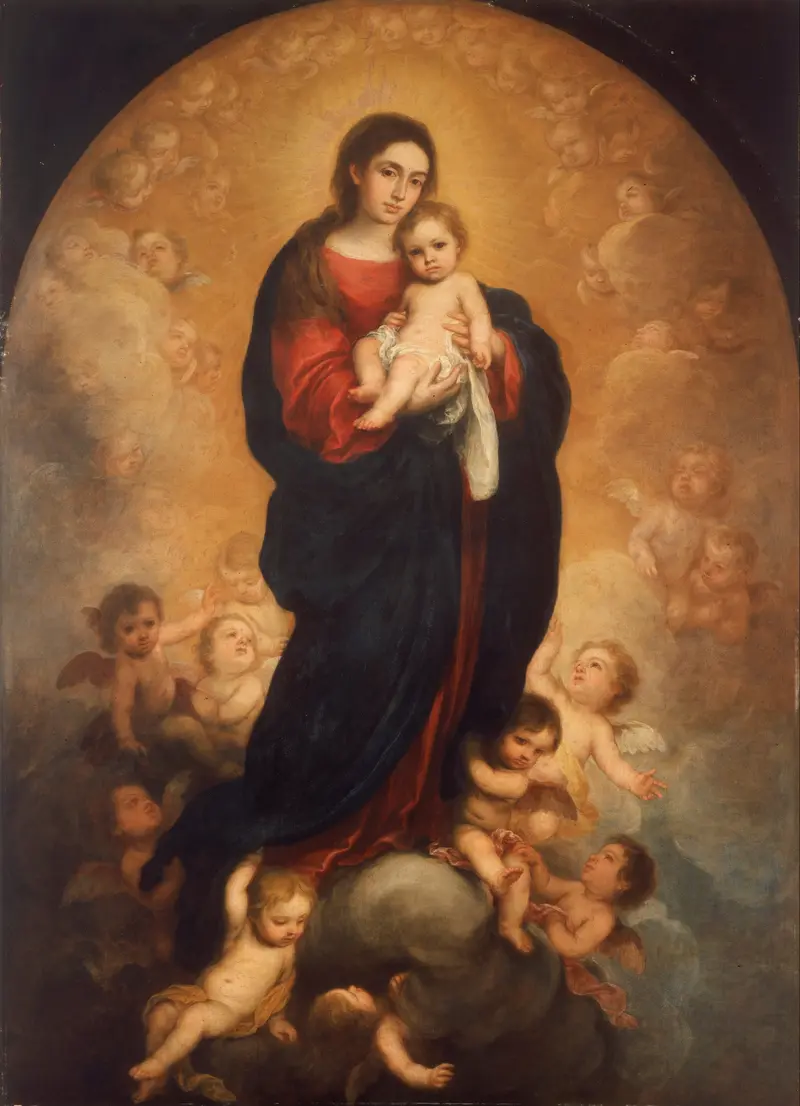
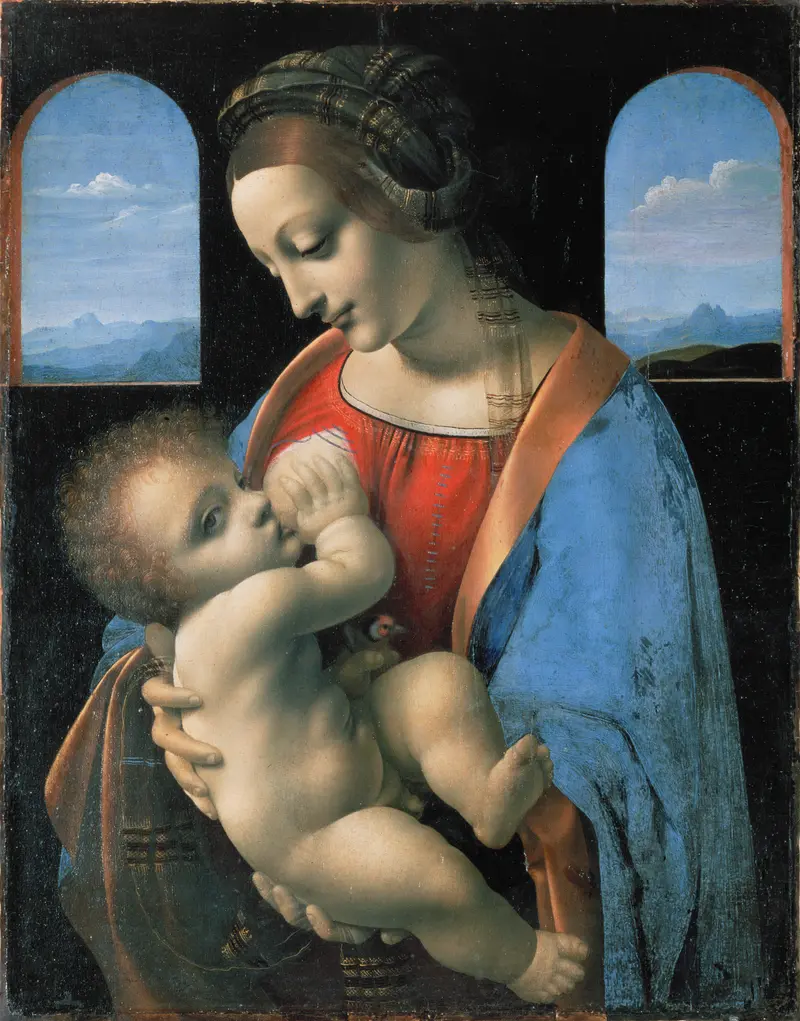
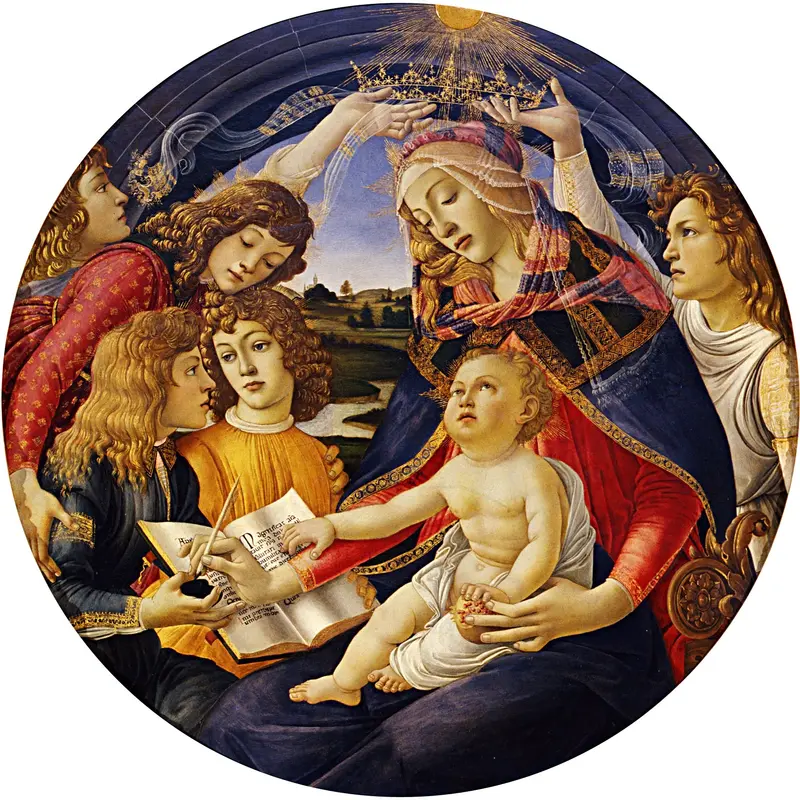
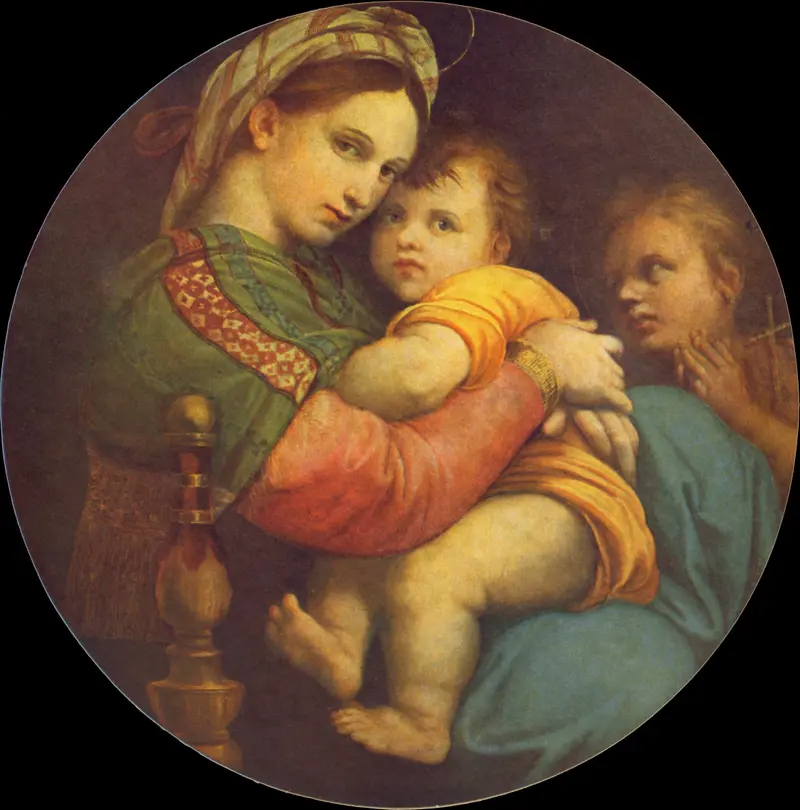
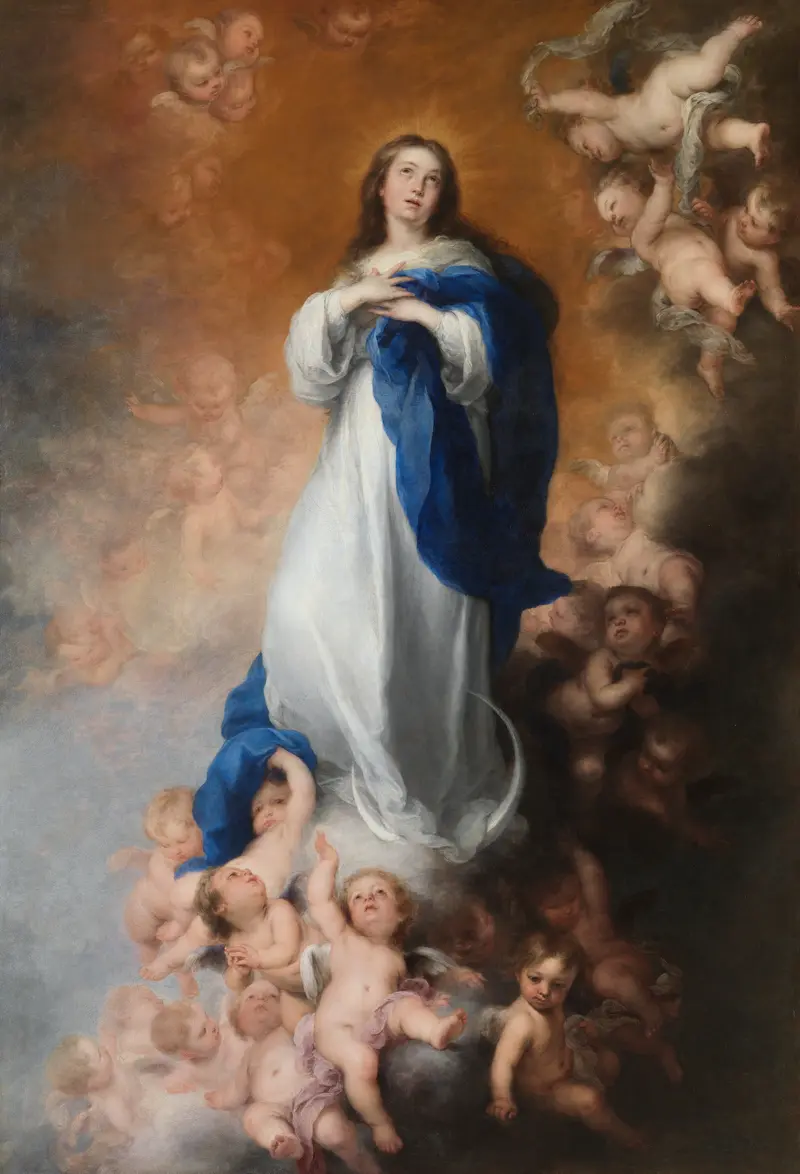
Six more famous paintings of the Virgin Mary, from Giotto’s enthroned Madonna to Murillo’s Immaculate Conception, with Leonardo, Raphael and Botticelli in between.
Famous angel paintings
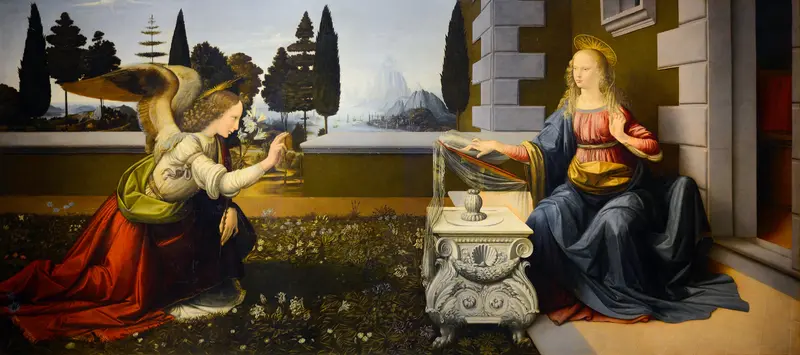
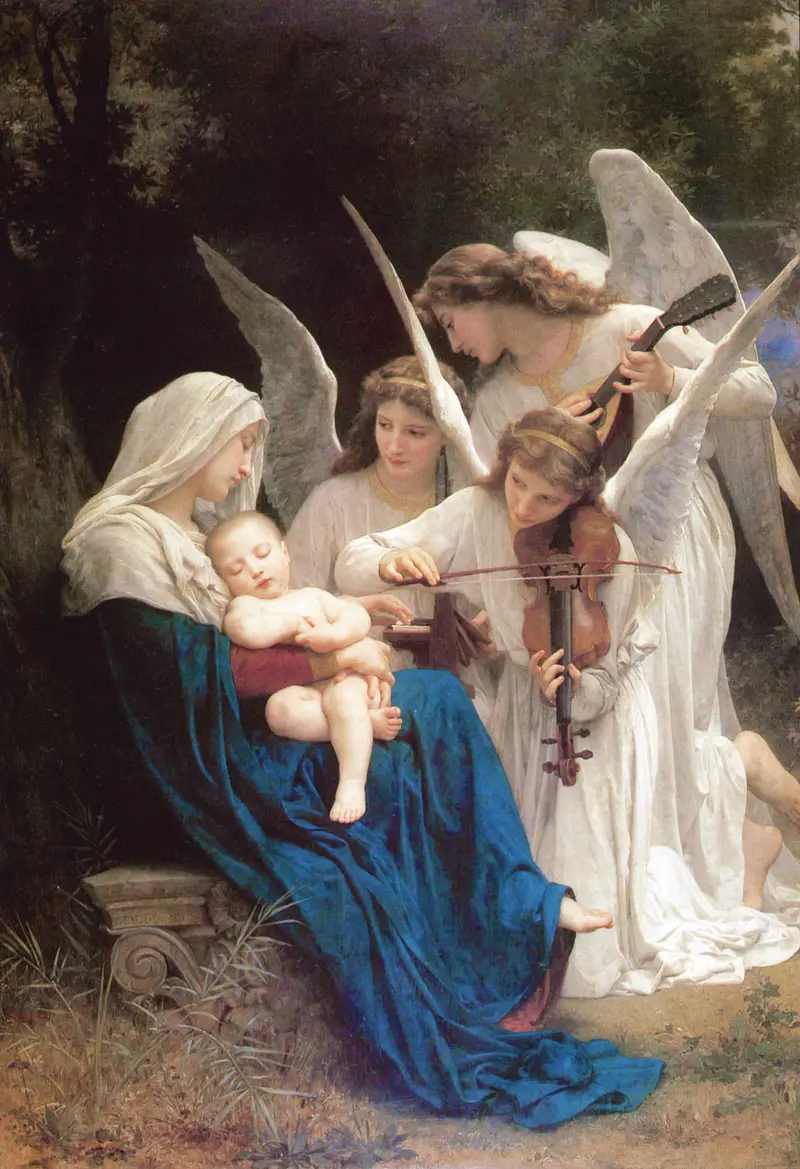
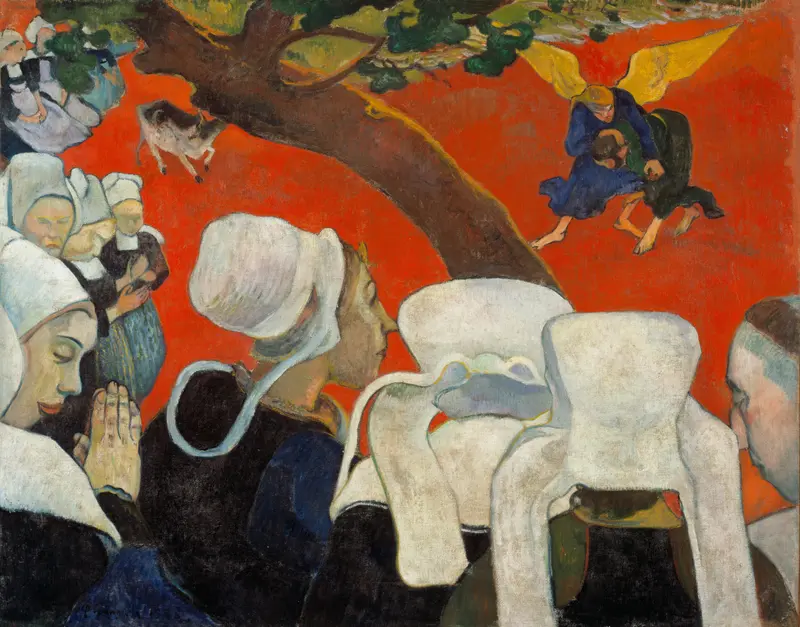
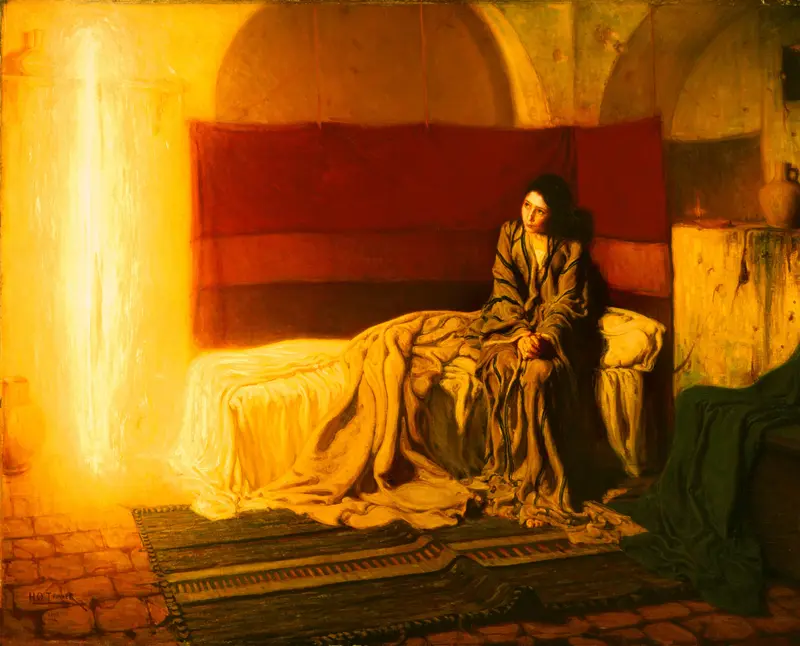
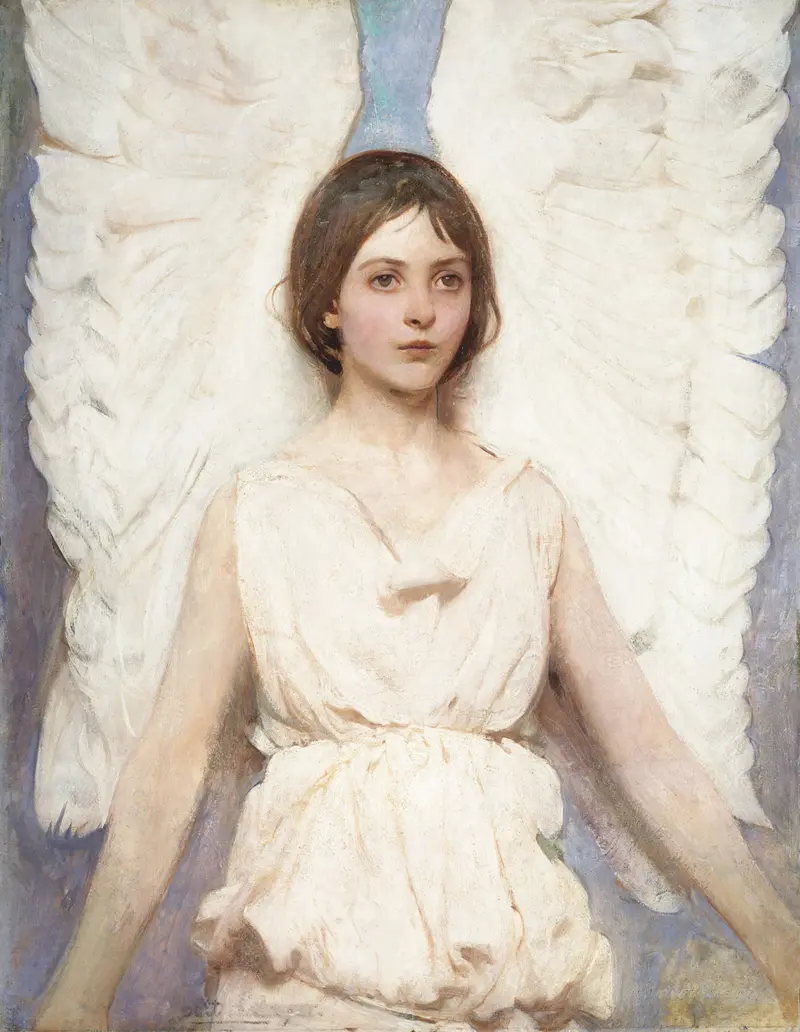
Angels bring news, sing, dance and even wrestle in these famous angel paintings, from Leonardo’s Annunciation to Thayer’s Angel.
Famous biblical paintings
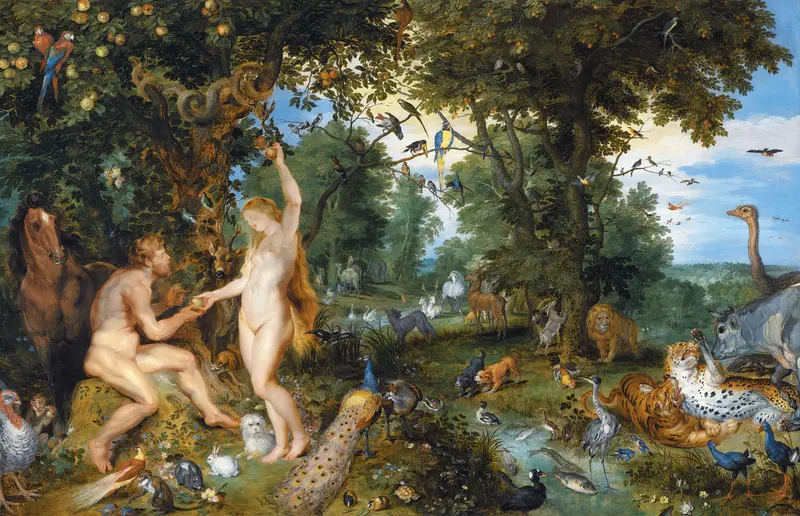
Famous biblical paintings of Old Testament stories: the Garden of Eden, the Tower of Babel, manna from heaven, Samson and Delilah, David and Goliath and Belshazzar’s Feast.

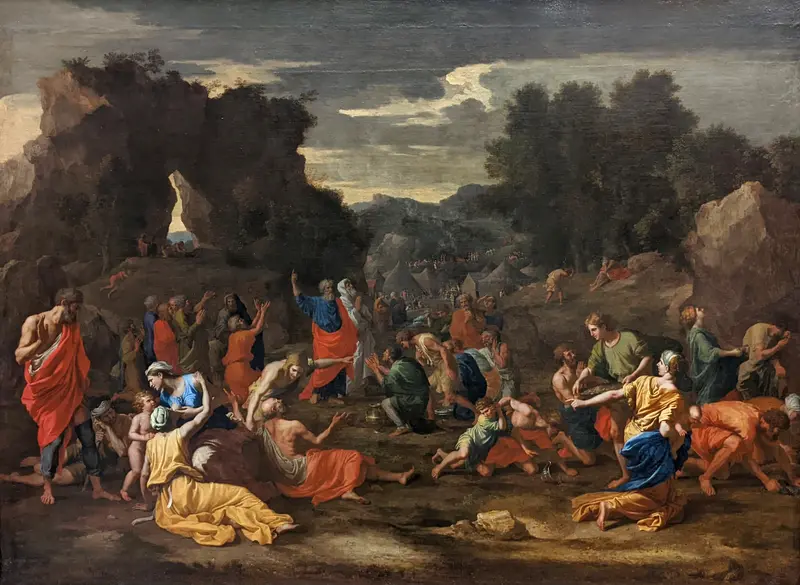
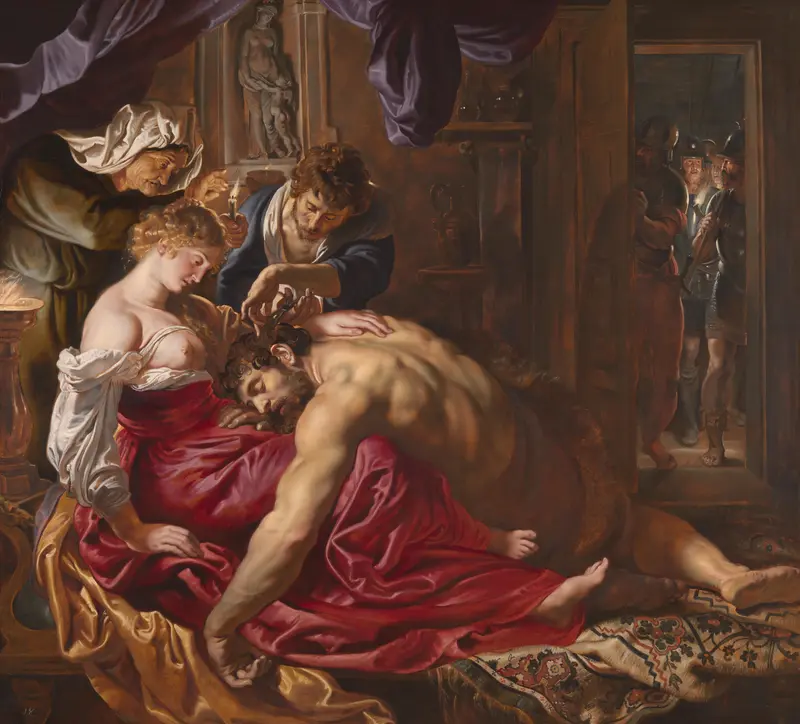
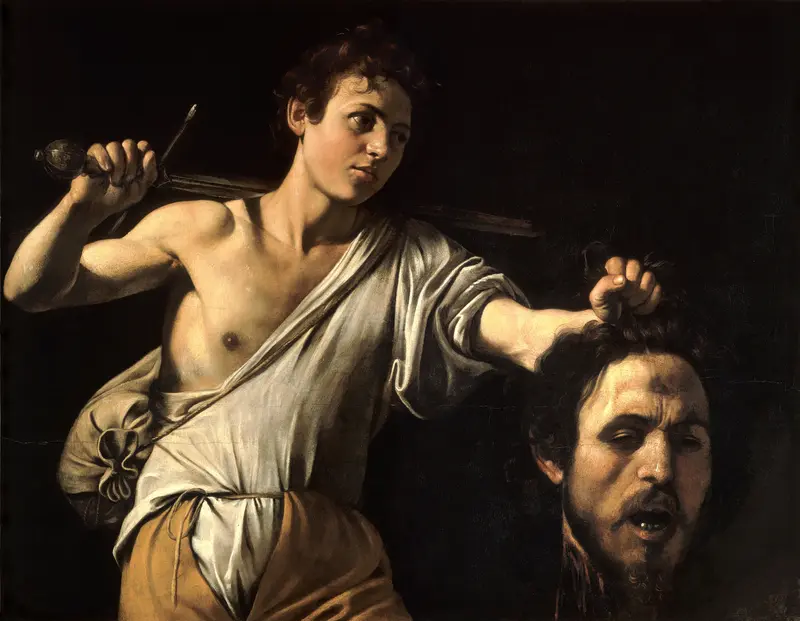
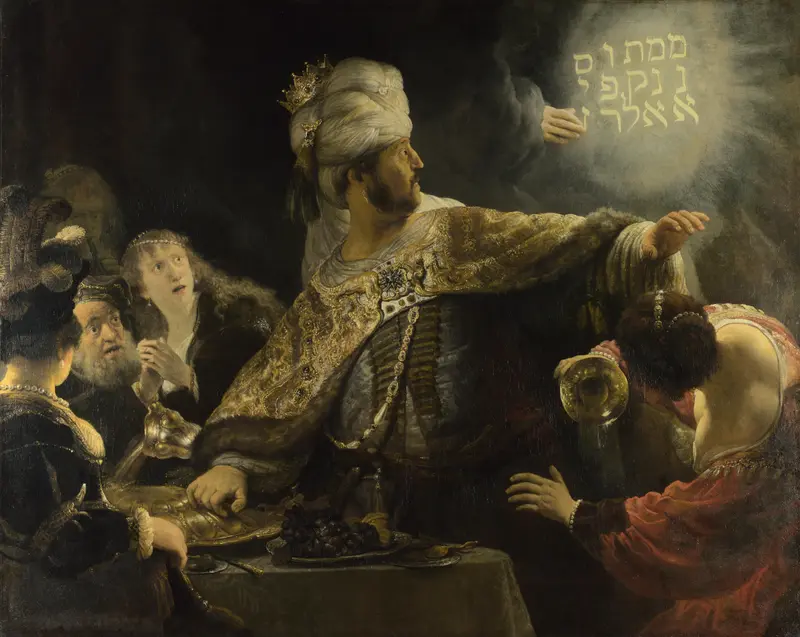
Famous religious painters
The great names of Christian art, from Giotto in the 1300s to Rembrandt in the 1600s. Each link opens all their paintings.
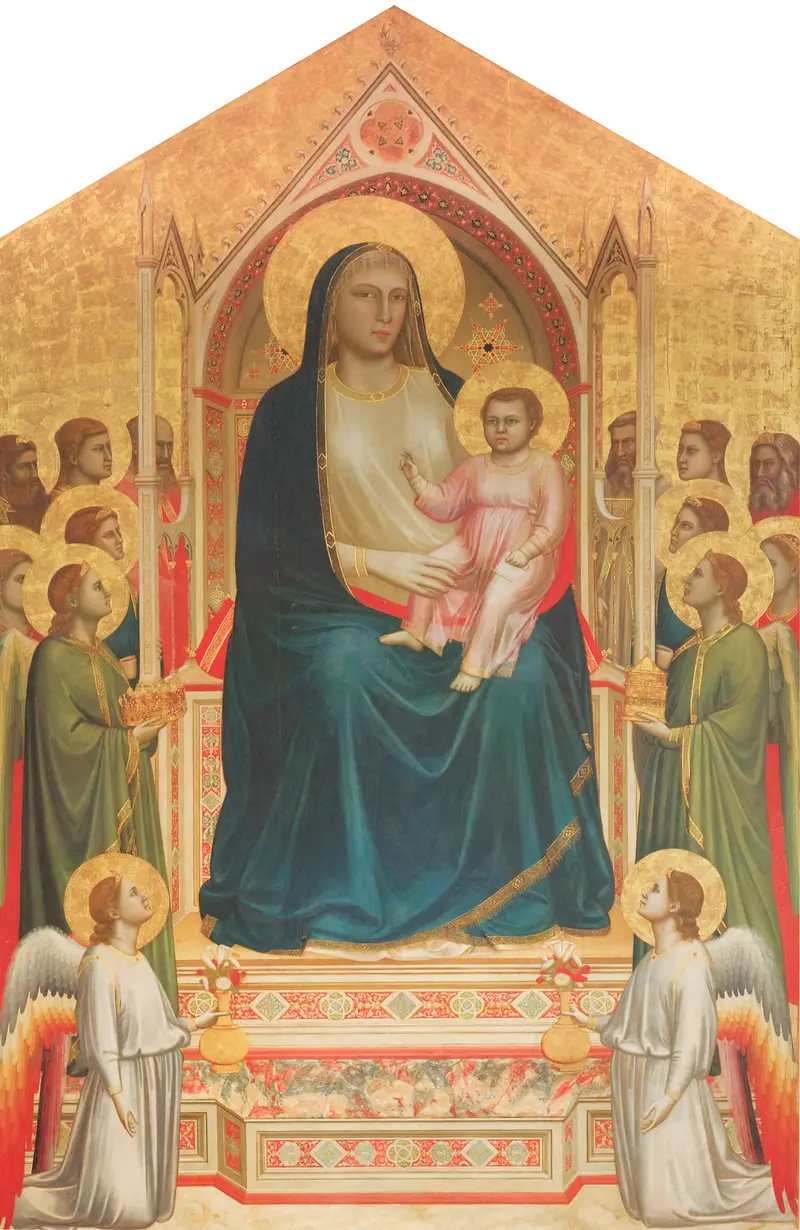 GiottoGave Bible stories real weight and feeling, in his Ognissanti Madonna and the frescoes of Padua’s Scrovegni Chapel.
 Fra AngelicoA Dominican friar in Florence, loved for his gentle angels and glowing gold.
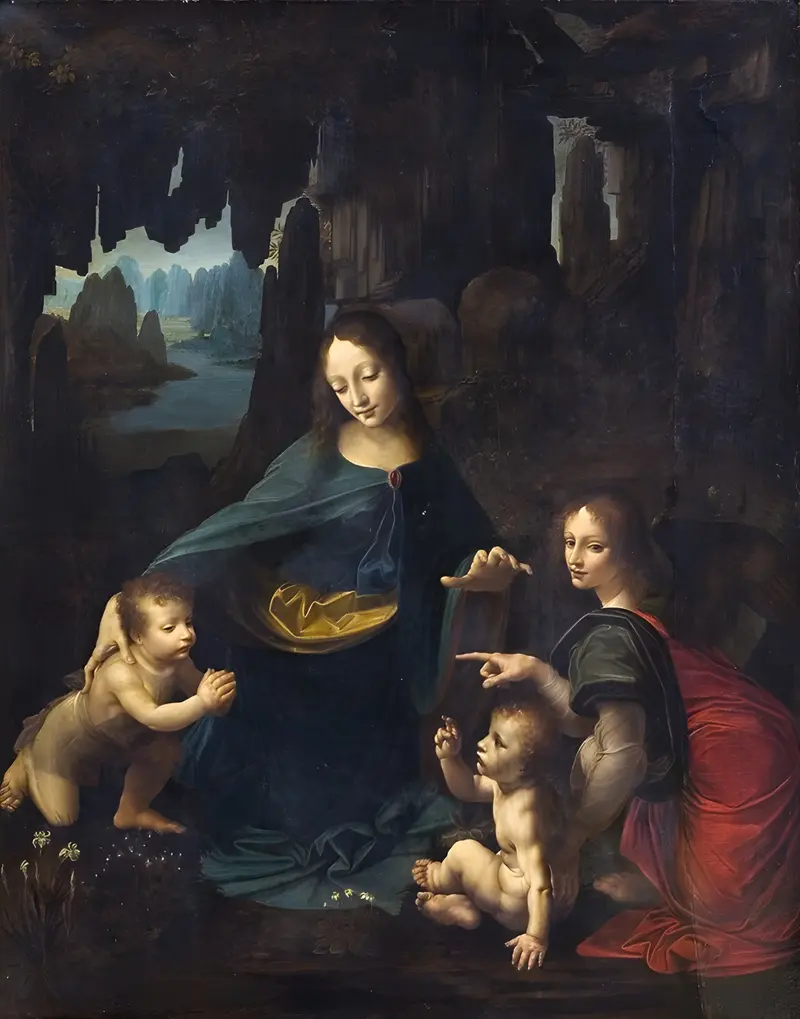
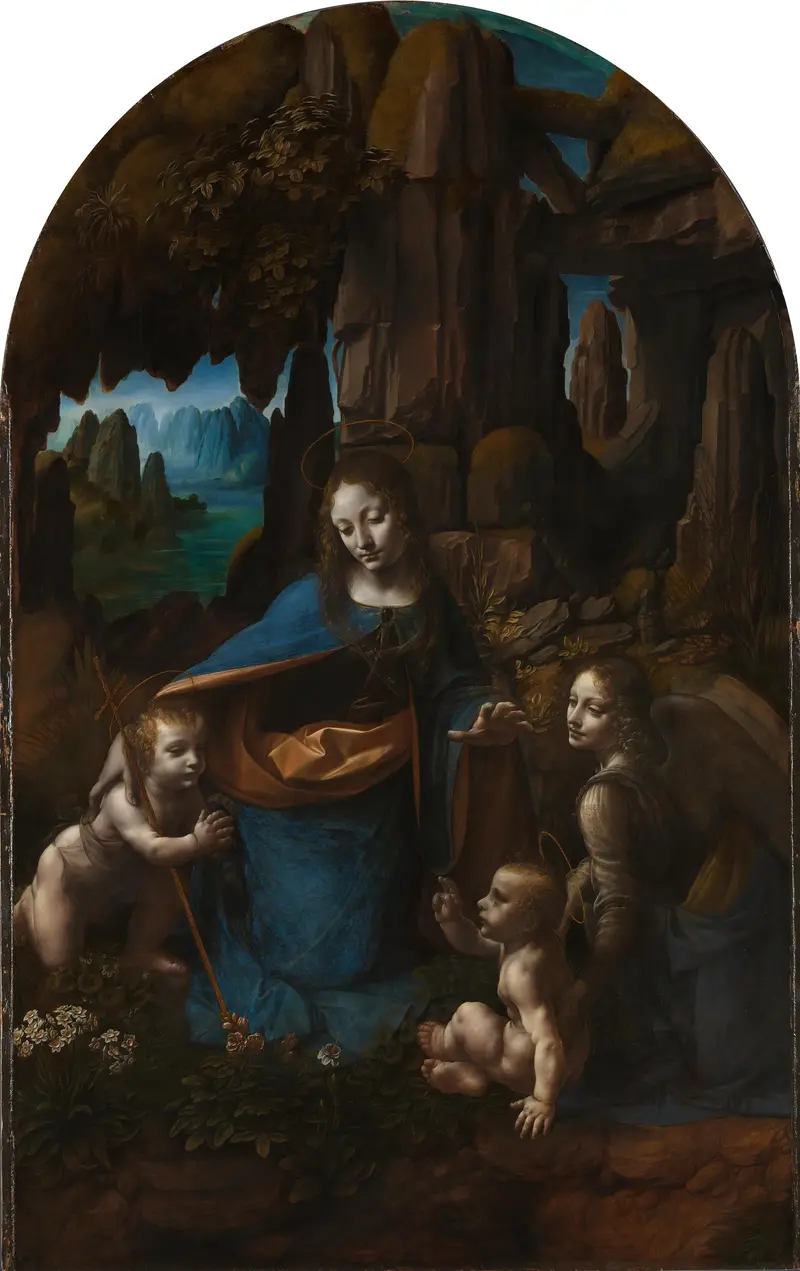 Leonardo da VinciPainted The Last Supper on a monastery wall in Milan and two versions of the Virgin of the Rocks.
- MichelangeloA sculptor who painted the Sistine Chapel ceiling and, decades later, its Last Judgment.
- RaphaelThe great painter of Madonnas, from the Sistine Madonna to the Madonna of the Goldfinch.
- CaravaggioPut saints in the streets and taverns of Rome, lit by a single dramatic light.
- El GrecoThe Greek-born painter of Toledo, known for long, flame-like figures.
- RembrandtTold Bible stories as human dramas, from the Storm on the Sea of Galilee to the Prodigal Son.
List of famous religious paintings and their artists
The 25 most famous religious paintings: who painted them, the story they tell, when, and where each one is today.
Show the list of 25 religious paintingsHide the list
| # | Painting | Story | Painted by | Year | Medium | Size | Located in | City |
|---|---|---|---|---|---|---|---|---|
| 1 | The Last Supper | Jesus's last supper with the twelve apostles | Leonardo da Vinci | 1495–1498 | Tempera on dry plaster | 460 × 880 cm (181.1 × 346.5 in) | Santa Maria delle Grazie | Milan |
| 2 | The Creation of Adam | God giving life to Adam (Genesis) | Michelangelo | c. 1512 | Fresco | 280 × 570 cm (110.2 × 224.4 in) | Sistine Chapel | Vatican City |
| 3 | The Last Judgment | Christ's judgment at the end of time | Michelangelo | 1536–1541 | Fresco | 1370 × 1200 cm (539.4 × 472.4 in) | Sistine Chapel | Vatican City |
| 4 | The Garden of Earthly Delights | Eden, a false paradise and Hell | Hieronymus Bosch | 1490–1500 | Grisaille and oil on oak panel | 185.8 × 172.5 cm (73.1 × 67.9 in) (center panel) | Museo del Prado | Madrid |
| 5 | Ghent Altarpiece | The Adoration of the Mystic Lamb | Hubert and Jan van Eyck | 1432 | Oil on oak panels | 375 × 520 cm (147.6 × 204.7 in) (open) | St Bavo's Cathedral | Ghent |
| 6 | The Virgin and Child with Saint Anne | Mary, her mother Saint Anne and the infant Jesus | Leonardo da Vinci | c. 1503–1519 | Oil on poplar panel | 168 × 113 cm (66.1 × 44.5 in) | Louvre | Paris |
| 7 | Sistine Madonna | The Virgin and Child with Pope Sixtus II and Saint Barbara | Raphael | 1512–1513 | Oil on canvas | 269.5 × 201 cm (106.1 × 79.1 in) | Gemäldegalerie Alte Meister | Dresden |
| 8 | The Calling of Saint Matthew | Jesus calling the tax collector Matthew | Caravaggio | 1599–1600 | Oil on canvas | 322 × 340 cm (126.8 × 133.9 in) | San Luigi dei Francesi | Rome |
| 9 | Lamentation of Christ | Mourners over the dead Christ | Andrea Mantegna | c. 1483 | Tempera on canvas | 68 × 81 cm (26.8 × 31.9 in) | Pinacoteca di Brera | Milan |
| 10 | The Yellow Christ | The Crucifixion, with Breton women | Paul Gauguin | 1889 | Oil on canvas | 92.1 × 73.3 cm (36.3 × 28.9 in) | Buffalo AKG Art Museum | Buffalo, New York |
| 11 | The Wedding at Cana | Jesus turns water into wine at a wedding | Paolo Veronese | 1562–1563 | Oil on canvas | 677 × 994 cm (266.5 × 391.3 in) | Louvre | Paris |
| 12 | The Storm on the Sea of Galilee | Jesus and his disciples in a storm | Rembrandt | 1633 | Oil on canvas | 160 × 128 cm (63 × 50.4 in) | Isabella Stewart Gardner Museum (stolen in 1990) | Boston |
| 13 | The Return of the Prodigal Son | Jesus's parable of the prodigal son | Rembrandt | c. 1668 | Oil on canvas | 262 × 205 cm (103.1 × 80.7 in) | Hermitage Museum | St. Petersburg |
| 14 | The Baptism of Christ | John the Baptist baptizing Jesus | Andrea del Verrocchio and Leonardo da Vinci | c. 1470–1475 | Tempera and oil on panel | 177 × 151 cm (69.7 × 59.4 in) | Uffizi | Florence |
| 15 | The Beheading of Saint John the Baptist | The execution of John the Baptist | Caravaggio | c. 1608 | Oil on canvas | 360 × 520 cm (141.7 × 204.7 in) | St John's Co-Cathedral | Valletta, Malta |
| 16 | Madonna of the Goldfinch | Mary, the Christ Child and the young John the Baptist | Raphael | c. 1505–1506 | Oil on panel | 107 × 77.2 cm (42.1 × 30.4 in) | Uffizi | Florence |
| 17 | The Burial of the Count of Orgaz | A miracle at the funeral of the lord of Orgaz | El Greco | 1586–1588 | Oil on canvas | 480 × 360 cm (189 × 141.7 in) | Church of Santo Tomé | Toledo |
| 18 | The Descent from the Cross | Christ's body taken down from the cross | Rogier van der Weyden | before 1443 | Oil on panel | 204.5 × 261.5 cm (80.5 × 10³ in) | Museo del Prado | Madrid |
| 19 | Assumption of the Virgin | Mary rising to heaven | Titian | 1516–1518 | Oil on poplar panel | 668 × 344 cm (263 × 135.4 in) | Santa Maria Gloriosa dei Frari | Venice |
| 20 | The Madonna of Chancellor Rolin | Chancellor Rolin praying to the Virgin and Child | Jan van Eyck | c. 1430–1435 | Oil on oak panel | 66 × 62 cm (26 × 24.4 in) | Louvre | Paris |
| 21 | Adoration of the Magi | The Three Magi visit the infant Jesus | Sandro Botticelli | 1470–1475 | Tempera on panel | 111 × 137 cm (43.7 × 53.9 in) | Uffizi | Florence |
| 22 | Trinity | Abraham's three angelic visitors, an image of the Holy Trinity | Andrei Rublev | 1422–1427 | Tempera on panel | 141.5 × 114 cm (55.7 × 44.9 in) | Trinity Lavra of St. Sergius | Sergiev Posad |
| 23 | The Elevation of the Cross | Christ's cross being raised | Peter Paul Rubens | 1609–1610 | Oil on panel | 460 × 340 cm (181.1 × 133.9 in) (center panel) | Cathedral of Our Lady | Antwerp |
| 24 | Judith Slaying Holofernes | Judith beheading Holofernes (Book of Judith) | Artemisia Gentileschi | c. 1613 | Oil on canvas | 158.8 × 125.5 cm (62.5 × 49.4 in) | Museo di Capodimonte | Naples |
| 25 | The Last Judgment | The Last Judgment, with the Archangel Michael weighing souls | Hans Memling | 1467–1473 | Tempera and oil on oak panel | 224 × 162 cm (88.2 × 63.8 in) (center panel) | National Museum in Gdańsk | Gdańsk |
Famous religious paintings: questions and answers
What is the most famous religious painting?
There’s no official ranking, but Leonardo da Vinci’s The Last Supper in Milan is the strongest candidate, and it tops our list. The museum that cares for it calls it “perhaps the most important mural painting in the world.” Its closest rival is Michelangelo’s work in the Vatican’s Sistine Chapel, above all The Creation of Adam on the ceiling (1508–1512) and The Last Judgment on the altar wall (1536–1541).
Sources: Museo del Cenacolo Vinciano, Milan (official site) · Vatican Museums: Sistine Chapel
What is the most famous painting of Jesus?
Leonardo da Vinci’s The Last Supper, which shows Christ at the table with his twelve apostles, is probably the most famous painting of Jesus. The biographer Giorgio Vasari wrote in 1550 that Leonardo left Christ’s head “imperfect,” doubting he could give it the divinity it needed. Other famous images of Christ include Michelangelo’s Last Judgment in the Sistine Chapel, Caravaggio’s The Supper at Emmaus in London’s National Gallery and Velázquez’s Christ Crucified in Madrid’s Prado.
Sources: Museo del Cenacolo Vinciano, Milan (official site) · National Gallery, London: The Supper at Emmaus · Vatican Museums: Sistine Chapel
Who painted The Last Supper, and where is it?
Leonardo da Vinci painted The Last Supper in 1495–1498 for Ludovico Sforza, ruler of Milan. It is still where he painted it, covering the north wall of the refectory, or dining hall, of the Dominican monastery of Santa Maria delle Grazie in Milan. Leonardo worked on dry plaster rather than in true fresco, which made the painting fragile, so visits are by reservation only and last 15 minutes.
Sources: Museo del Cenacolo Vinciano, Milan (official site) · Museo del Cenacolo Vinciano, Milan: History · Museo del Cenacolo Vinciano, Milan: Backstage (conservation)
What is the famous painting of God touching Adam's finger?
It’s The Creation of Adam, which Michelangelo painted on the ceiling of the Sistine Chapel in the Vatican for Pope Julius II. He signed the contract in 1508, and the ceiling was finished in time for a papal Mass on November 1, 1512. The scene illustrates Genesis 1:26–27. The Vatican Museums describe its focal point as the contact between the fingers of God and Adam, “through which the breath of life is transmitted.”
Sources: Vatican Museums: Creation of Adam · Vatican Museums: Sistine Chapel ceiling
Who are the most famous religious painters?
There’s no official list, but Leonardo da Vinci, Michelangelo, Raphael and Titian are the obvious place to start. London’s National Gallery says the leading painters of their century “achieved a fame that has never diminished.” Other giants of sacred art include Giotto, who frescoed Padua’s Scrovegni Chapel in 1303–1305; Jan van Eyck; Caravaggio, whose Saint Matthew paintings caused a sensation in Rome; El Greco; Rubens; and Rembrandt.
Sources: National Gallery, London: Collection overview, 16th century · Scrovegni Chapel, Padua (official site) · National Gallery, London: The Supper at Emmaus
What is religious art?
Religious art is art that depicts the stories, holy figures and beliefs of a faith, usually made to support worship, prayer or teaching. In European painting it mostly means Christian subjects: Bible stories, the life of Jesus, the Virgin Mary and the saints. Many works were altarpieces, which the National Gallery says “usually form the focus of devotion for worshippers”; others were smaller pictures for private prayer at home.
Sources: National Gallery, London: Glossary, Altarpieces · National Gallery, London: Collection overview, 13th to 15th century
Why is religious art important?
For centuries it was central to European art and daily life. The National Gallery notes that most surviving late medieval pictures are religious, made for church altars or private devotion. Paintings also taught the faith: the Vatican Museums, recalling Pope John Paul II, describe the Sistine Chapel paintings as working “like the images of a book” to make Scripture easier to understand. Many still hang where they were made to be seen, like Rubens’s altarpieces in Antwerp Cathedral.
Sources: National Gallery, London: Collection overview, 13th to 15th century · Vatican Museums: Sistine Chapel · Cathedral of Our Lady, Antwerp: Rubens
What are the most famous paintings of the Virgin Mary?
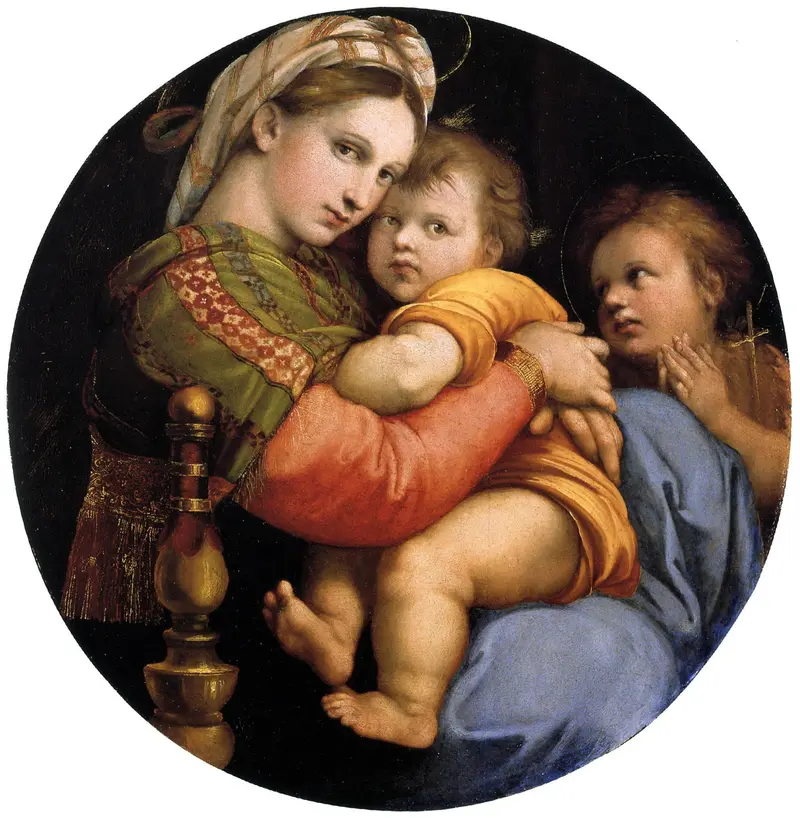
Raphael’s Sistine Madonna is probably the best known; its museum in Dresden calls it “one of the most famous paintings of all time.” Other favorites include Leonardo’s Virgin of the Rocks, which exists in two versions (in the Louvre and London’s National Gallery); Botticelli’s Madonna of the Magnificat and Giotto’s Ognissanti Madonna, both in Florence’s Uffizi; Raphael’s Madonna della Seggiola at the Pitti Palace; and Titian’s Assumption in Venice.
Sources: Gemäldegalerie Alte Meister, Dresden (SKD): Sistine Madonna · National Gallery, London: The Virgin of the Rocks · Uffizi Galleries: Madonna of the Magnificat
What are the most famous angel paintings?
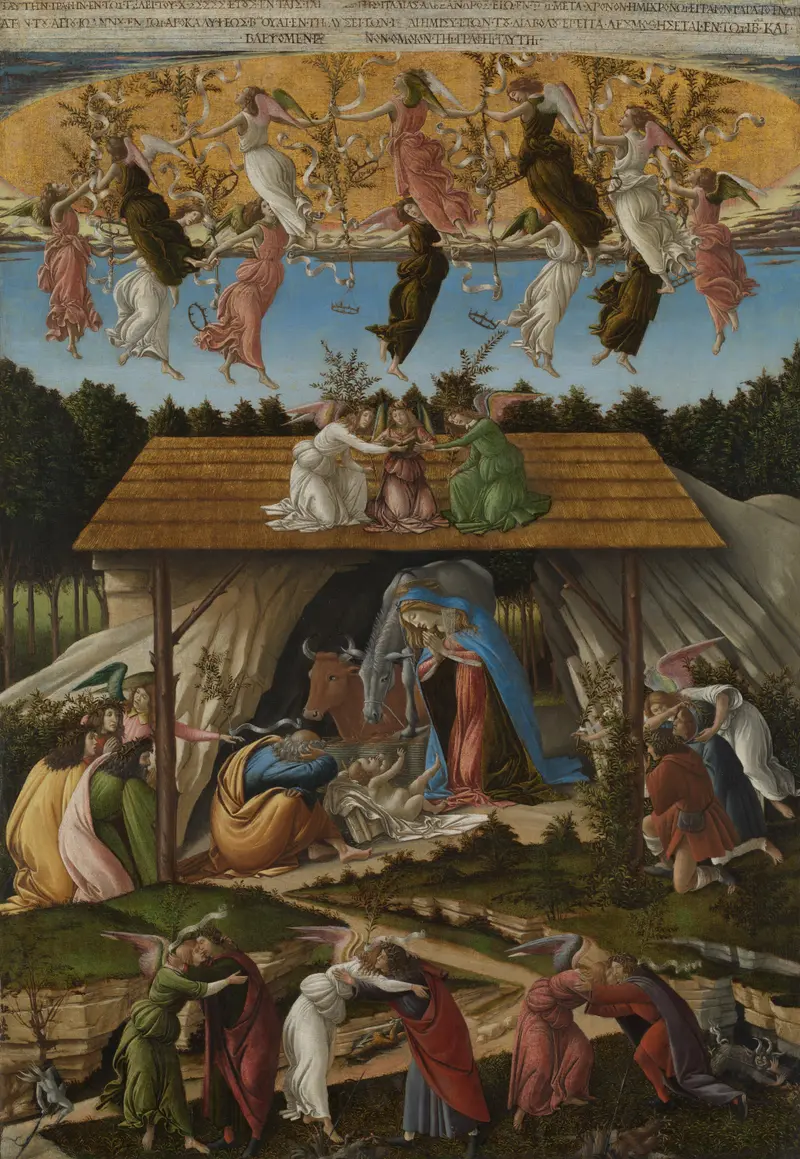
Leonardo’s Annunciation in Florence’s Uffizi is among the most famous; the museum notes that the angel Gabriel’s wings are modeled on a bird of prey’s. Others include the two little angels at the foot of Raphael’s Sistine Madonna, famous in their own right; Botticelli’s Mystic Nativity; Andrei Rublev’s Trinity, which shows three angels; and Henry Ossawa Tanner’s The Annunciation (1898), in which Gabriel appears only as a shaft of light.
Sources: Uffizi Galleries: Annunciation (Leonardo da Vinci) · Gemäldegalerie Alte Meister, Dresden (SKD): Sistine Madonna · Philadelphia Museum of Art: The Annunciation (Henry Ossawa Tanner)
What are the most famous crucifixion paintings?
Among the most famous is Matthias Grünewald’s Isenheim Altarpiece (1512–1516) in Colmar, France; its museum calls the Crucifixion “one of the most poignant representations of this scene in Western art.” Others include Velázquez’s Christ Crucified in Madrid’s Prado; Rubens’s The Elevation of the Cross (1609–1610), which hangs in Antwerp’s Cathedral of Our Lady; and Paul Gauguin’s The Yellow Christ (1889) in Buffalo, based on a wooden crucifix in a chapel in Brittany.
Sources: Musée Unterlinden, Colmar: Isenheim Altarpiece (closed) · Cathedral of Our Lady, Antwerp: The Elevation of the Cross · Buffalo AKG Art Museum: The Yellow Christ
What are the most famous nativity paintings?
Botticelli’s Mystic Nativity (1500) in London’s National Gallery is one of the best known, with 12 angels dancing in a ring in the open heavens above the stable. Others include Piero della Francesca’s The Nativity, also in London, and two works in Florence’s Uffizi: Hugo van der Goes’s Portinari Triptych and Gentile da Fabriano’s Adoration of the Magi (1423). The Uffizi alone holds over 300 works on the Nativity or the Adoration of the Magi.
Sources: National Gallery, London: Mystic Nativity · National Gallery, London: The Nativity (Piero della Francesca) · Uffizi Galleries: “Today a Saviour has been born to you” (Nativity and Epiphany)
Are famous religious paintings in the public domain, and can I download them for free?
Yes. Every painting on this page is in the public domain, and you can download standard-size images free for any use, including commercial. In the US, works published before 1931, or unpublished works by artists who died before 1956, are public domain, and the Copyright Office won’t register a photo that is a mere “slavish copy” of a painting. EU law likewise denies new copyright to faithful reproductions. Rules vary elsewhere, and churches and museums may restrict photography on site.
Sources: Cornell University Library: Copyright Term and the Public Domain in the United States · U.S. Copyright Office, Compendium (Third Edition), §909.3(A) · Directive (EU) 2019/790, Article 14 (Official Journal of the EU)
How we chose the most famous religious paintings
We ranked the paintings by how widely each one is known around the world: the number of languages that have an encyclopedia entry about it, checked in October 2026. The more cultures write about a painting, the higher it ranks.
A few rules keep the list useful. Every painting is in the public domain, so you can download and use it freely. Each painter has at most two places of their own; Leonardo's third is The Baptism of Christ, which he painted with his master, Verrocchio. Paintings on walls count, so the Sistine Chapel frescoes and The Last Supper are in, but sculpture, scenes from mythology and paintings whose attribution is disputed, such as the Salvator Mundi, are left out. A few altarpieces are shown in their own carved frames, which are part of the original work, and for The Elevation of the Cross we show the central panel of the triptych.
Stories, dates, sizes and locations come from the records of the museums and churches that hold the paintings, and each entry links to its sources.
Spotted a mistake? Tell us and we will correct it.
Browse all 7,347 religious paintings
Every one is public domain and free to download, most famous first: Christian art, Bible scenes and saints from the Middle Ages to the 1900s.