A Farmhouse in Summer Rain — História e Análise
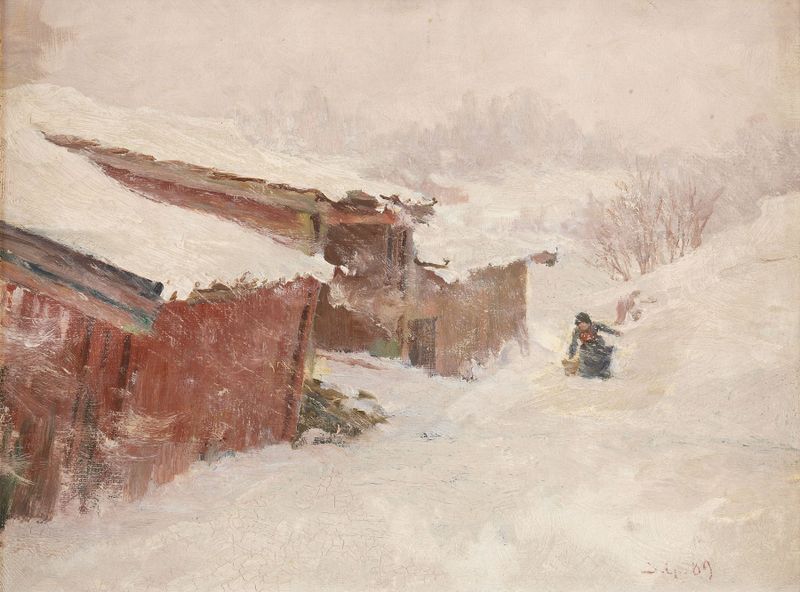
Did the painter know this moment would outlive them? A serene haven, captured in the stillness of a summer rain, invites the viewer to pause and reflect on the nature of time and tranquility. Look to the left at the farmhouse, its rustic charm grounded against the diffused light filtering through the grey clouds. The muted colors—soft blues and earthy browns—merge seamlessly, while the rain creates glistening patterns across the green fields. Notice how the delicate brushstrokes evoke a gentle movement of the falling drops, adding a sense of rhythm to the scene.
The composition centers around the sturdy yet humble structure, inviting you to explore its inviting porch, where nature and architecture harmonize. Delve into the emotional contrasts within the painting—while the rain may suggest melancholy, it also breathes life into the landscape, enhancing the vibrancy of the flora. The juxtaposition of the serene farmhouse against the dynamic weather creates a tension that speaks of resilience and comfort amid nature's unpredictability. Hidden moments, like the small bird perched nearby, symbolize hope and the continuity of life, serving as a reminder that even in the rain, there is peace. Created in 1909 during a period of burgeoning artistic exploration, Gløersen painted this work while living in Norway, a time marked by a growing appreciation for natural beauty.
His focus on rural landscapes resonated with the broader movements in art that sought to capture authentic experiences, while the simplicity of the scene reflects a personal connection to his own life and surroundings.