A Landscape — História e Análise
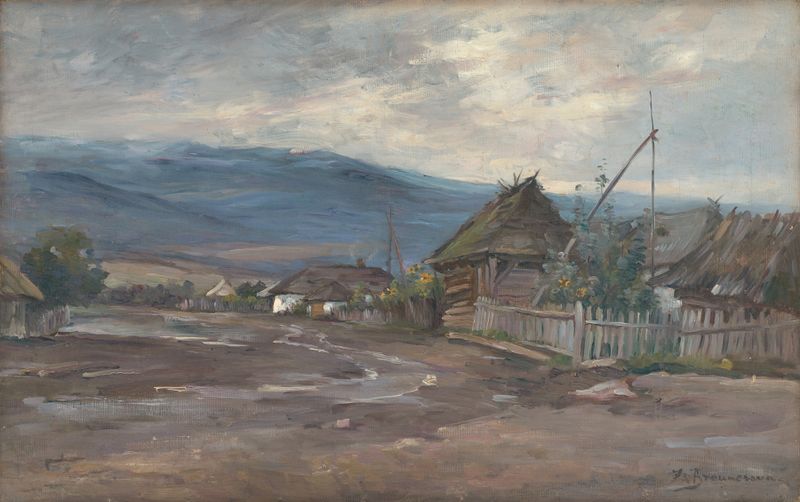
Who listens when art speaks of silence? In the absence of noise, the essence of emptiness unfurls across the canvas, inviting our introspection and contemplation. Look closely at the horizon where muted colors blend seamlessly, a soft gradient of greens and browns punctuated by a whisper of blue. The brushwork, delicate yet deliberate, guides your gaze from the foreground — a subtle interplay of texture — to the serene expanse in the distance. Notice how the light dances across the landscape, illuminating hidden nooks and crannies while casting long shadows that evoke a sense of both peace and longing. Within this quiet expanse lies a tension between the fullness of nature and the vast emptiness surrounding it.
The sparse arrangement of trees and rolling hills suggests solitude, evoking a sense of isolation that resonates on a personal level. Each element is deliberate, hinting at the artist's concern with the relationship between humanity and the natural world, suggesting that even in silence, there is a story waiting to be unearthed. During the late 19th century, Braunerová created A Landscape amidst a burgeoning art scene in Prague. Influenced by Impressionism while also exploring her own voice, she navigated a period of societal change and artistic liberation.
This painting reflects her commitment to capturing the essence of her surroundings, a quest for authenticity in a world that often feels chaotic and disconnected.