
A Seascape — História e Análise
In the solitude of loss, we find ourselves immersed in the depths of a painter's vision. Each brushstroke echoes the silence left behind, inviting us to explore the emotional landscape where sorrow meets the vastness of nature. Look to the left at the tumultuous waves, their crests shimmering with a flicker of light that dances against the deep blue hues. The artist's deft application of texture captures the relentless motion of the sea, while the tumultuous sky above suggests an impending storm.
Notice how the horizon blurs with the meeting of water and sky, creating a dreamlike ambiance that speaks to the transience of beauty. Within this composition lies a tension between tranquility and chaos. The gentle push and pull of the waves symbolize the ebb and flow of grief, while the darker clouds loom ominously, hinting at uncertainties that accompany loss. There is a haunting beauty in the contrast of the vibrant colors against the darker tones, suggesting a stubborn hope amid despair—a fleeting moment where nature reflects our innermost struggles. In the 1870s, during a period marked by personal and artistic upheaval, Jules Dupré painted this work amidst the changing tides of the art world.
Influenced by the Barbizon School, he sought to capture the raw essence of nature, reflecting both his emotional state and the broader romanticism that defined the era. Facing his own losses, his brush became a vessel through which he navigated his grief, echoing the universal quest for solace in the natural world.
Mais obras de Jules Dupré
Ver tudo →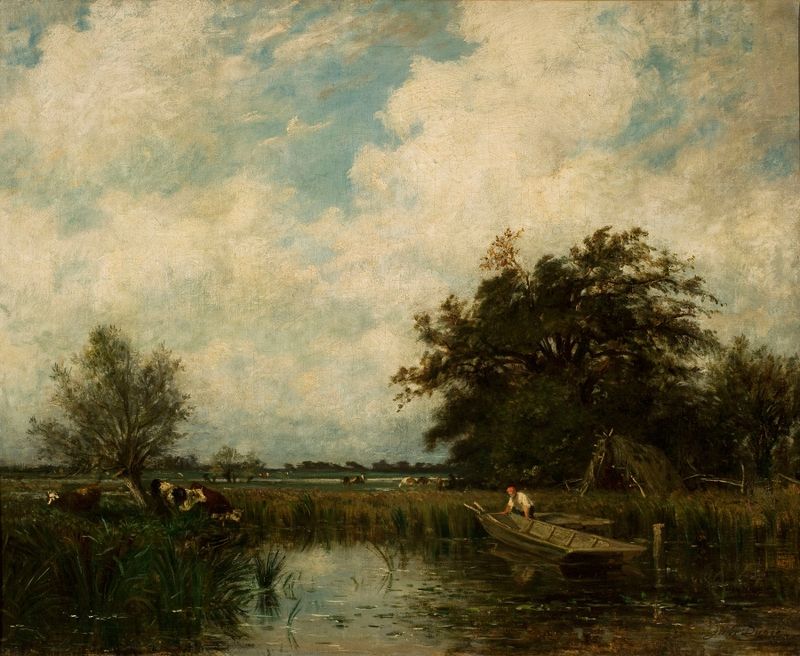
Landscape with a pond
Jules Dupré

The Cottage by the Roadside, Stormy Sky
Jules Dupré
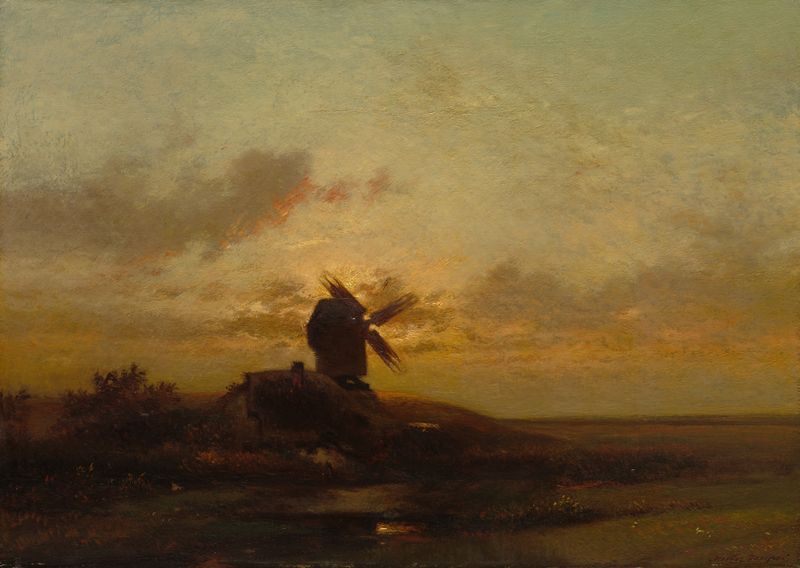
The Windmill
Jules Dupré

The Estuary Farm
Jules Dupré

Fontainebleau Oaks
Jules Dupré

Village Scene, Sunset
Jules Dupré

Barks Fleeing Before the Storm
Jules Dupré

Cows Crossing a Ford
Jules Dupré

The Old Oak
Jules Dupré

Weidelandschaft im Limousin
Jules Dupré





