
A Three-Master off a Southern Coast — História e Análise
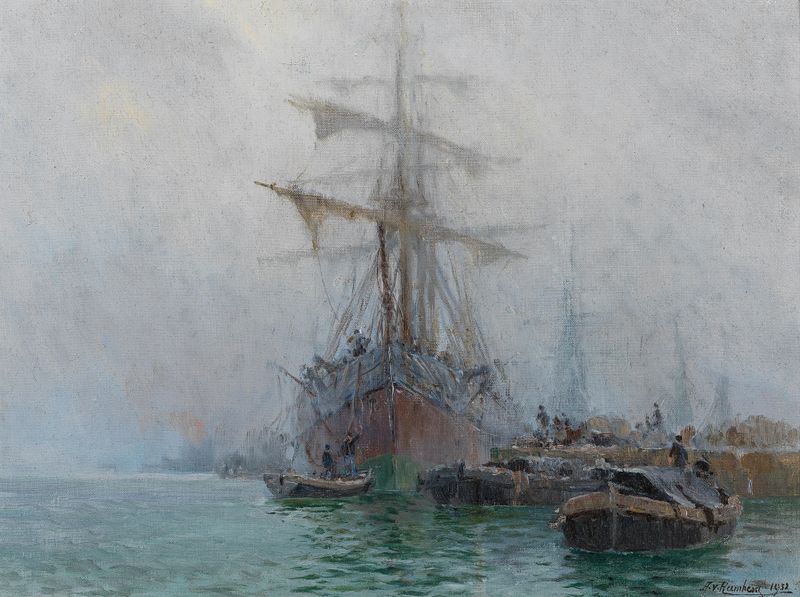
In a world that often seems chaotic, we find ourselves drawn to the delicate balance between turmoil and tranquility. August von Ramberg’s A Three-Master off a Southern Coast captures this paradox with a serene yet powerful composition that invites contemplation. Focus on the stark contrast between the three-masted ship and the horizon. The vessel, poised gracefully against the sea, draws your eye with its intricate rigging illuminated by the soft glow of the setting sun.
Notice how the gentle waves reflect this light, creating a shimmering pathway that leads the viewer deeper into the scene. The color palette of deep blues and warm golds evokes a sense of harmony, while the ship's bold lines offer a structured counterpoint to the fluidity of the water. Yet, beneath the surface beauty lies an emotional tension. The ship, an emblem of exploration and adventure, stands resilient against an ominous sky, hinting at the challenges that lurk beyond the calm.
This duality—of adventure intertwined with the foreboding—mirrors the struggles of 1942, a year marked by global conflict and uncertainty. The balance between the appealing and the unsettling encapsulates the human experience, where beauty often coexists with struggle. In 1942, Ramberg painted this work amidst the shadows of World War II, a time when many artists grappled with the stark realities of life. Working in Germany, he faced the pressures of an art world that was both influenced by and resistant to the political turmoil surrounding him.
This painting reflects not only a personal aesthetic but also a broader commentary on the tensions of the era.
Mais obras de August von Ramberg
Ver tudo →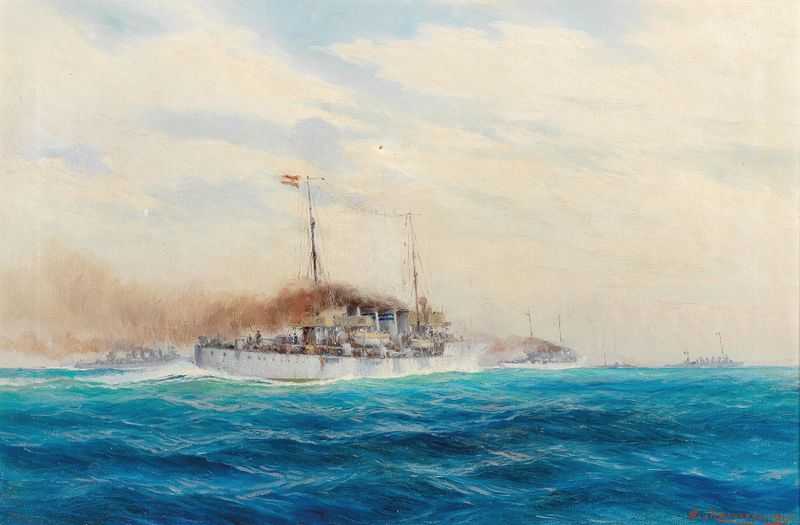
Bombardment of Palagruža in 1915
August von Ramberg

Am Weg zum Gmundnerberg
August von Ramberg
Fishing Boats by the Jetty
August von Ramberg
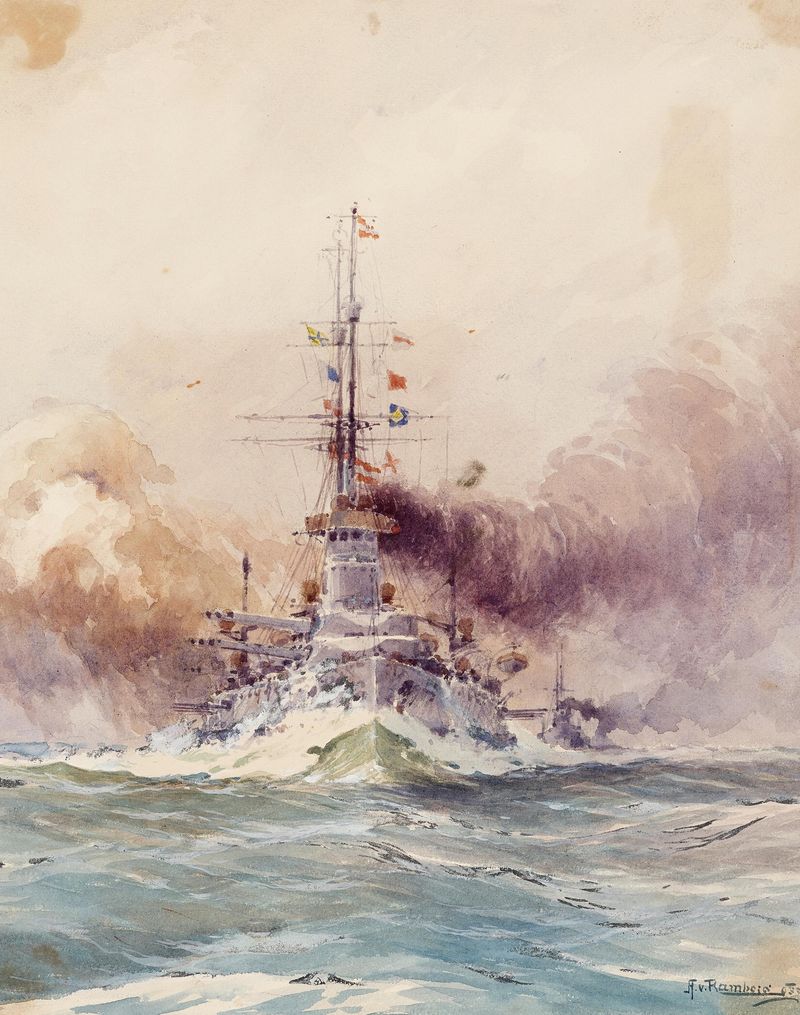
The Imp. Royal Battleship VIRIBUS UNITIS at full speed accompanied by the fleet
August von Ramberg
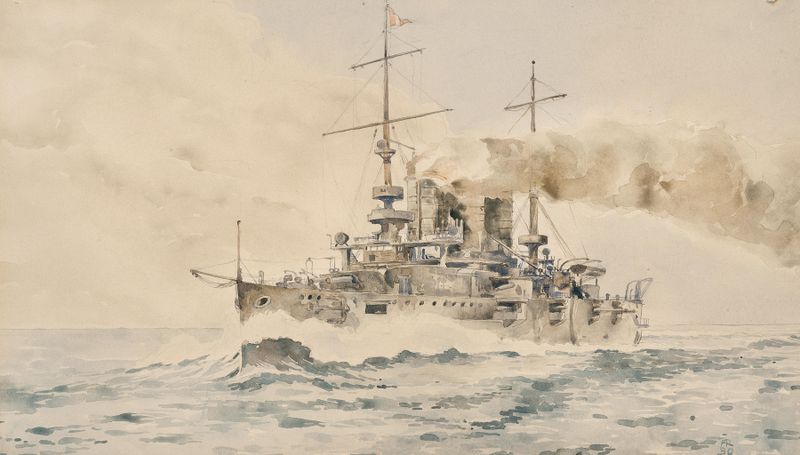
Imperial and Royal Battleship of the SMS Erzherzog Karl Class in full sail
August von Ramberg





