
A View at Girgenti in Sicily with the Temple of Concord and Juno — História e Análise
This longing for permanence contrasts sharply with the transience of life, drawing us into the heart of loss. Look to the left at the majestic Temple of Concord, its classical columns standing tall against a backdrop of ethereal blues and soft earth tones. The artist skillfully balances light and shadow, illuminating the temple while allowing the surrounding landscape to fade into a dreamy haze. The gentle strokes create an almost tactile texture, inviting us to reach out and feel the warmth of the sun-soaked earth beneath our fingertips. Yet, beneath the surface beauty lies a poignant tension.
The temple, a symbol of ancient glory, stands in stark contrast to the weight of time that erodes both memory and history. Notice how the verdant hills encroach upon the structure, suggesting nature’s relentless reclaiming of human achievement. The soft blending of colors subtly conveys a sense of nostalgia, reminding us of what once was and echoing the inevitability of decay. Charles Lock Eastlake created this work during a period marked by personal and artistic transformation.
Active in the mid-19th century, he was influenced by the Romantic movement's fascination with the sublime in nature and the ruins of antiquity. His journey through Italy coincided with a broader cultural exploration of heritage and identity, capturing the fragility of both art and memory in this exquisite piece.
Mais obras de Charles Lock Eastlake
Ver tudo →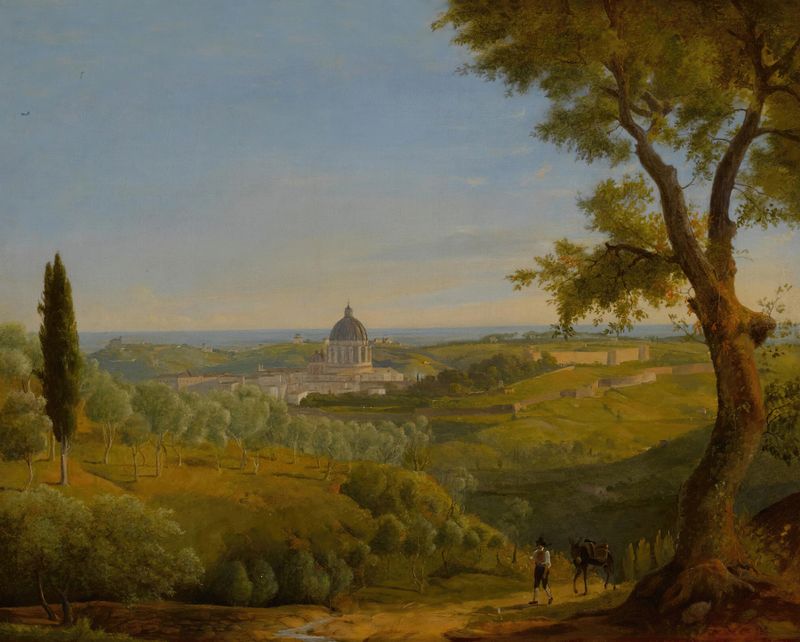
Rome, a view of Saint Peter’s from Monte Mario
Charles Lock Eastlake
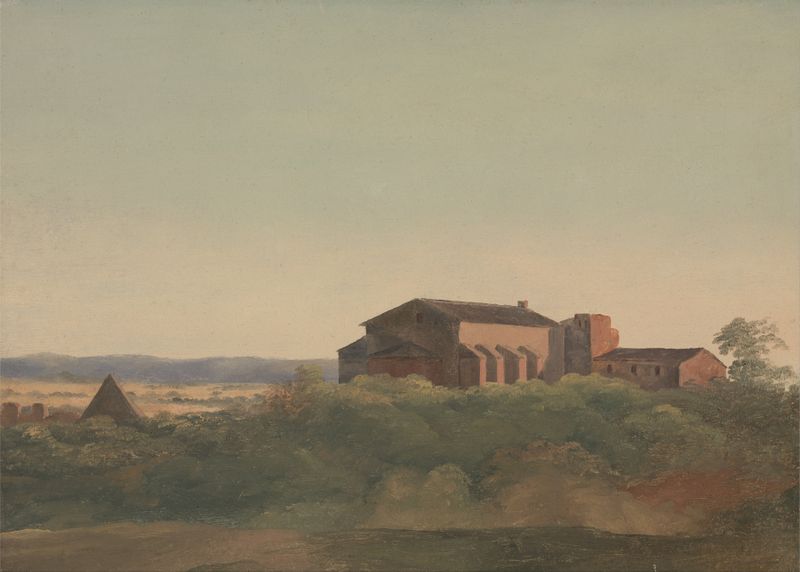
A View of the Church of S. Sabina and the Pyramid of Cestius, Rome
Charles Lock Eastlake
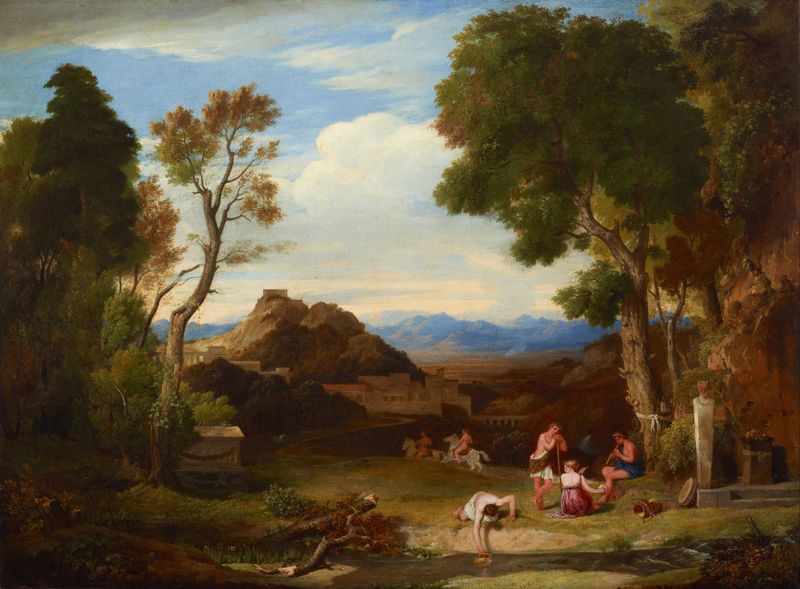
Classical landscape
Charles Lock Eastlake

The Erechtheum, Athens, with Figures in the Foreground
Charles Lock Eastlake
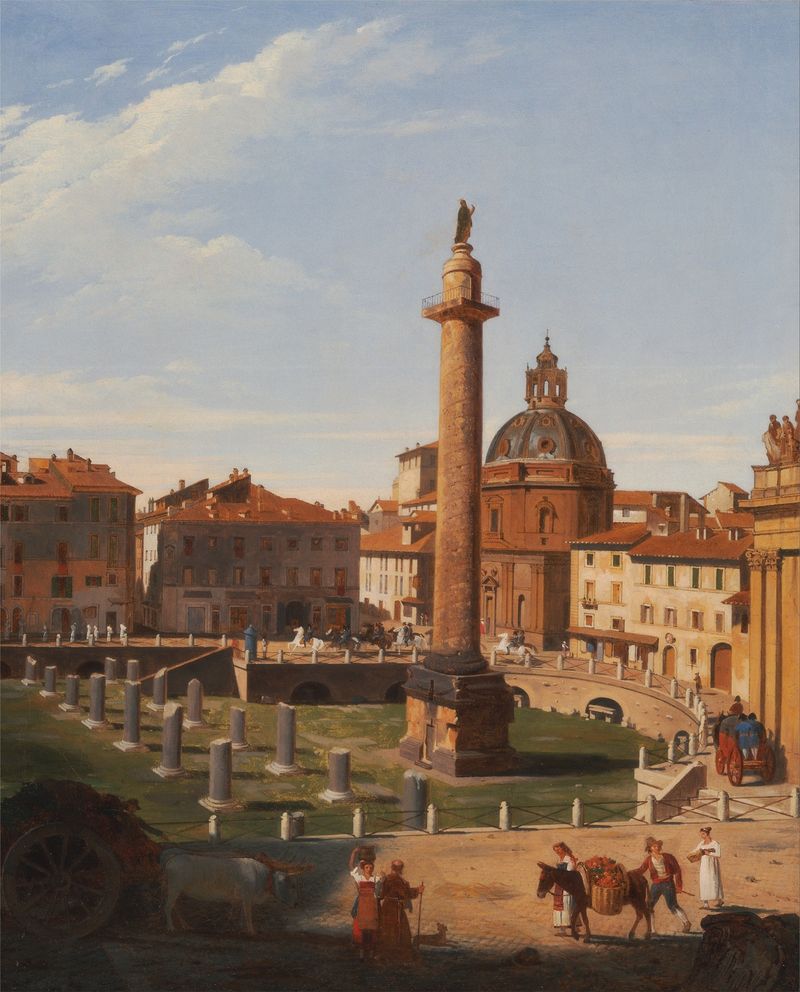
A View of Trajan’s Forum, Rome
Charles Lock Eastlake
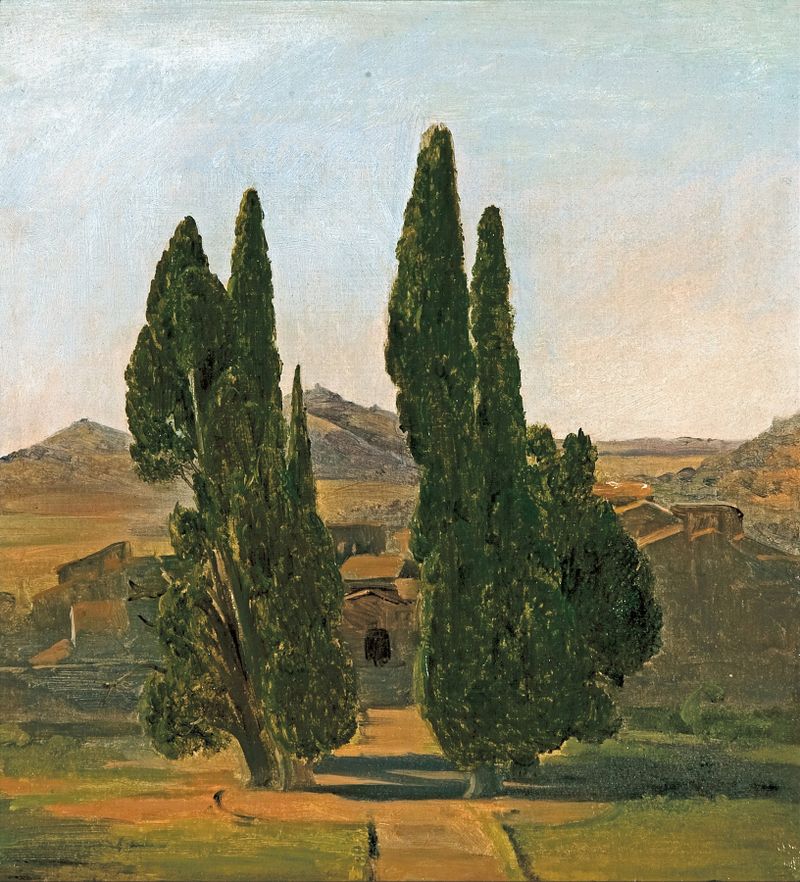
Cypress trees at the Villa d’Este
Charles Lock Eastlake





